Twa kɔ nsɛm atitiriw so
Log in
Sign up for FREE
arrow_back
Laabri

Digestive System

star
star
star
star
star
Last updated over 4 years ago
8 Nsɛmmisa

Glue the diagram on page 50. Fold the notes page and glue it in on 51.

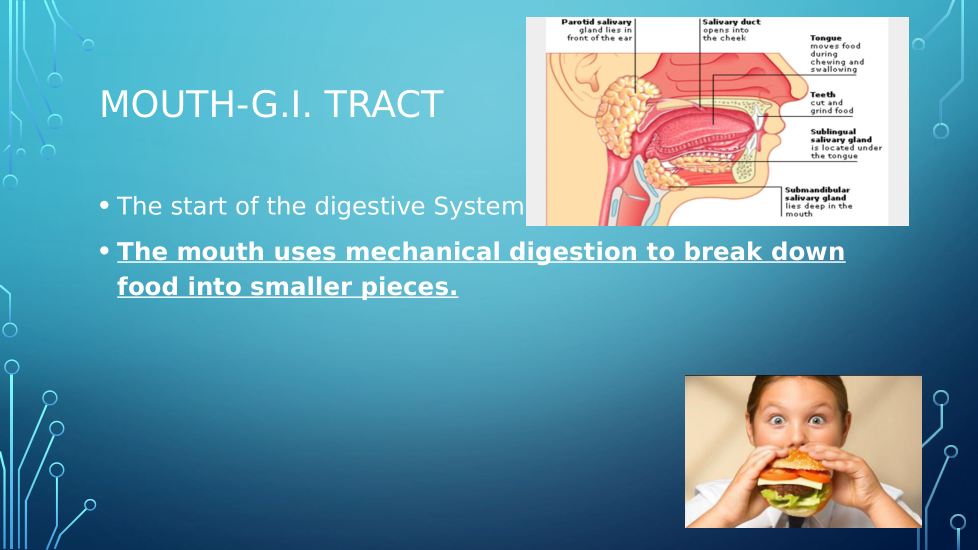
Fill out the diagram and the notes using this formative. The notes that you will write beside each structure and organ are in bold and underlined.

You will not write anything beside accessory organs in the chart. That is there to separate the organs of the GI tract from the accessory organs.

Don't include the appendix

1
Asemmisa {{asɛmmisaAhyɛnsode}}
1.

What is the difference between organs in the digestive tract and accessory organs?
1
Asemmisa {{asɛmmisaAhyɛnsode}}
2.

What type of digestion does the mouth use?

1
Asemmisa {{asɛmmisaAhyɛnsode}}
3.

What do salivary glands produce?

1
Asemmisa {{asɛmmisaAhyɛnsode}}
4.

Is peristalsis voluntary or involuntary muscle movement?

1
Asemmisa {{asɛmmisaAhyɛnsode}}
5.

What is the main function of the small intestine?

1
Asemmisa {{asɛmmisaAhyɛnsode}}
6.

What does the liver produce?

Correction to the last bullet point:

Bile does NOT make fats.

Bile salts break down larger pieces of fat into smaller fats. Smaller fat droplets are easier for the digestive enzymes from the pancreas to process and break down.

Some people have to have their galbladder removed.

Without a gallbladder, there's no place for bile to collect. Instead, your liver releases bile straight into the small intestine. This allows you to still digest most foods. However, large amounts of fatty, greasy, or high-fiber food become harder to digest.

1
Asemmisa {{asɛmmisaAhyɛnsode}}
7.

People who have their gallbladder removed are advised to avoid foods high in fat. Why do you think this is so?

1
Asemmisa {{asɛmmisaAhyɛnsode}}
8.

What is the difference between the anus and the rectum?