Waves Test Acquarelli
star
star
star
star
star
Last updated over 4 years ago
29 Nsɛmmisa
1
1
1
1

2
2
1
1
1
1
1
1
1
1
1
1

1

2
1
3
1
1
1
1
1
1
1
1
1
Waves carry _____________ from one place to the other.
The ______________________ is how tall the wave is.
The ______________________ is the lowest point of the wave.
The ______________________ is the highest point of the wave.
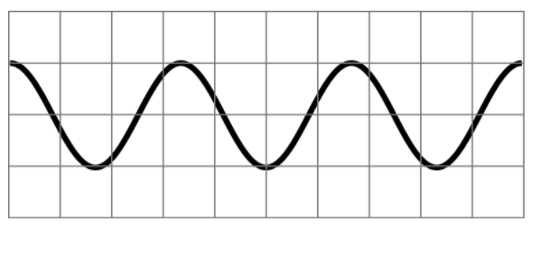
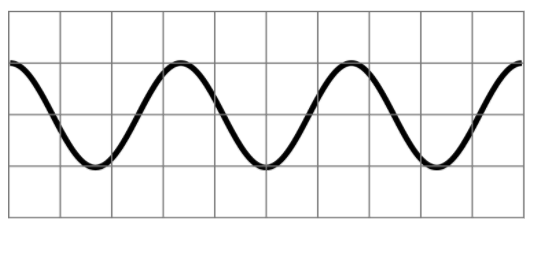
Using the picture of the wave, which show(s) the WAVELENGTH? (Choose 2 correct answers)
Using the picture of the wave, which show(s) the AMPLITUDE? (Choose 2 correct answers)
Using the picture of the wave, which show(s) the CREST? (Choose 1 correct answer)
Using the picture of the wave, which show(s) the TROUGH? (Choose 1 correct Answer)
When you increase the frequency of a sound wave, what happens to the pitch? CHOOSE ONLY ONE
The measurement from crest to crest or from trough to trough is called what?
The regions of a wave where the particles are the CLOSEST together in a longitudinal wave are called
The regions of a wave where the particles are the FURTHEST APART in a longitudinal wave are called
What is the unit for frequency?
Which of these is an electromagnetic wave?
Which type of electomgnetic waves can humans see?
Which type of electromagnetic wave has more energy?
What type of wave is pictured above?
Which are characteristics of a longitudinal wave? Check 2 out of 3
What type of wave is shown above?
Which are characteristics of a transverse wave? (Choose 3 correct answers)
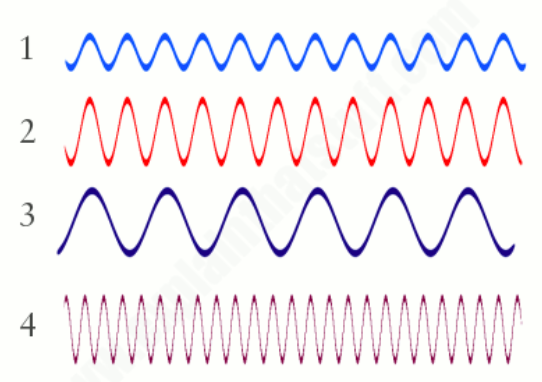
Which wave pictured above has the highest frequency?
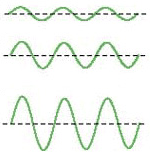
Which wave pictured above has the biggest amplitude?
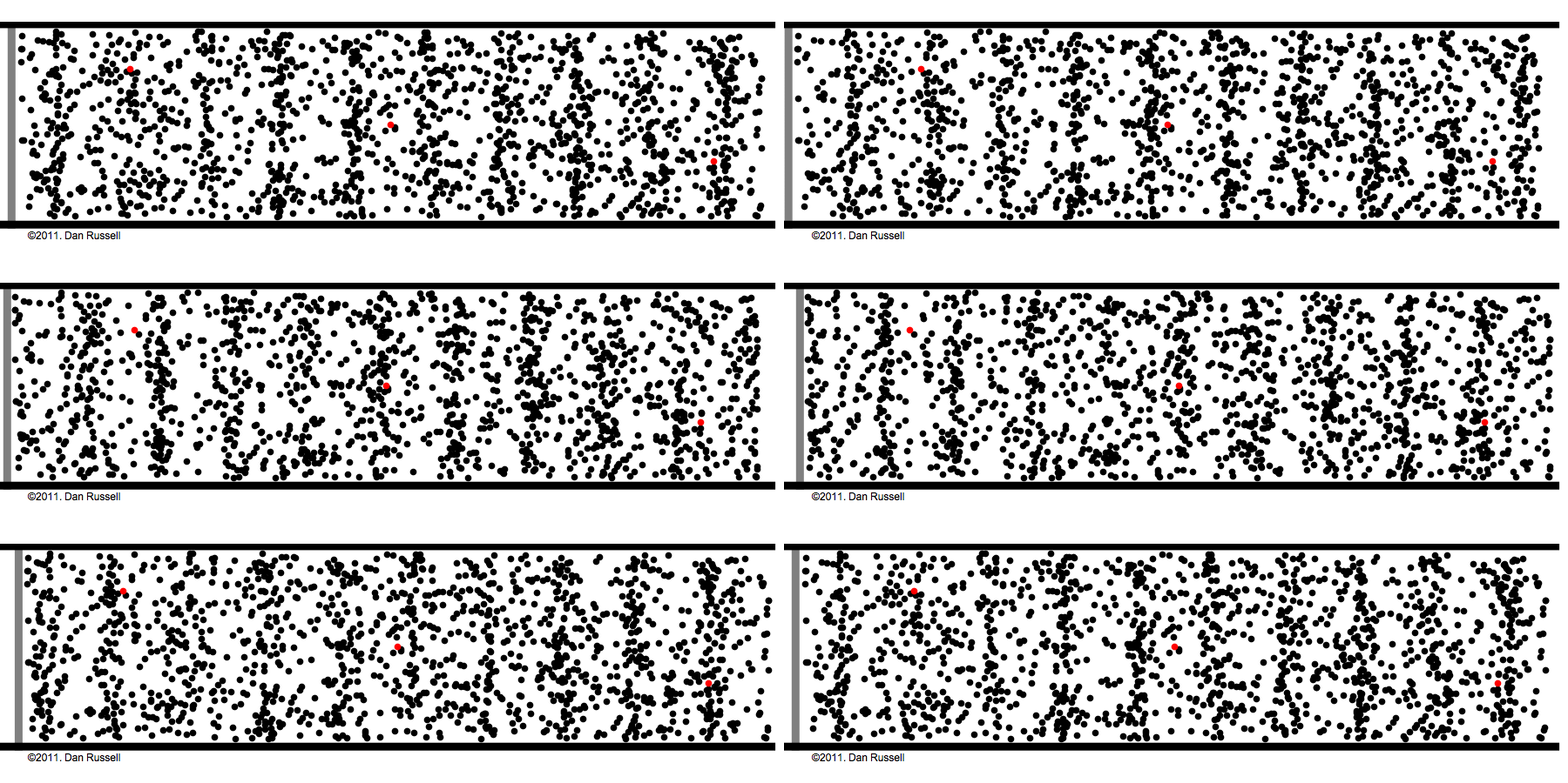
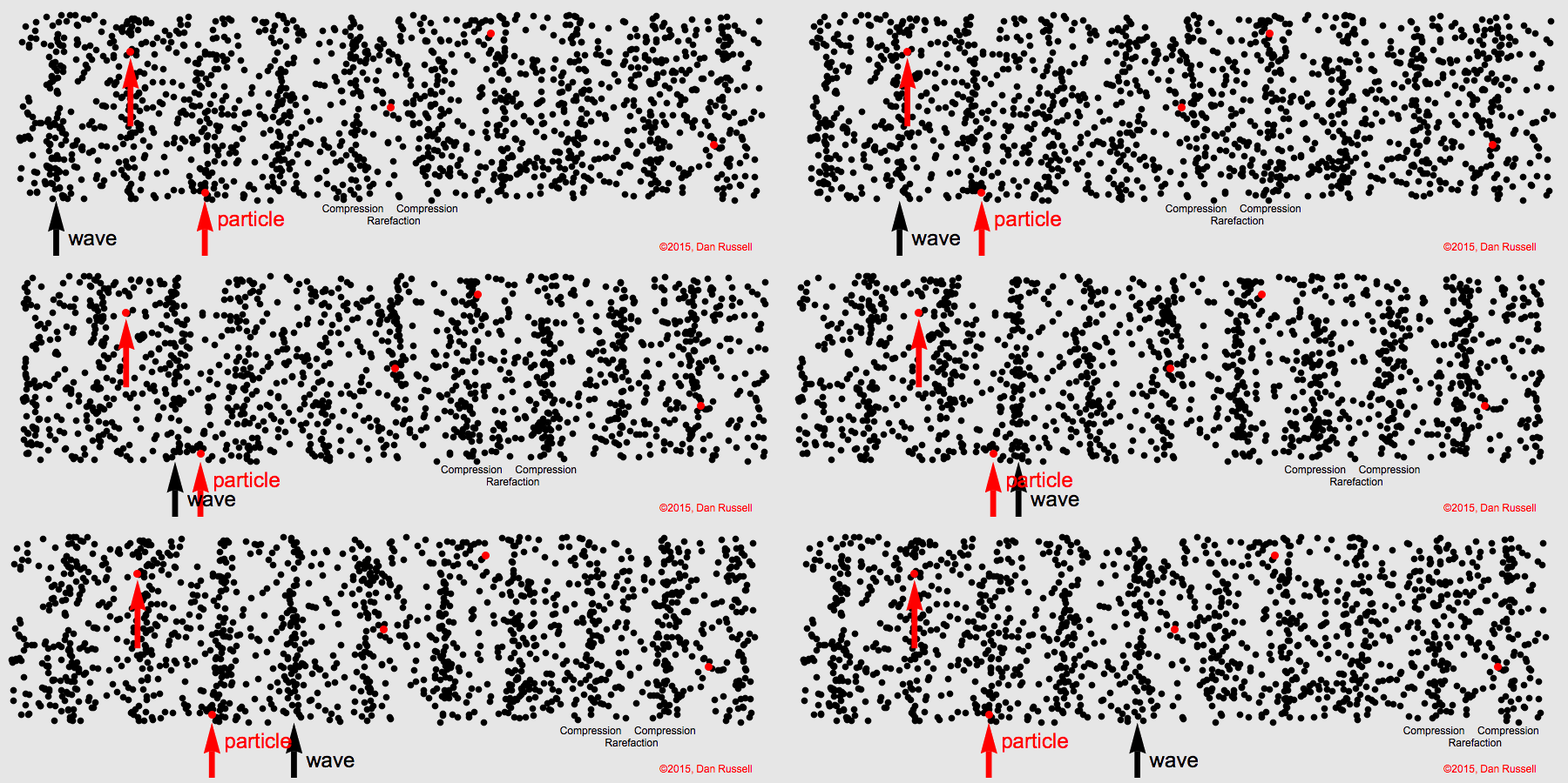
Look at the animations of longitudinal waves above. What happens to the particles of matter (red dot) as the waves move through them?
In a longitudinal wave the particles move ______________________ to the direction of the wave.
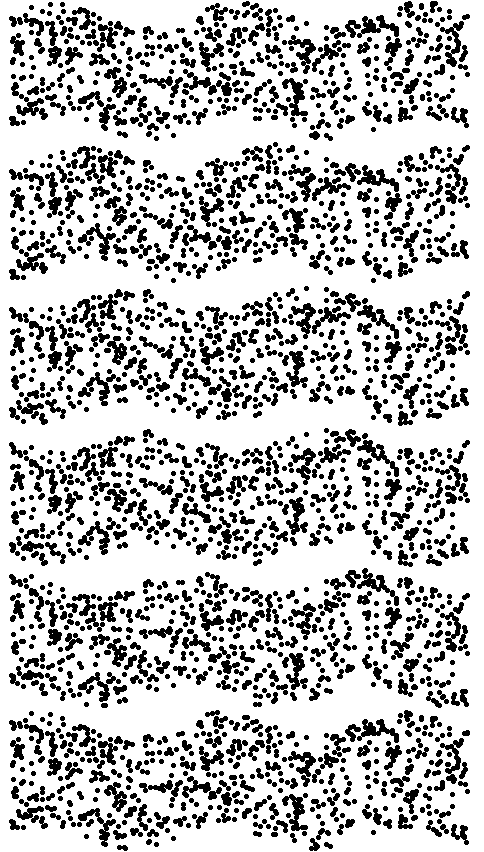
Look at the animation of the transverse wave above. how would a human sitting in an intertube move?
In a transverse wave the particles move ______________________ to the direction of the wave.
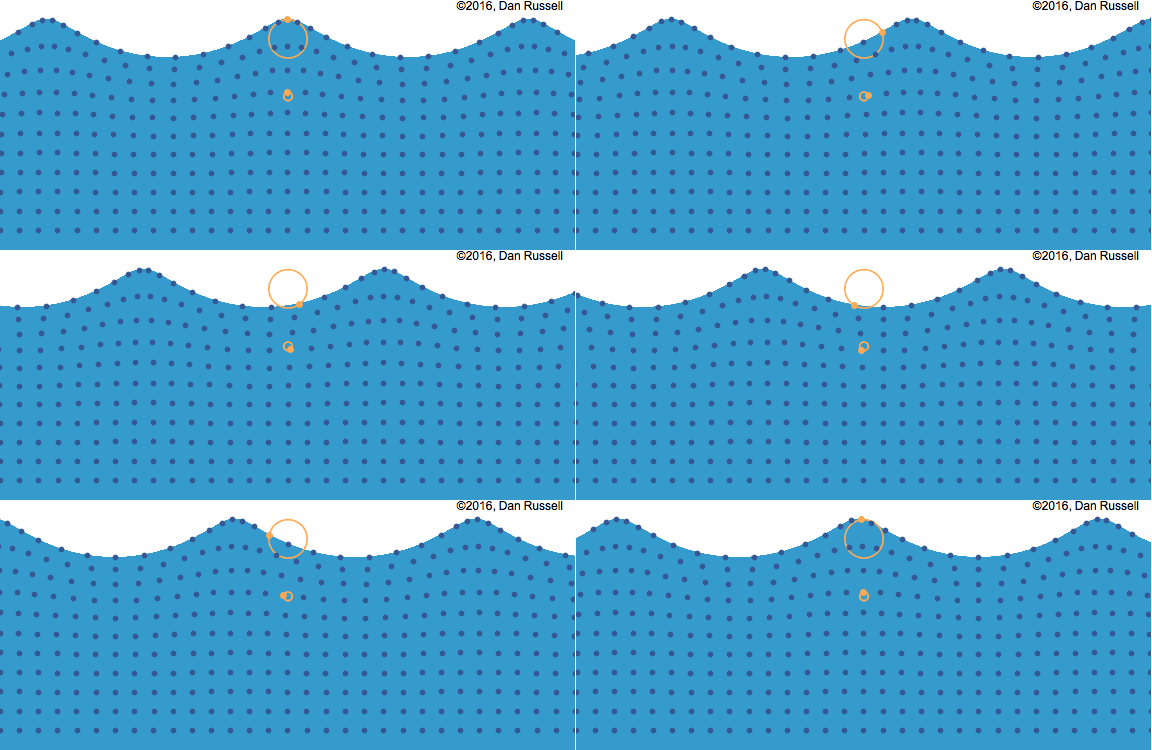
Look at the animation of the water wave above. If you were on a surf board in the ocean, how would you move in relation to the wave?
If the frequency of a wave is increased, what will happen to the wavelength?
On a longitudinal wave, in which areas are particles farthest apart?