1
1
1
1
1
1
1
1
1
1
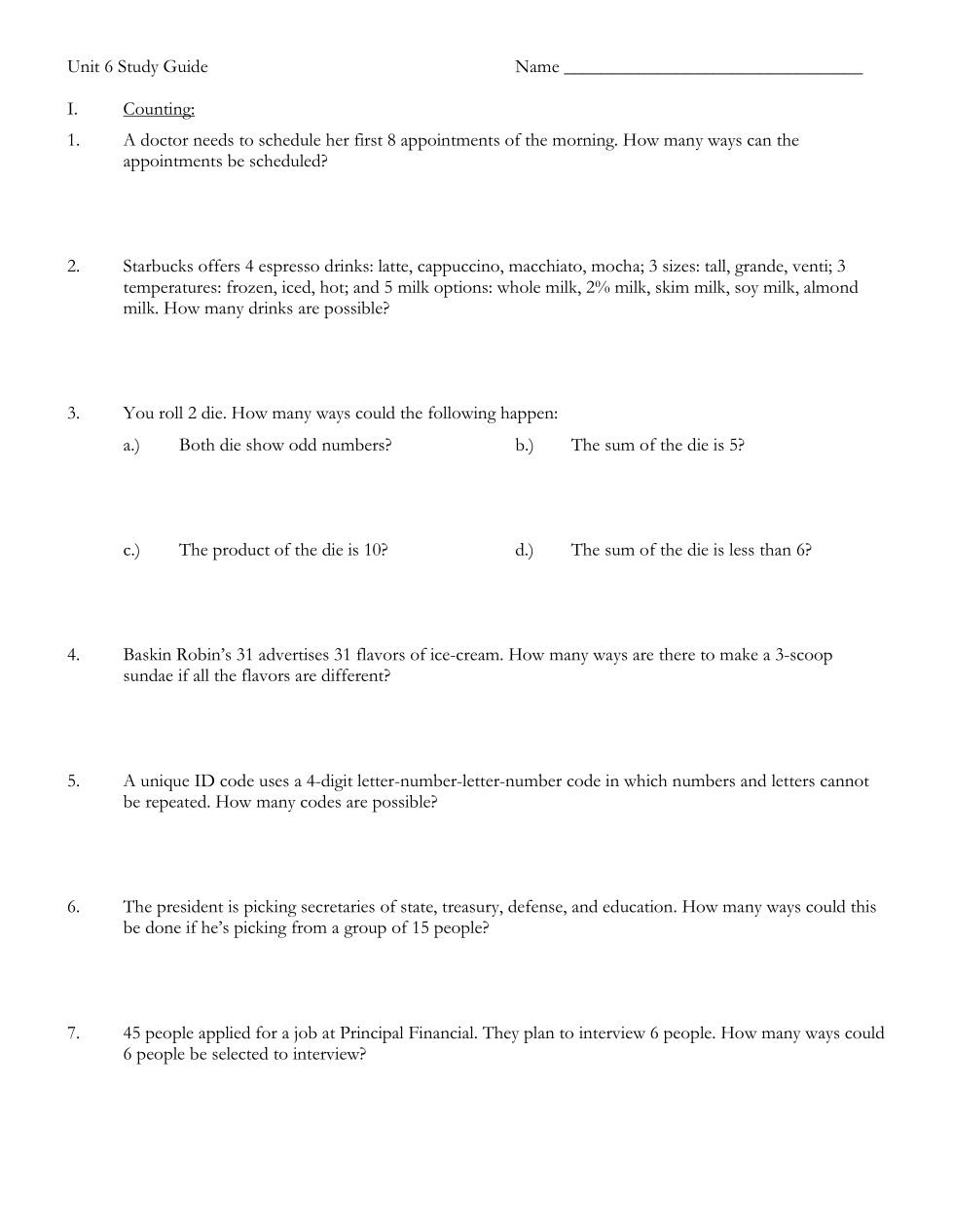
How many ways can 8 appointments be scheduled?
Given the options, how many drinks are possible?
How many ways could 2 die show odd numbers?
How many ways could the sum of 2 dice be 5?
How many ways could the product of 2 dice be 10?
How many ways could the sum of 2 dice be less than 6?
How many ways could you make a 3-scoop sundae if you have 31 flavor options.
How many 4 digit letter-number-letter-number (no repetition) codes are possible?
How many ways can secretaries of state, treasury, defense, and eduction be picked if 15 people are being considered?
There are 45 applicants. How many ways can 6 people be selected to interview?
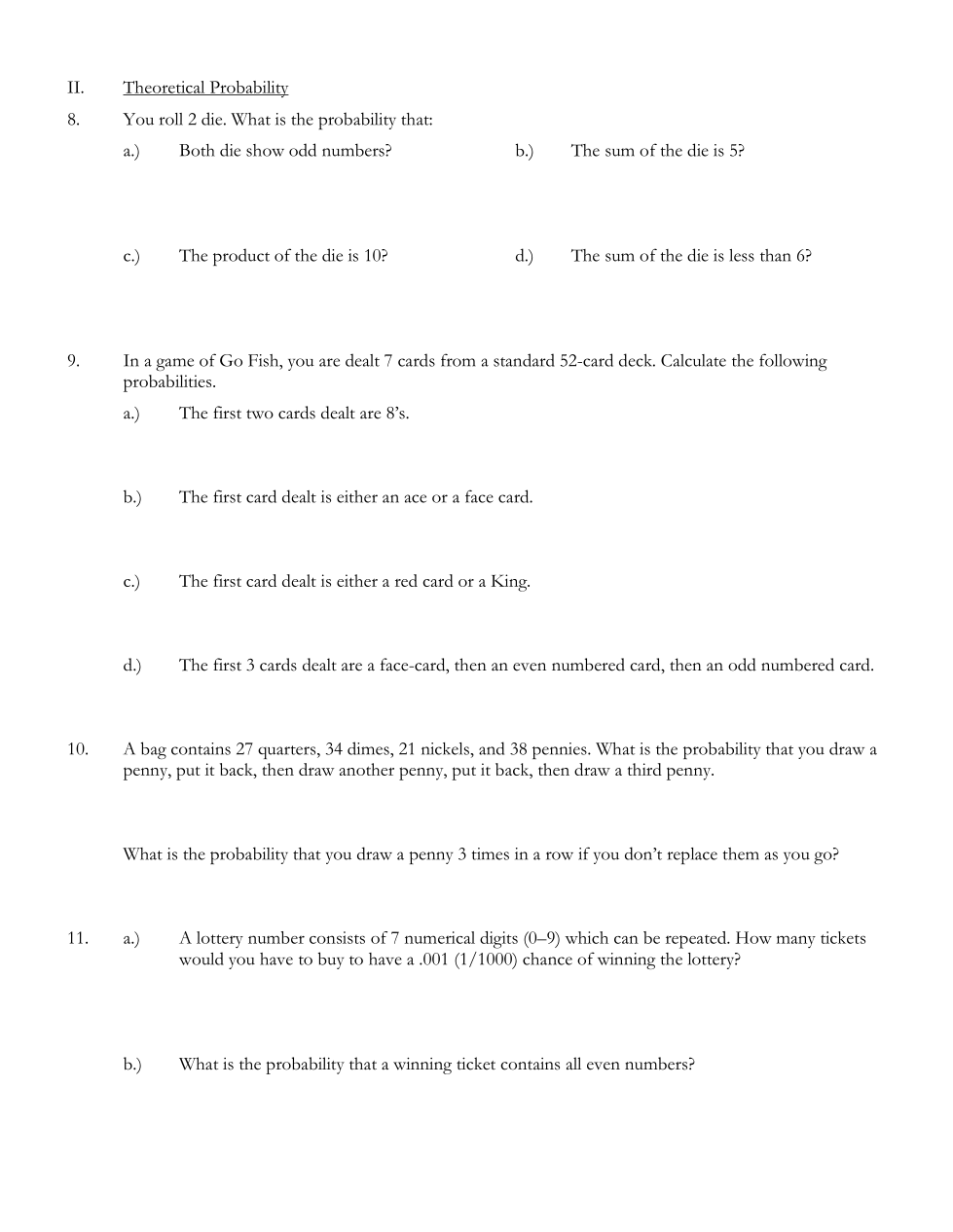
What is the probability that both die show odd numbers? (Answers should be a reduced fraction or a decimal to the nearest hundredth.)
What is the probability that the sum of 2 dice is 5? (Answers should be a reduced fraction or a decimal to the nearest hundredth.)
What is the probability that the product of 2 dice is 10? (Answers should be a reduced fraction or a decimal to the nearest hundredth.)
What is the probability that the sum of 2 dice is less than 6? (Answers should be a reduced fraction or a decimal to the nearest hundredth.)
What is the probability that the first two card dealt are both 8s? (Answers should be a reduced fraction or a decimal to the nearest hundredth.)
What is the probability that the first card dealt is either an ace or a face card? (Answers should be a reduced fraction or a decimal to the nearest hundredth.)
What is the probability that the first card dealt is either a red card or a king? (Answers should be a reduced fraction or a decimal to the nearest hundredth.)
What is the probability that the first 3 cards dealt are a face-card, then an even numbered card, then an odd numbered card? (Answers should be a reduced fraction or a decimal to the nearest hundredth.)
What is the probability that you draw a penny, put it back, another penny, put it back, then a third penny? (Answers should be a reduced fraction or a decimal to the nearest hundredth.)
What is the probability that you draw a penny 3 times in a row if you don't replace them as you go? (Answers should be a reduced fraction or a decimal to the nearest hundredth.)
A lottery number has 7 digits (0-9) and numbers can be repeated. How many tickets will it take to make your probability of winning .001 (1/1000)? (Answers should be a reduced fraction or a decimal to the nearest hundredth.)
A lottery number has 7 digits (0-9) and numbers can be repeated. What is the probability that a winning ticket contains all even numbers? (Answers should be a reduced fraction or a decimal to the nearest hundredth.)
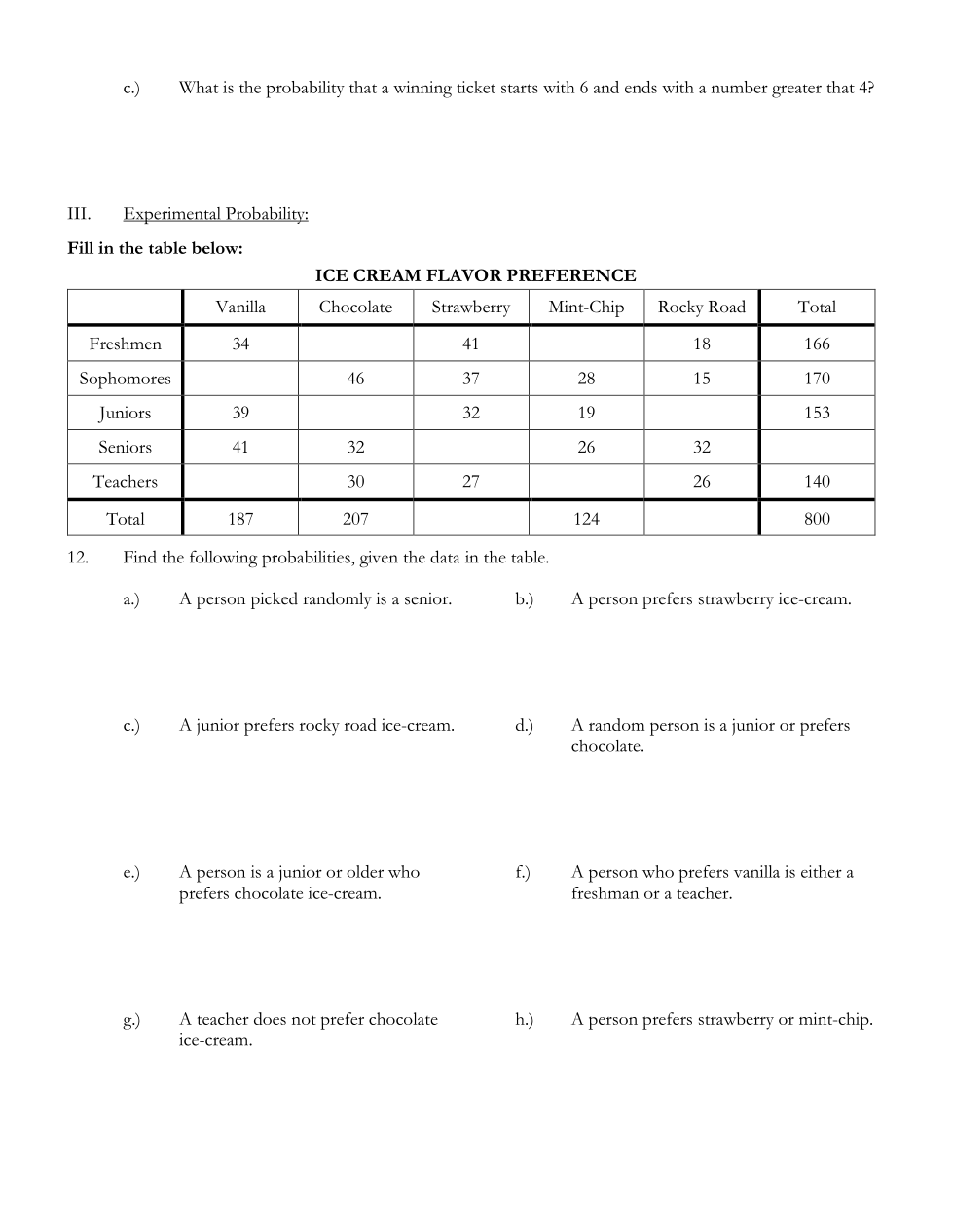
A lottery number has 7 digits (0-9) and numbers can be repeated. What is the probability that a winning ticket starts with a 6 and ends with a number greater than 4? (Answers should be a reduced fraction or a decimal to the nearest hundredth.)
Freshman who chose chocolate?
Freshman who chose mint-chip?
Sophomores who chose vanilla?
Juniors who chose chocolate?
Juniors who chose rocky road?
Seniors who chose strawberry?
Total seniors?
Teachers who chose vanilla?
Teachers who chose mint-chip?
Total who prefer strawberry?
Total who prefer rocky road?
What is the probability of selecting a senior? (Answers should be a reduced fraction or a decimal to the nearest hundredth.)
What is the probability of selecting a person who prefers strawberry? (Answers should be a reduced fraction or a decimal to the nearest hundredth.)
What is the probability that a junior prefers rocky road? (Answers should be a reduced fraction or a decimal to the nearest hundredth.)
What is the probability of selecting a junior or a person who prefers chocolate? (Answers should be a reduced fraction or a decimal to the nearest hundredth.)
What is the probability that a person is a junior or older who prefers chocolate? (Answers should be a reduced fraction or a decimal to the nearest hundredth.)
What is the probability that a person who prefers vanilla is either a freshman or a teacher? (Answers should be a reduced fraction or a decimal to the nearest hundredth.)
What is the probability that a teacher does not prefer chocolate? (Answers should be a reduced fraction or a decimal to the nearest hundredth.)
What is the probability that a person prefers strawberry or mint-chip? (Answers should be a reduced fraction or a decimal to the nearest hundredth.)