NS 2.1 (1/13)
star
star
star
star
star
Last updated about 3 years ago
11 Nsɛmmisa

0
0
0
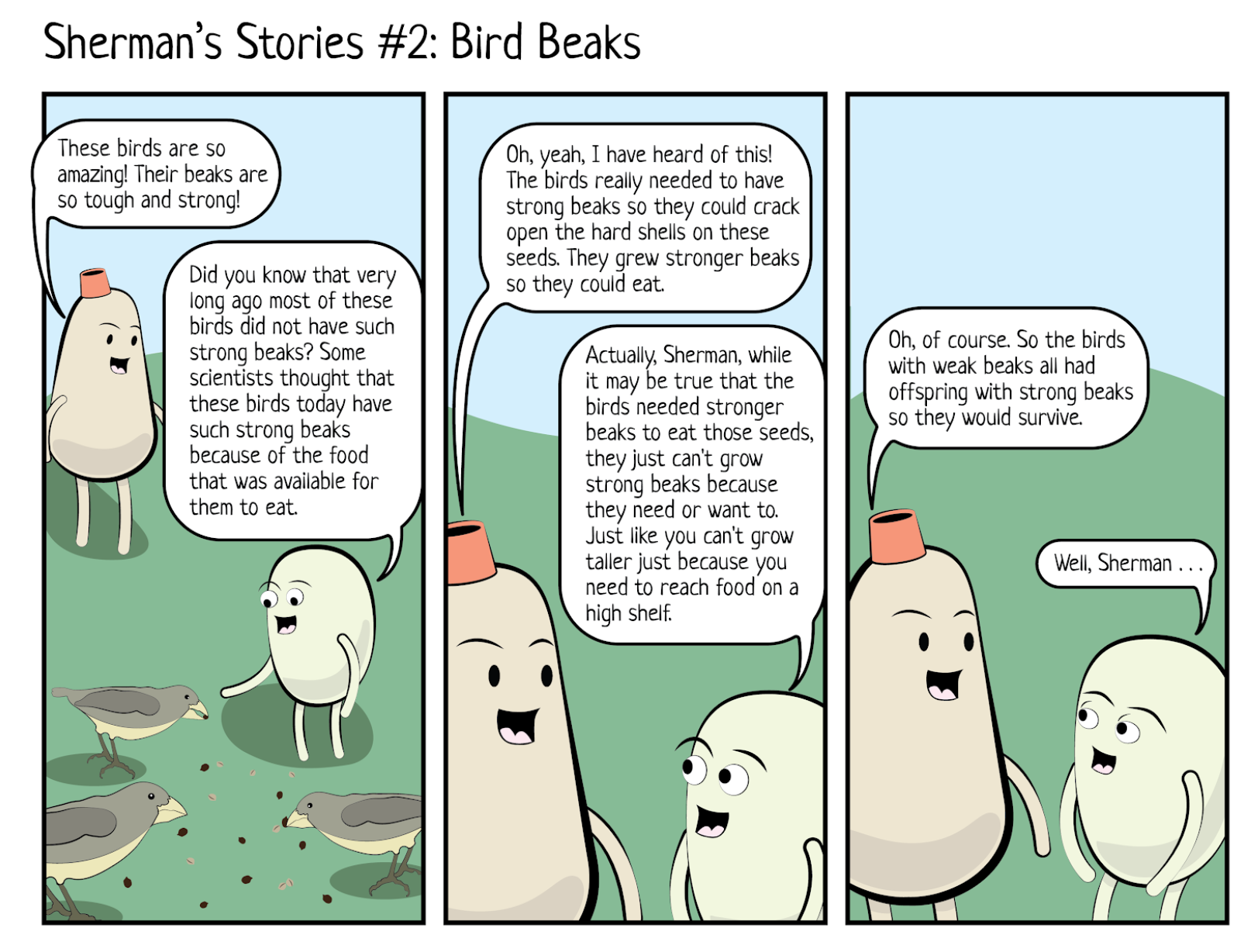
In this environment, which trait is adaptive for the birds?
Do birds determine their own adaptive traits
Sherman suggests that reproduction always creates individuals with adaptive traits. Does this seem correct? Why or why not?
Hypothesis: Yellow color is adaptive in a Yellow Level 7 environment with carnithons. Do you think all ostrilopes who reproduce will create offspring with the adaptive yellow-color trait? Why or why not?
CFS:
accurately describes the relationship between environmental changes and population variations
describes the cause and effect relationship between environmental factors and species traits
Log into:
Amplify Science
Unit 8: Natural Selection
Chapter 2: Natural Selection and Reproduction
Lesson 2.1: Reproduction and Traits
Goal: Gather evidence to support or refute the claim that reproduction always creates individuals with adaptive traits.
Do:
Open the Natural Selection Simulation and open the mode: Reproduction Claims.
Press RUN to complete the data tables below.
Tips:
Slow down and pause the Sim to carefully observe traits after reproduction.
Reset the Sim between trials.
If the ostrilope you are following gets eaten before it reproduces, select and follow a similar ostrilope.
Trial A:
Ostrilopes with non-adaptive traits:
Select and follow an ostrilope that does not blend into its environment (one that has a non-adaptive color trait).
Follow the ostrilope until it reproduces. Pause the Sim.
Observe and record the color-trait levels of both parents and the offspring in the data table on the next page.
Reset the Sim. Repeat the above steps for Trial 2
Observe and record the color-trait levels of both parents and the offspring in the data table on the next page.
What color trait is most present after each trial? Why do you think this trait is most present?
CFS:
accurately describes the relationship between environmental changes and population variations
describes the cause and effect relationship between environmental factors and species traits
Trial B:
Ostrilopes with adaptive traits:
Select and follow an ostrilope that blends into its environment (one that has an adaptive color trait).
Follow the ostrilope until it reproduces. Pause the Sim.
Observe and record the color-trait level of both parents and the offspring in the data table below.
Reset the Sim. Repeat the above steps for Trial 2.
Observe and record the color-trait levels of both parents and the offspring in the data table on the next page.
How many of the offspring that you observed had the adaptive trait of Yellow Color 7? (check one)
Analysis
As more and more generations pass, what do you expect to see in the ostrilope population who live in a Yellow Level 7-9 environment?
Accurately model and label the ending histogram based environmental changes named above.
What color trait is most present after each trial? Why do you think this trait is most present?
CFS:
accurately describes the relationship between environmental changes and population variations
describes the cause and effect relationship between environmental factors and species traits
Accurately cites evidence from the most relevant source
What color trait is most present after each trial? Why do you think this trait is most present?
CFS:
accurately describes the relationship between environmental changes and population variations
describes the cause and effect relationship between environmental factors and species traits