Abridged Chapter 11-12: The Missouri Compromise and Slavery in the Western U.S.
star
star
star
star
star
Last updated over 1 year ago
10 questions
1
RPU.01
1
RPU.01
1
IIUR.01
1
IITE.01
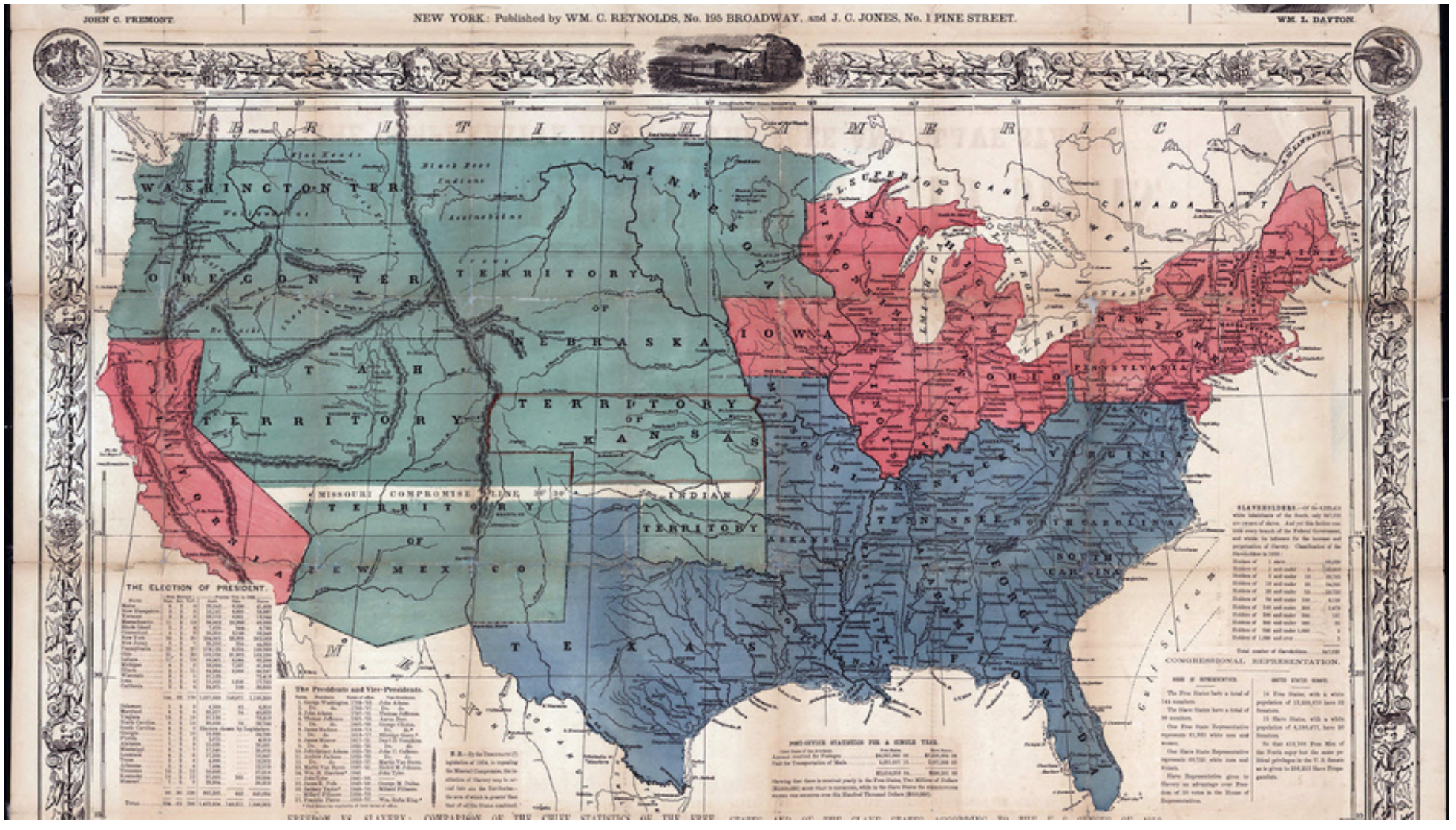
Printed on Map: "Designed to exhibit the comparative area of the free and slave states and the territory open to slavery or freedom by the repeal of the Missouri compromise. With a comparison of the principal statistics of the free and slave states, from the census of 1850."
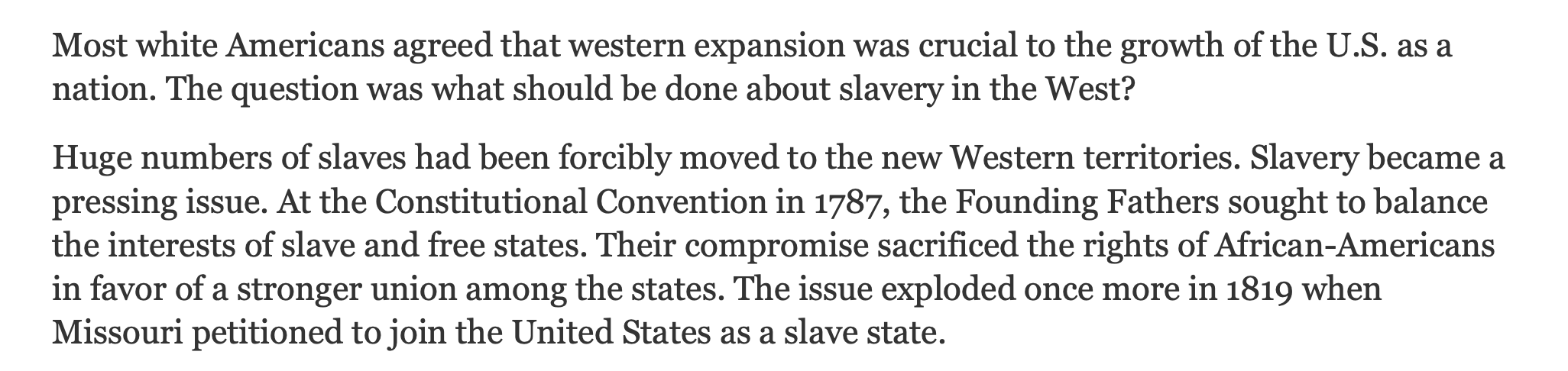
Map Key
Red = Free state
Dark Blue= Slave states are in dark blue
Green Blue= Territories that could be slave or free if the Missouri compromise was ended
Question 1
1.
The main purpose of the passage is to
Note how Question #1 is about the entire article. Hence, you should wait until you read the entire article before you answer it! (Hint: You should do the same thing on the SAT Reading exam.)
1
Question 2
2.
IIRC.01
Question 3
3.
The MOST likely reason for including information about the Kansas-Nebraska Act of 1854 is to show
1
Question 4
4.
IIRC.02
1
IIRC.01
Question 6
6.
Which answer choice BEST describes the central tension that led to the Missouri Compromise?
1
Question 7
7.
Based on the information in the passage, it can be reasonably inferred that
IIRC.02
Question 8
8.
Which choice provides the best evidence for the answer to the previous question? (from Paragraph 4)
1
Question 9
9.
As used in line 1, "sentiment" most nearly means
IIWD.01
1
Question 10
10.
The final paragraph develops a key concept of the article by
According to the passage, the reaction to the Missouri Compromise can best be described as
viewed favorably by both Southerners and Northerners.
viewed favorably by Southerners, but not Northerners.
viewed favorably by Northerners, but not Southerners.
It can be reasonably inferred that "self-determination" is
the concept that a state can make its own decisions, separate from those of other states.
the right that white people have to determine the fate of black people.
the power the federal government has to pass laws that must be upheld by all states.
the idea that Missouri is geographically closer to slave states, so logically it should be a slave state.
Question 5
5.
The passage indicates that Thomas Jefferson believed that the question over slavery would eventually lead to
Northern states argued that every state should have the right to determine whether they wanted to allow or forbid slavery; slave states believed that slavery should be outlawed across the nation.
although Vesey's slave revolt was unsuccessful, many rebellions were successful.
many slaves tried to escape, rather than be relocated to the West.
most slaves joined in rebellions when they were able to.
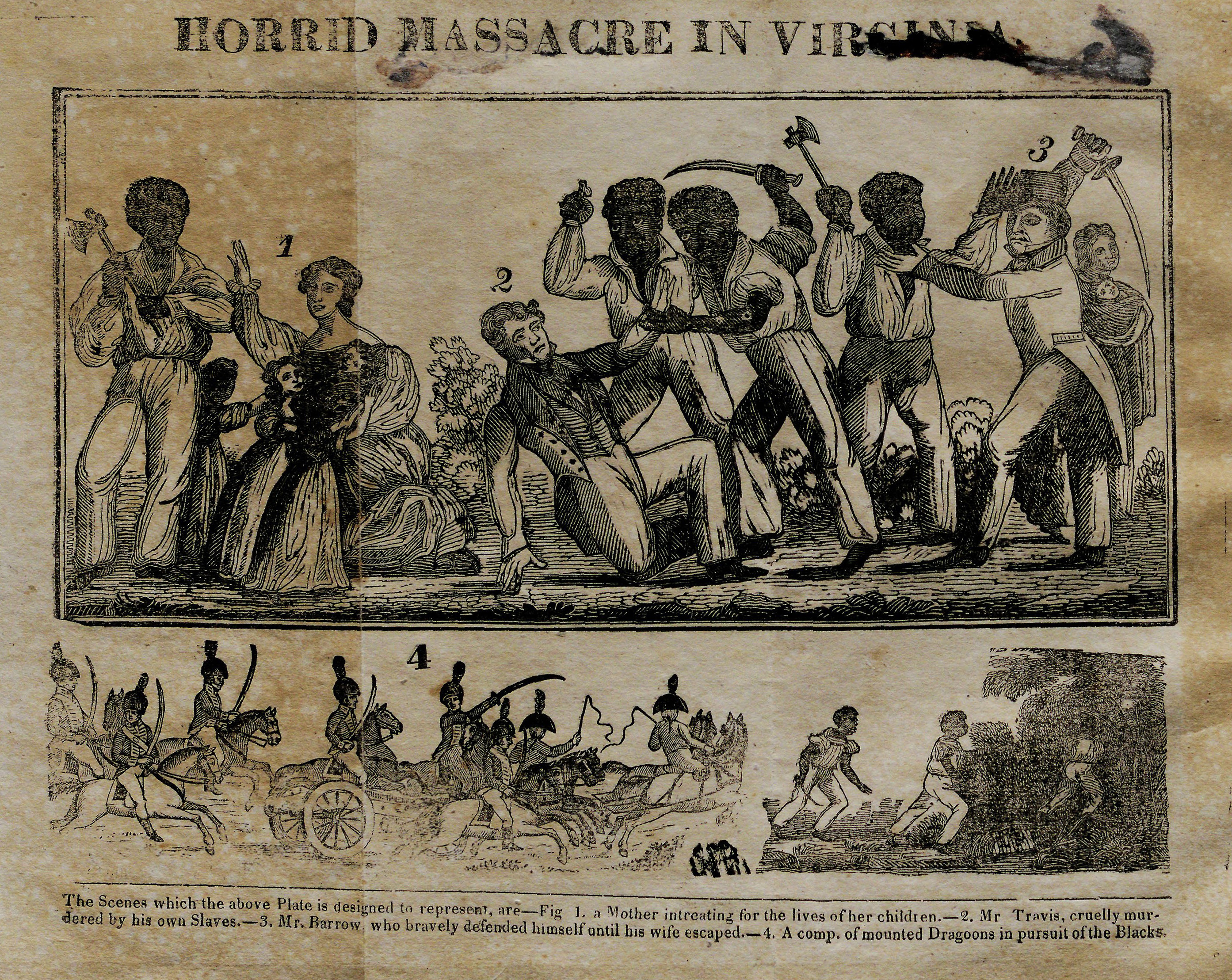
slave rebellions often led to harsh consequences for the black community.
Lines 8-9 ("It resulted...he preached")
disagreement
opinions
persuasion
contrasting the effects of Nat Turner's slave revolt with the earlier one led by Denmark Vesey.
illustrating that many people viewed western expansion more negatively than positively.
showing that Southerners were more likely to dislike the Missouri Compromise than Northerners.
demonstrating how the Missouri Compromise affected attitudes towards slavery and rebellion.