Log in
Sign up for FREE
arrow_back
Library

Abridged Chapter 13: Andrew Jackson and the Rise of Mass Democracy (1824-1840)

star
star
star
star
star
Last updated over 1 year ago
18 questions
Note from the author:
1
RPU.01
1
IIWD.01
Directions: Please read the following excerpts from your textbook and Steve Inskeep's articles, "Donald Trump and the Legacy of Andrew Jackson" in The Atlantic.
There’s no shortage of parallels between the two populists—but there’s at least one crucial difference.

By Steve Inskeep from The Atlantic

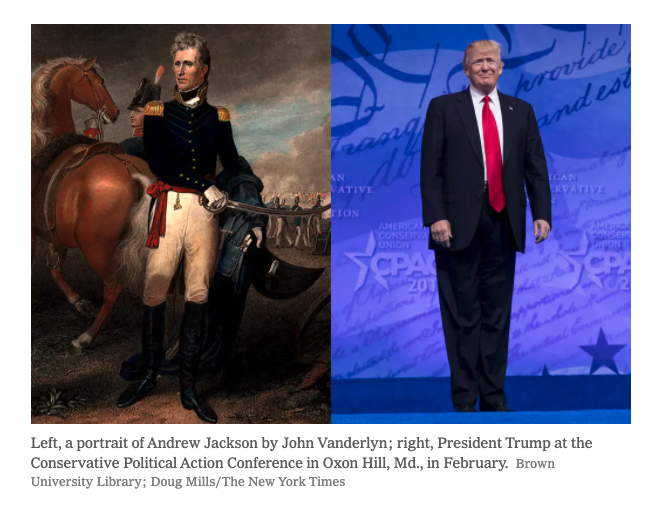
Some images pulled from the New York Times' article, "Jackson and Trump: How Two Populist Presidents Compare" (Baker, 2017).
A portrait of Andrew Jackson in the Oval Office.

Credit: Al Drago/The New York Times
Question 1
1.

The main purpose of the passage is to
While President Jackson has a lengthy military background, President Trmp never served in the armed forces, receiving five deferments from the draft during the Vietnam War, four for education and one for bone spurs in his heels.
Question 2
2.

As used in line 2 of the second paragraph, "rigged" most nearly means
Required
1
Question 3
3.

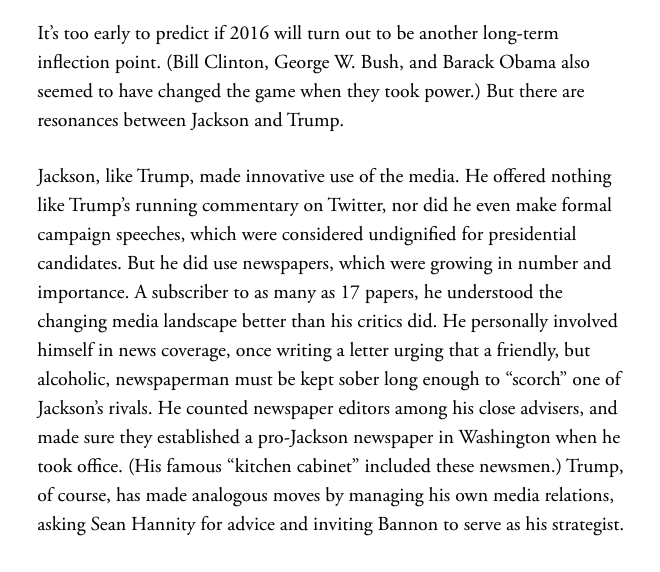
How did the U.S. political system expand in the period after 1800?
IIRC.01
1
Question 4
4.

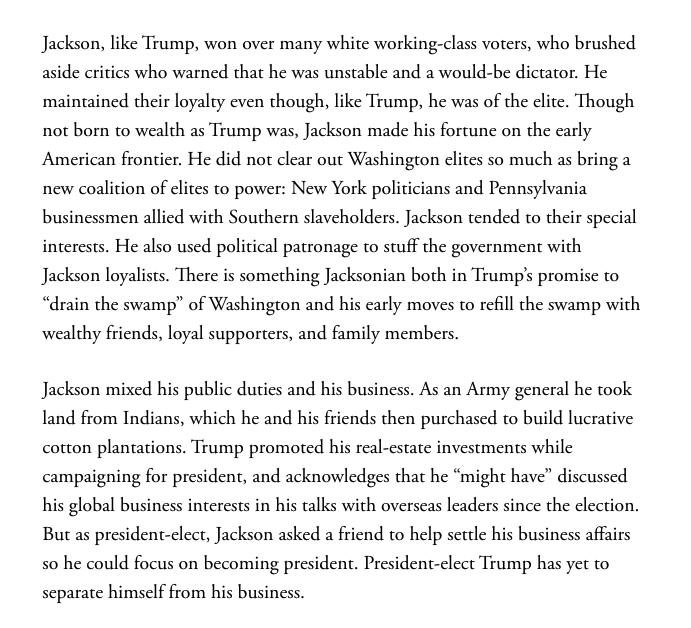
According to the second paragraph in this section, what do President Jackson and Trump have in common?
IIUR.01
Political Patronage is the appointment or hiring of a person to a government position based on their political party loyalties.
1
RWC.01
1
Question 6
6.

According to the author, the major difference between Jackson and Trump's victory is that

IIRC.01
This article was written in 2016, so the author does not have the benefit of hindsight like we have in 2021.
1
Question 7
7.

How does the Election of 2020 impact President Trump's legacy as a "Jacksonian man of the people"?

0
Question 8
8.

That's all due for Thursday, 11/14/2021. Any questions?

1
Question 9
9.

The passage indicates that the two issues in the 1820s and 1830s that greatly raised the political stakes were

1
Question 10
10.

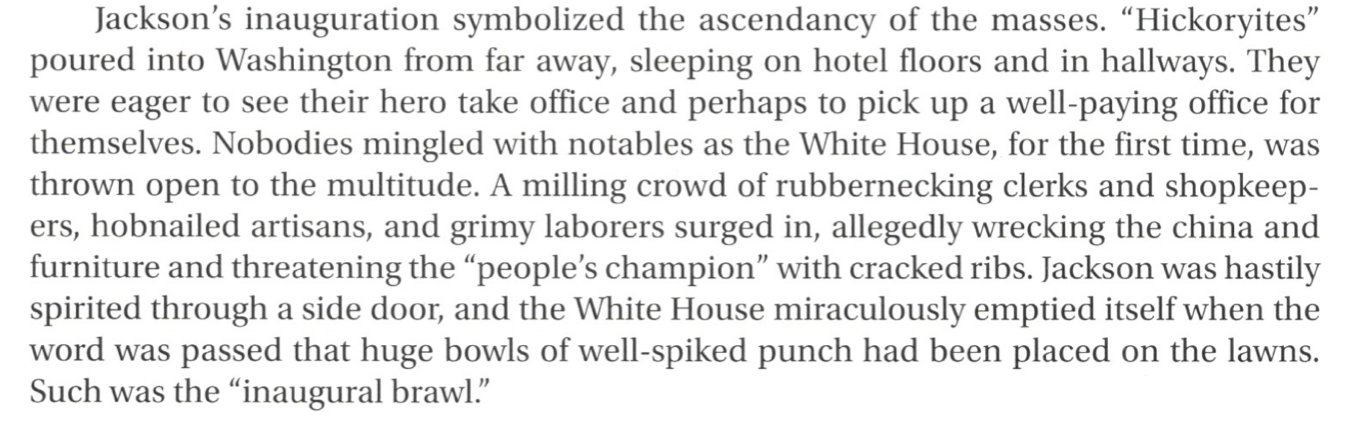
The passage suggests that Andrew Jackson's inauguration symbolized the

IIRC.02
1
Question 11
11.

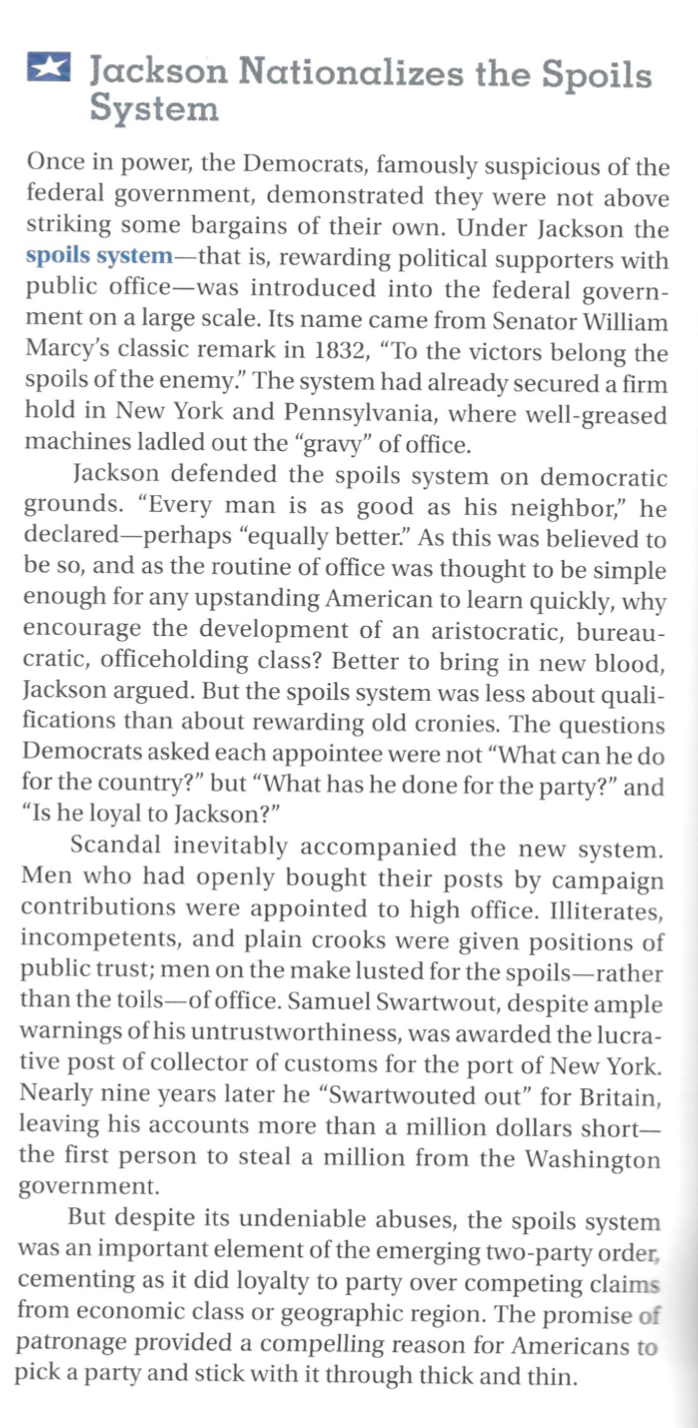
The purpose behind the spoils system was to

IIRC.01
1
Question 12
12.

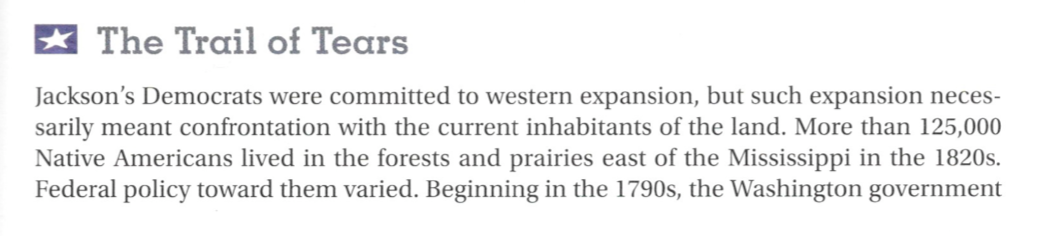
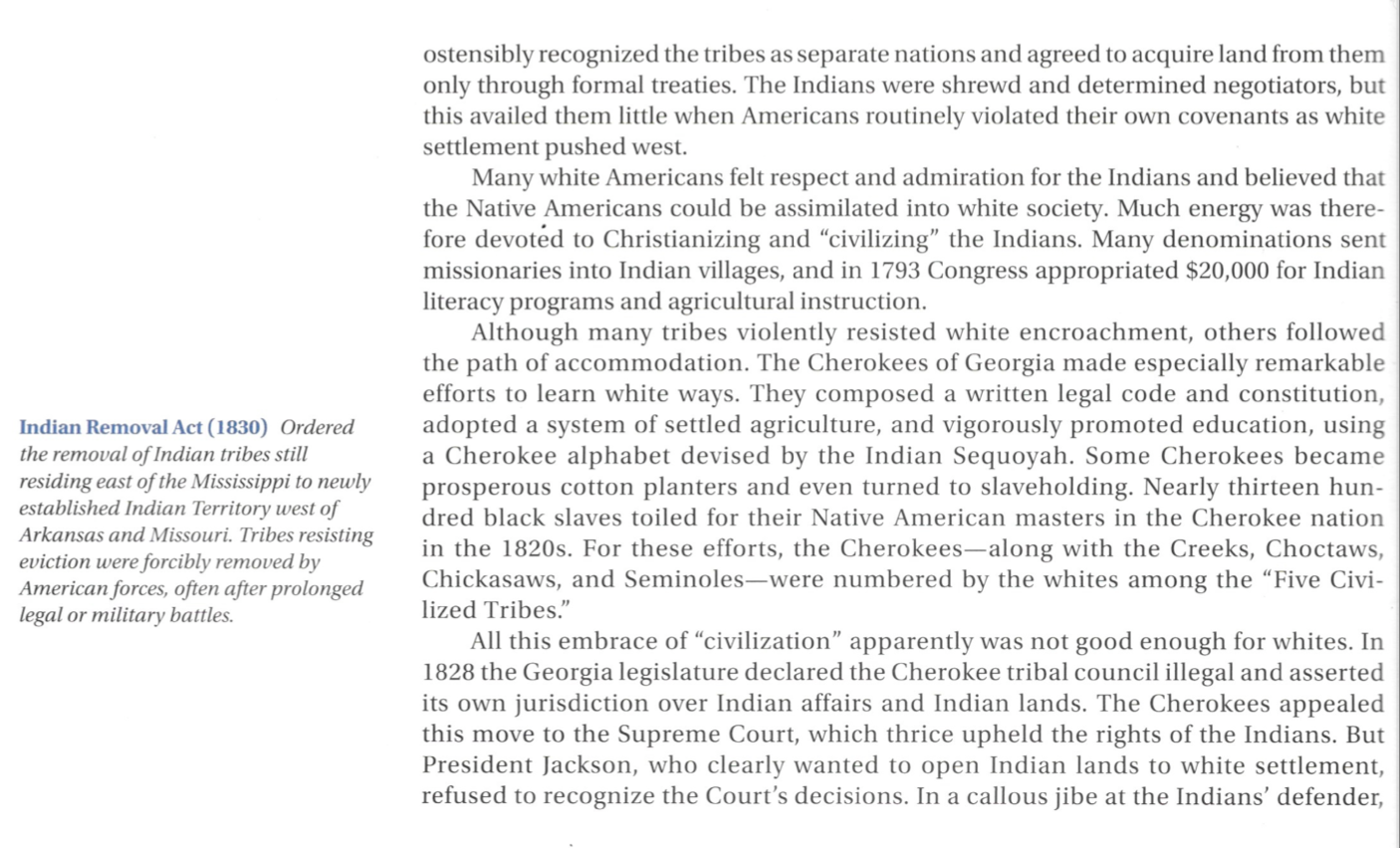
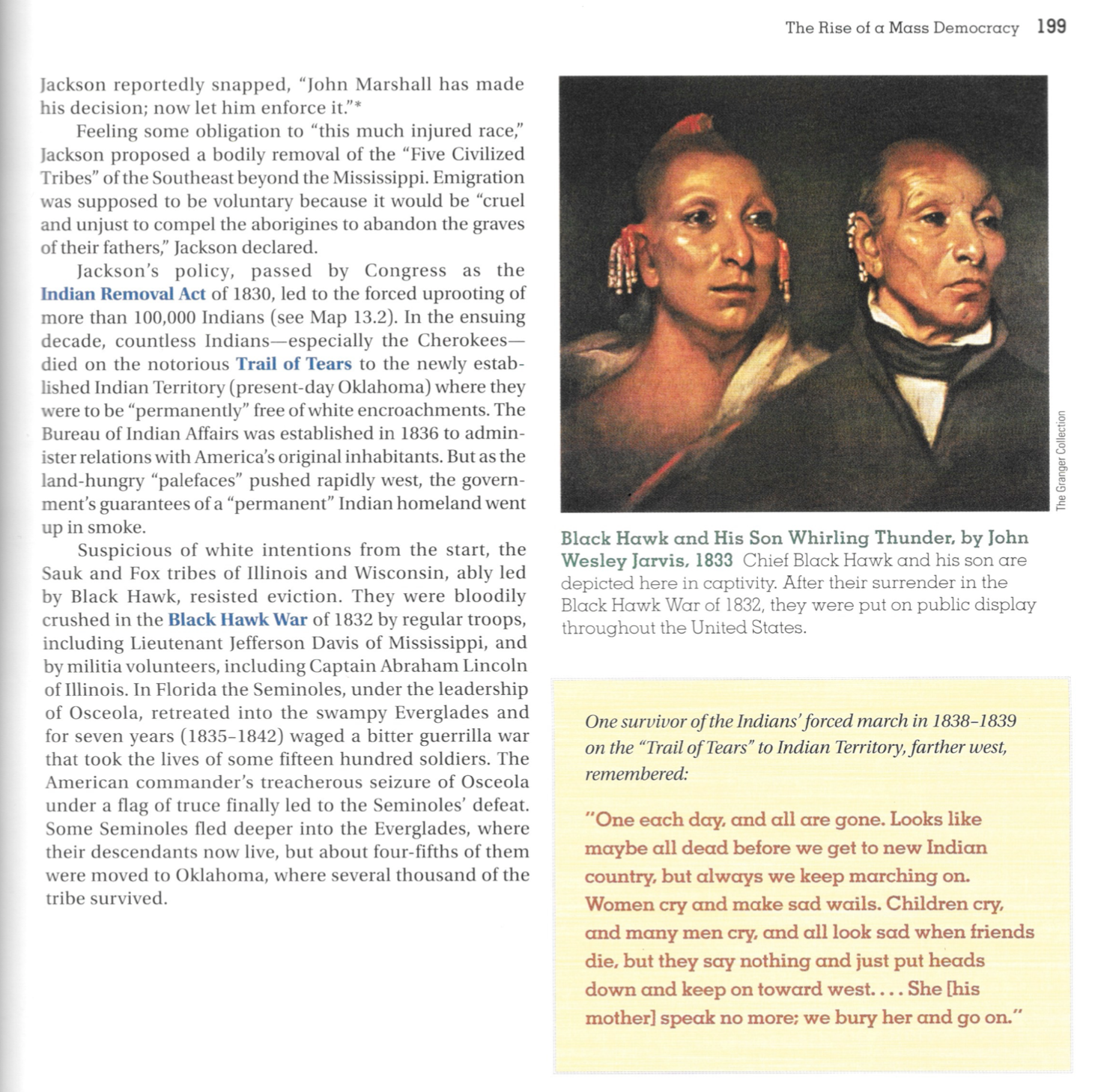
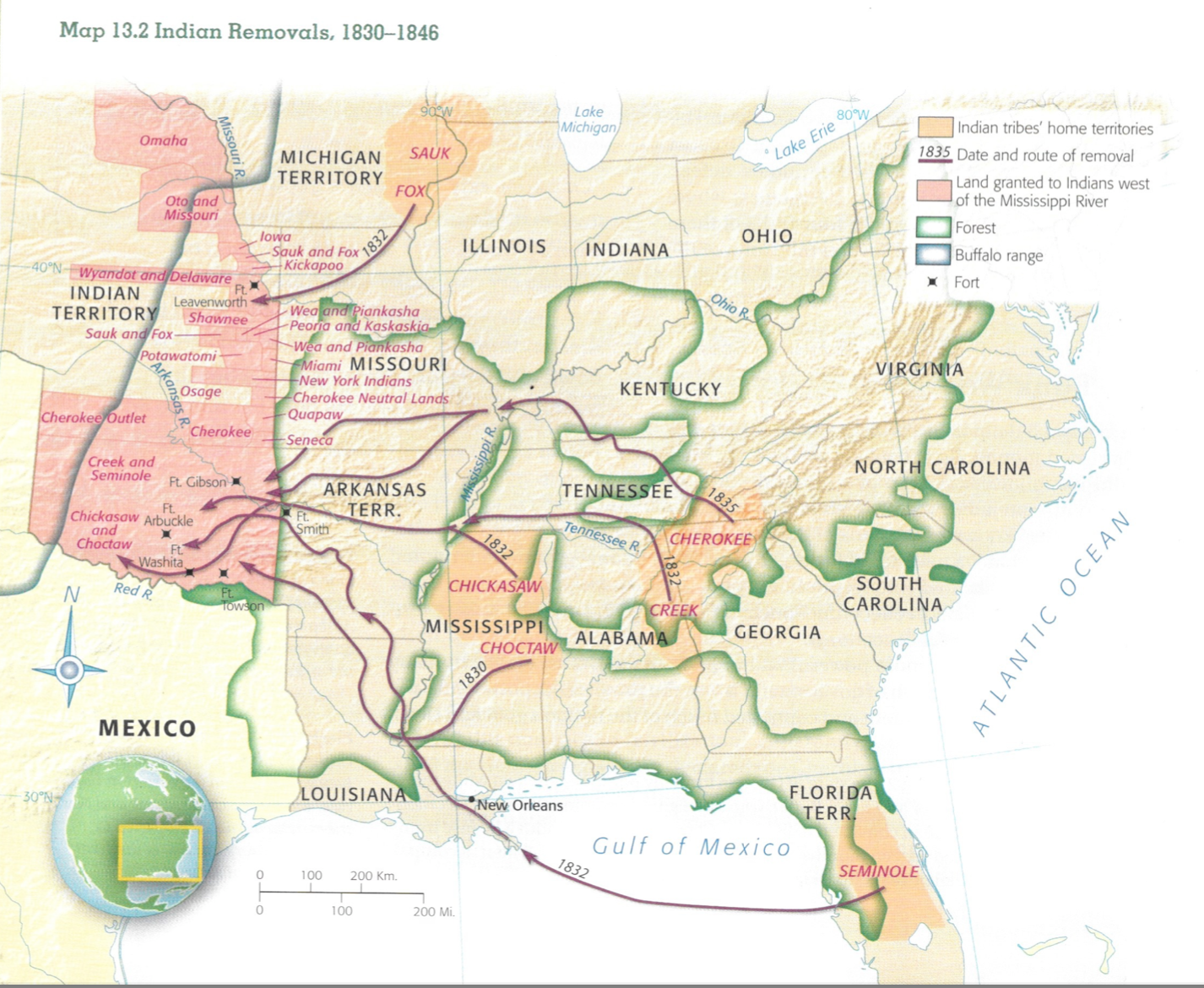
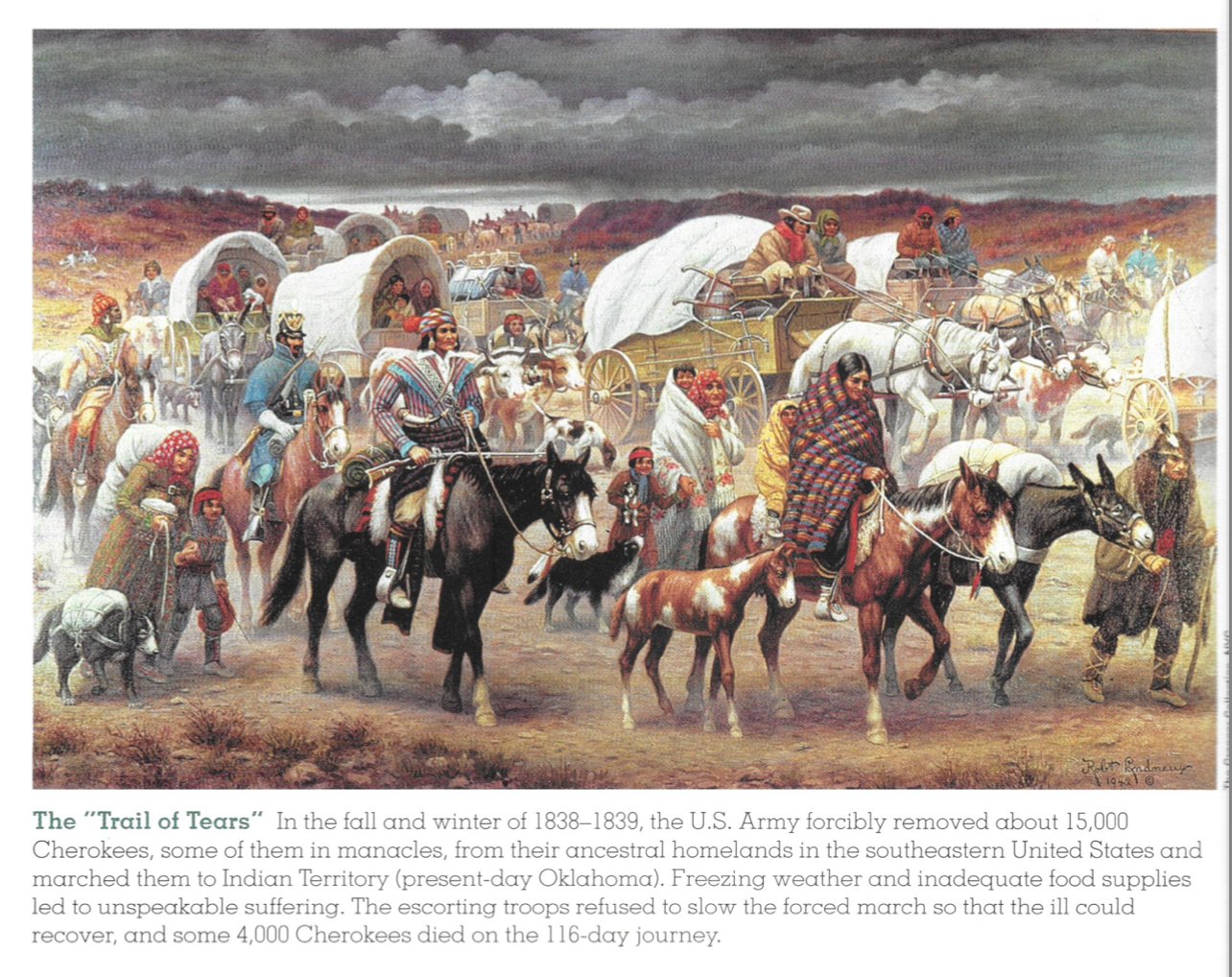
Andrew Jackson's administration supported the removal of Native Americans from the eastern
states because

IIRC.01
1
Question 13
13.

In an effort to accommodate their culture to white American society, the Cherokees took all of
these steps EXCEPT

IIRC.01
1
Question 14
14.

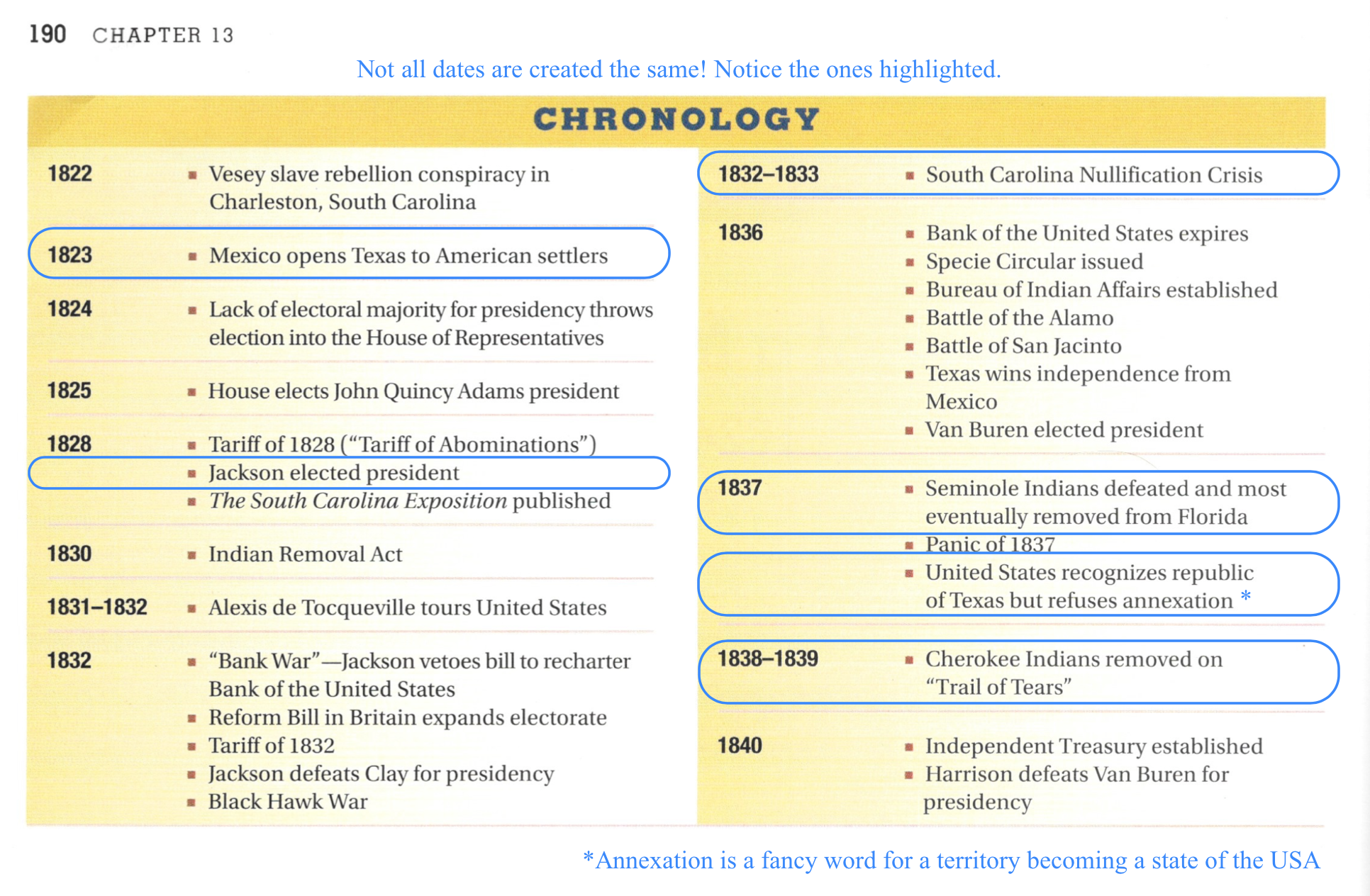
According to the table, the essential policy of the Jackson administration towards Native Americans was

1
Question 15
15.

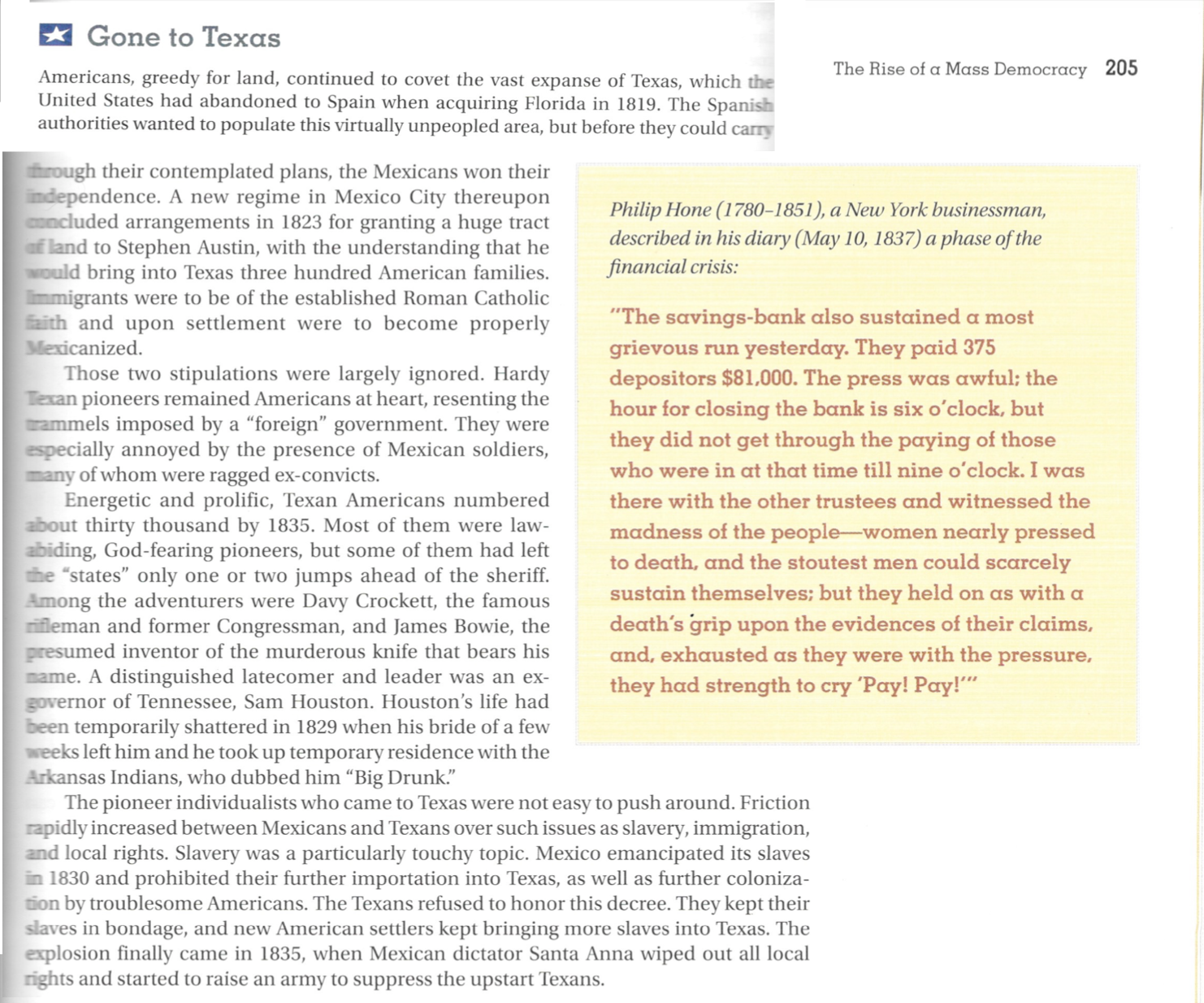
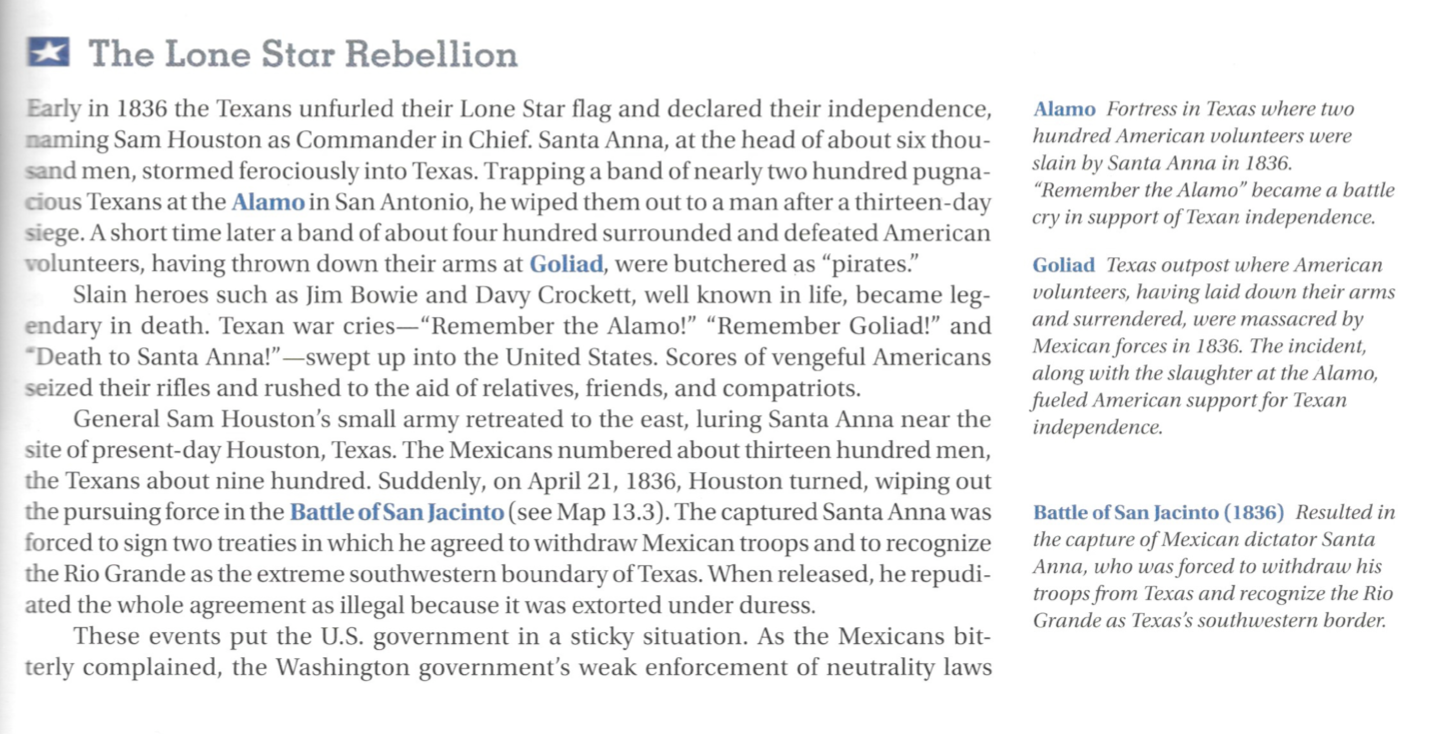
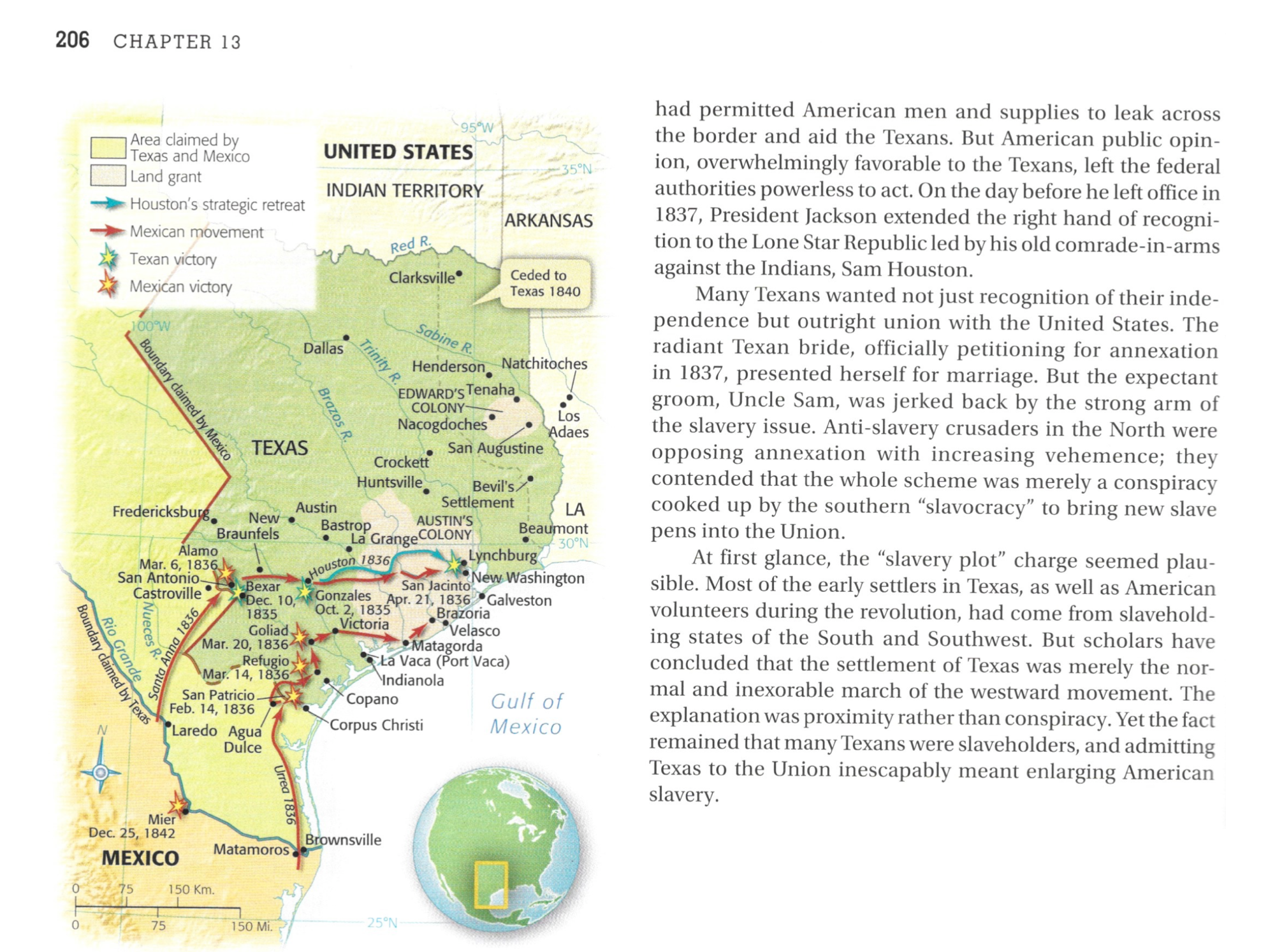
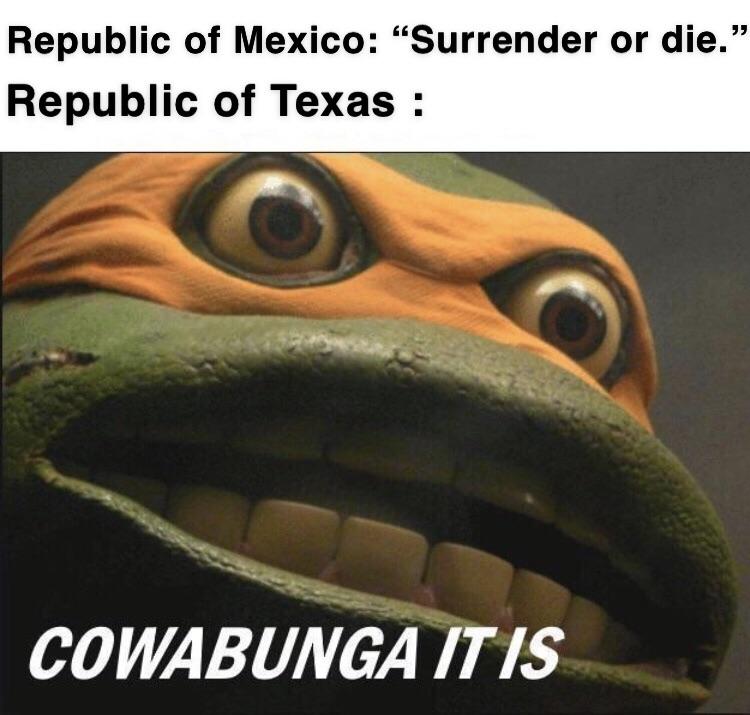
Americans who moved to Texas defied which aspect of their agreement with Mexico?

IIRC.01
1
Question 16
16.

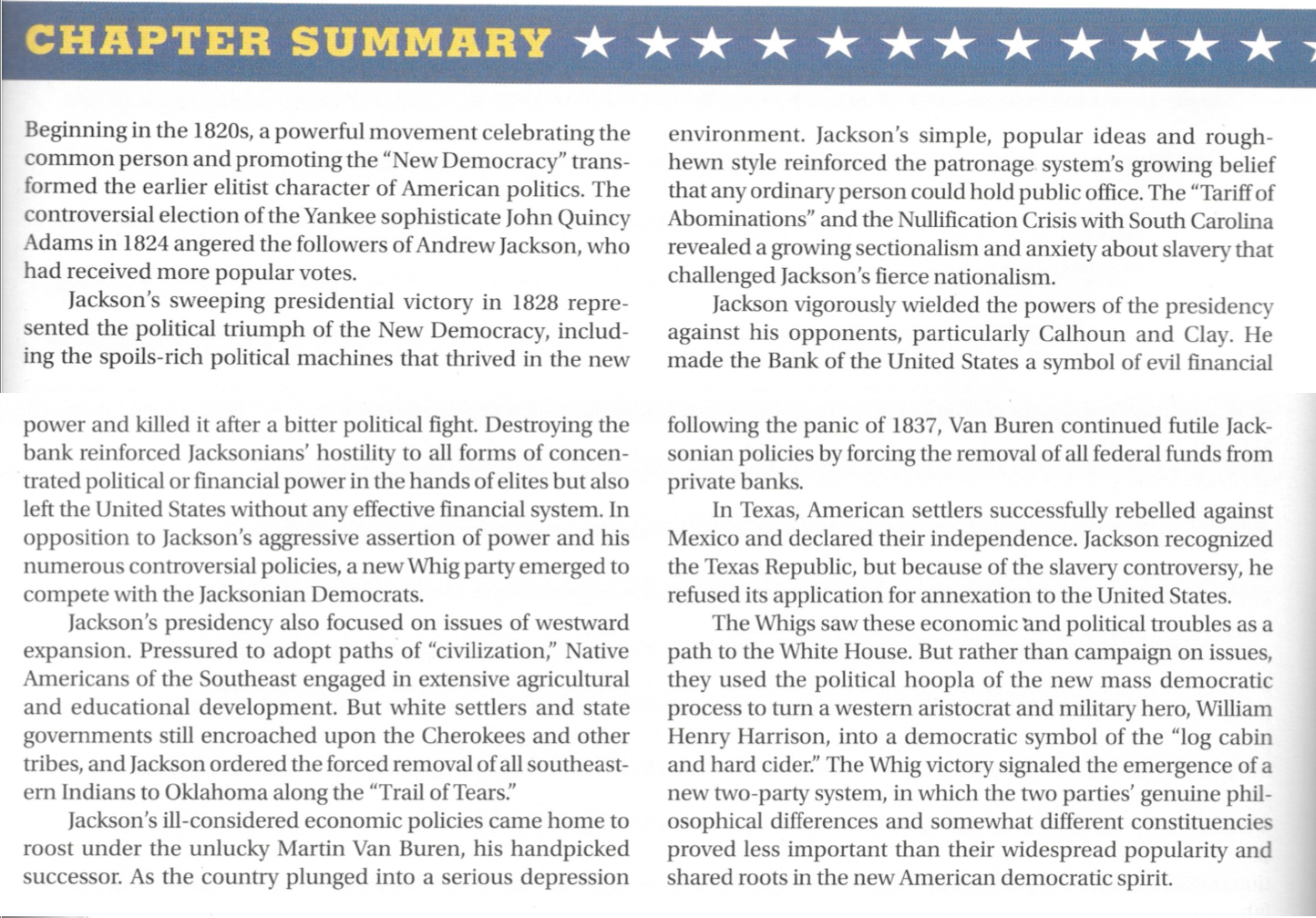
The initial attempt to bring Texas into the Union was thwarted by

IIRC.01
0
Question 17
17.

Another chapter in the books! What do you think are the five most important key terms to recall from this reading?

0
Question 18
18.

Finité. Any questions about the abridged Chapter 13?

manipulated.
All white men could vote -- not just property owners.
There were no changes to the U.S. political system after 1800.
All men could vote, regardless of race or color of skin.
All white people could vote, regardless of gender.
Both candidates made formal campaign speeches when running for the presidency.
Both candidates did as they pleased, ignoring the pleas of their close advisors.
Both presidents listened wisely to their critics to make informed decisions.
Question 5
5.

The author references the phrase "drain the swamp" to emphasize what he sees as
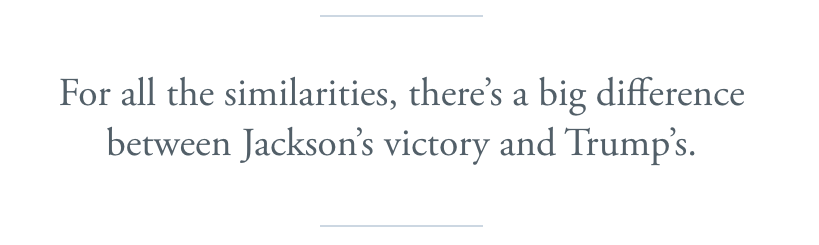
Trump actually won the popular vote, unlike Jackson or Clinton.
Trump received more votes than any Republican candidate in history, including Jackson and Bush.
Jackson actually brought new voters to politics whereas Trump actively tried to keep certain voters out of politics.
hard money and banking regulatuib,
the end of property qualifications for voting and political conventions.
the rise of the common people.
dignity and decorum with which he would run the White House.
return of Jeffersonian simplicity.
press those with experience into governmental service.
reward political supporters with public office.
prevent corruption from spoiling democratic systems.
the Supreme Court ruled that Native Americans could not be American citizens.
he wanted to open Indian lands to white settlement.
Native Americans were waging warfare on white settlements.
promote education and schools.
develop a Cherokee writing system.
support antislavery reform.
develop a written legal code and constitution.
delegating mangement to the churches.
the establishment of a reservation system.
That they denounce Spain.
That they abstain from alcohol.
That they do not bring slaves into Mexico.
the "Texican" refusal to accept Anglo-American culture and language.
northern antislavery forces.
many Texans' determination to maintain an independent republic.