Log in
Sign up for FREE
arrow_back
Library

APUSH Chapter 15 - The Ferment of Reform and Culture (1790-1860)

star
star
star
star
star
Last updated almost 2 years ago
23 questions
1
SMT.01
1
0
Welcome to your Chapter 15 reading!

As always, "Focus Questions" should guide your reading and notes, but you do not necessarily have to explicitly answer them.
1
IICI.01
1
Question 2
2.

Do you believe in a God or the Deist's belief that a Supreme Being created the universe?

Please explain as you are comfortable in complete sentences. Your responses will be kept confidential unless you indicate otherwise.

1
IIWD.01
1
IIRC.02
1
IITE.01
0
Question 6
6.

That's all that's due for Monday, 12/13/2021. Any questions?

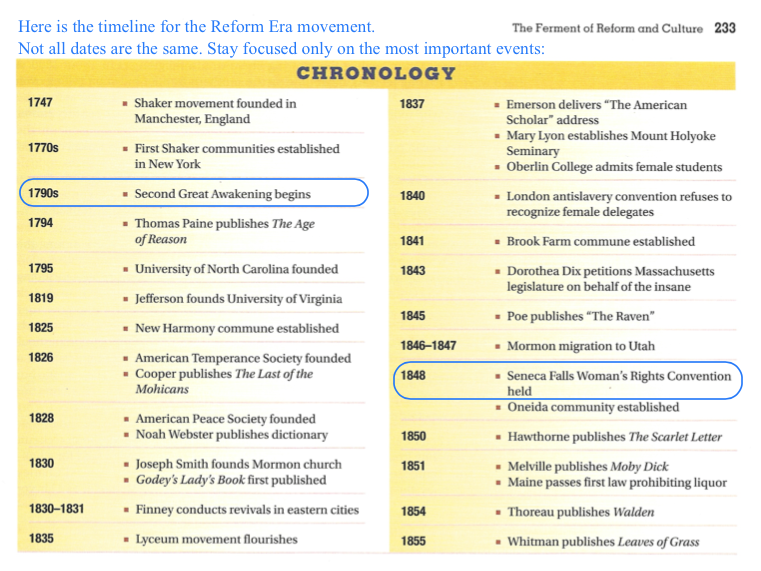
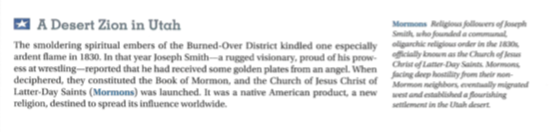
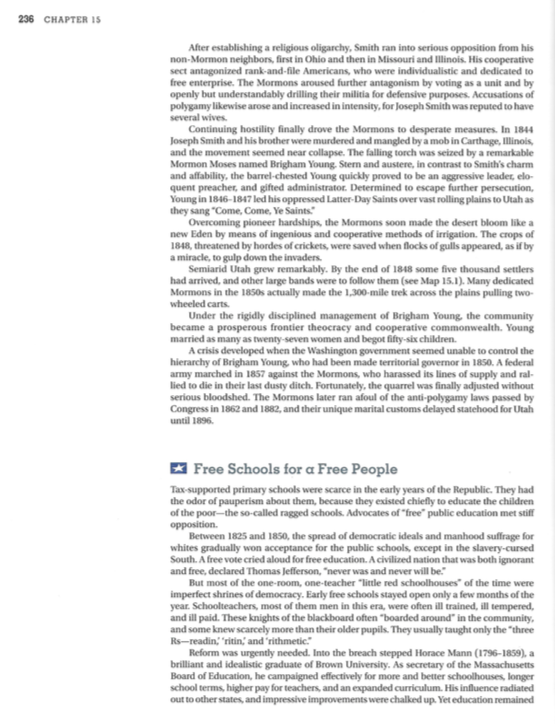
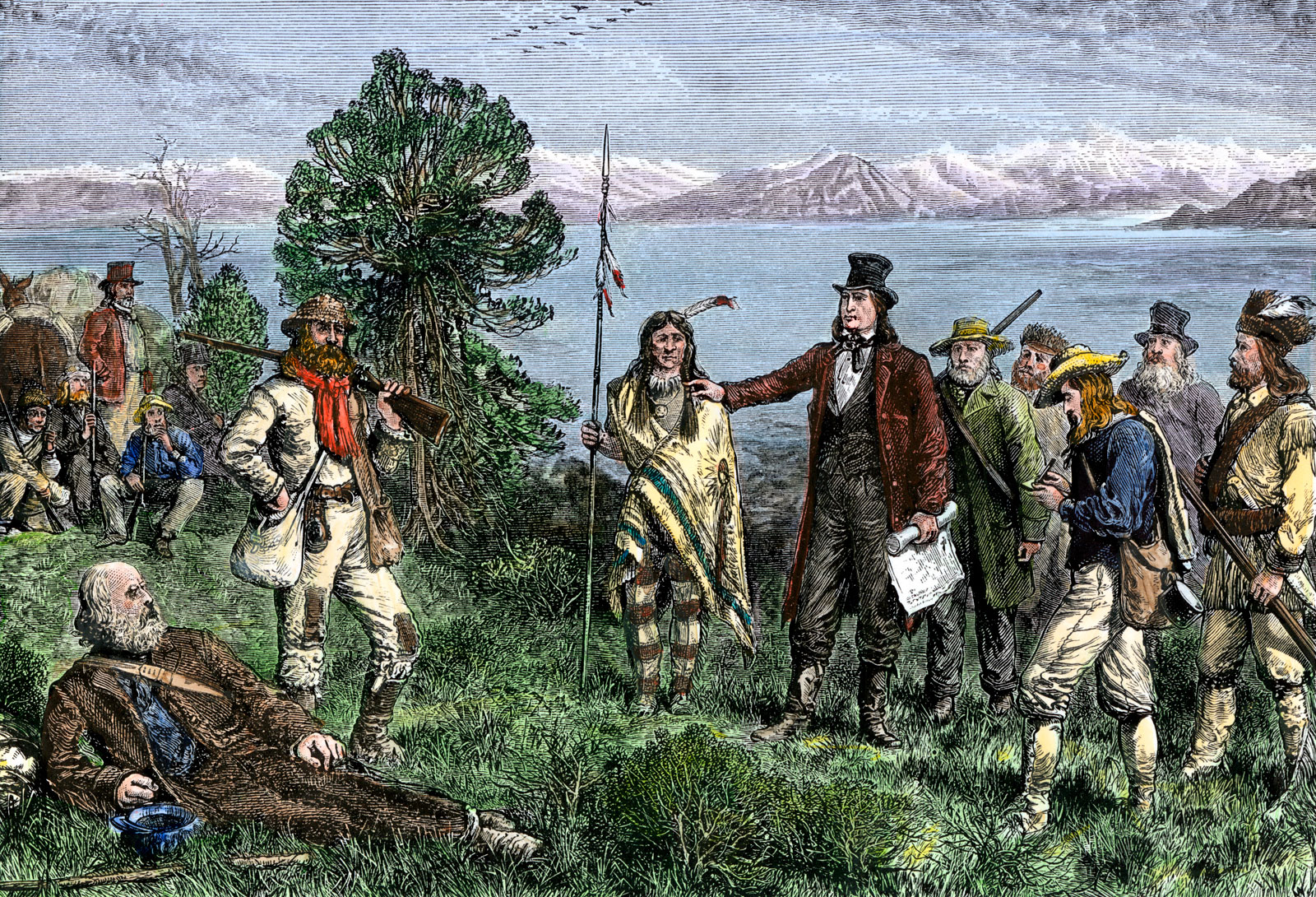
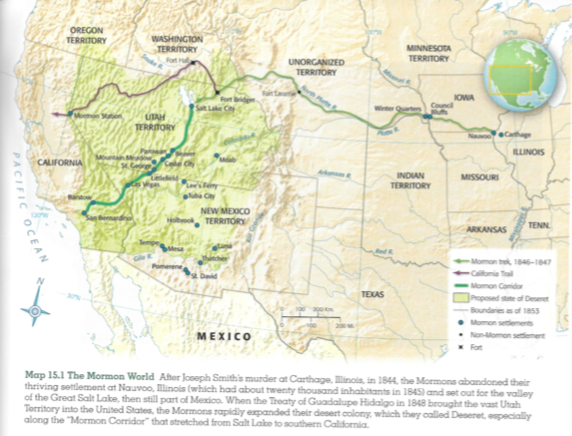
Brigham Young leading Mormons to Salt Lake City, Utah
1
IIRC.02
1
IIUR.01
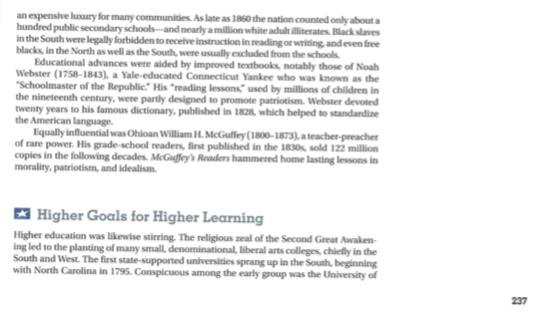
Yes! This is Noah Webster of Webster's Dictionary.

Do you remember the funky misspelling in John Winthrop's City Upon a Hill sermon? Standardization of the American language also created standards for spelling words.
1
IIRC.01
1
IIWD.01
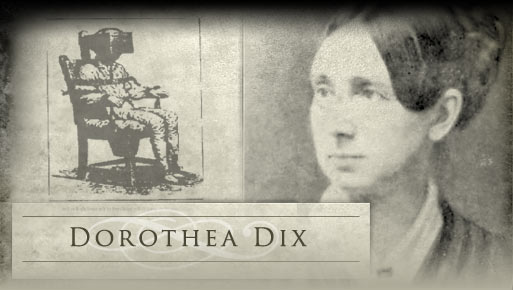
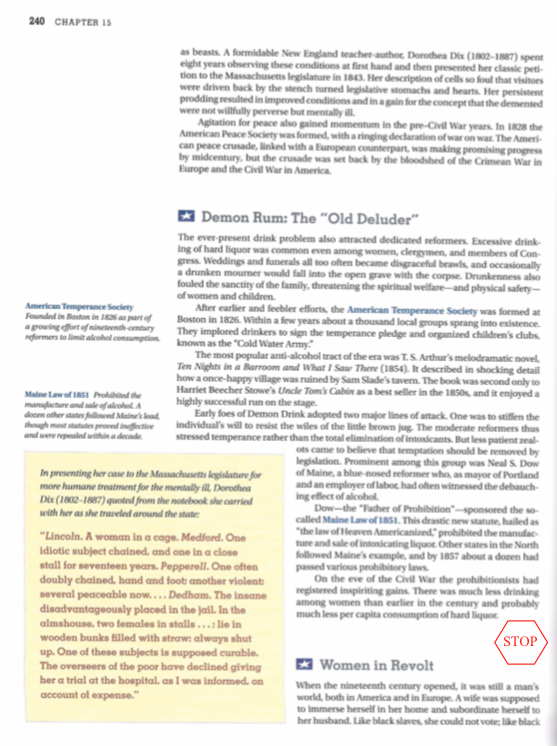
Dorothea Dix is known for her work in prison and asylum reform. If you're interersted in the history of mental health and its treatment, check out this interactive timeline!
1
IIRC.02
0
Question 12
12.

That's all that's due for Tuesday, 12/14/2021. Any questions?

1
IIRC.01
Question 14
14.

1
Question 15
15.

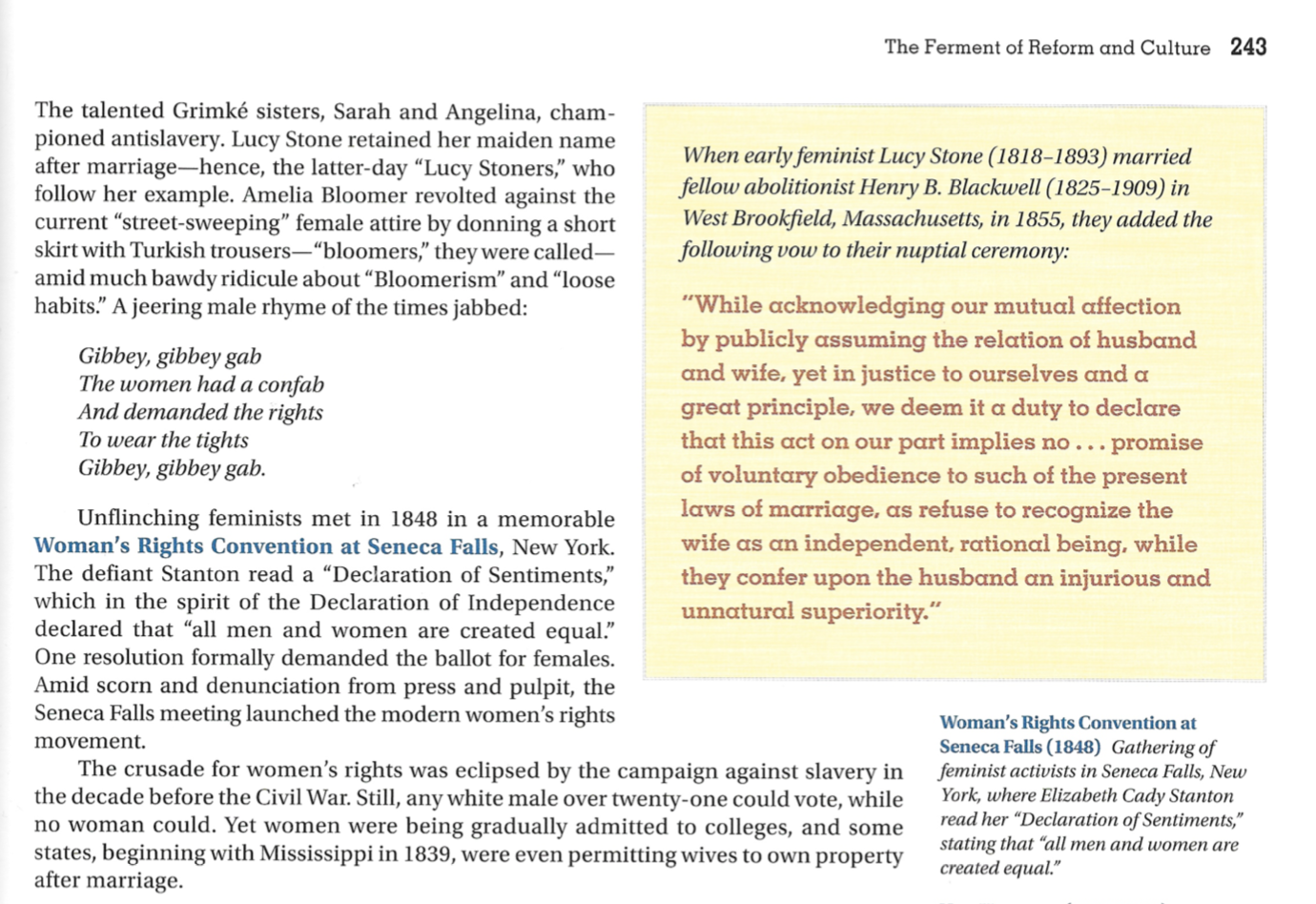
What was the intended purpose of the phrase "all men and women are created equal" in the Declaration of Sentiments?

Your response needs to reference should Answer the Prompt in at least 2 complete sentences.

0
Question 16
16.

That's all that's due for Wednesday, 12/15/2021. Any questions?

1
IIRC.02
Question 18
18.

1
RAG.01
1
IIRC.01
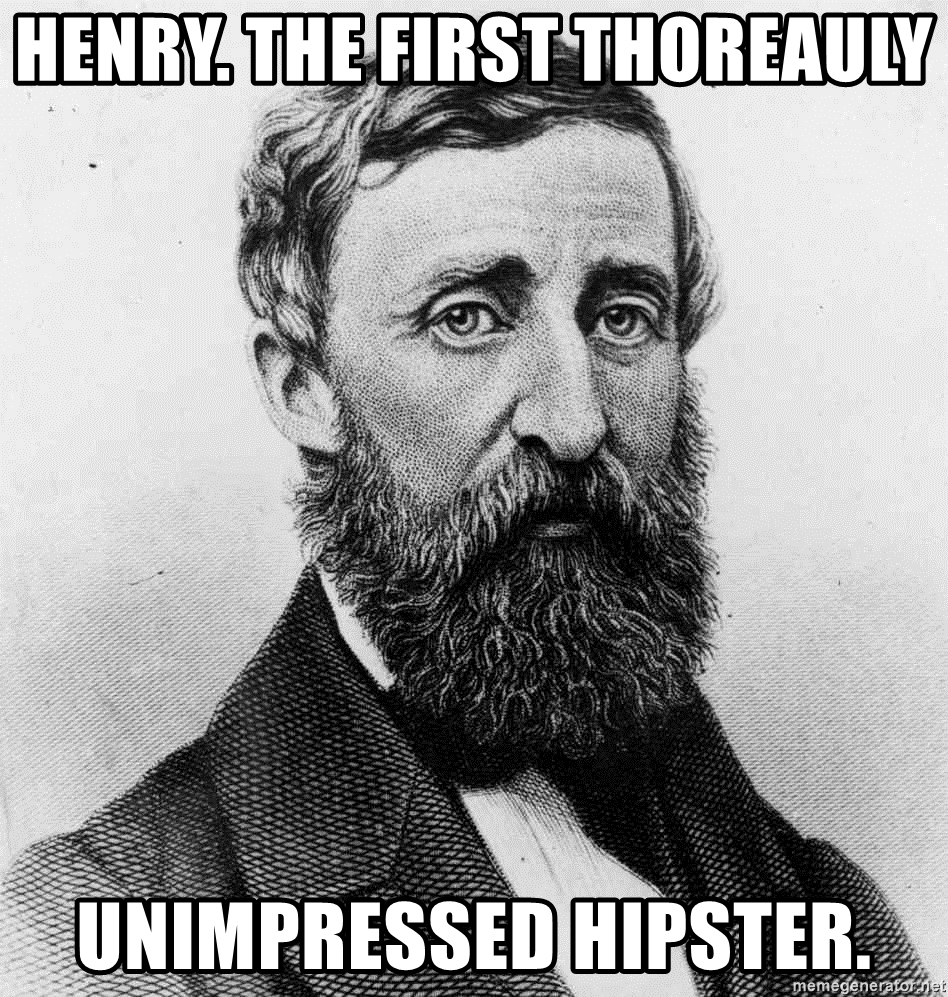
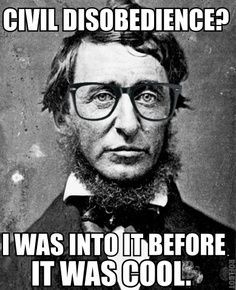
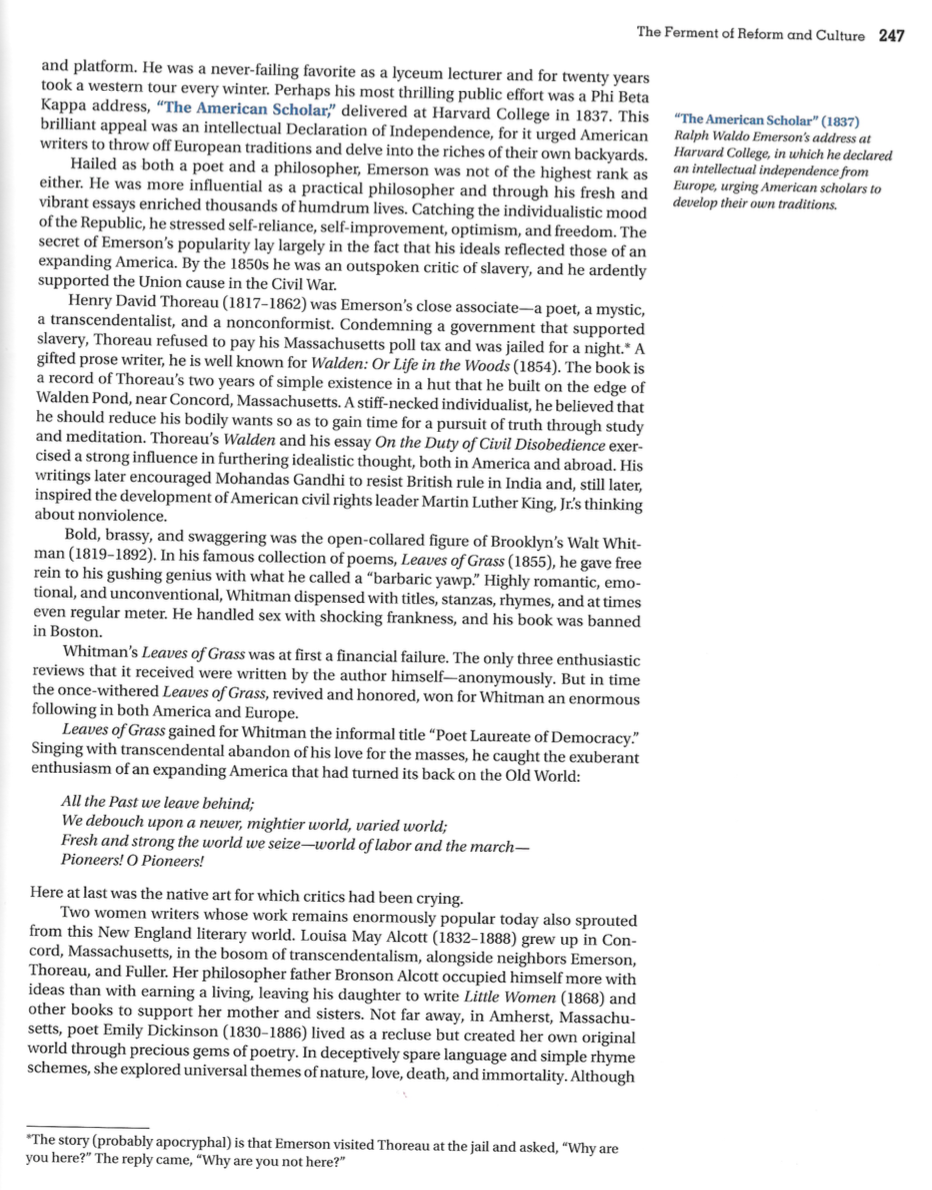
Pay attention to Henry David Thoreau! Yes, he is very meme-able, but also Thoreau shows up a lot on the AP and SAT exam.
WHY? Look at all the historical figures his work will inspire!
1
IICI.01
0
Question 22
22.

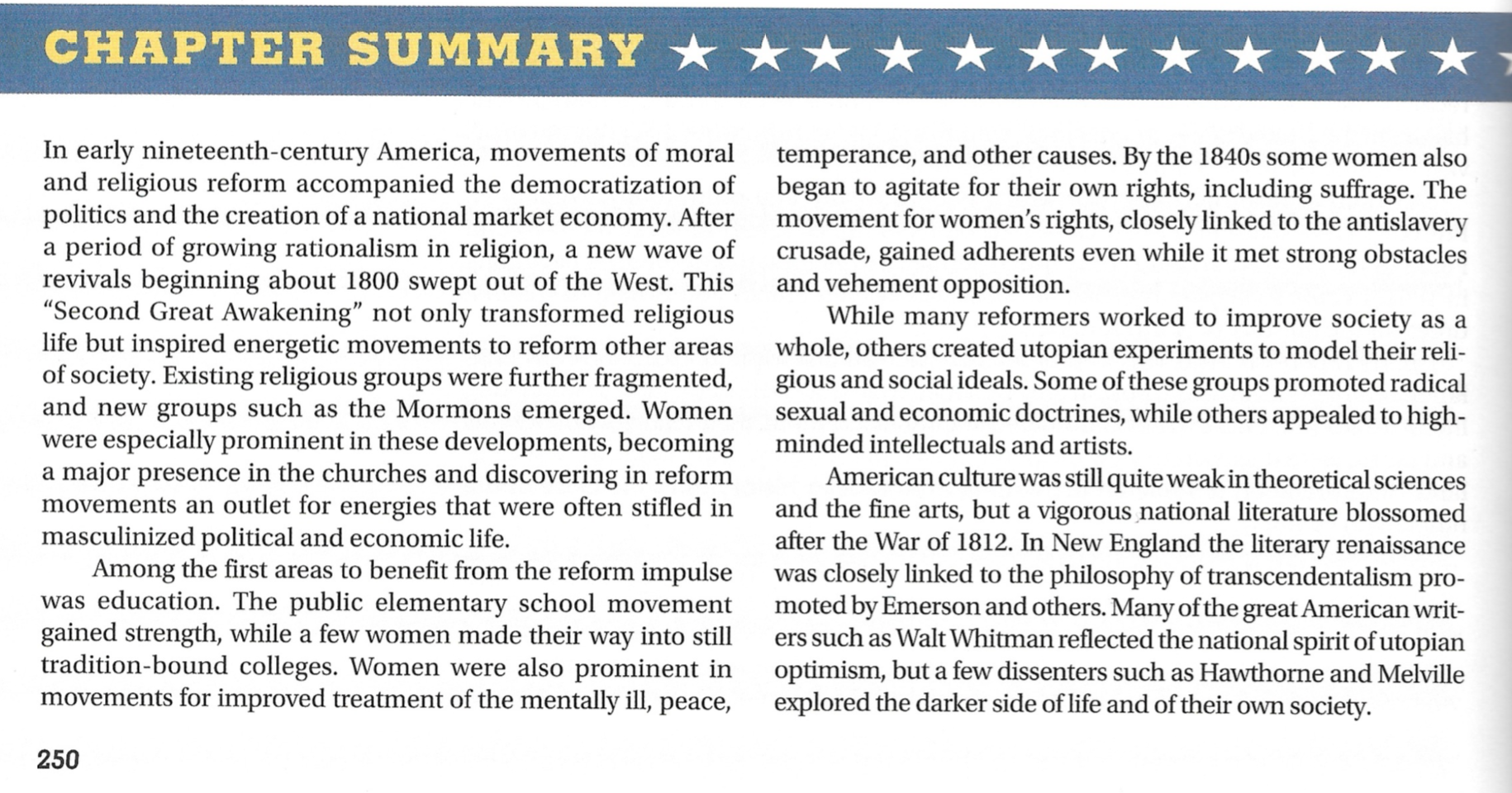
Excellent reading! Close out this Chapter by reviewing the "Chapter Summary" and boxing the 5 most important key terms in the space provided.

Question 23
23.

Do you have any feedback or questions about the Formative reading or comprehension questions that you want to go over in class?

Congrats! You finished the final reading before Winter Break!

Be sure to click "Submit" in Formative and "Mark as Done!" in Google Classroom.
Question 1
1.

Question 3
3.

Question 4
4.

Question 5
5.

Question 7
7.

Question 8
8.

Question 9
9.

Question 10
10.

Question 11
11.

Question 13
13.

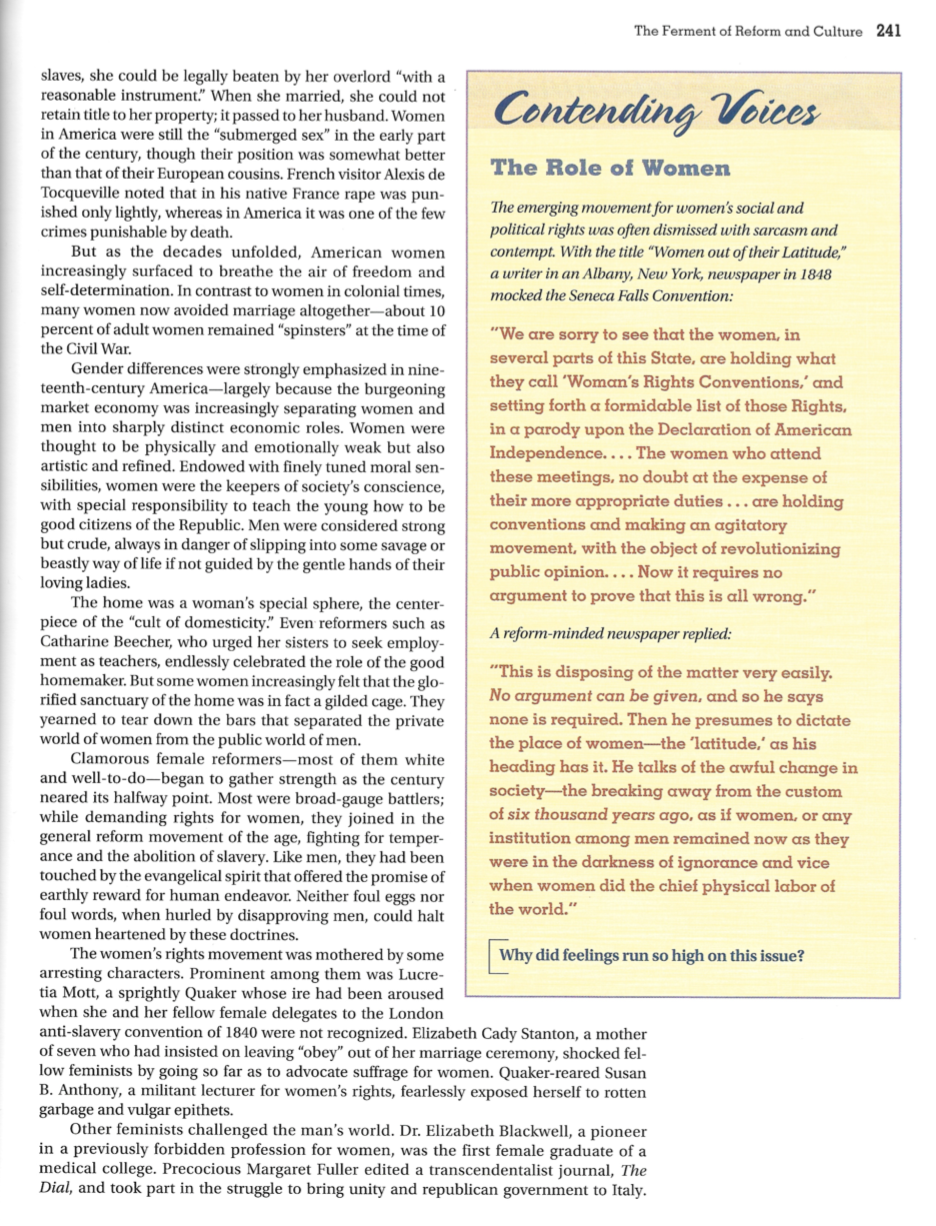
Which choice best describes the relationship between the two primary source passages under "Contending Voices" (see above)?
Passage 2 draws alternative conclusions from the evidence presented in Passage 1.
Passage 2 elaborates on the proposal presented in Passage 1.
Passage 2 restates in different terms the argument presented in Passag 1.
Passage 2 strongly challenges the point of view in Passage 1.
Question 17
17.

Which choice provides the best evidence for the answer to the previous question?
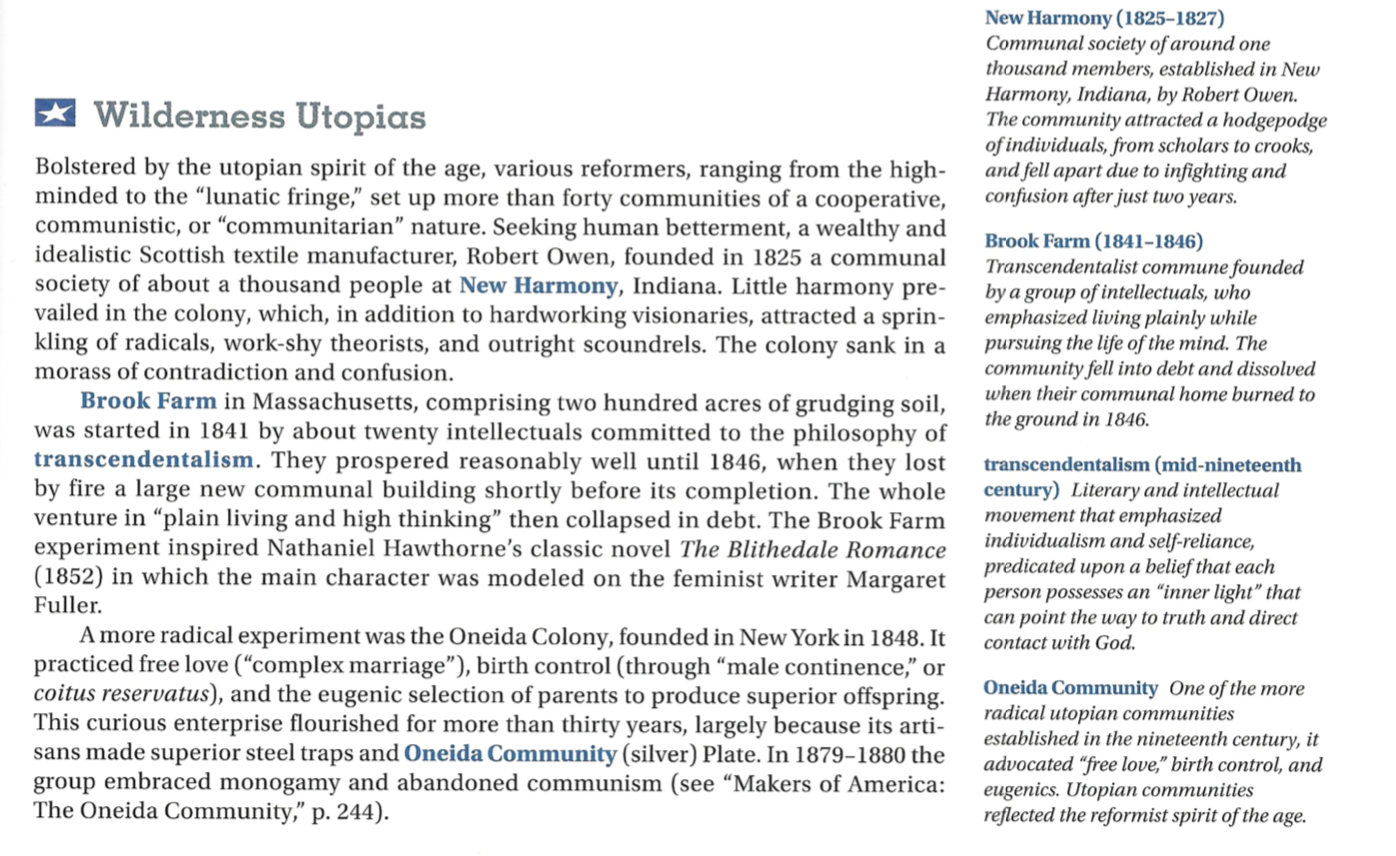
Lines 1-3 ("Bolstered by...'communitarian' nature")
Lines 5-7 ("Little harmony...outright scoundrels")
Lines 9-11 ("Brook Farm...of transcendentalism")
Lines 17-19 ("A more...superior offspring")
Question 19
19.

Question 20
20.

Question 21
21.

The main idea of the final paragraph is that
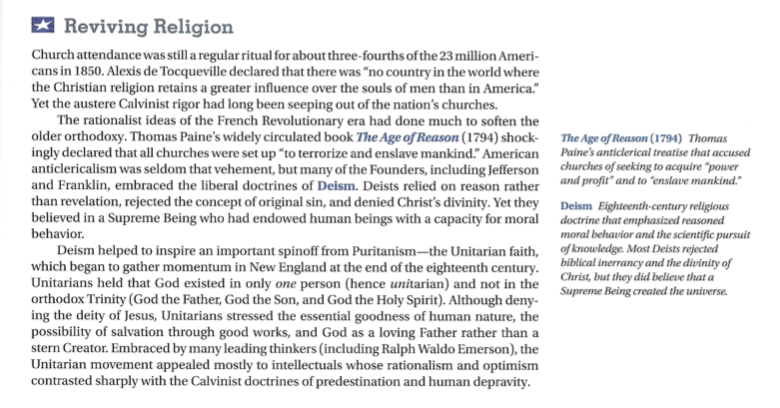
Reformers poured their energies into treligious revivals and reform movement in an effort to improve American society.
American women became increasingly aware that they did not have a voice in their society due to a lack of suffrage.
American people in the mid-nineteenth century were hyper-focused on upholding and preserving the traditions of the founding fathers.
Protestant churches rallied to turn the United States into a more upstanding and god-fearing theocracy.
As used in line 5, "episodes" most nearly means
circumstances
installments
events
incidents
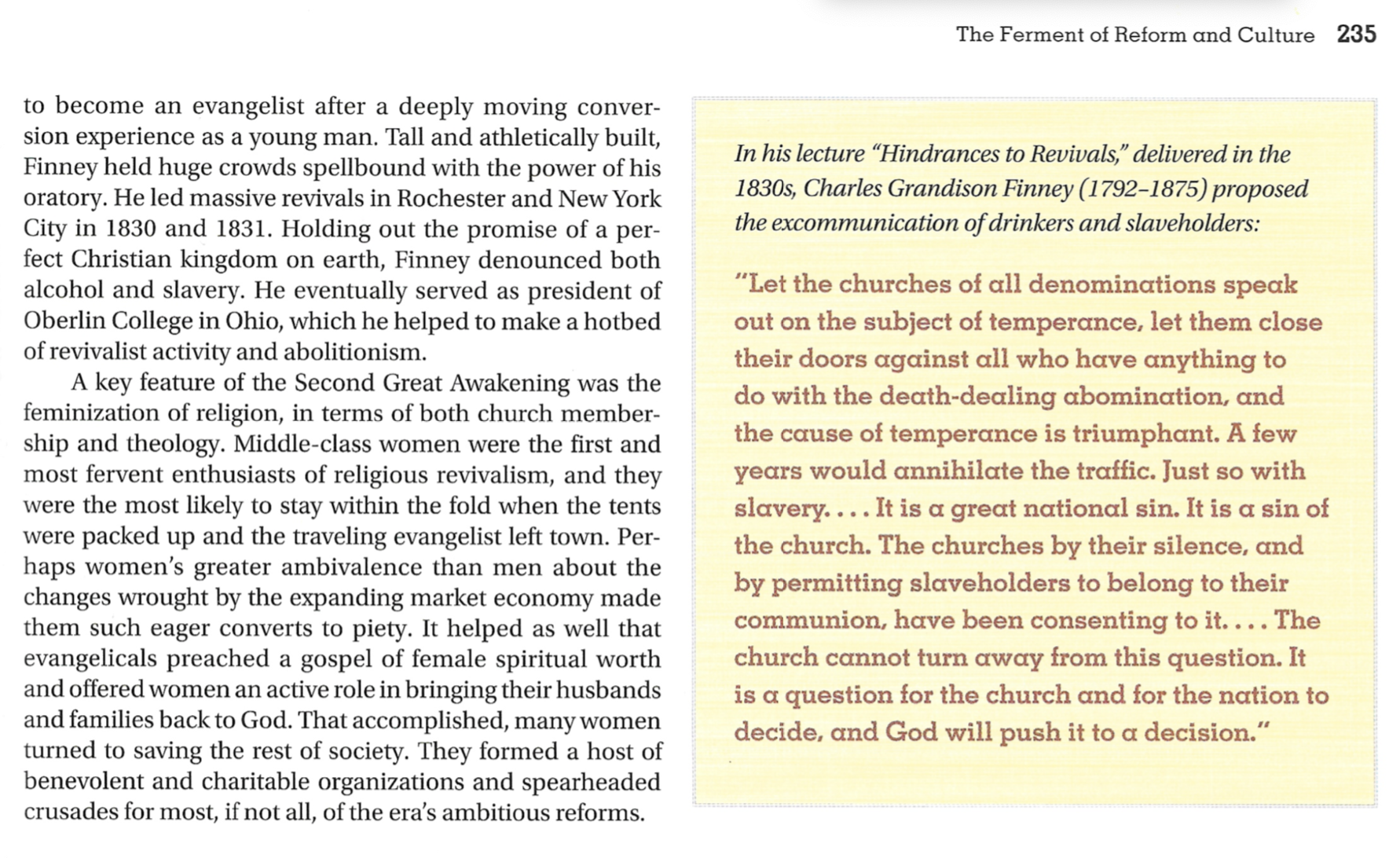
The passage indicates that the Second Great Awakening partly reshaped American religion by making it

more reliant on women as members and social reformers.
more sympathetic to hierarchical churches like Catholicism.
less socially and theologically diverse.
more dependent on a college-educated clergy.
Which choice provides the best evidence for the answer to the previous question?
Lines 7-9 ("He eventually...and abolitionism")
Lines 10-12 ("A key...and theology"
Lines 12-15 ("Middle-class women...left town")
Finney, 1830s ("Let the...is triumphant")
It can be reasonably inferred that polygamy is the practice of
having more than one spouse.
moving to multiple parts of the country.
voting for more than one political party.
hierarchical structures within a church.
Which statement best describes the relationship between education and democracy in this section?
In order to have a truly free democracy, all citizens need access to a free public education.
Southern slave owners advocated for free public education for all children, regardless of servitude.
Wealthy Americans opposed the idea of free public education because their children did not need it.
Poor Americans threatened to launch a violent rebellion unless free education was made available.
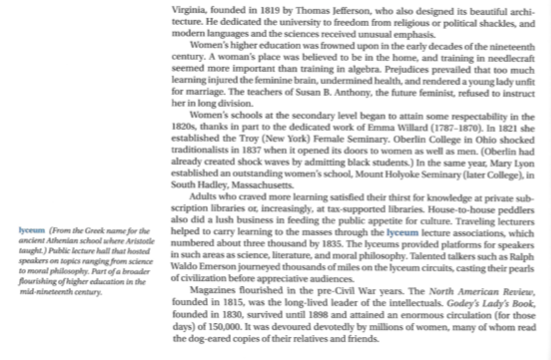
A strong prejudice inhibiting women from obtaining higher education in the early nineteenth century was the belief that
too much learning would injure women's brains and ruin their health.
the presence of women would distract men from learning.
no one would donate funds to support women in colleges.
women would be unable to participate in college athletics.
As used in line 2 of the first full paragraph, "place" most nearly means
position
location
residence
abode
It can be reasonably inferred that the exessive consumption of alcohol by Americans in the 1800s
had little impact of the efficiency of the labor force and the productivity of the American economy.
held little threat for the family because drinking was so commonplace in American society.
stemmed from the hard, struggling, and monotonous life of many American men and women.
was addressed by the wide availability of government-sponsored programs for alcoholics.
The passage indicates that sexual differences were strongly emphasized in nineteenth century America because
frontier life necessitated these distinctions for economic prosperity.
the market economy increasingly separated men and women into distinct economic roles.
men were regarded as morally superior beings to women.
it was the duty of men to teach the young how to be good, productive citizens.
The passage indicates that early nineteenth century utopian communities were often founded on the ideal of
capitalism.
pacifism.
rugged individualism.
coooperative social and economic practices.
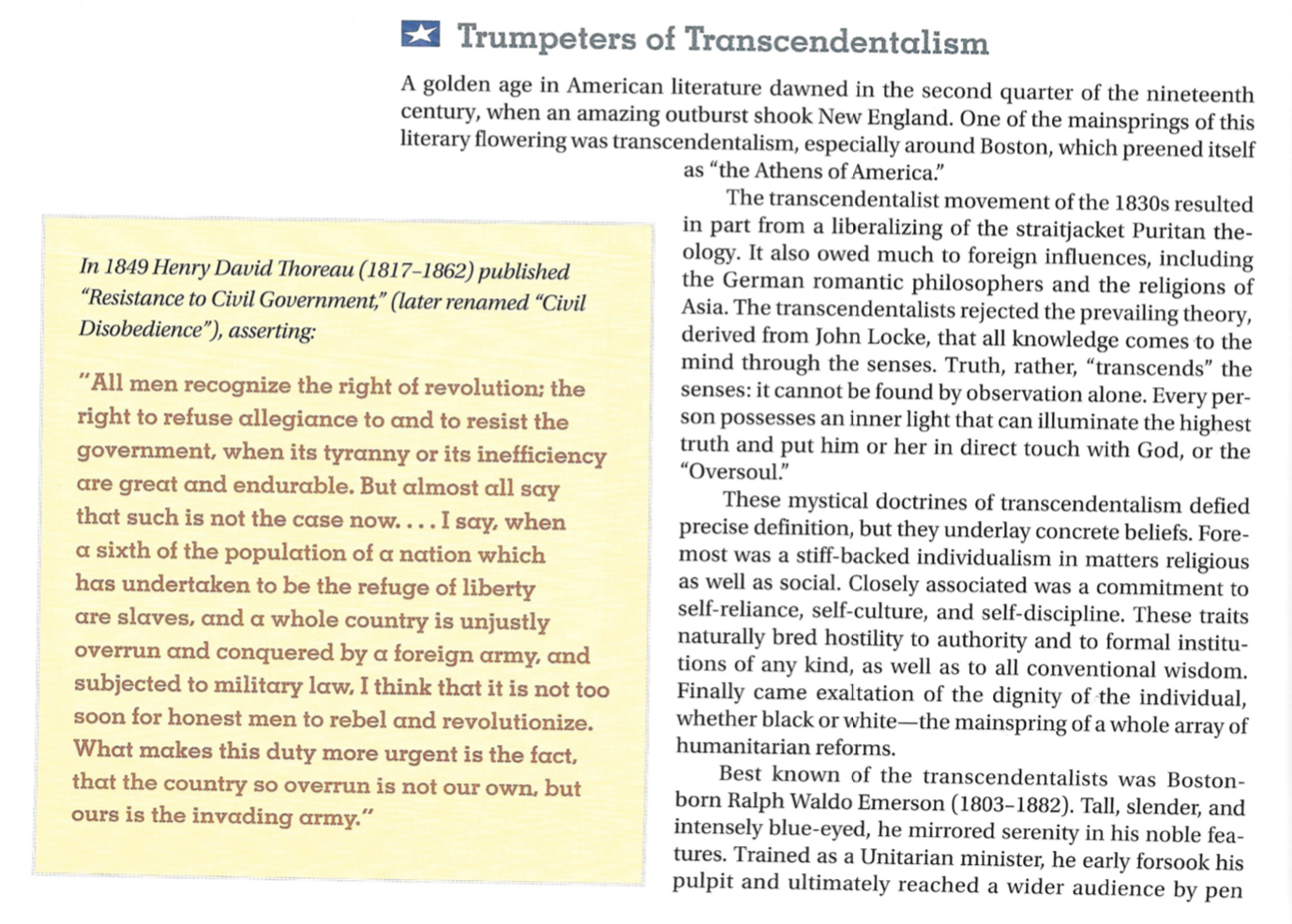
Leading Transcendentalist Henry David Thoreau's central claim in this paragraph is that
Slaves have a right to rebel against the entire United States.
Honest men have a duty to their country and should not revolutionize.
Tyranny is inefficient and will not endure in the long run.
All of the following influenced transcendentalist thought EXCEPT
Catholicism and the papacy.
individualism.
German philosophers.
love of nature.
Which statement best expresses a central idea in this chapter about the Second Great Awakening?
Nineteenth century reformers brought greater attention to church history and doctrine, but surprisingly few humanitarian efforts.
Reform era encouraged women to enter male-dominated professions in order to make them more moral.
Religious revivals turned the attention of American women from raising their families to reforming society.
Despite the best efforts of American women, the Second Great Awakening resulted in little increase with church membership.