LNM1 Ch 6 Exercises 1 & 3: sum & possum
star
star
star
star
star
Last updated almost 4 years ago
27 Nsɛmmisa

1
1
1
1
1
1
1
1
1
1
1
1
1
1
1
1
1
1
1
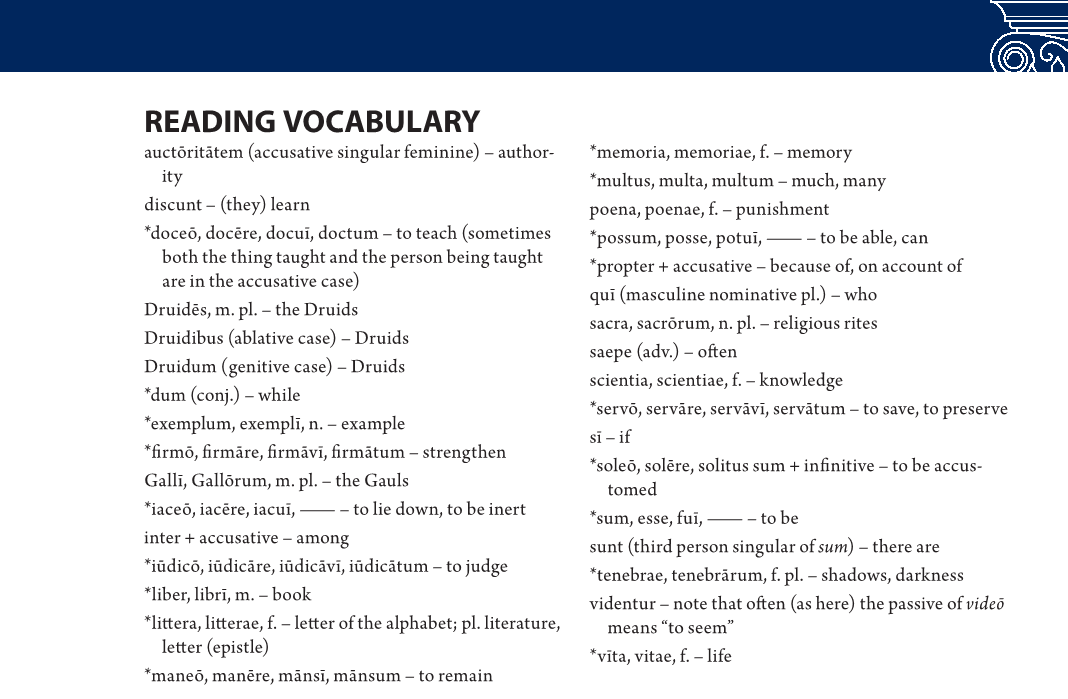
Druidēs sunt virī māgnī.
Estis Druidēs: exempla bona docētis et fābulās nārrātis.
Nōn sumus Druidēs.
Vir iūstus sum.
Ego autem sum māgnus āthlēta.
Tū nōn es āthlēta; tū es poēta.
Liber est bonus.
Fill in the blanks with the correct form of possum. The subjects are indicated in parentheses.
Translate the sentences. The Reading Vocabulary may be consulted.
Example: (Ego) iūdicāre nōn __________.
(Ego) iūdicāre nōn possum. I cannot judge.
(Nōs/we) Puerōs docēre
Translate: Puerōs docēre __________.
(Tū) Scientiam māgnam habēre
(Tū) Scientiam māgnam habēre __________.
(Ego) Memoriam firmāre
(Ego) Memoriam firmāre __________.
(Illī/they) Sacra Gallōrum cūrāre nōn
(Illī/they) Sacra Gallōrum cūrāre nōn __________.
(Ille/he) Druidēs (accusative) amāre nōn
(Ille/he) Druidēs (accusative) amāre nōn __________.
(Tū) Druidēs timēre
(Tū) Druidēs timēre __________.
Besides brute force memorization, what does the video say will make it easier to learn irregular verbs?
Put the following in order, from 1st person singular to 3rd person plural/:
sumus
est
es
sum
estis
sunt
If a Latin sentence begins with the verb est/sunt, how do you translate the beginning of the sentence?
What is the verb stem for the verb sum, esse?
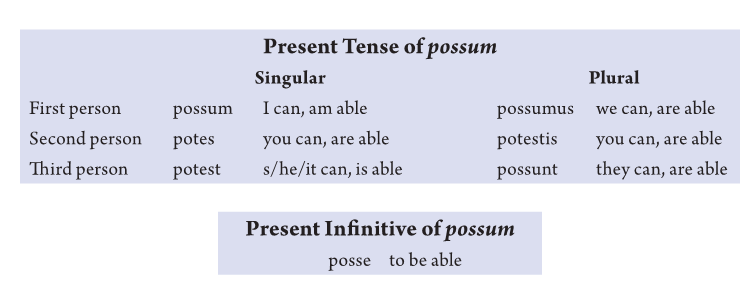
The verb possum, posse is actually a compund of what two Latin words?
Arrange the following in order from 1st person singular to 3rd person plural.
potestis
potes
potest
possunt
possum
possumus
What do complementary infinitives do?
pot + s =