3.6 Core Charge and Atomic Radius Trends
star
star
star
star
star
Last updated almost 4 years ago
22 Nsɛmmisa

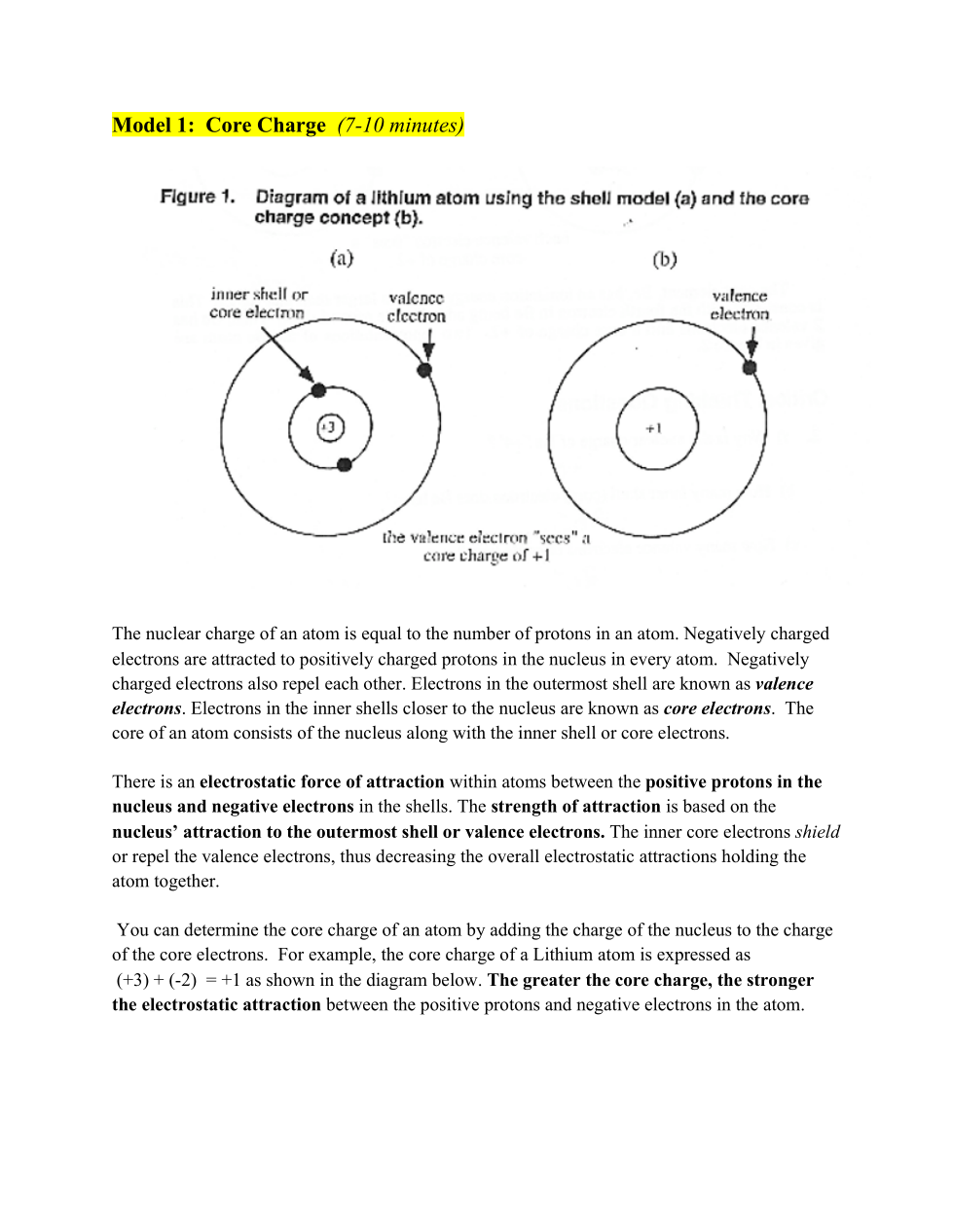
Carefully read and annotate the passage using CHAT in the folders.
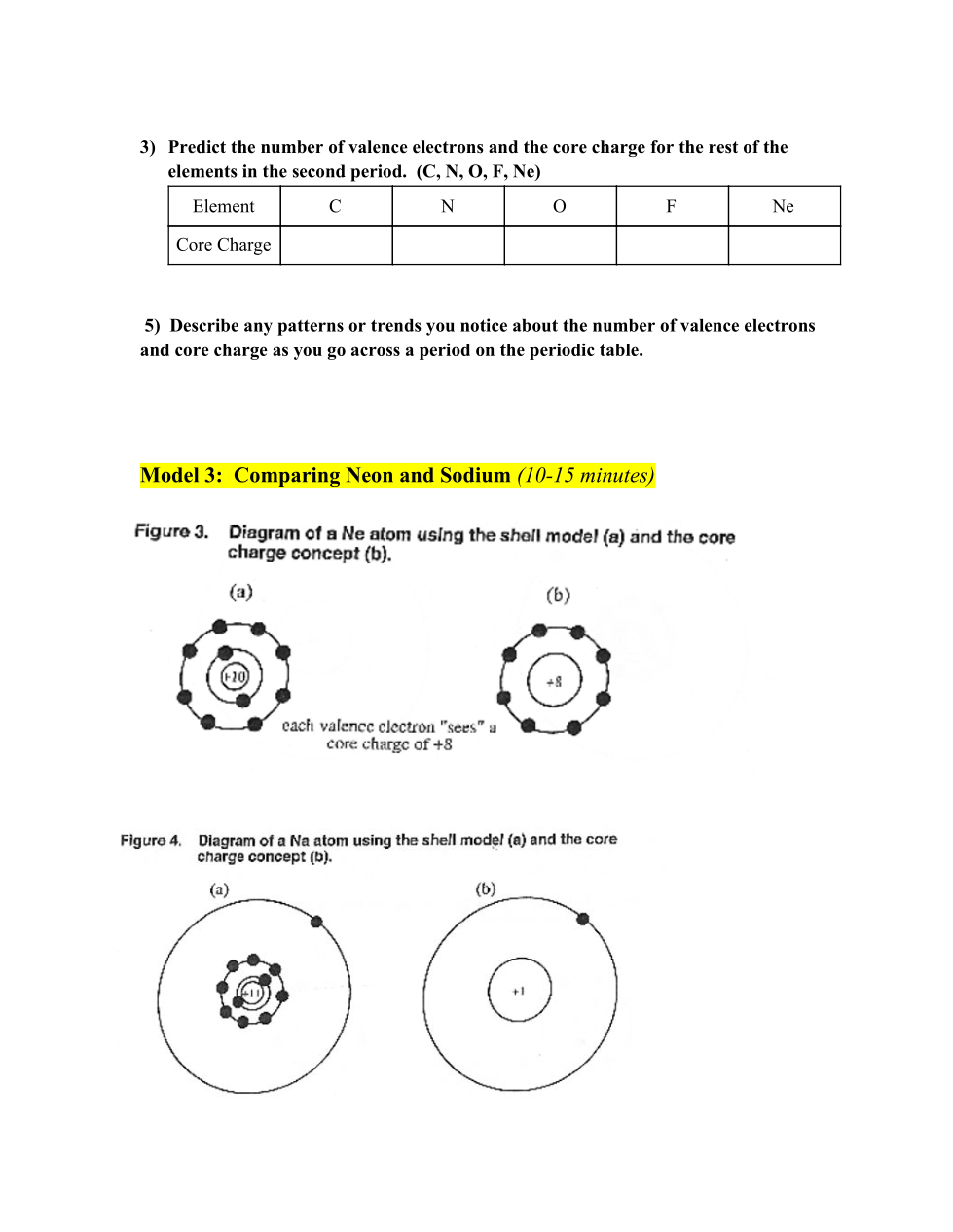
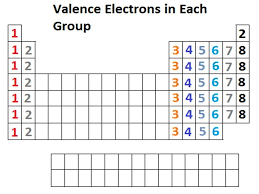
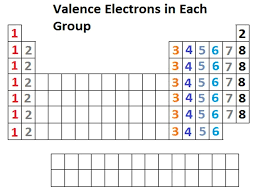
Drag the correct number of valence electrons and core charge for each element.
3
4
5
6
7
8
C
N
O
F
Ne
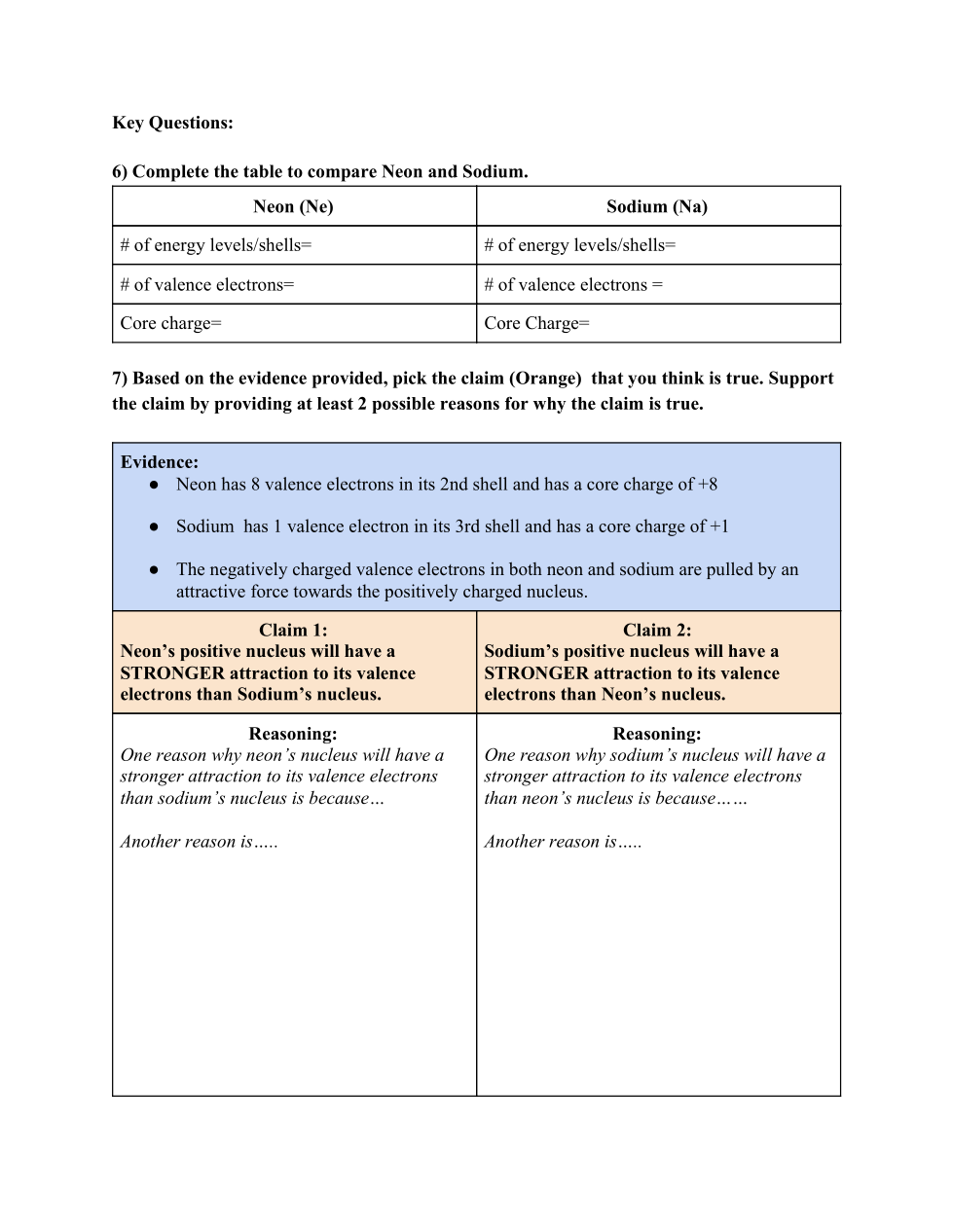
Drag the numbers to each term below to determine the # of energy levels/shells, valence electrons and core charge for Ne
1
2
3
4
5
6
7
8
# of energy levels/shells
# of valence electrons
Core Charge
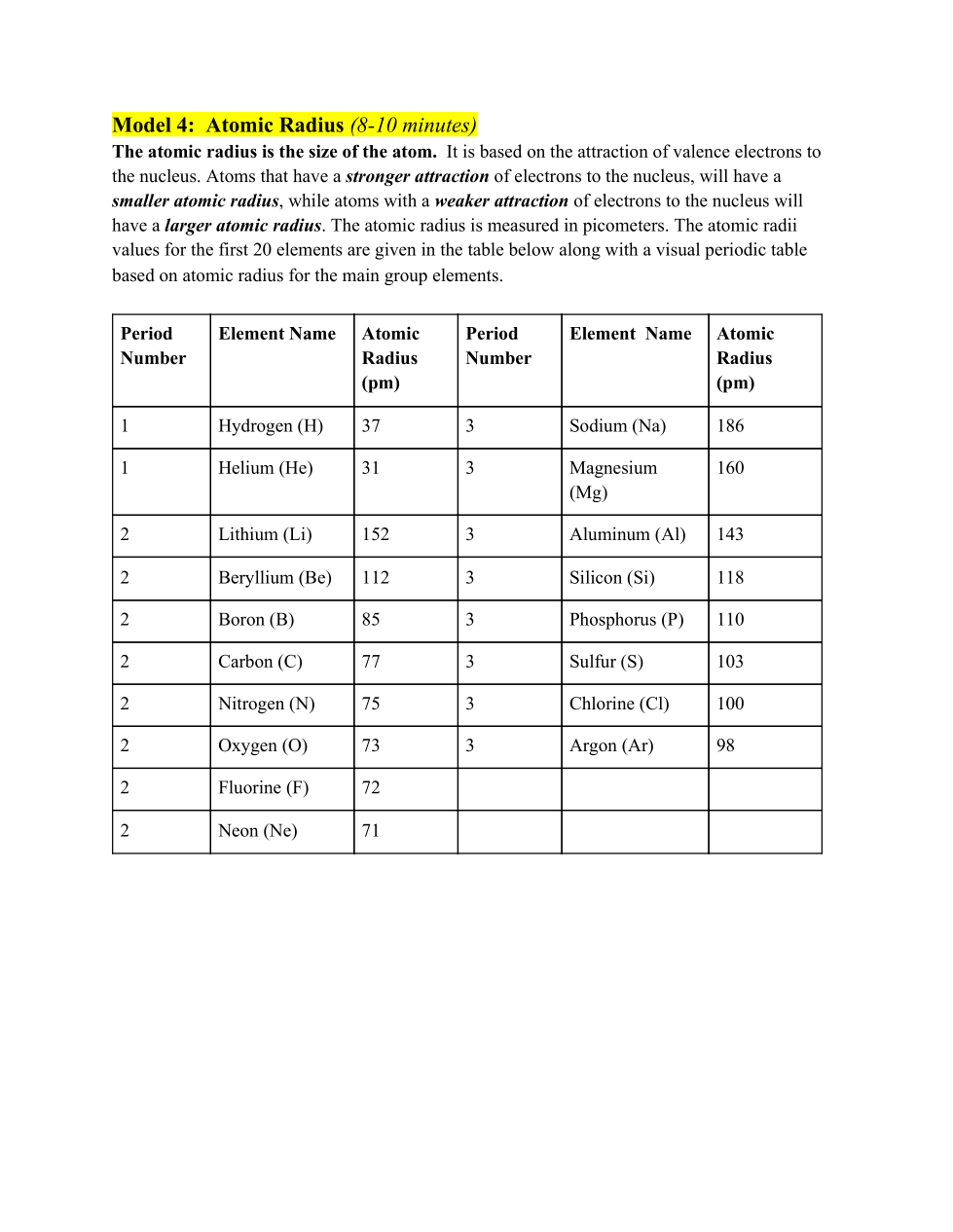
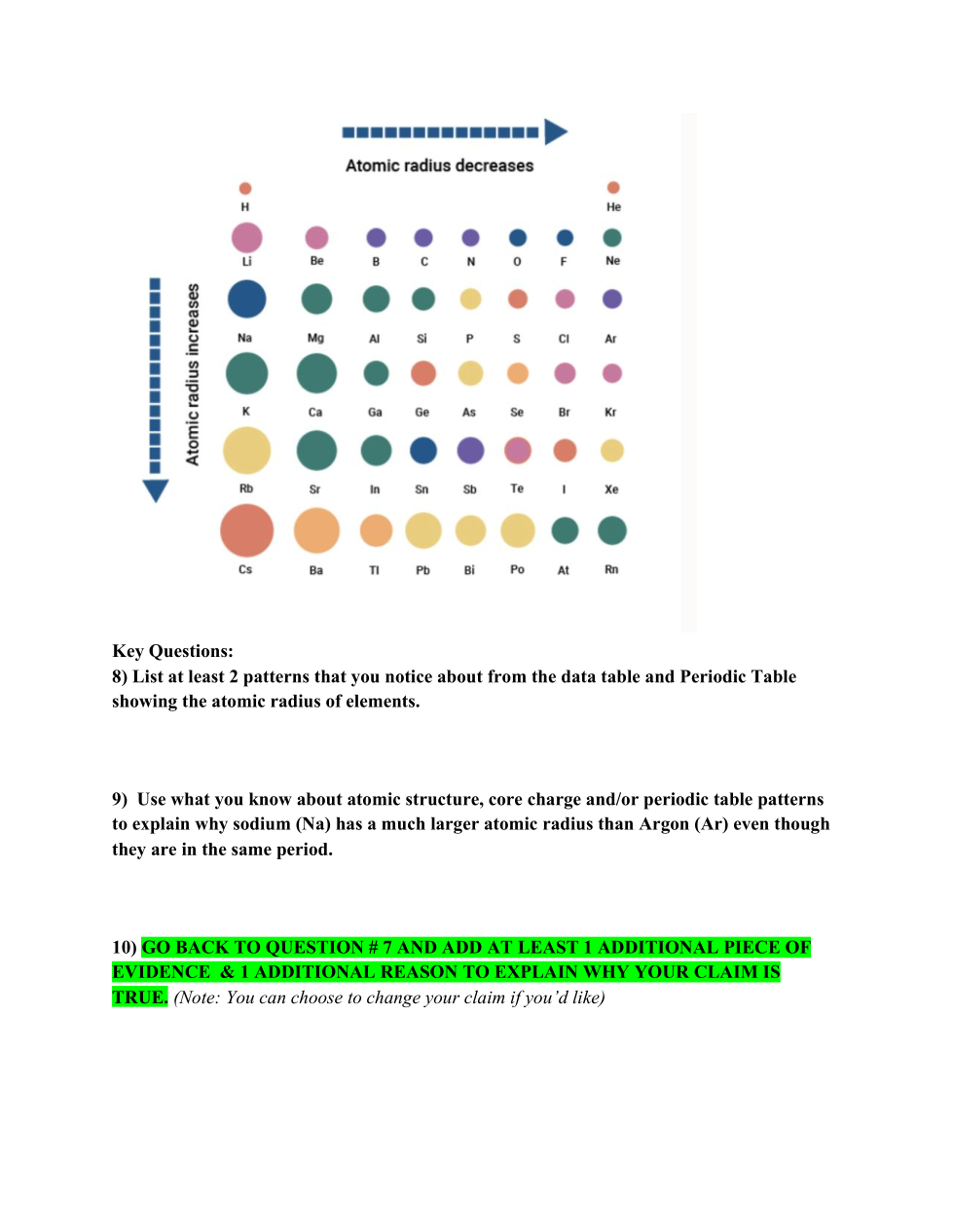
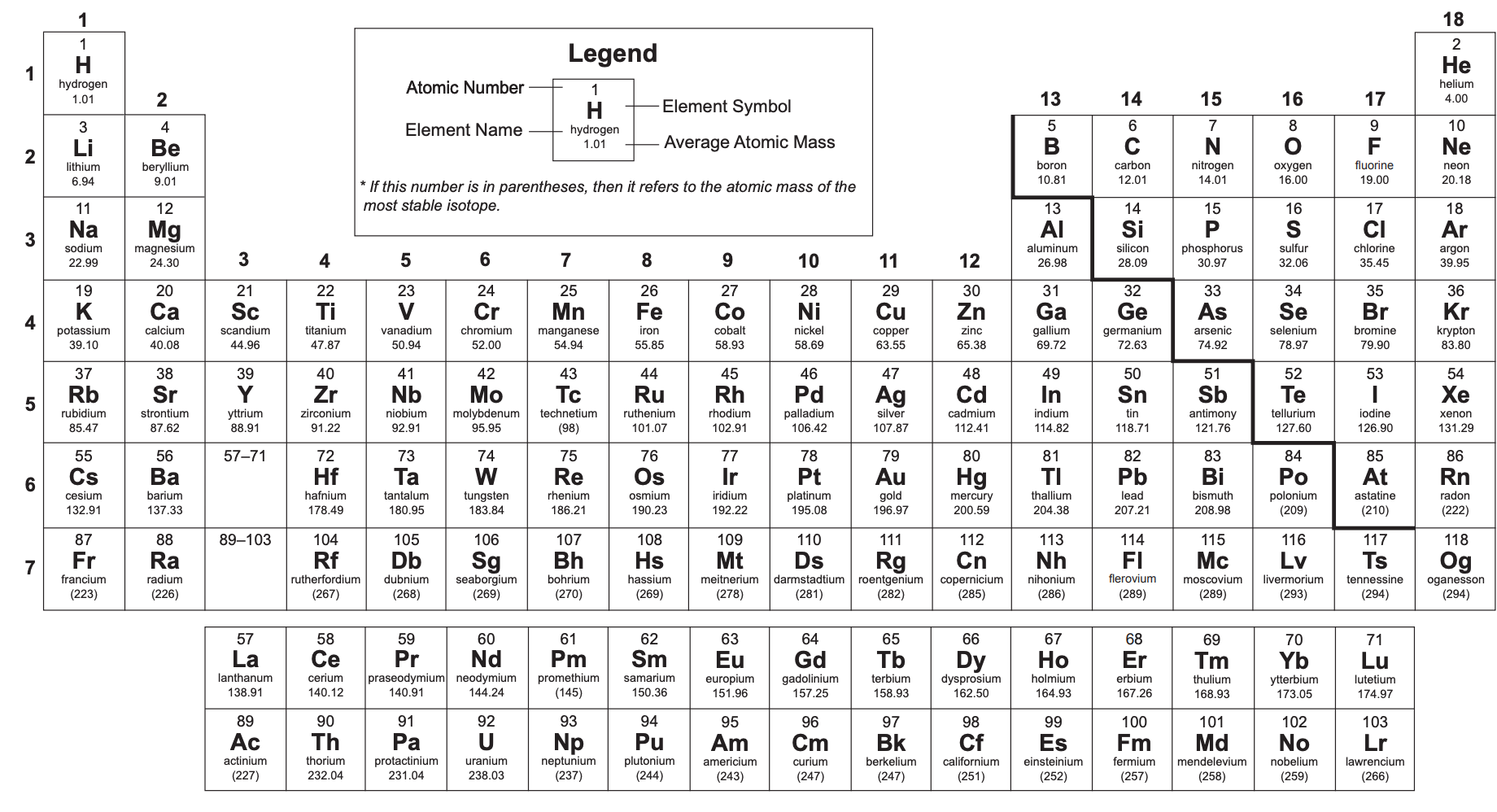
List at least 2 patterns that you notice from the data table and Periodic Table showing the atomic radius of elements.
Go back to question 16 and add an additional piece of evidence based on the atomic radius trend you notice for elements as you go across a period.
What is 1 Got and 1 Need you have?
Got- Something you're taking away or understand from this formative
Need- A question you have or a topic you want to go over more.
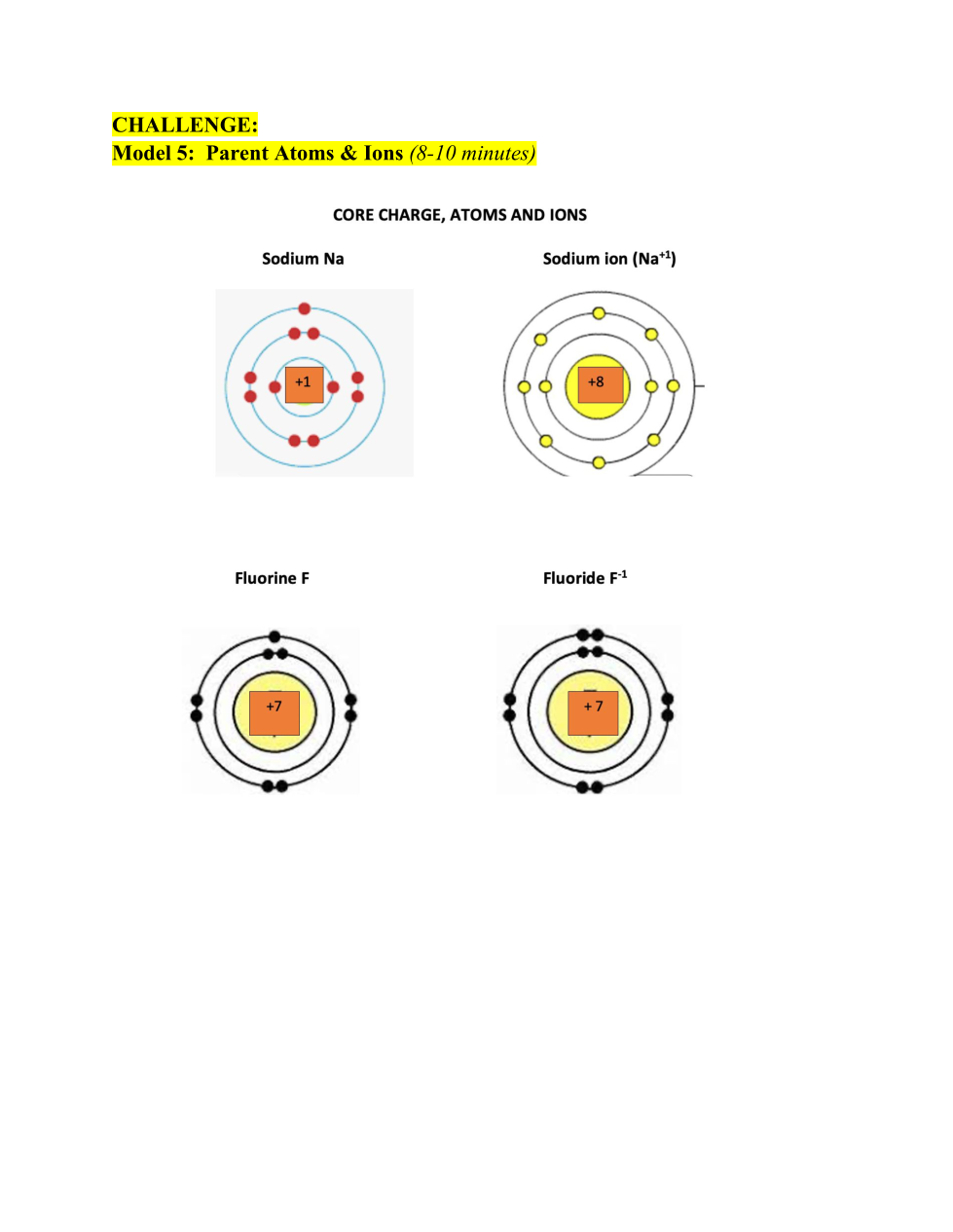
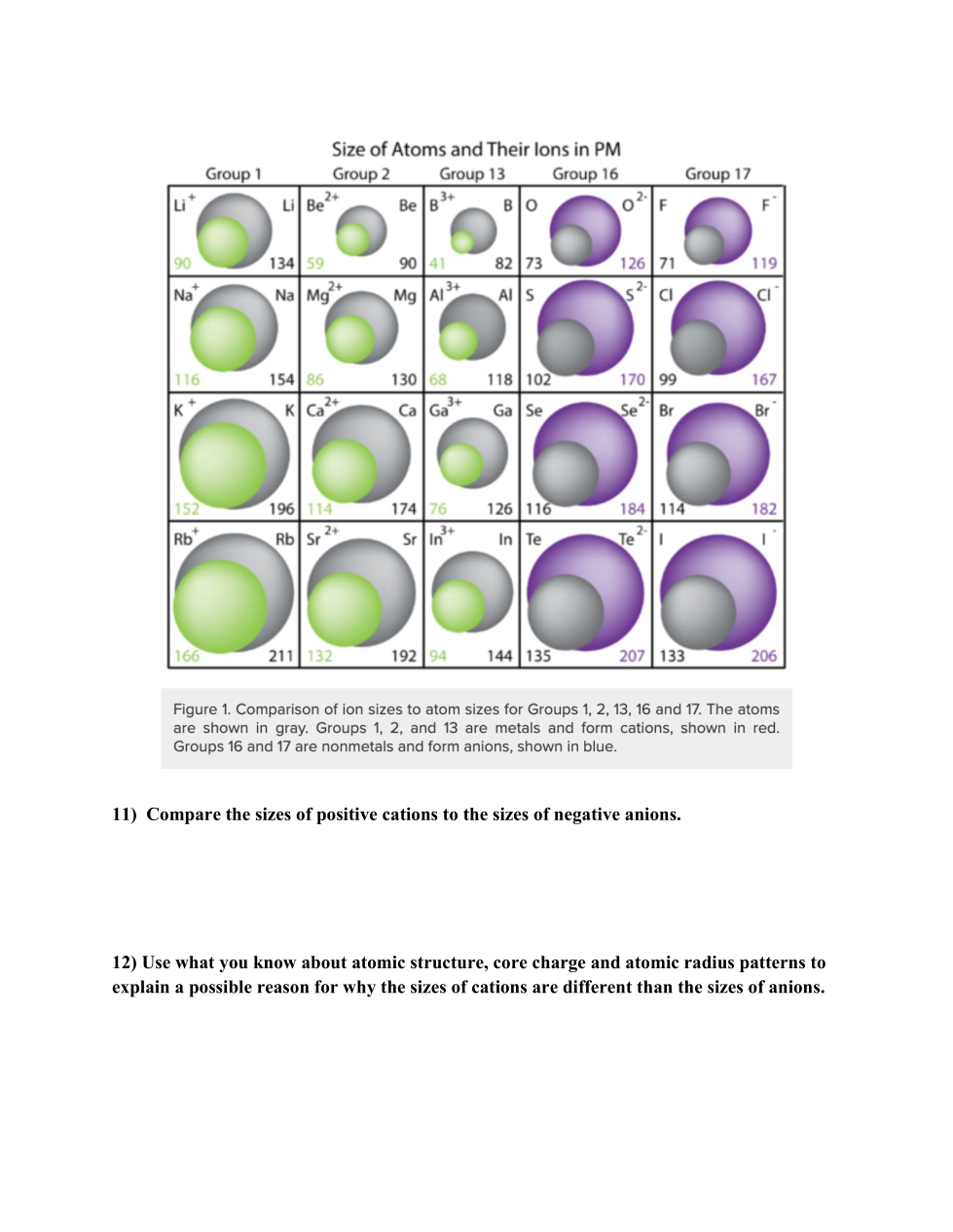
Compare the sizes of positive cations to the sizes of negative anions.
Use what you know about atomic structure, core charge and atomic radius patterns to explain a possible reason for why the sizes of cations are different than the sizes of anions.
Respond to 1 question below about the passage you read in question 1.
1. What is the main idea of this passage?
2. What do you think the model is showing?
3. Choose 1-2 direct quotes that are most important to understand the model
What is 1 question or idea from the passage you need clarified to understand Model 1 better?
Based on Model 1: Which of the following are true? Select all that apply
The strength of the electrostatic force of attraction within atoms is between the positively charged ______________ and negatively charged __________________.
If an element has a greater core charge it will have a ____________ electrostatic attraction holding the protons and electrons together within the atom.
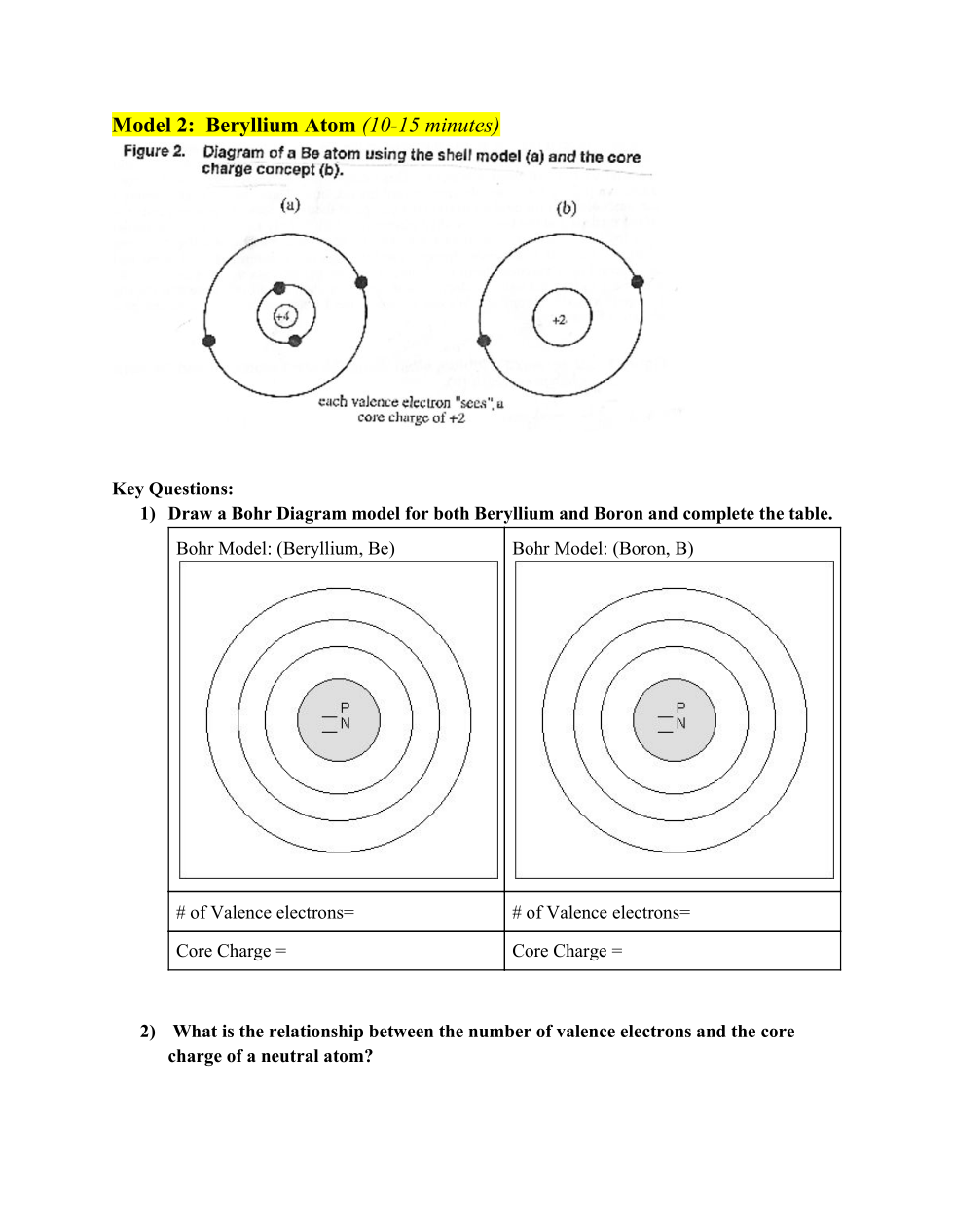
Draw a Bohr Diagram of Be
Remember:
Atomic Number = protons
Protons= electrons
Atomic Mass - Atomic Number= neutrons
Drag the correct number under each category for the valence electrons and core charge for Be.
0
1
2
3
4
# of valence electrons
Core Charge
Draw a Bohr Diagram of B.
Remember:
Atomic Number = protons
Protons= electrons
Atomic Mass - Atomic Number= neutrons
Drag the correct number under each category for the valence electrons and core charge for B.
0
1
2
3
4
# of valence electrons
Core Charge
What is the relationship between the number of valence electrons and the core charge of a neutral atom?
Describe any patterns or trends you notice about the number of valence electrons and core charge as you go acrossa period on the periodic table.
Drag the numbers to each term below to determine the # of energy levels/shells, valence electrons and core charge for Na
1
2
3
4
5
6
7
8
# of energy levels/shells
# of valence electrons
Core Charge
Click on Show your Work to answer question 16.
NOTE: You fill in the reasoning for the CLAIM that you think is correct. Leave the other side blank.
See the link that says rubric under the question # to help with response.
Why does sodium (Na) have a much larger atomic radius than argon (Ar) even though they are in the same period? CHOOSE THE BEST OPTON.