NS 3.1 (2/3)
star
star
star
star
star
Last updated about 3 years ago
17 Nsɛmmisa
0
0
Investigating Mutant Fur Traits in the Sim
In the Sim activity that follows, you will investigate a low-fur population of ostrilopes with the trait distribution shown in the histogram below.
In the Sim, you will be able to turn on mutations for fur traits.
You will make the environment for this population cold.
Before you do this, study the histogram below and answer the questions that follow.
Think about which new traits would be adaptive and non-adaptive in a cold environment. Label any traits that would be adaptive with an A. Label any traits that would be non-adaptive with an NA.
Think about which new traits would be adaptive and non-adaptive in a cold environment. Label any traits that would be adaptive with an A. Label any traits that would be non-adaptive with an NA.
Are all traits that are introduced by mutations adaptive? Do you think non-adaptive traits can be introduced into a population through mutations? Why or why not?
CFS:
accurately identifies the traits in the environment
accurately describes the adaptive or non-adaptive nature of the traits in the environment
Open the Natural Selection Simulation and open the mode: Mutations and Traits.
Change the temperature of the environment to cold (Level 1) by moving the Temperature slider.
Turn ostrilope fur-trait mutations on by pressing the Ostrilope icon and pressing the Mutations toggle.
Press RUN and observe the population for at least 50 generations.
Press ANALYZE and use the Generations slider to carefully observe new traits in the population.
Open the Natural Selection Simulation andopen the mode: Mutations and Traits.
Change the temperature of the environment to cold (Level 1) by moving the Temperature slider.
Turn ostrilope fur-trait mutations on by pressing the Ostrilope icon and pressing the Mutations toggle.
Press RUN and observe the population for at least 50 generations.
What evidence do you have to explain how the traits you indicated in the above histogram were adaptive?
CFS:
accurately identifies the traits in the environment
accurately describes the adaptive or non-adaptive nature of the traits in the environment
What evidence do you have to explain how the traits you indicated in the above histogram were non-adaptive?
CFS:
accurately identifies the traits in the environment
accurately describes the adaptive or non-adaptive nature of the traits in the environment
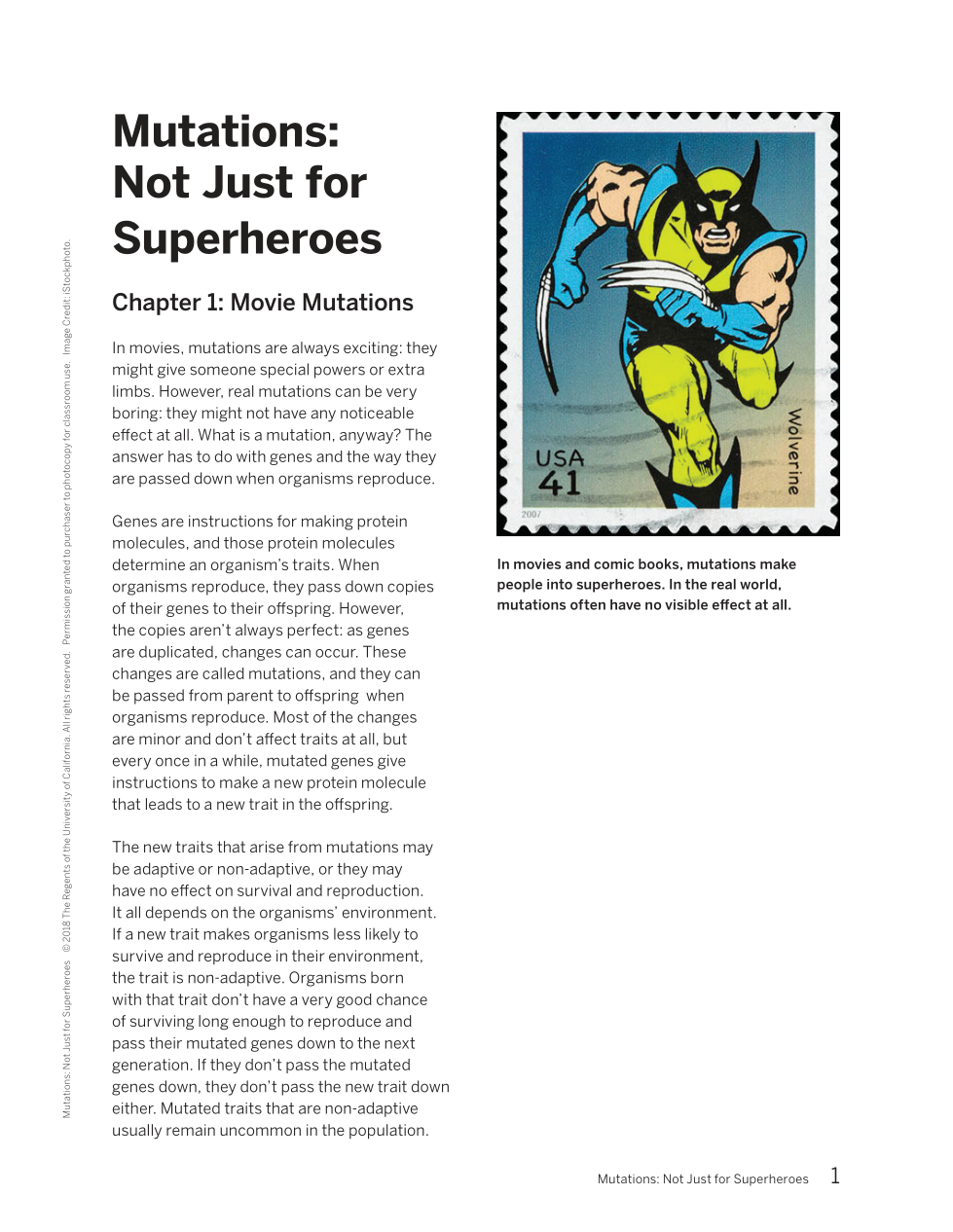
What are genes?
CFS:
accurately identifies the central idea from the primary source of evidence
accurately describes the relationship between title and the source of evidence
What is a mutation?
CFS:
accurately identifies the how mutations impact a gene pool
accurately describes the adaptive or non-adaptive nature of the traits in the environment
Do mutations often affect traits?
CFS:
accurately identifies the how mutations impact a gene pool
accurately describes the adaptive or non-adaptive nature of the traits in the environment
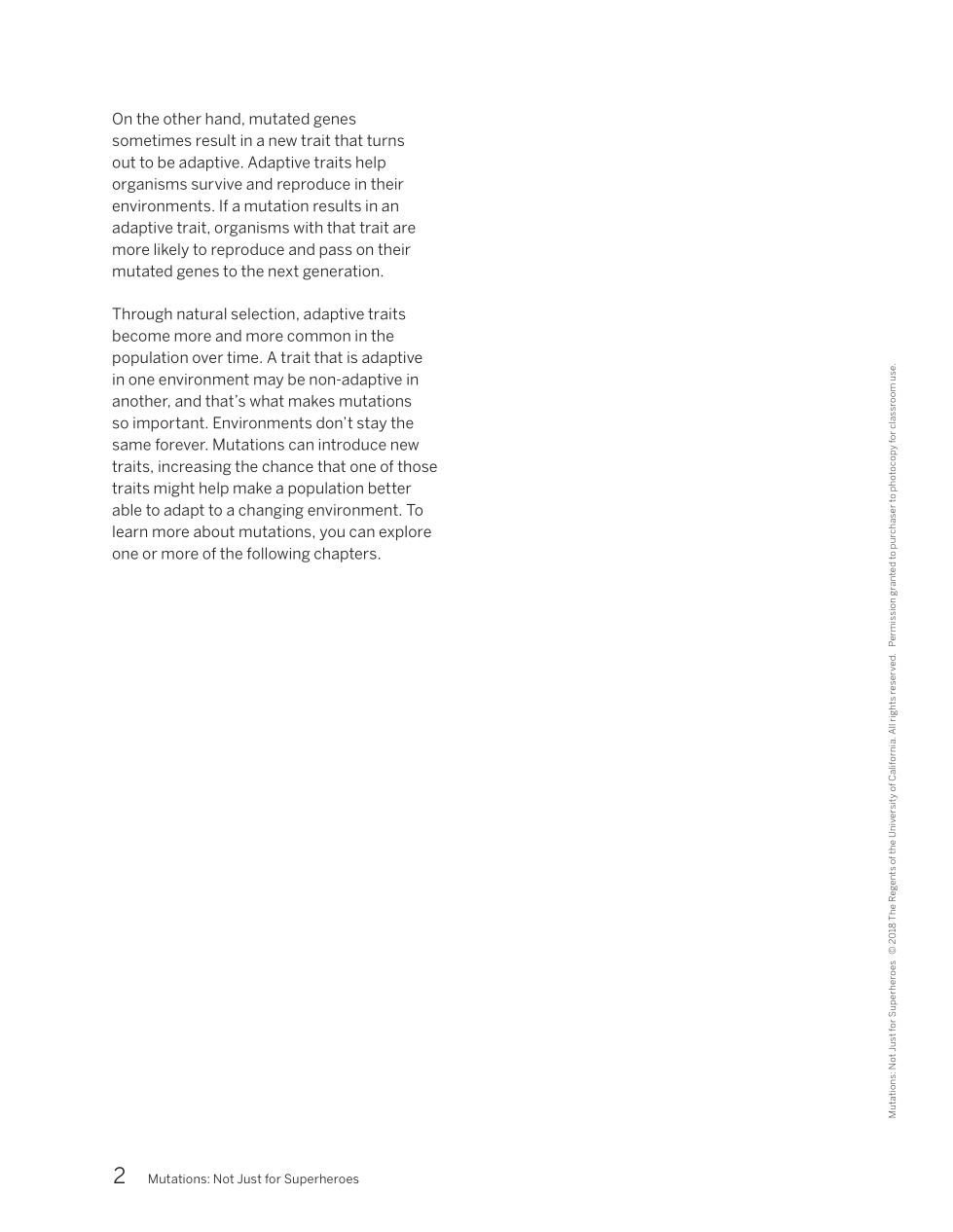
Are mutations always good?
CFS:
accurately identifies the how mutations impact a gene pool
accurately describes the adaptive or non-adaptive nature of the traits in the environment
How can mutations increase the chance of an organism’s survival?
CFS:
accurately identifies the how mutations impact a gene pool
accurately describes the adaptive or non-adaptive nature of the traits in the environment
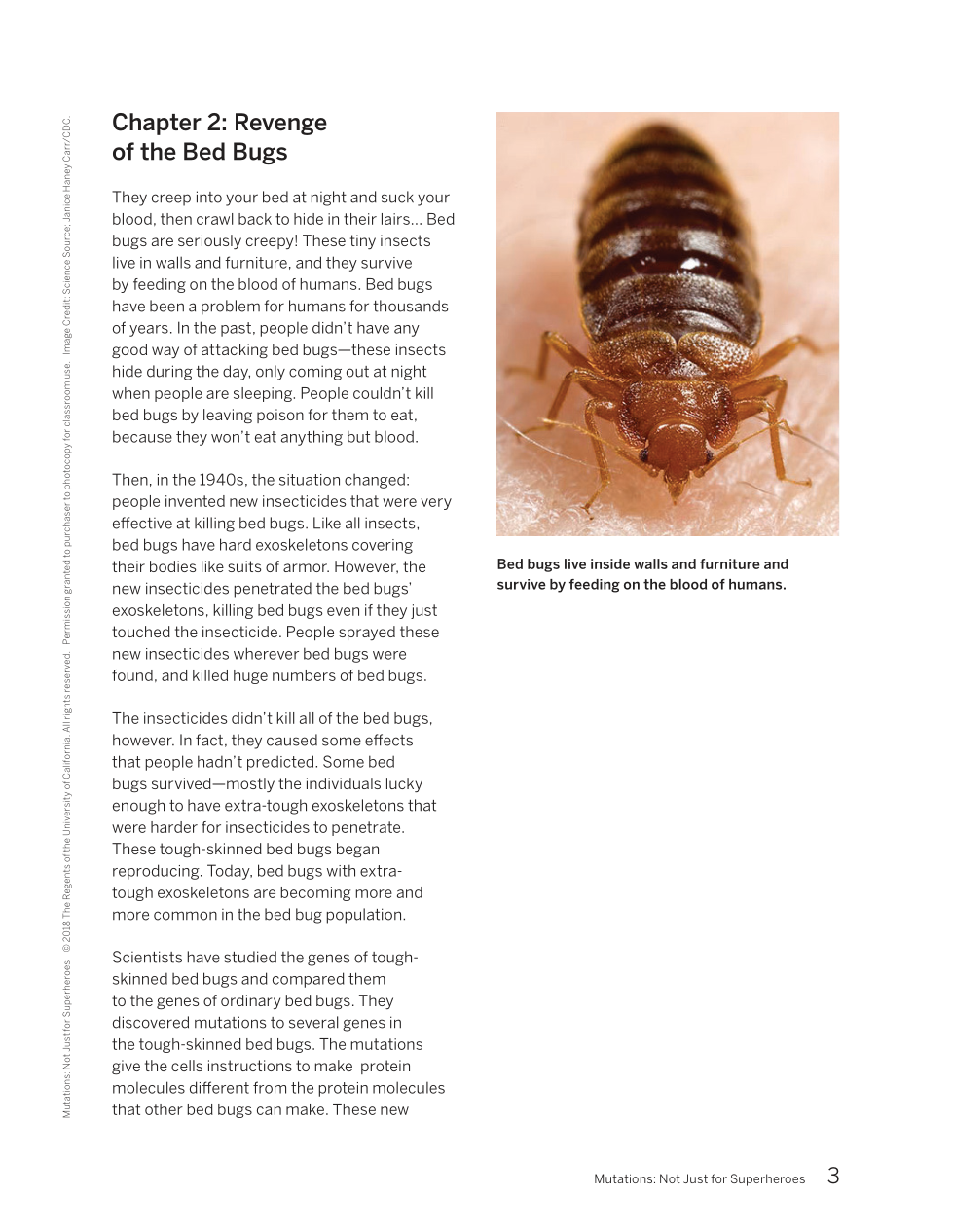
How have people combated bed bugs?
CFS:
accurately identifies the central idea from the primary source of evidence
accurately describes the relationship between title and the source of evidence
How did the new method of eradicating bed bugs overcome the bed bugs' adaptive trait?
CFS:
accurately identifies the how mutations impact a gene pool
accurately describes the adaptive or non-adaptive nature of the traits in the environment
Were all bed bugs killed with this new method? Why or why not?
CFS:
accurately identifies the how mutations impact a gene pool
accurately describes the adaptive or non-adaptive nature of the traits in the environment
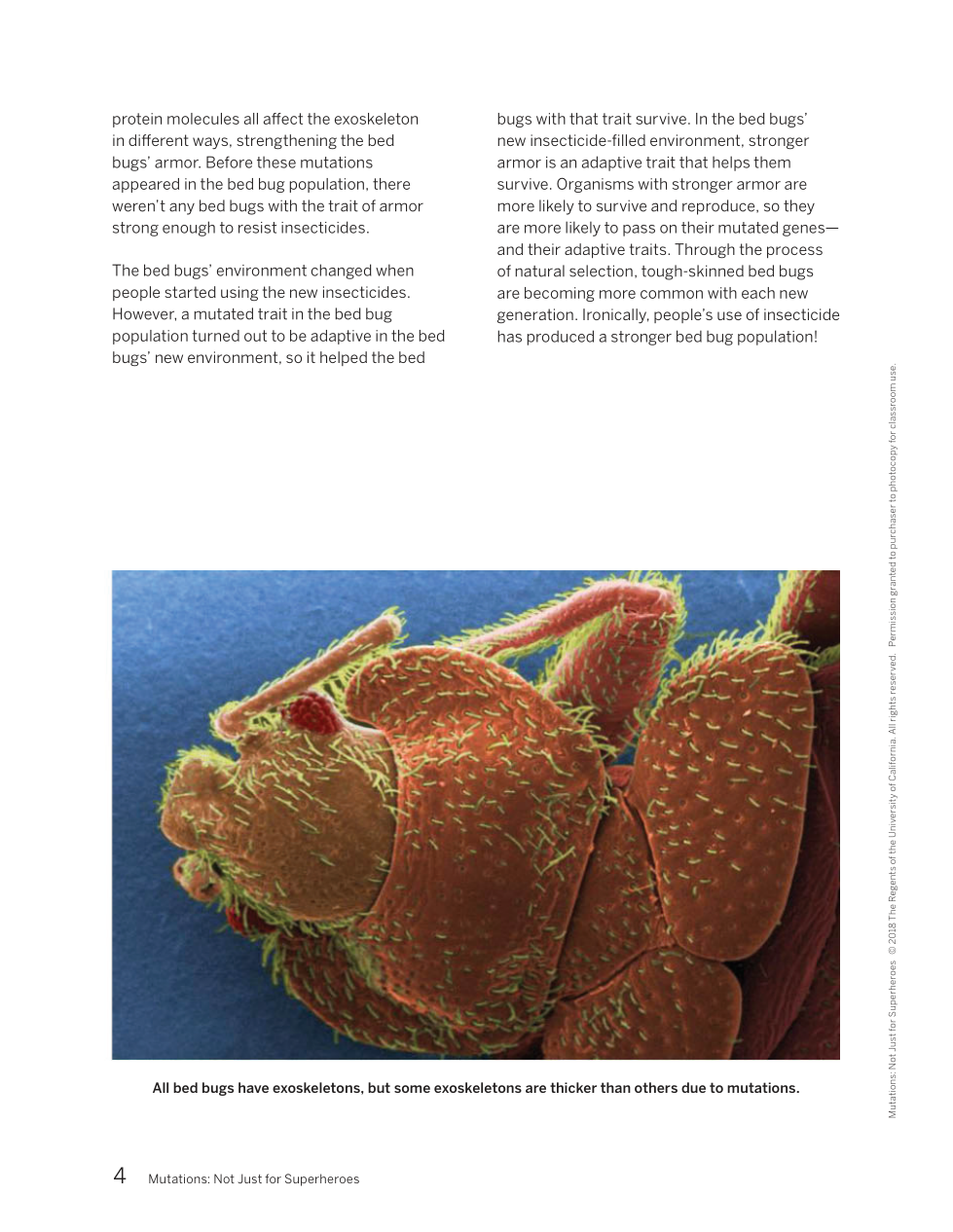
Describe the bed bug’s mutation.
CFS:
accurately identifies the how mutations impact a gene pool
accurately describes the adaptive or non-adaptive nature of the traits in the environment
Summarize how the bed bug’s environment changed and the adaptive trait that was perpetuated as a result.
CFS:
accurately identifies the how mutations impact a gene pool
accurately describes the adaptive or non-adaptive nature of the traits in the environment
Did humans help or hinder their bed bug problem?
CFS:
accurately identifies the how mutations impact a gene pool
accurately describes the adaptive or non-adaptive nature of the traits in the environment
What evidence do have to explain how non-adaptive traits can be introduced into a population?
CFS:
accurately identifies the how mutations impact a gene pool
accurately describes the adaptive or non-adaptive nature of the traits in the environment
