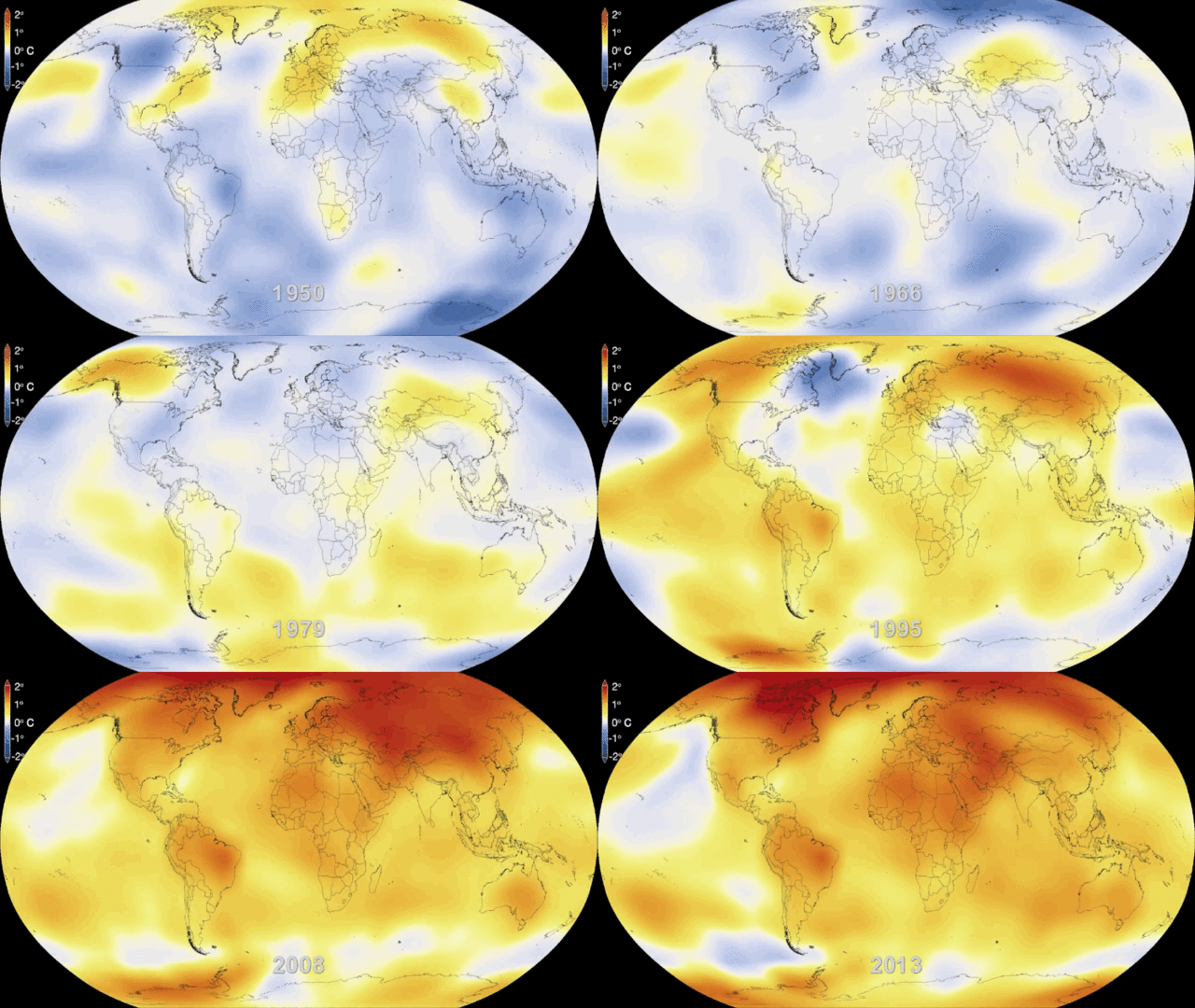
Global warming has been a topic of concern and much controversy for many years. Whatever the disagreements have been in the past, most scientists and policy makers now recognize that if the Earth’s surface temperatures continue to rise as much as they have in the past decade or so, then many parts of the world could face dire consequences, including food and water shortages, coastal flooding, and health consequences.
Using this Internet-based webquest activity, you will learn about climate change, energy use, and global warming. You will learn firsthand how society and environment might be impacted by global warming and how to help people make better decisions regarding all the complicated issues surrounding climate change, energy use, and available policy options.
Global warming has been a topic of concern and much controversy for many years. Whatever the disagreements have been in the past, most scientists and policy makers now recognize that if the Earth’s surface temperatures continue to rise as much as they have in the past decade or so, then many parts of the world could face dire consequences, including food and water shortages, coastal flooding, and health consequences.
Using this Internet-based webquest activity, you will learn about climate change, energy use, and global warming. You will learn firsthand how society and environment might be impacted by global warming and how to help people make better decisions regarding all the complicated issues surrounding climate change, energy use, and available policy options.
Before you begin your investigation of the changing climate, you should understand the difference between “climate” and “weather.”
https://www.epa.gov/climate-indicators/weather-climate
http://www.nasa.gov/mission_pages/noaa-n/climate/climate_weather.html
The UN is concerned that the gas carbon dioxide (CO 2 ) may have something to do with recent changes in the climate.
http://news.bbc.co.uk/2/shared/spl/hi/sci_nat/04/climate_change/html/greenhouse.stm
https://www.koshland-science-museum.org/explore-the-science/interactives/what-is-the-greenhouse-effect
http://eo.ucar.edu/kids/green/warming4.htm
There are many different factors that contribute to climate change.
http://eo.ucar.edu/kids/green/warming5.htm
https://www.epa.gov/climate-change
Humans, like all species on this planet, will see many alterations in their environment as the global climate changes.
https://www.un.org/en/climatechange/science/key-findings#physical-science
https://www.noaa.gov/education/resource-collections/climate/climate-change-impacts
https://www.washingtonpost.com/news/capital-weather-gang/wp/2013/07/01/ask-a-state-climatologist-q-a-with-new-jerseys-david-robinson/
https://www.nasa.gov/centers/langley/news/factsheets/AtmSciCareer.html
https://www.americangeosciences.org/sites/default/files/compass/CareerCompass_AtmosphericSciences.pdf
https://www.un.org/en/global-issues/climate-change
https://www.ipcc.ch/about/
https://www.nationalacademies.org/topics/climate
https://www.koshland-science-museum.org/explore-the-science/earth-lab/modeling
https://serc.carleton.edu/microbelife/topics/proxies/paleoclimate.html
http://eo.ucar.edu/kids/green/long1.htm
https://www.ncei.noaa.gov/news/how-do-scientists-study-ancient-climates
https://news.climate.columbia.edu/2017/04/04/how-we-know-climate-change-is-not-natural/
https://scied.ucar.edu/learning-zone/how-climate-works/investigating-past-climates
Climate scientists use complicated computer models to better understand the climate and predict climate change in the future.
https://www.climate.gov/maps-data/climate-data-primer/predicting-climate/climate-models
https://climate.mit.edu/explainers/climate-models
http://nas-sites.org/climate-change/climatemodeling/