Using the evidence: The Warmonger
star
star
star
star
star
Last updated over 4 years ago
7 Nsɛmmisa
Hyɛ no nsow a efi ɔkyerɛwfo no hɔ:
"Using the Evidence" activity that examines Kaiser Wilhelm II's involvement in advancing the Great War.
"Using the Evidence" activity that examines Kaiser Wilhelm II's involvement in advancing the Great War.
The Allies (Britain, France and Russia) always blamed Germany for causing the war. In a sense, of course, Germany did provoke confict initially by invading Belgium. Some historians now think that Germany not only caused the war but wanted war and planned for it. At the centre of this activity was the Kaiser, Wilhelm II. He had a reputation for stirring up trouble and was said to be a warmonger [one who urges or attempts to stir up war].
Was this true?
What impression was source A meant to give of the Kaiser? Refer to details in the photograph to explain your answer.
In what way do they agree?
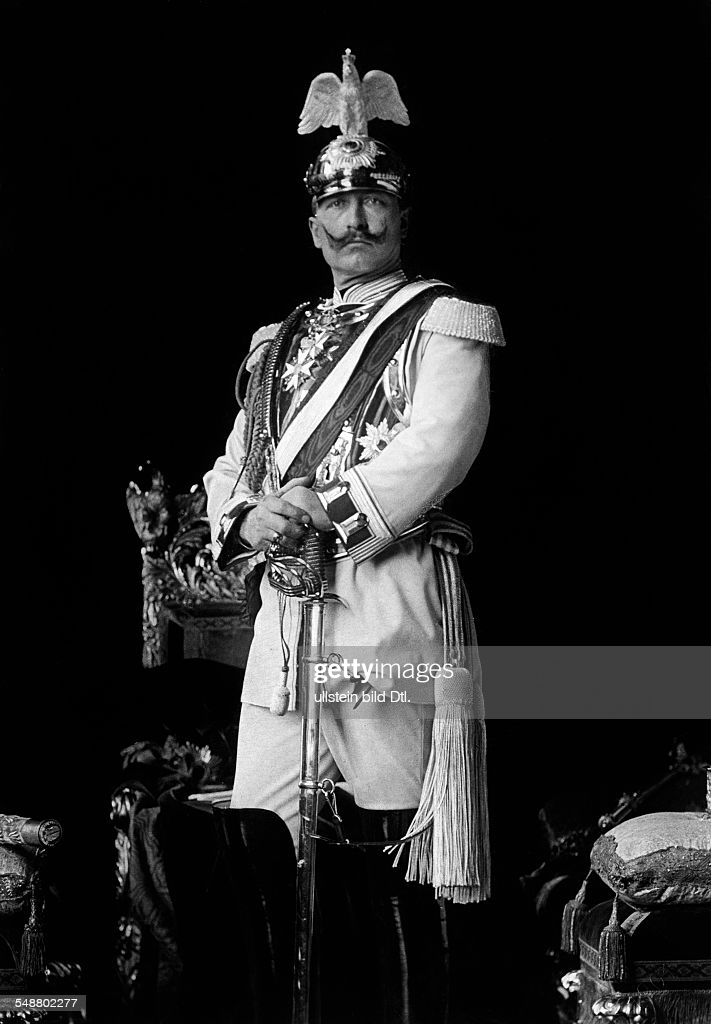
(left) An official portrait of Wilhelm II in full military uniform.
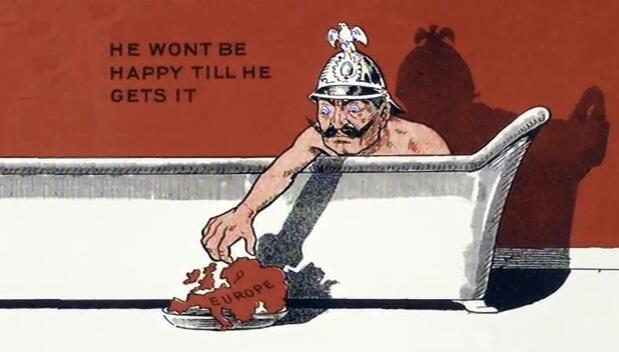
A British postcard of 1914
“Should you encounter the enemy, he will be defeated! No quarter will be given! Prisoners will not be taken! Whoever falls into your hands is forfeited. Just as a thousand years ago the Huns under their King Attila made a name for themselves, one that even today makes them seem mighty in history and legend, may the name German be affirmed by you in such a way in China that no Chinese will ever again dare to look cross-eyed at a German.”
Wilhelm II, in a speech to troops, Bremerhaven, July 27, 1900
"I am with you there. The others [i.e., the other Powers] are not prepared, they will not do anything against it. Within a few days you must be in Belgrade. I was always a partisan [supporter] of peace; but this has its limits. I have read much about war and know what it means. But finally a situation arises in which a Great Power can longer just look on but must draw the sword."
Wilhelm II, at the unveiling of the Battle of Nations monument in Leipzig, 18 Oct 1913
In what way does source C contradict the Kaiser's claim that 'I was always a partisan [ strong supporter] of peace'?
Explain why each of these might not provide totally accurate views of the attitude of the Kaiser.
Explain how these sources could still be very useful to the historian.
Use them as evidence to write a paragraph (5 to 7 sentences) which supports this statement.
Why does your answer to the previous question give an unbalanced view of the Kaiser's attitude?