Today we are going to study the verb Estar - to be (~temporary), in the presente do indicativo.
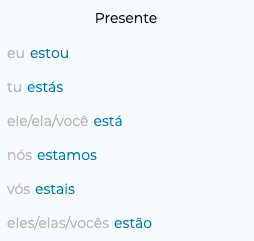
Verbo Estar (A1 Level) Portuguese
Learning, memorising, practicing and using the verb Estar (to be ~temporary) in the present tense. 📖
Today we are going to study the verb Estar - to be (~temporary), in the presente do indicativo.
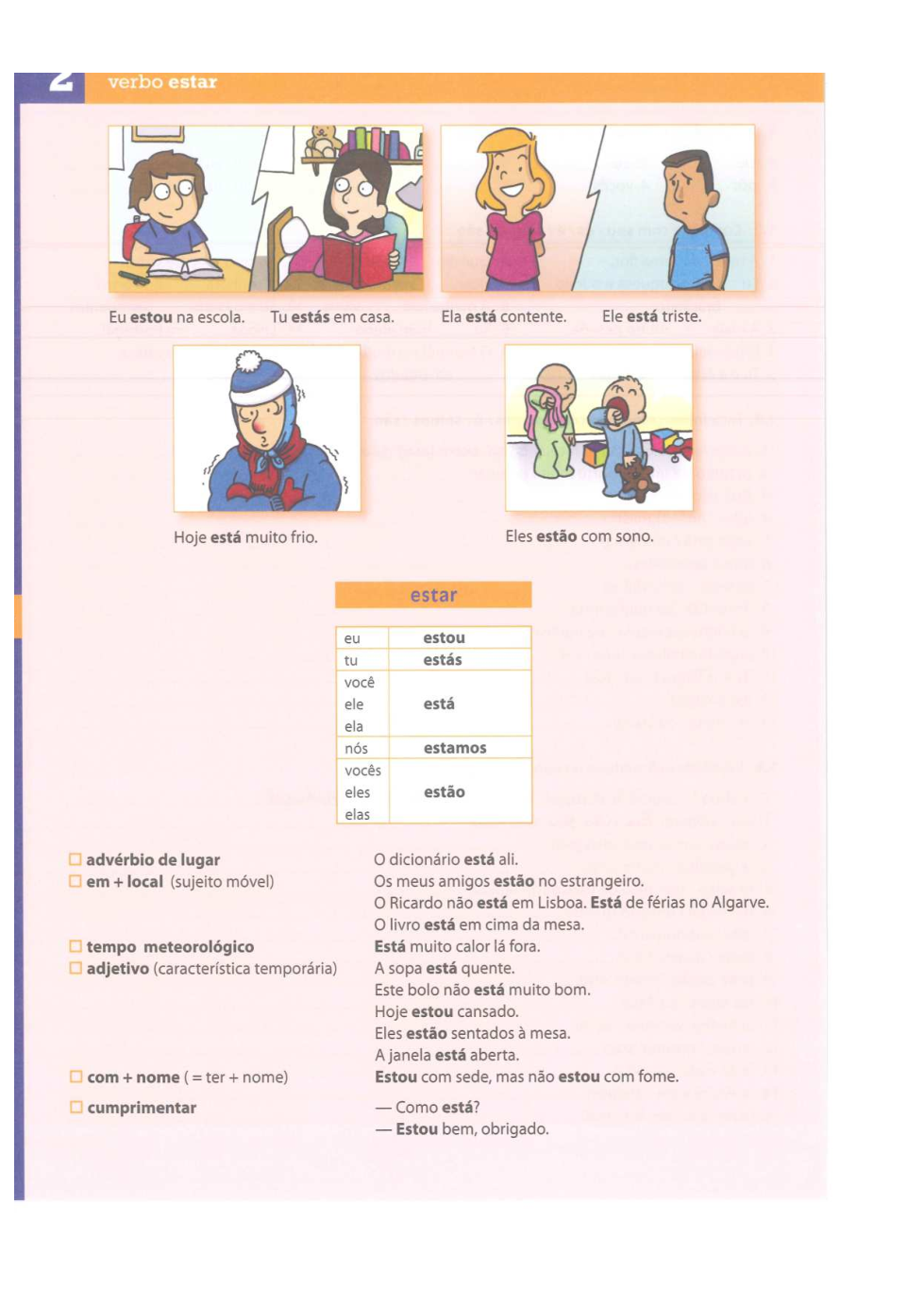
When to use verb Estar - to be (~temporary)?
(instead of verb Ser - to be (~permanent))
Tell if the information about the uses of the verb Estar - to be (~temporary) on the left are true ✅ or false ❌ .
Verdadeiro ✅ | Falso ❌ | |
|---|---|---|
1. Temporary characteristics | ||
2. Farewells | ||
3. Location | ||
4. The weather | ||
5. Specific situations like when you want to tell your mates 'YOLO'! |
Drag and drop thestáse correct conjugation of the verb Estar - to be (~temporary) after the subject.
Eu
Tu
Ele/Ela/Você
Nós
Eles/Elas/Vocês
Match the correct conjugation of the verb Estar - to be (~temporary) to the subject.
| Draggable item | arrow_right_alt | Corresponding Item |
|---|---|---|
estão | arrow_right_alt | Eu |
está | arrow_right_alt | Eles/Elas/Vocês |
estamos | arrow_right_alt | Tu |
estou | arrow_right_alt | Nós |
estás | arrow_right_alt | Ele/Ela/Você |
Categorize the conjugations of the verb Estar - to be (~temporary) with the correct subject.
estamos
estão
estás
estou
está
Eu
Tu
Ele/Ela/Você
Nós
Eles/Elas/Vocês
Pick the correct line with the conjugation of the verb Estar - to be (~temporary)
(There is only one correct answer per list).
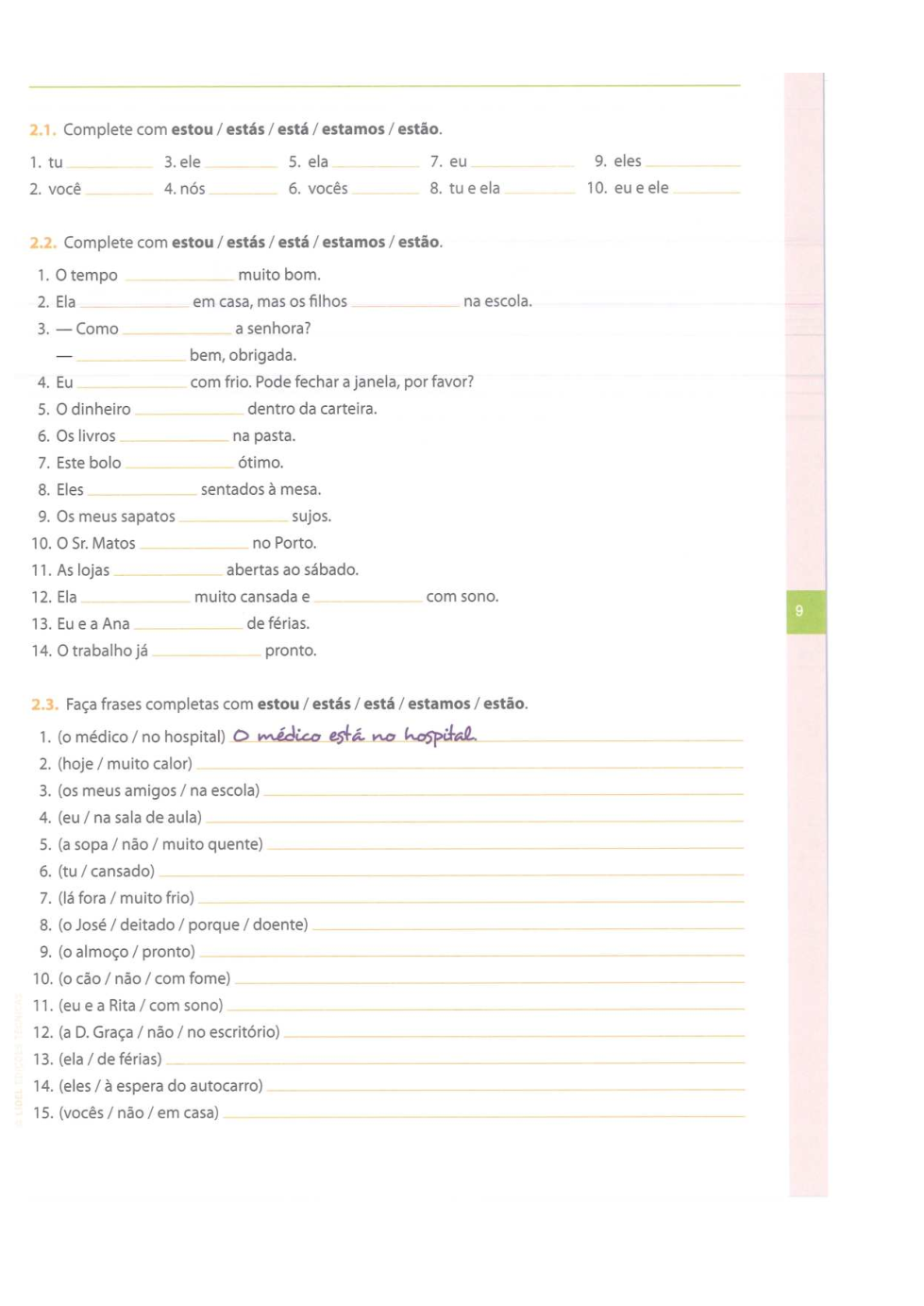
Eu _______ na escola.
Ele _______ em casa.
Eles _______ cansados.
Tu _______ lindo!
Você _______ doente?
Nós _______ com fome!
Hoje _______ sol!
Oh não! (''Ele'') _______ a chover!!!!
Como é que você ________ ?
Nós ________ felizes!
In one word answer the question:
Nós estamos na escola?
In one word answer the question:
Nós estamos na rua?
Translate into english: Eles estão a estudar.
Translate into english: Eu estou feliz.
In the box below you will find a diologe between two friends with many examples of the verb Estar - to be (~temporary).
Select all the conjugations of the verb Estar - to be (~temporary) that you can find in the box below.
Not all the highlighted words are correct.
Rui: -
João: -
Rui: - Eu
João: - O Paulo e
Rui: - Oh! A Joana e Nádia
João: -
Rui: - Até à
The 4 amigos!
A boy describes his group of friends. Draw the picture and write their names under:
Nós somos 4 amigos.
Eu sou o João e estou em casa a jogar XBOX.
O Manuel está a estudar para os exames.
O Rui e o Paulo estão de férias na praia.
Made by Helena Bidarra, Portuguese Development Officer
for Post-Primary Languages Ireland