Gizmo: Rainfall and Bird Beaks
star
star
star
star
star
Last updated almost 4 years ago
30 questions
Note from the author:
Rainfall and Bird Beaks Gizmo Write Up
Complete the Gizmo: https://gizmos.explorelearning.com/index.cfm?method=cResource.dspView&ResourceID=404&ClassID=5523286 by answering the questions below
General Video Directions: https://www.loom.com/share/5b8140b43a724bec8d5ed37bfab28be4
*There will be more in depth video directions for each section linked into each section.
Prior Knowledge Questions (Do these BEFORE using the Gizmo.)
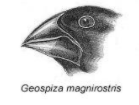
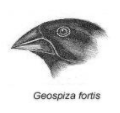
During the voyage of the HMS Beagle (1831–1836), the young Charles Darwin collected several species of finches from the Galápagos Islands. Two of Darwin’s finches are shown below.
VIDEO DIRECTIONS PRIOR KNOWLEDGE QUESTIONS
https://www.loom.com/share/ee87723b75634ccbbcf389b2504d532d
8
____________ - a period of much lower than normal rainfall.
__________________________ - a process of natural selection in which intermediate phenotypes are favored over phenotypes at the extremes.
__________________________ - a process of natural selection in which phenotypes at one extreme are favored over other phenotypes.
________________ - a trait that is beneficial to an organism.
______________ - change in the inherited traits of a population of organisms that occurs over many generations.
__________ - the difference between the greatest and least value in a data set.
_______________ - the distance from the top to the bottom of a beak.
______________________ - the process by which favorable inherited traits become more common over time.
Other Answer Choices:
range
evolution
adaptation
natural selection
beak depth
drought
stabilizing selection
directional selection
2
Drag and Drop what you believe to be that species of birds is best adapted to the diet of.
Geospiza Magirostnis
__________________________
Geospiza Fortis
___________________________
Other Answer Choices:
small, delicate seeds
large, tough-to-crack
2
Reasoning for what you answered about about the Geospiza Magirostnis diet.
_______
Reasoning for what you answered about about the Geospiza Fortis diet.
_______
Gizmo Warm-up
Darwin’s finches are one of many types of animals on the Galápagos Islands that have unique adaptations, or traits that help an organism survive in its environment. The Rainfall and Bird Beaks Gizmo™ allows you to explore how rainfall influences the range of beak shapes found in a single finch species.
VIDEO DIRECTIONS FOR GIZMO WARM-UP
https://www.loom.com/share/b3b56ac21c4b4130ac596678a1518468

2
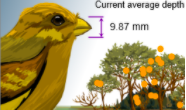
The beak depth of a finch is the distance from the top of the beak to the bottom, as shown.
A) What is the current average beak depth in the Gizmo? _______ mm
B) Select the HISTOGRAM tab. Do all the finches have the same beak depth? _______
2
Click Play (📷) and let the simulation play for five years with average rainfall (10 inches/yr). Select the GRAPH tab and view the Finches vs time and Beak depth vs time graphs.
A) How does the finch population change? _______
B) Does the beak depth change significantly? _______
Activity A: Normal Years
Introduction: The Galápagos Islands are very dry, with an average rainfall on some islands of only five inches per year. The amount of rainfall has a large impact on the abundance and types of seeds that are available to be eaten by finches. In the process of natural selection, only the finches that are best adapted to the available seed types survive and have offspring.
VIDEO DIRECTIONS FOR ACTIVITY A: NORMAL YEARS
2
Observe: With the Rain sliders set to 10 inches, click Play, and then Pause (📷) after one year has passed. Select the TABLE tab and look at the Month and Finches columns.
A) How did the finch population change over the course of one year? _______
B) The finches have their young during the rainy season. Based on the table, which part of the year do you think is the rainy season? _______
3
Analyze: Click Reset, and choose the HISTOGRAM tab. The bars represent the numbers of finches that have different beak depths. The range of beak depths is equal to the difference between the largest and smallest beaks.
A) What is the average beak depth of the current finch population? _______ mm
B) What is the range in beak depths in the population? _______ mm
C) Do most of the finches have beak depths near the lower extreme, the middle, or the higher extreme of the range? _______
4
Experiment: Click Play, and observe the histogram as the simulation plays for five years.
A) What is the average beak depth now? _______ mm
B) What is the current range of beak depths? _______ mm
C) Based on what you have seen, are finches with very small, medium, or very large beaks most likely to survive in times of normal rainfall? _______
Justify your answer. _______
1
How is the finch population affected by a period of average rainfall?
Activity B: Drought
Introduction: In years of extreme drought, Galápagos plants don’t produce new seeds. The small, delicate seeds get eaten up quickly, leaving behind only the largest, toughest seeds.
VIDEO DIRECTIONS FOR ACTIVITY B: DROUGHT
1
Form hypothesis: What type of beak do you think will be best for finding food in a drought?
2
Predict: Select the HISTOGRAM tab.*Either Recreate the histogram on the left hand side of the "Show Your Work" section or take a screenshot and then put it over the left graph.On the right hand side create what you believe will happen after 5 years of drought.
Predict: Select the HISTOGRAM tab.
*Either Recreate the histogram on the left hand side of the "Show Your Work" section or take a screenshot and then put it over the left graph.
On the right hand side create what you believe will happen after 5 years of drought.
4
Predict: Select the HISTOGRAM tab.
Initial Number of Finches: _______
Initial Average Depth: _______ mm
Initial Range of Beak Depths: _______ mm
Explanation for Prediction: _______
3
Experiment: Use the sliders to set the Rain to 2 inches for each of the five years in the simulation. Click Play, and wait for five years. Observe the beak of the finch.
A) How does the beak depth change over time? _______
B) What is the final average beak depth? _______ mm
C) What is the final range of beak depths? _______ mm
2
Describe: Compare the final histogram to the initial histogram.
3
Describe: How have the finches been affected by drought? _______
Describe at least two changes that you notice.
1) _______
2) _______
2
Analyze: Was the increase in the average beak depth caused by an increase in large-beaked finches or a decline in small-beaked finches? _______
Explain your answer. _______
1
Draw conclusions: What do you think caused the changes in the finch population and average beak size during the drought?
2
Interpret: Directional selection occurs when individuals at one end of a range are more likely to survive than intermediate individuals or individuals at the opposite end of the range. Stabilizing selection occurs when intermediate individuals are the most likely to survive.
Is directional selection, stabilizing selection, or both operating in this example? _______
Explain. _______
1
Think and discuss: Evolution is the process by which populations of organisms can change over time. How is directional selection related to evolution?
1
How does drought affect the finch population and average beak depth?
Activity C: Rainy Days
Introduction: In years of abundant rainfall, there can be 20 inches or more of rain. In these years, plants produce an enormous number and variety of seeds.
VIDEO DIRECTIONS FOR ACTIVITY C: RAINY DAYS
1
Form hypothesis: What beak shape do you think will be best for finding food in a period of abundant rainfall?
2
Predict: Select the HISTOGRAM tab.*Either Recreate the histogram on the left hand side of the "Show Your Work" section or take a screenshot and then put it over the left graph.On the right hand side create what you believe will happen after 5 years of heavy rain.
Predict: Select the HISTOGRAM tab.
*Either Recreate the histogram on the left hand side of the "Show Your Work" section or take a screenshot and then put it over the left graph.
On the right hand side create what you believe will happen after 5 years of heavy rain.
4
Predict: Select the HISTOGRAM tab.
Initial Number of Finches: _______
Initial Average Depth: _______
Initial Range of Beak Depths: _______ mm
Explanation for Prediction: _______
3
Experiment: Click Reset. Use the sliders to set the Rain to 20 inches for each of the five years in the simulation. Click Play, and wait for five years. Observe the beak of the finch.
A) How does the beak depth change over time? _______
B) What is the final average beak depth? _______ mm
C) What is the final range of beak depths? _______ mm
2
Describe: Compare the final histogram to the initial histogram.
3
Describe: How have the finches been affected by abundant rain? _______
Describe at least two changes that you notice.
1) _______
2) _______
1
Analyze: Was the decrease in the average beak depth caused by an increase in small-beaked finches or a decline in large-beaked finches?
_______
Explain your answer.
_______
1
Draw conclusions: What do you think caused the changes in finch population and average beak size during the period of abundant rain?
2
Extend your thinking: Most scientists think that a small group of finches colonized the Galápagos Islands thousands of years ago. They would have been the only seed-eating birds on the islands. Suppose one island was very dry and another had plentiful rainfall.
A) How would the finch populations on these islands change over time? _______
B) What might happen to the finch populations after millions of years? _______
1
How does plentiful rainfall affect the finch population and average beak depth?