Use your periodic table to determine the number of valence electrons in the following elements.
1 | 3 | 5 | 7 | |
|---|---|---|---|---|
Nitrogen | ||||
Phospherous | ||||
Sodium (Na) | ||||
Chlorine |
Use your periodic table to determine the number of core electrons in the following elements.
0 | 2 | 8 | 10 | |
|---|---|---|---|---|
Nitrogen | ||||
Phospherous | ||||
Helium | ||||
Chlorine |
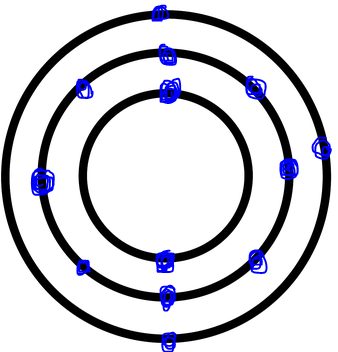
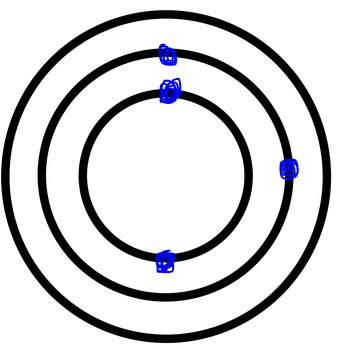
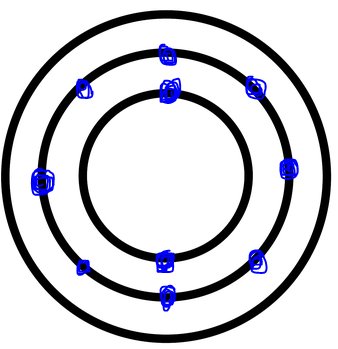
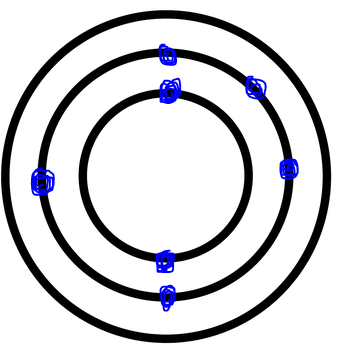
Match the following shell diagram to the correct atom.
| Draggable item | arrow_right_alt | Corresponding Item |
|---|---|---|
Berilium | arrow_right_alt | |
Neon | arrow_right_alt | |
Nitrogen | arrow_right_alt | |
Aluminum | arrow_right_alt |
Match the following elements to the charge their ion would have
| Draggable item | arrow_right_alt | Corresponding Item |
|---|---|---|
N | arrow_right_alt | +1 |
Br | arrow_right_alt | +2 |
Mg | arrow_right_alt | -3 |
K | arrow_right_alt | -1 |
Why do ions form?
Atoms that lose electrons are ____________ and ____________.
Which of the following formulas are correct? (the numbers should be read as subscripts)
What is the proper formula for Magnesium hydroxide?
what is the charge of the following polyatomic ions?
| Draggable item | arrow_right_alt | Corresponding Item |
|---|---|---|
ammonium | arrow_right_alt | 2- |
hydroxide | arrow_right_alt | 3- |
phosphate | arrow_right_alt | 1+ |
Sulfate | arrow_right_alt | 1- |