ELPAC Reading practice to use with secondary students. Use as a group or individual activity. See trends in reading and help your students make slight adjustments with big returns in real-time! Also works well for extra practice at the upper elementary level.
***Best when assigned in chunks (work on one section at a time and review answers)
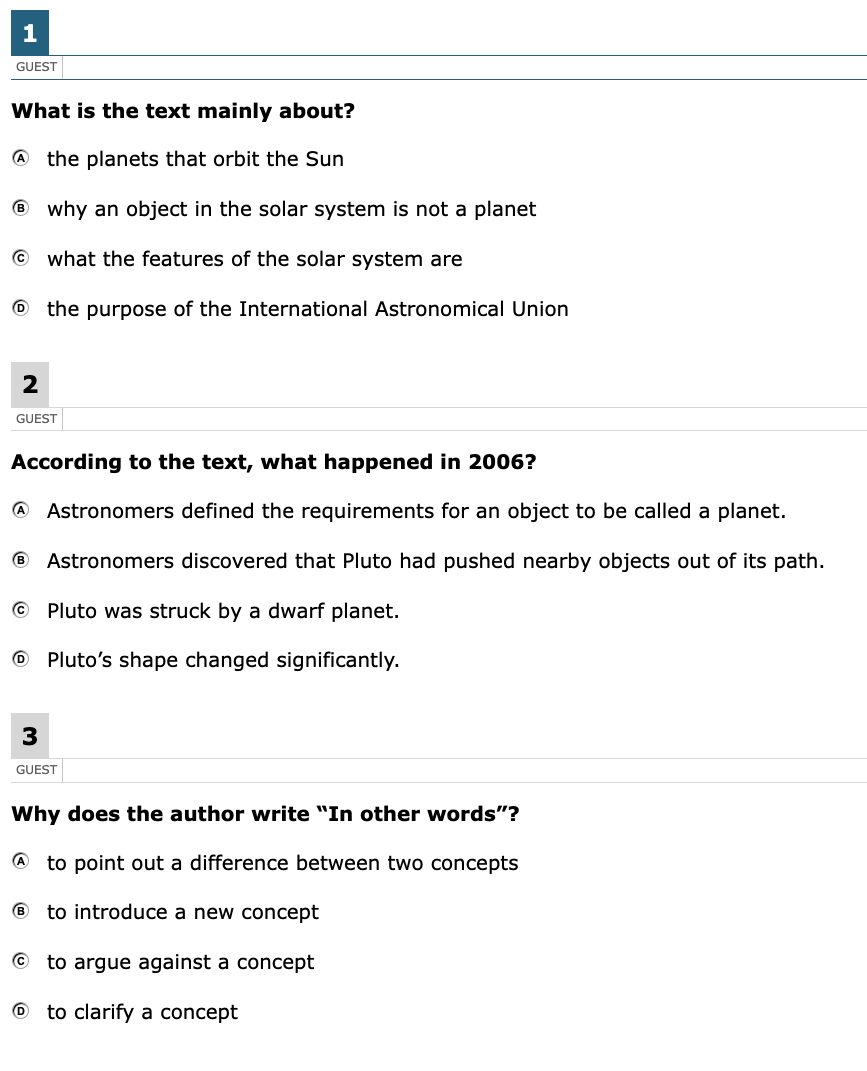
What is the text mainly about?
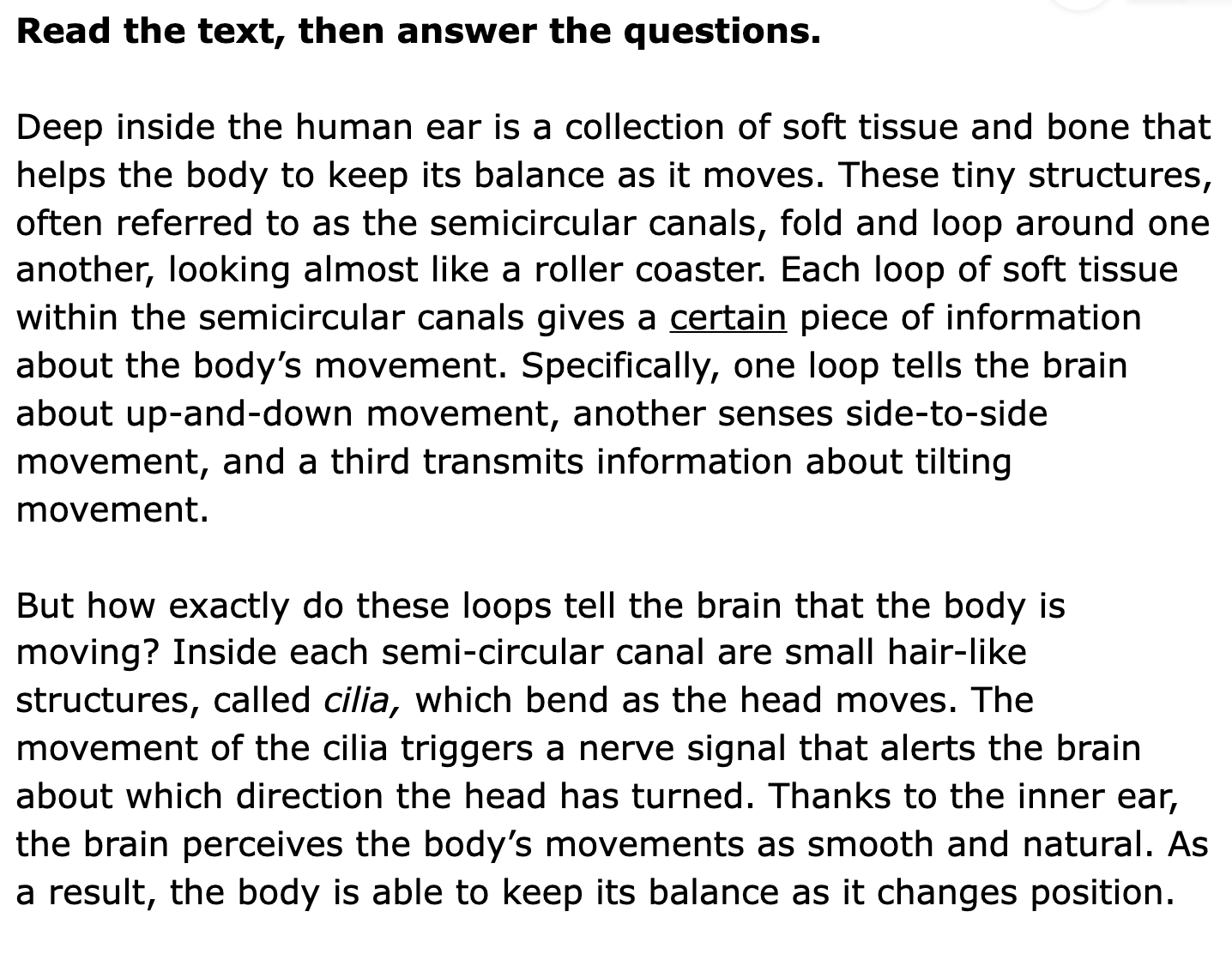

First, read the definition of the word certain.
certain adj. v. 1. confident 2. guaranteed 3. particular 4. constant
Then read this sentence from paragraph 1.
Each loop of soft tissue within the semicircular canals gives a certain piece of information about the body's movement.
What definition best matches the meaning of certain as it is used in the sentence?
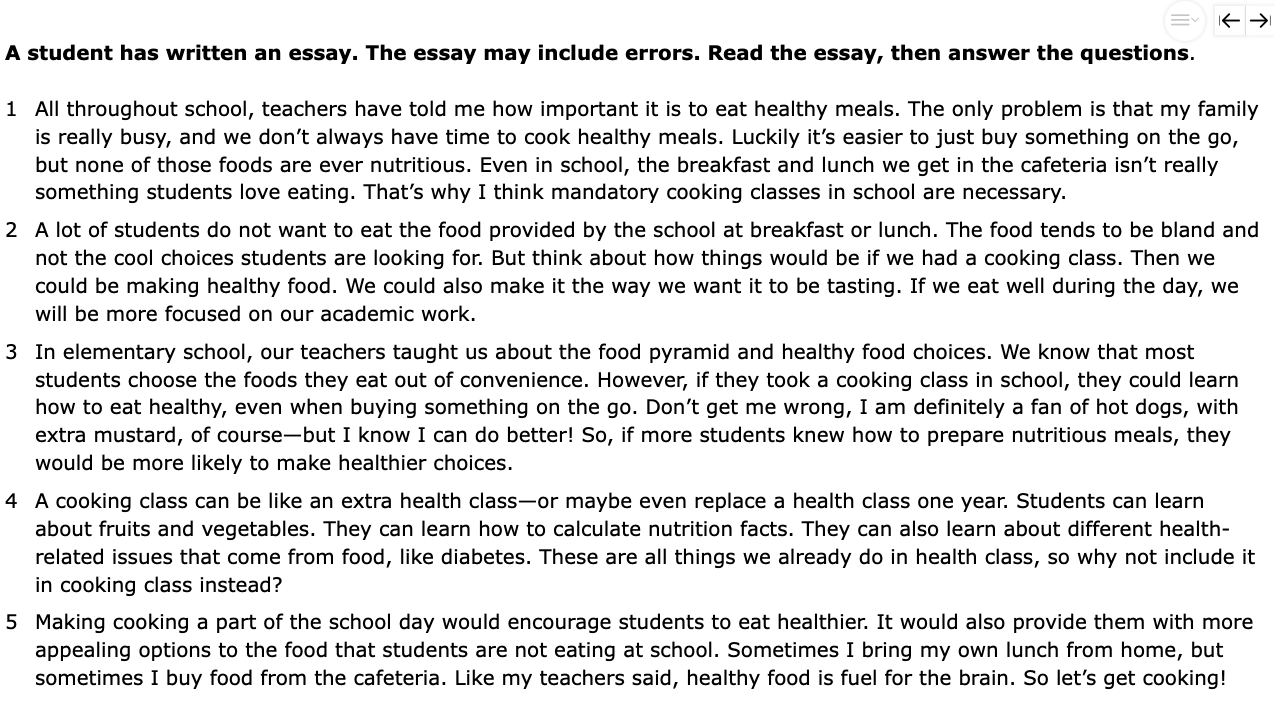
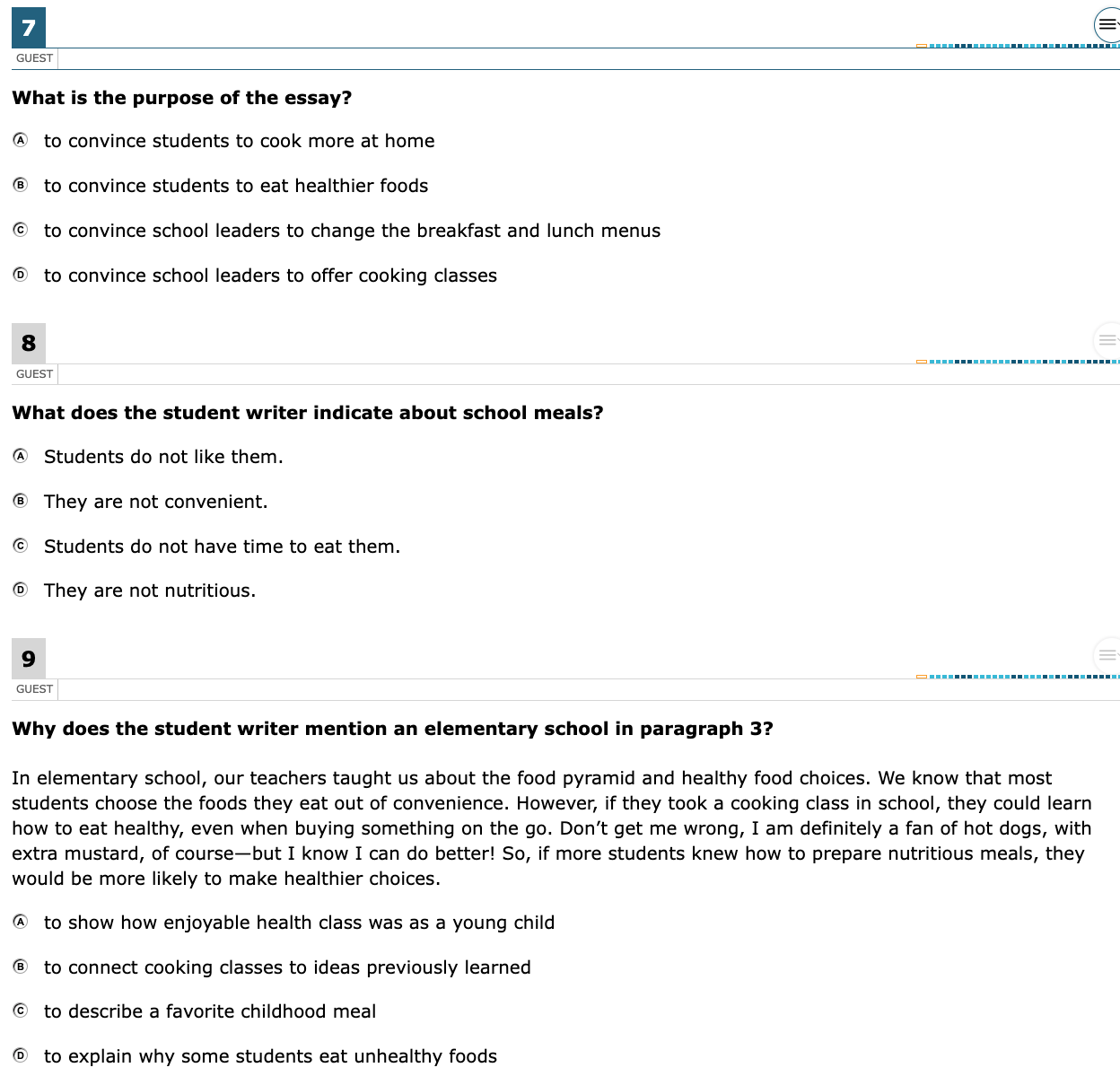
What is the purpose of this essay?
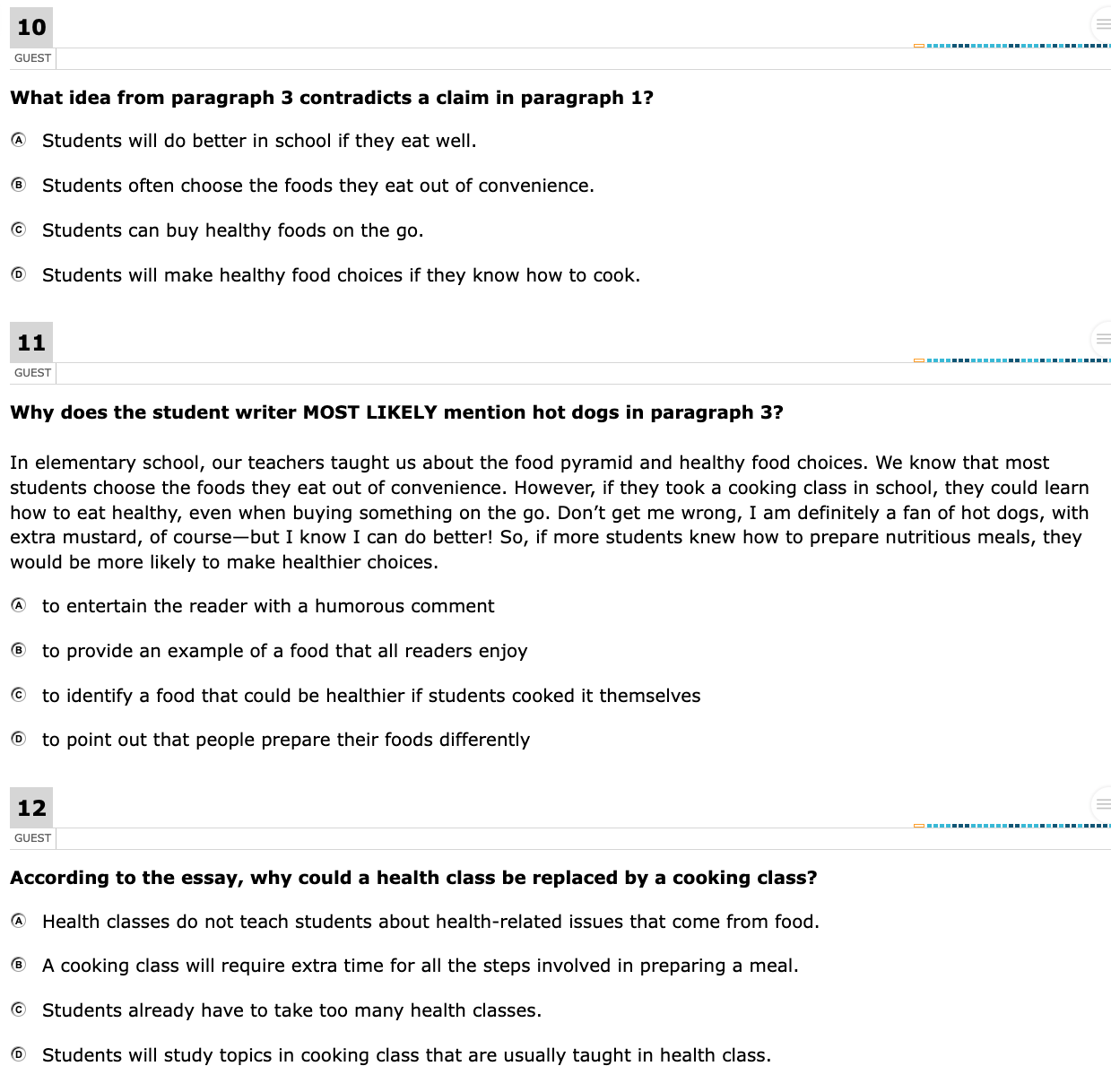
What idea from paragraph 3 contradicts a claim in paragraph 1?
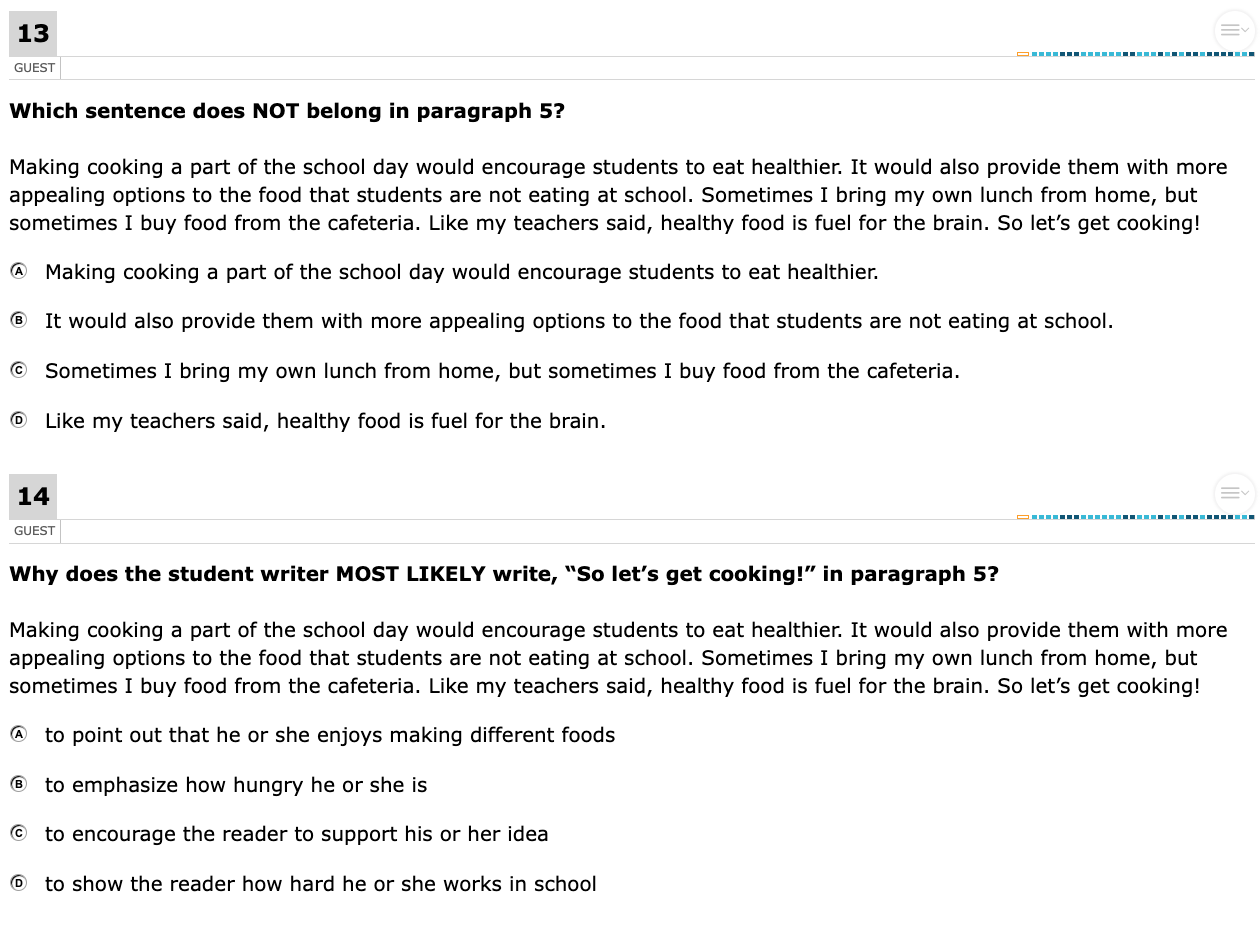
Which sentence does NOT belong in paragraph 5?
Making cooking a part of the school day would encourage students to eat healthier. It would also provide them with more appealing options to the food that students are not eating at school. Sometimes I bring my own lunch from home, but sometimes I buy food from the cafeteria. Like my teahcers said, healthy food is fuel for the brain. So let's get cooking!


What is the main theme of the story?
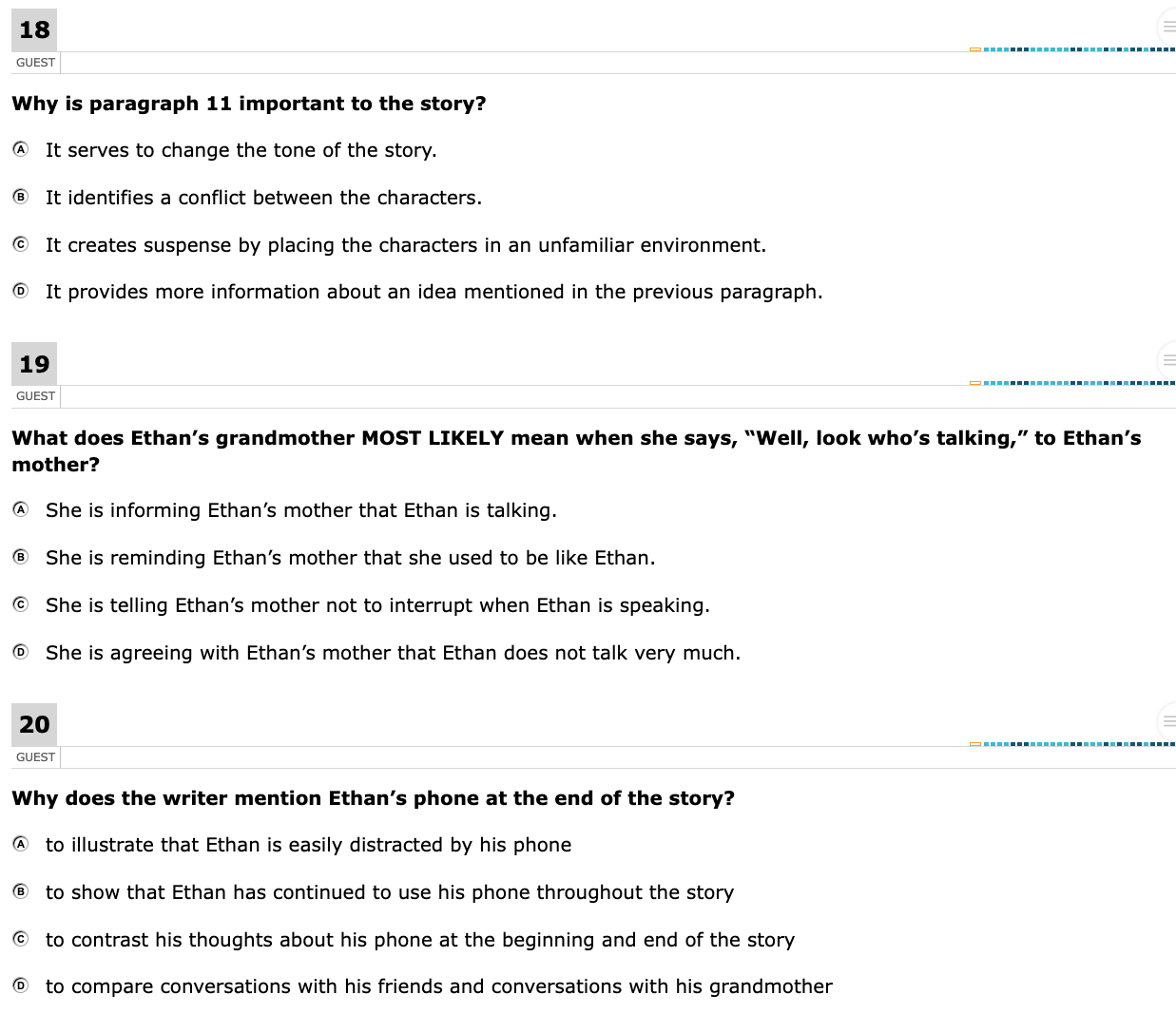
Why is paragraph 11 important to the story?
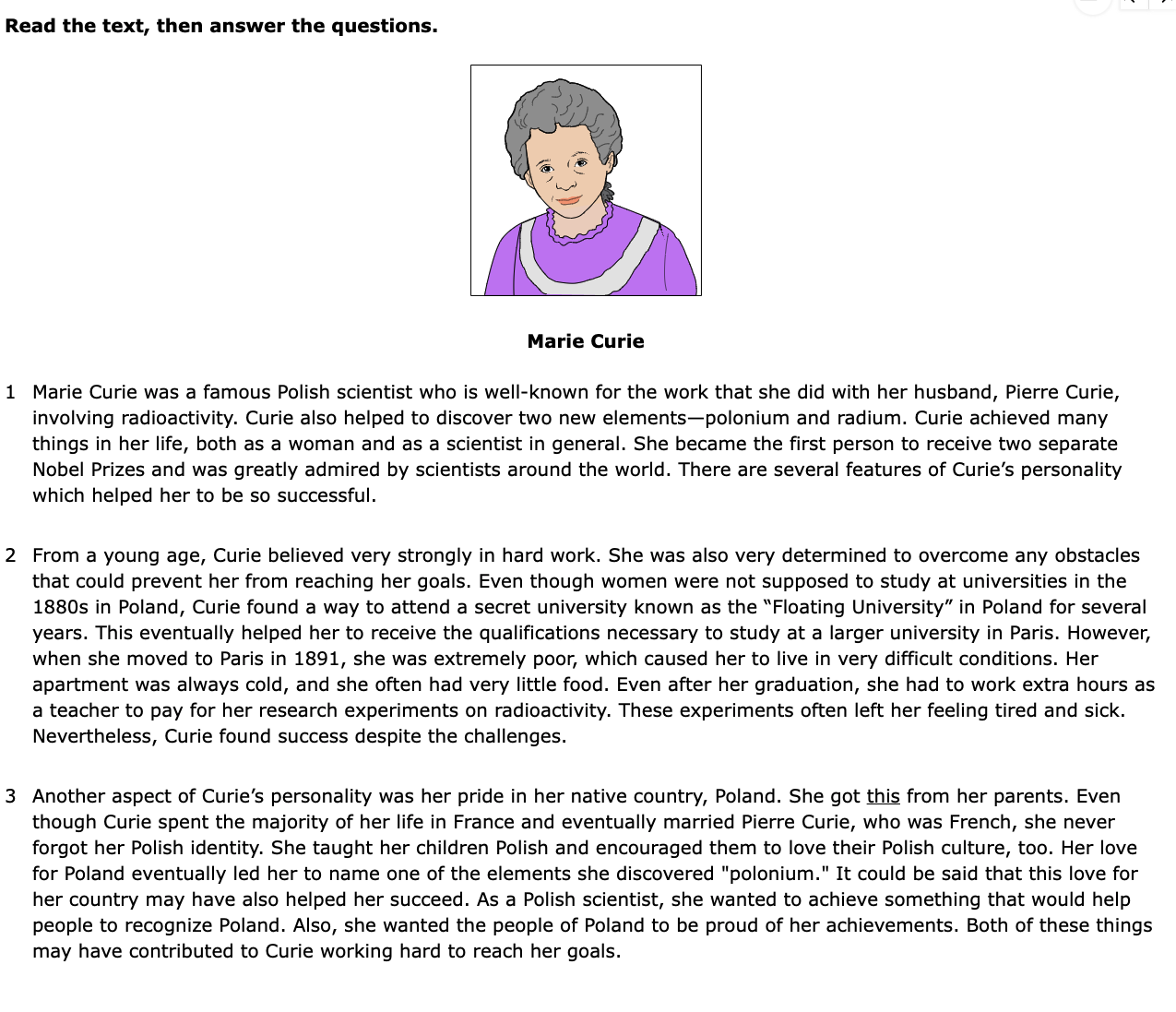

What is the text mainly about?
Read the following two sentences from paragraph 2.
Even after her graduation, she had to work extra hours as a teacher to pay for her research experiments on radioactivity. These experiments oftern left her feeling tired and sick.
What is the BEST expression that could be used at the beginning of the second sentence to link it to the first sentence?

What is TRUE about polonium?
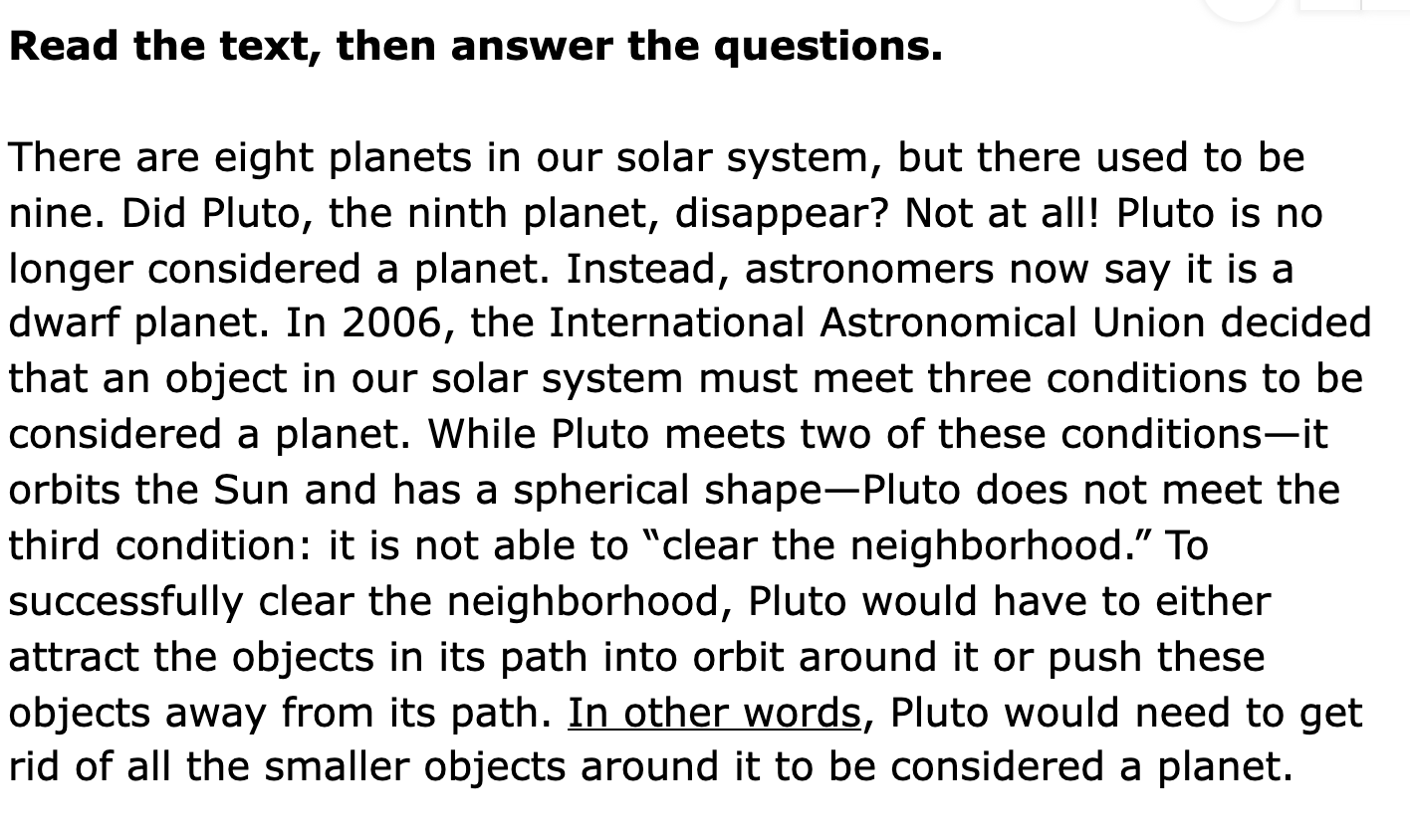
According to the text, what happened in 2006?
Why does the author write "In other words"?
What happens when the cilia move?
What would most likely signal a problem with a person's semicircular canals?
What does the student writer indicate about school meals?
Why does the student writer mention an elementary school in paragraph 3?
In elementary school, our teachers taught us about the food pyramid and healthy food choices. We know that most students choose the foods they eat out of convenience. However, if they took a cooking class in school, they could learn how to eat healthy, even when buying soemthing on the go. Don't get me wrong, I am definietly a fan of hot dogs, with extra mustard, of course-but I know I can do better! So, if more students knew how to prepare nutritious meals, they would be more likely to make healthier choices.
Why does the student writer MOST LIKELY mention hot dogs in paragraph 3?
In elementary school, our teachers taught us about the food pyramid and healthy food choices. We know that most students choose the foods they eat out of convenience. However, if they took a cooking class in school, they could learn how to eat healthy, even when buying soemthing on the go. Don't get me wrong, I am definietly a fan of hot dogs, with extra mustard, of course-but I know I can do better! So, if more students knew how to prepare nutritious meals, they would be more likely to make healthier choices.
According to the essay, why could a health class be replaced by a cooking class?
Why does the student writer MOST LIKELY write, "So let's get cooking!" in paragraph 5?
Making cooking a part of the school day would encourage students to eat healthier. It would also provide them with more appealing options to the food that students are not eating at school. Sometimes I bring my own lunch from home, but someimes I buy food from the cafeteria. Like my teahcers said, healthy food is fuel for the brain. So let's get cooking!
Why does Ethan's mother sigh in paragraph 5?
What can be inferred about Ethan during the car ride to the supermarket?
What does Ethan's grandmother MOST LIKELY mean when she says, "Well, look who's talking," to Ethan's mother?
Why does the writer mention Ethan's phone at the end of the story?
Why does the author mention the "Floating University" in paragraph 2?
From a young age, Curie believed very strongly in hard work. She was also very determined to overcome any obstacles that could prevent her from reaching her goals. Even though women were not supposed to study at universities in the 1880s in Poland, Curie found a way to attend a secret university known as the "Floating University" in Poland for several years. This eventually helped her to receive the qualificiations necessary to studey at a a larger university in Paris. However, when she moved toParis in 1891, she was extremely poor, which caused her to live in very difficult conditions. Her apartment was always cold, and she oftyern had very little food. Even after her graduation, she had to work extra hours as a teacher to pay for her research experiments on radioactivity. These experiments oftern left her feeling tired and sick. Nevertheless, Curie found success despite the challenges.
Why was Ms. Curie's early life in Paris so difficult?
What does the word "this" refer to in paragraph 3:
Another aspect of Curie's personality was her pride in her native country, Poland. She got this from her parents. Even though Curie spent the majority of her life in France and eventually married Pierre Curie, who was French, she never forgot her Polish identity. She taught her children Polish and encouraged them to love their Polish culture, too. Her love for Poland eventually led her to name one of the elements she discovered "polonium." It could be said that this love for her country may have also helped her succeed. As a Polish scientist, she wanted to achieve somehting that would help people to reconginze Poland. Also, she wanted the people of Poland to be proud of her achievemnets. Both of these thngs may have contributed to Curie working hard to reach her goals.