Twa kɔ nsɛm atitiriw so
Log in
Sign up for FREE
arrow_back
Laabri

Electrostics Quiz

star
star
star
star
star
Last updated over 1 year ago
5 Nsɛmmisa
Ɛhia
2
Ɛhia
1
Ɛhia
1
Ɛhia
2
Ɛhia
4
Asemmisa {{asɛmmisaAhyɛnsode}}
1.

The charge of an electron is -1,6 x10⁻¹⁹ C.

How many protons are needed to make 1 C of charge?

Asemmisa {{asɛmmisaAhyɛnsode}}
2.

In a physics lab, you charge up three metal spheres, two with +3nC each, and one with −4nC. When you bring all three spheres together so that they all touch one another, what is the total charge on all three spheres which are now touching?

Asemmisa {{asɛmmisaAhyɛnsode}}
3.

Consider the triboelectric series given below:
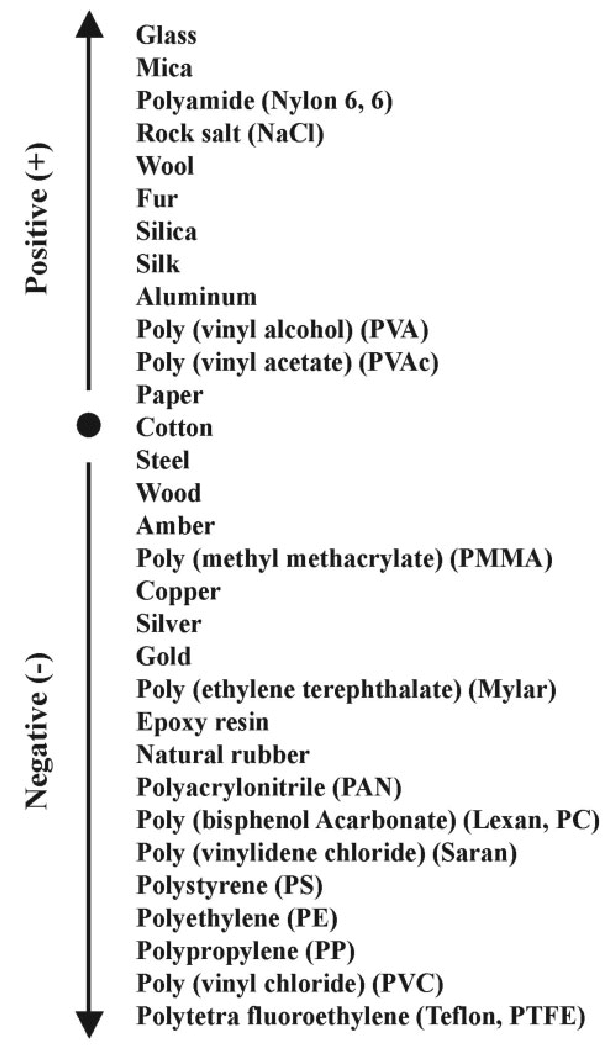
Pick the correct statement describing what will happen when a glass rod is rubbed against silk

Asemmisa {{asɛmmisaAhyɛnsode}}
4.

Two charged pith balls on isolated strings are brought into contact with each other. Initially ball one had a charge of +11nC and ball two has a charge of +7nC. Calculate the number of electrons transferred from one ball to the next. The charge of an electron is -1,6 x10⁻¹⁹ C

Asemmisa {{asɛmmisaAhyɛnsode}}
5.

Match the definitions to the correct terms.

Draggable itemarrow_right_altCorresponding Item

When a charged object is brought near an uncharged object, causing the electrons in the uncharged object to move to one side, creating two oppositely charged ends.

arrow_right_alt

conduction

The process of removing the excess charge on an object by means of the transfer of electrons between it and another object of substantial size, or with the earth.

arrow_right_alt

induction

The neutral body is charged without any direct contact with the charged body.

arrow_right_alt

polarization

The neutral body is charged by a charged body through direct contact with the charged body.

arrow_right_alt

grounding