Part A: Multiple Choice (40%) ____ / 40 points
Directions: Identify the choice that best completes the statement or answers the question.
Period 1 (1491-1607)
Where did the largest and most sophisticated civilizations exist in the New World before Columbus arrived?
The goal of the Spanish explorations into North America was to
Columbus called the native peoples he encountered “Indians” because
What was Bartolome de Las Casas’ relationship to the encomienda system?
Spain secured its claim to Columbus’ “discoveries” in the ____, dividing the “heathen lands” of the New World with Portugal.
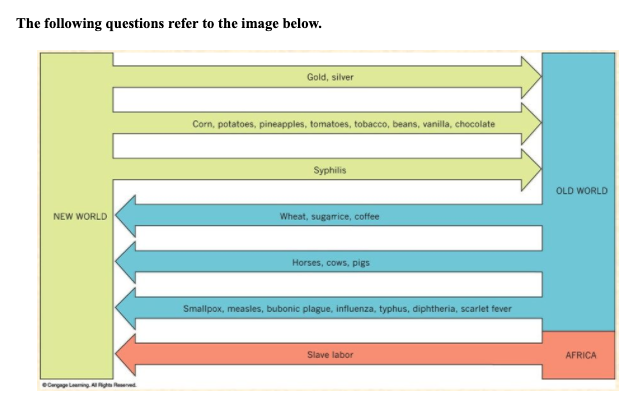
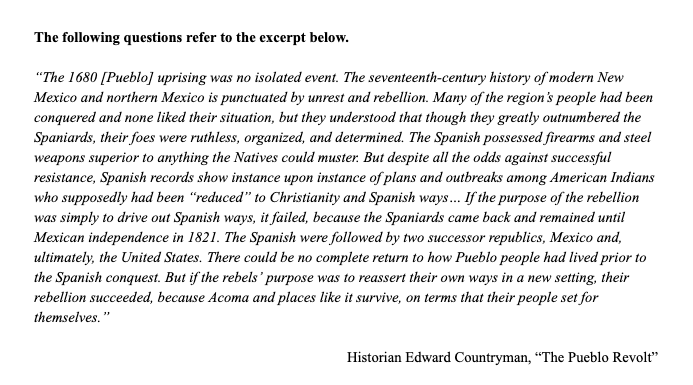
The passage supports which of the following historical trends?
Why did early Jamestown settlers starve in spite of an abundance of local fish and game?
What pushed poorer Englishmen to become indentured servants in the colonies?
New Englanders differed from their counterparts in the Chesapeake because
King Philip’s War represented
Which of the following strained the relationship between the colonies and Britain?
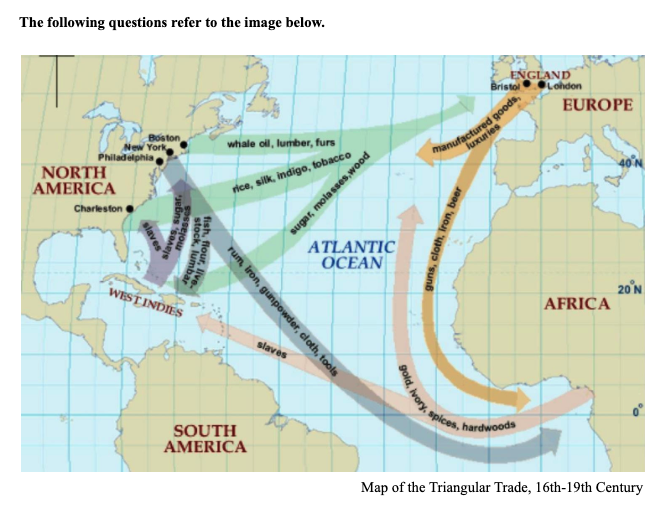
The map most directly illustrates that
Why did colonists vehemently object to the Stamp Act?
What is true of African Americans during the American Revolution?
The final draft of the Declaration of Independence did NOT include
A result of the Great Compromise was that
As the first 10 amendments to the U.S. Constitution, the Bill of Rights was intended to protect ____ against the potential tyranny of ____.
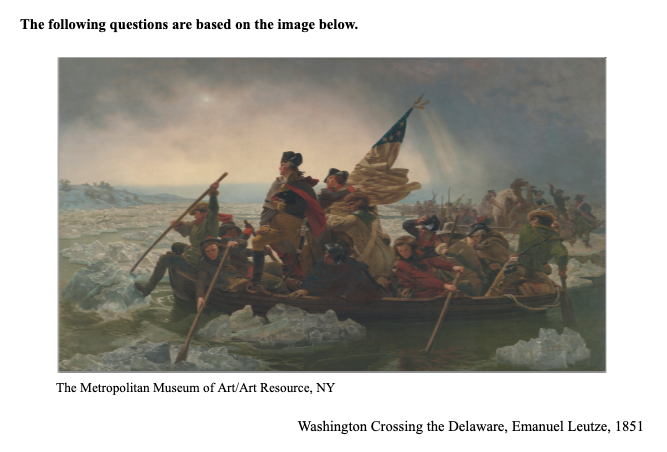
This painting commemorates a turning point in the Revolutionary War by emphasizing which of the following as a significant reason for the ultimate American victory?
In the 1840s, the view that God had ordained the growth of an American nation stretching across North America was called
As a result of the introduction of the cotton gin,
During the Industrial Revolution, advances in manufacturing and transportation brought
The “cult of domesticity”
The purpose of the Seneca Falls Convention was to
The fulfillment of Jefferson’s proposal in the excerpt would be used to support which of the following executive acts?
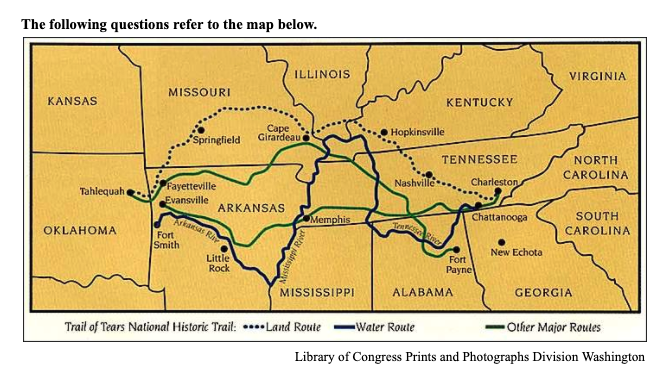
Which of the following best explains President Jackson’s reasoning for authorizing the Indian Removal Act of 1830?
Which of the following was the most dramatic demographic effect of the Columbian Exchange on the New World?
Horses, which came to the New World in the Columbian Exchange,
What was the major effect of the introduction of sugar to the New World?
As seen in the passage, which of the following was a similarity between Spanish and British colonizers?
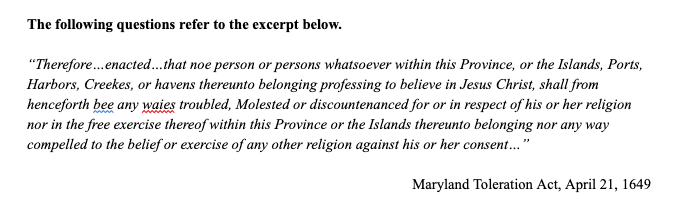
The legislation excerpted above reflects which of the following historical trends?
Which of the following was a result of trends like those seen in the excerpt?
All of the following statements are true of the period in which the legislation was enacted EXCEPT:
Which of the following represents the Triangular Trade’s impact on the colonies?
The Proclamation above sought to address British-Indian relations following the conclusion of
The intent of the Proclamation above was to
Which of the following best explains why British colonists would have been frustrated by the Proclamation above?
The troops mustered by the American Continental Army were generally motivated by a belief in
The immediate diplomatic goal Jefferson sought through his proposal in the excerpt was most likely
The fulfillment of the proposal in the excerpt would most immediately affect American Indians by
Which of the following statements best reflects the consequences of the Indian Removal Act of 1830?