NS 3.3 (2/4)
star
star
star
star
star
Last updated over 2 years ago
5 questions
0
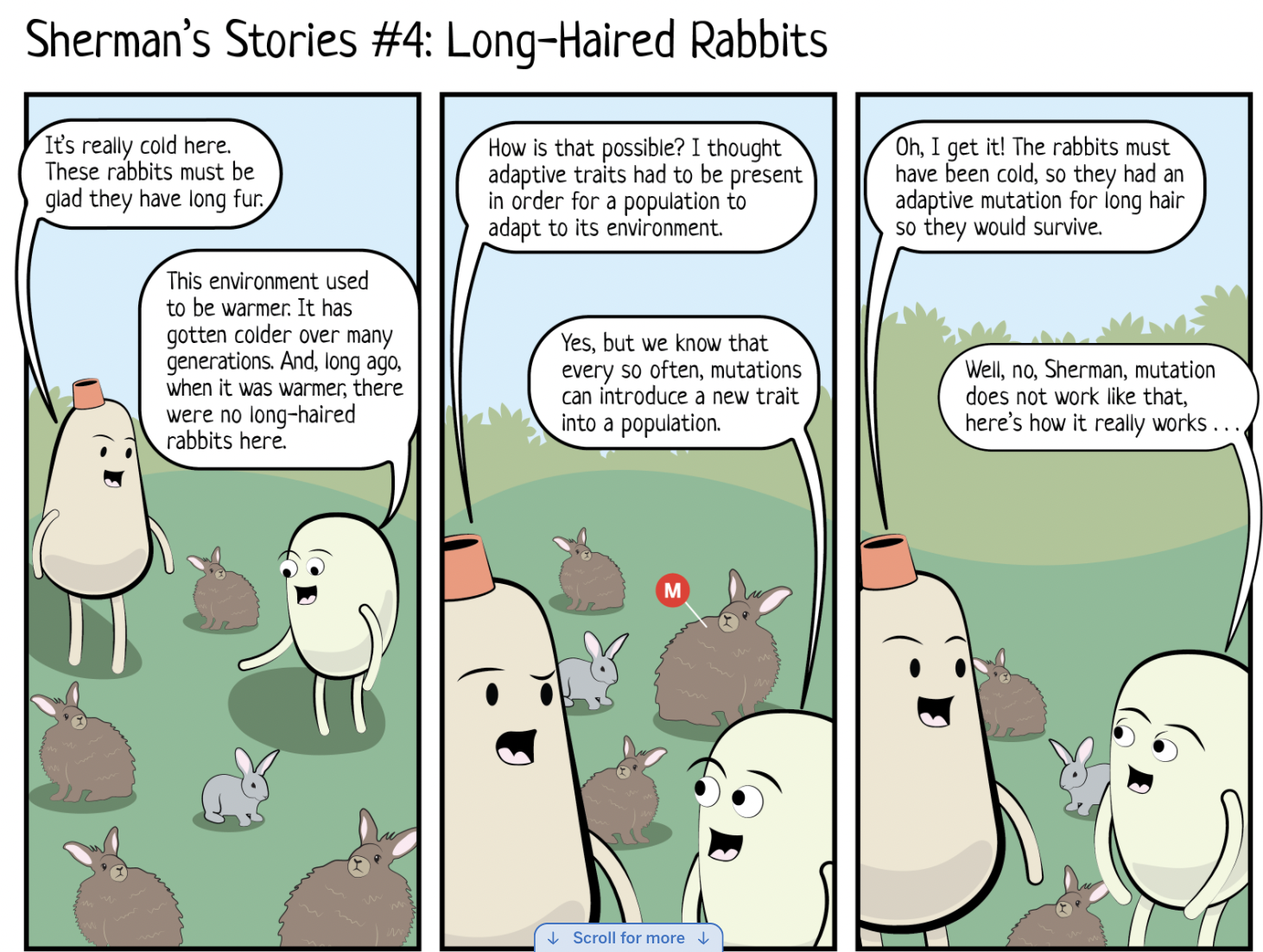
Why did the mutation that resulted in a long-hair trait in these rabbits become more common in the population?
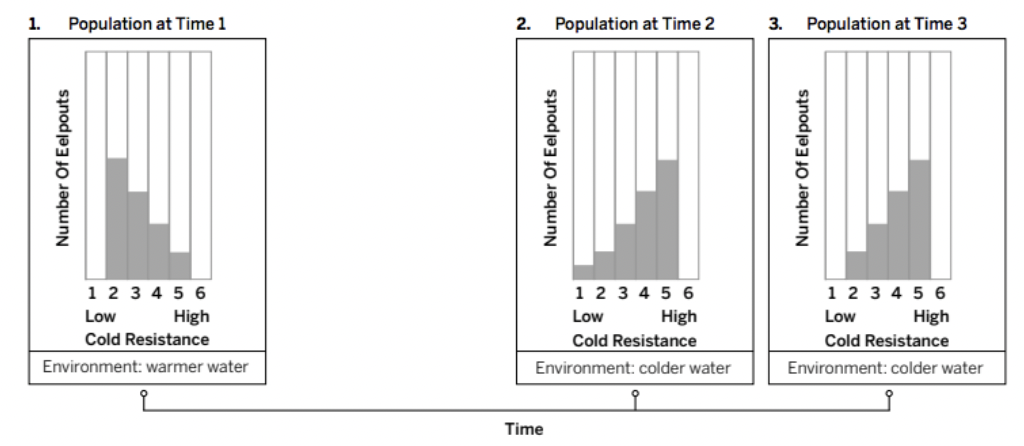
At Time 1, the Antarctic eelpout lived in warmer water. When land masses moved millions of years ago, the water became colder. Time 2 represents some time after the environment changed. Time 3 represents many generations after the environment changed. Review the histograms below.
0
Add annotations to the histograms to help you identify which traits are due to a mutation.
0
Did mutations affect which trait was the most common at Time 3? Why or why not? Add annotations to the histograms to help you answer this question. Then, write an explanation about your annotations below. Use all of these words in your explanation:
0
Add annotations to the histograms to help you identify which traits are due to a mutation.
0
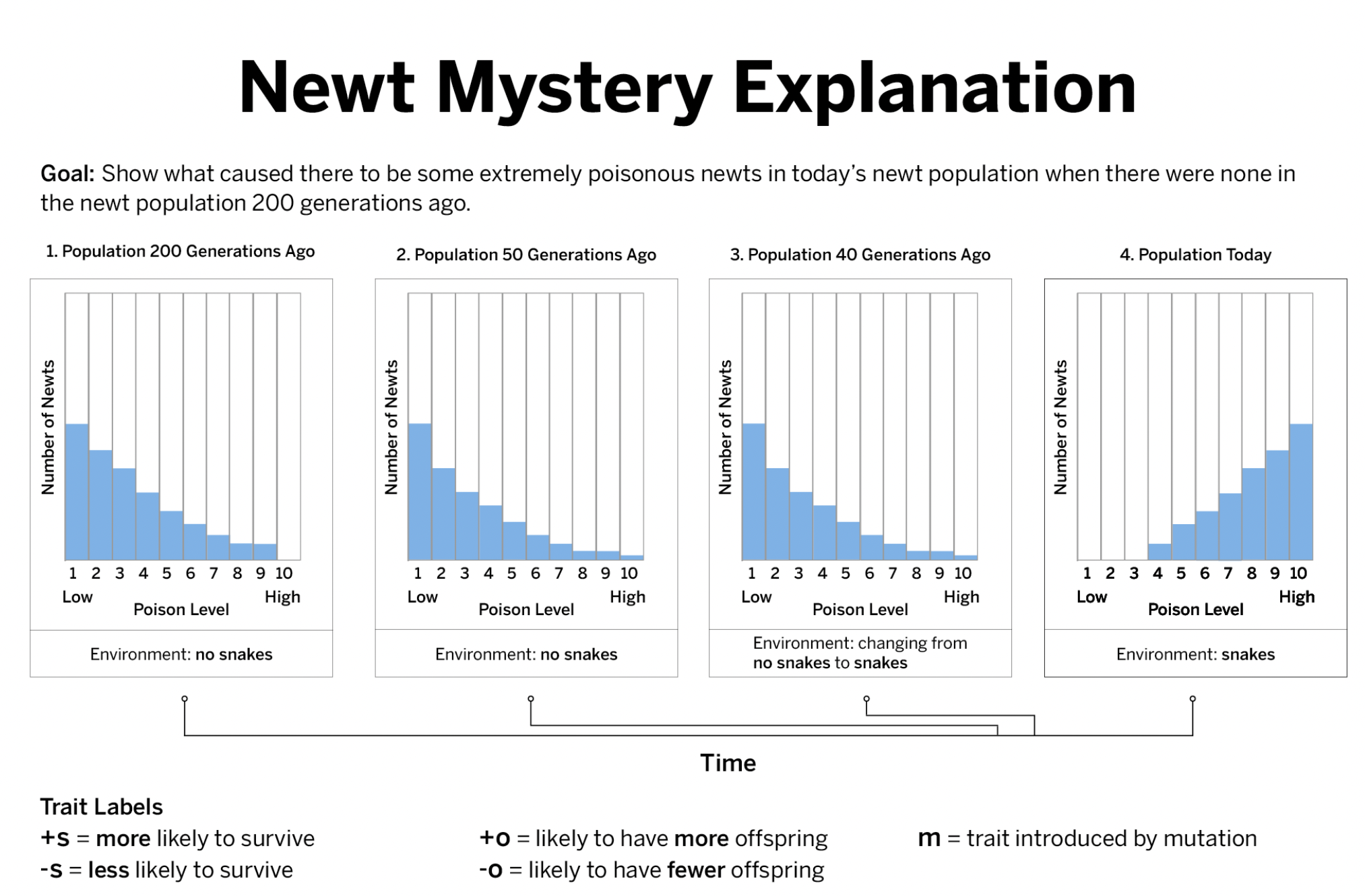
Explain how your model answers the question: How did a poison-level trait that wasn’t always present in the newt population become the most common trait?CFS:- accurately identifies the adaptive trait in the environment
- accurately identifies traits based mutations or natural selection
- accurately describes the environment in which a trait is adaptive
- accurately describes how adaptive traits become more common in an environment
Explain how your model answers the question: How did a poison-level trait that wasn’t always present in the newt population become the most common trait?
CFS:
- accurately identifies the adaptive trait in the environment
- accurately identifies traits based mutations or natural selection
- accurately describes the environment in which a trait is adaptive
- accurately describes how adaptive traits become more common in an environment