Log in
Sign up for FREE
arrow_back
Library

1/26/22 and 1/27/22_Organ Systems Review

star
star
star
star
star
Last updated 2 days ago
20 questions
1
Question 1
1.

1
1
1
1
1
1
1
1
1
1
1
1
1
1
1
1
1
1
1
The Digestive System

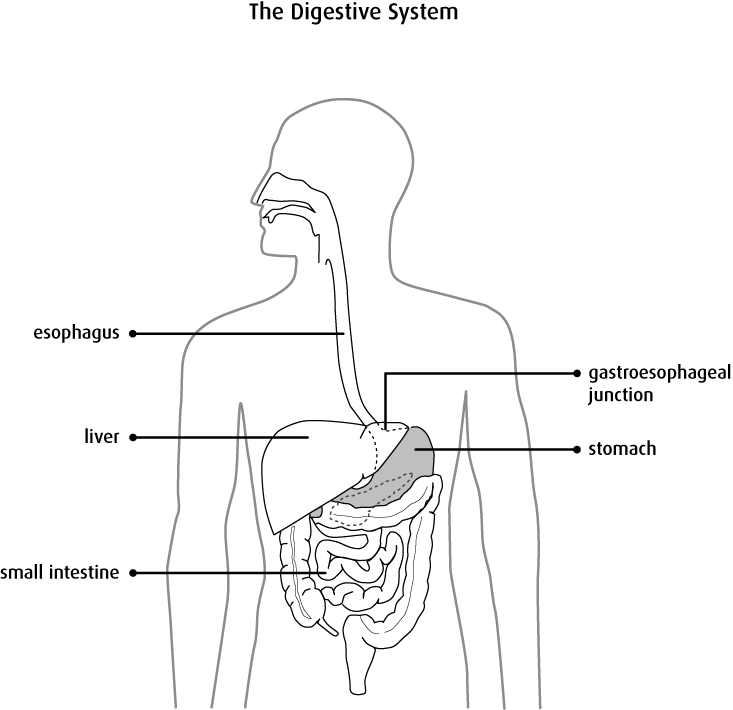
What happens after you bite into a piece of food? First you chew the food, and then it travels through your body’s digestive system. That system breaks down the food into small pieces so that it can be used as energy for your body.

Food travels to several places as it is digested, or broken down.


When you take a bite out of an apple and start to chew, the apple mixes with the liquid in your mouth called saliva. Your saliva helps break down food.

When you swallow food, it travels down a tube called the esophagus. That tube leads to your stomach.

The stomach is made up of muscles that squeeze the food and mix it with special juices. That turns the food into liquid.

The liquid moves to the intestines, where it is broken down again. The healthy parts of food that your body needs, called nutrients, are sent to other parts of your body. The unhealthy parts are pushed out of your body.

A calorie is a unit of energy. Your digestive system works to break down food, and your body burns the calories from food.
What does your digestive system do?
Question 2
2.

What are three organs in your digestive system?

Question 3
3.

What parts of food are pushed out of your body?

The Skeletal System

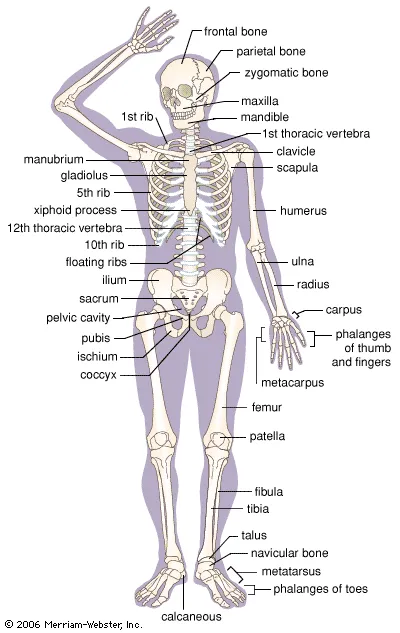
You need your skeleton. The skeletal system, or framework of bones, doesn’t just hold you up. It gives your body its shape, protects your organs, and works with your muscles to help you move.


At birth, you had more than 300 bones, which fused together as you grew. By the time your body is finished growing, you’ll have about 206 bones. Researchers at Wright State University School of Medicine in Ohio have discovered that kids who exercise have stronger bones as adults.

Your body has plate-like bones that cannot move, such as those that make up the cranium. The cranium protects your brain.

The stirrup bone, also called the stapes, is in the ear. It is the smallest bone in the human body.

Your body is made up of many movable bones, such as the humerus, which is located in the upper arm.

Your ribs provide a protective casing for important organs, such as your heart and lungs.

The spine is made up of 33 bones called the vertebrae.

The thighbone is called the femur. It’s the longest and strongest bone in your body.

More than half the bones in your body are in the hands and feet. Each hand has 27 bones. Each foot has 26 bones.

How can you make your bones stronger? Make sure your body gets enough calcium. That bone-building mineral is found in foods and drinks such as yogurt, leafy greens, and milk.
Question 4
4.

What does your skeletal system do?

Question 5
5.

Does the number of bones you have in your body increase or decrease as you get older?

Question 6
6.

Where is the smallest bone in your body?

Question 7
7.

What is the function of your ribs?

Question 8
8.

What do you need to make your bones stronger?

The Nervous System

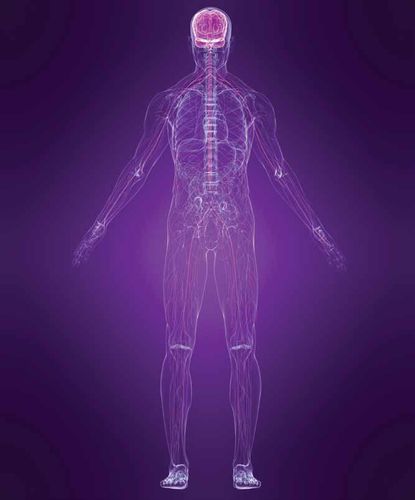
The skeletal system is made up of bones. The muscular system is made up of muscles. The nervous system is made up of—you guessed it—nerves!

You have about 200 bones in your body. You have about 650 muscles to help you move those bones around. How many nerves do you think you have?

A thousand? Nope. You have more than that.

Ten thousand? That’s still too low. Try again.

A million? Believe it or not, that’s still too low.

You have about a billion nerves in your body.
Your nerves allow you to keep track of what’s happening in the world around you. The nerves send messages to the brain. Then, the brain tells your body how to act.

Have you ever walked outside and felt a chill that sent you back inside to get a coat? What happened was the nerves in your skin sent a message to your brain. The message was, “It’s cold out here!”

Have you ever touched something hot? Chances are you pulled your hand away pretty quickly. That’s because your nerves sent a message to your brain.

Nerves are important for our sense of touch. Without nerves, we couldn’t feel heat or cold. We couldn’t touch things and find out if they are smooth or rough.

Nerves are important for our other senses, too. Without nerves, we couldn’t see or hear. We couldn’t smell or taste our food.
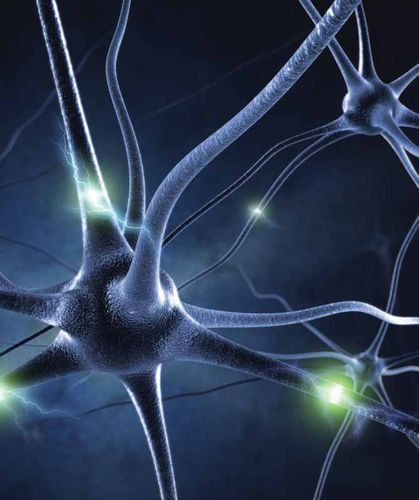
The nerves in your body are made up of nerve cells. A single nerve contains many nerve cells.

Here is an illustration of nerve cells. You can see that nerve cells have long stringy parts that lead away from the center. The center of the cell is called the cell body. The stringy parts that lead away from the cell body are called dendrites.

You can think of the dendrites as being like roads. Imagine that you want to send a letter to your aunt who lives in another town. Someone will have to put the letter in a car or truck and drive it to your aunt’s house. You might do this yourself. You might pay the post office to do it. When one of the nerves in your body wants to send a message to your brain, it sends the message out along the dendrites. The message travels along the dendrites, much as a car or truck travels along a road. Each of the little green dots in the picture is a message traveling along a dendrite.
�
Question 9
9.

What is the nervous system made up of?

Question 10
10.

How many nerves do you have in your body?

Question 11
11.

What do your nerves send to your brain?

Question 12
12.

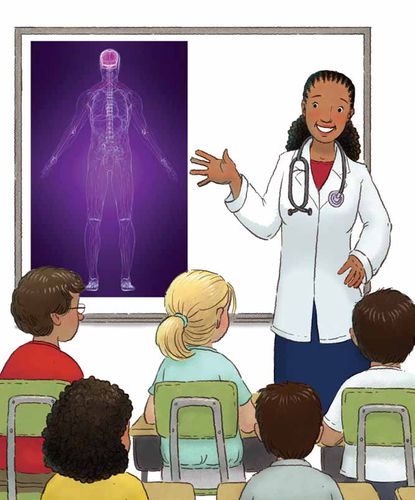
Look at the boy in the picture. What kind of message do you think his nerves are sending to his brain?

Question 13
13.

Why are nerves important?

Question 14
14.

What are dendrites like? Why?

The Muscular System

When you walk down the street, ride your bike, or even yell hello to a friend, you are using muscles. Here’s the good news: everyone can have stronger muscles and prevent injuries.

Muscles: A Lot of Work!

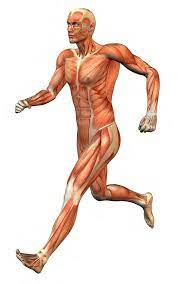
The human body has three types of muscle. There are skeletal, smooth, and cardiac muscles. Smooth and cardiac muscles work without you having to control them. Some body parts that have smooth muscle include the stomach, intestines, and eyes. Cardiac muscle can only be found in the heart.

Skeletal muscle is the most common type of muscle in the body. Skeletal muscles are responsible for almost all of the body’s movements. These muscles are usually attached to bones by strong tissue called tendons. Your body has more than 650 skeletal muscles. Skeletal muscles are generally voluntary, which means you can control them. These muscles help you run, jump, and do all kinds of activities. And they can be injured if you don’t take proper care of them.

Skeletal muscles are different sizes and shapes, depending on their job. Back muscles are some of the biggest and strongest muscles in your body because they help hold you upright. Smaller muscles in your hands let you bend your fingers.
Skeletal muscles work in a simple way. They react when they receive messages from your nerves. For example, when you kick a soccer ball, a nerve signal travels from your brain to your leg muscles, making them move.

What Pain Means

Your body moves by using muscles, bones, tendons, and ligaments. Ligaments usually connect bones together. Muscles, ligaments, and tendons can be injured if you push them too hard.

To avoid hurting your muscles, warm them up before exercising, says David Waymann, an exercise physiologist at the University of Michigan Health System. Walk or jog in place for at least five minutes to get blood to your muscles. "Don’t use stretching as a substitute for a warm-up," Waymann says. After exercising, cool down by walking slowly. Finally, stretch for a few minutes to keep joints and muscles from getting stiff.

Fun Facts About Muscles

  • Where are the busiest muscles in your body? In your eyes! Scientists estimate that the eye muscles move about 100,000 times a day.
  • Your muscles are always partly contracted. That maintains muscle tone, keeping muscles firm and healthy. It is the only skeletal muscle activity that you cannot control.
  • The body’s largest muscle is the gluteus maximus muscle in the buttocks.

Question 15
15.

What are the three types of muscles?

Question 16
16.

Why are smooth and cardiac muscles similar?

Question 17
17.

What do your skeletal muscles do?

Question 18
18.

How do your skeletal muscles and your nervous system work together?

Question 19
19.

What can you do to avoid hurting your muscles?

Question 20
20.

Which fun fact do you think is the most interesting?