ER 19 Ex. 19c (p. 152)
star
star
star
star
star
Last updated 6 months ago
14 Nsɛmmisa
5
5
5
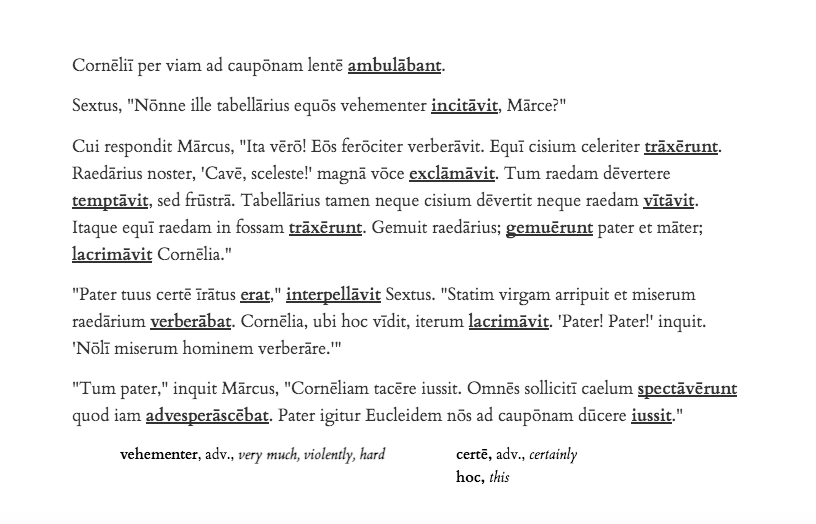
Identify each verb from the story as IMPERFECT or PERFECT.
ambulābant
incitāvit
exclāmāvit
vītāvit
trāxērunt
gemuērunt
erat
verberābat
spectāvērunt
advesperāscēbat
iussit
IMPERFECT
PERFECT
Identify each verb from the story based on its PERFECT STEM MARKER.
incitāvit
trāxērunt
exclāmāvit
temptāvit
vītāvit
gemuērunt
interpellāvit
spectāvērunt
iussit
arripuit
-v-
-s-
-u-
-x
Identify each verb from the story based on its PERFECT STEM MARKER.
incitāvit
trāxērunt
exclāmāvit
temptāvit
vītāvit
gemuērunt
interpellāvit
spectāvērunt
iussit
arripuit
-v-
-s-
-u-
-x
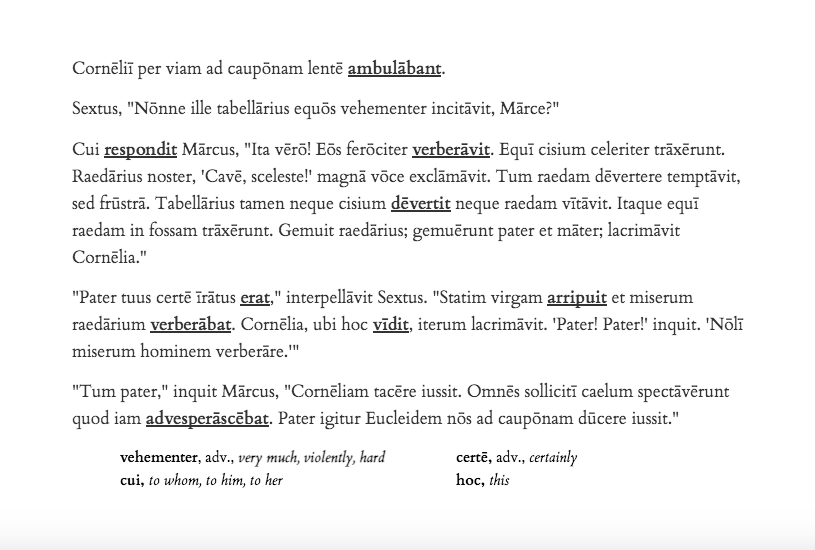
Explain why the imperfect tense is used here. (You will need to translate the sentence in order to answer.)
The principal parts of this verb are: respondeō, respondēre, respondī. Is it present or perfect tense?
Explain your answer to the previous question. (You will need to translate the sentence in order to answer.)
Explain why, based on the context of the story, this verb is perfect tense here and imperfect down below (in the second to last paragraph)?
The principal parts for this verb are: dēvertō, dēvertere, dēvertī. The present and perfect tense forms are identical in the 3rd person singular. But, based on context, which tense makes the most sense here?
Explain your answer to the previous question. (You will need to translate the sentence in order to answer.)
Explain why the imperfect tense is used here. (You will need to translate the sentence in order to answer.)
Even without knowing the principal parts for this verb, you have a good chance of identifying its tense correctly. Which tense is it?
Explain your answer to the question above. (You will need to translate the sentence in order to answer.)
The principal parts for this verb are: videō, videre, vīdī. Is it present tense or perfect tense?
Explain why the imperfect tense is used here. (You will need to translate the sentence in order to answer.)