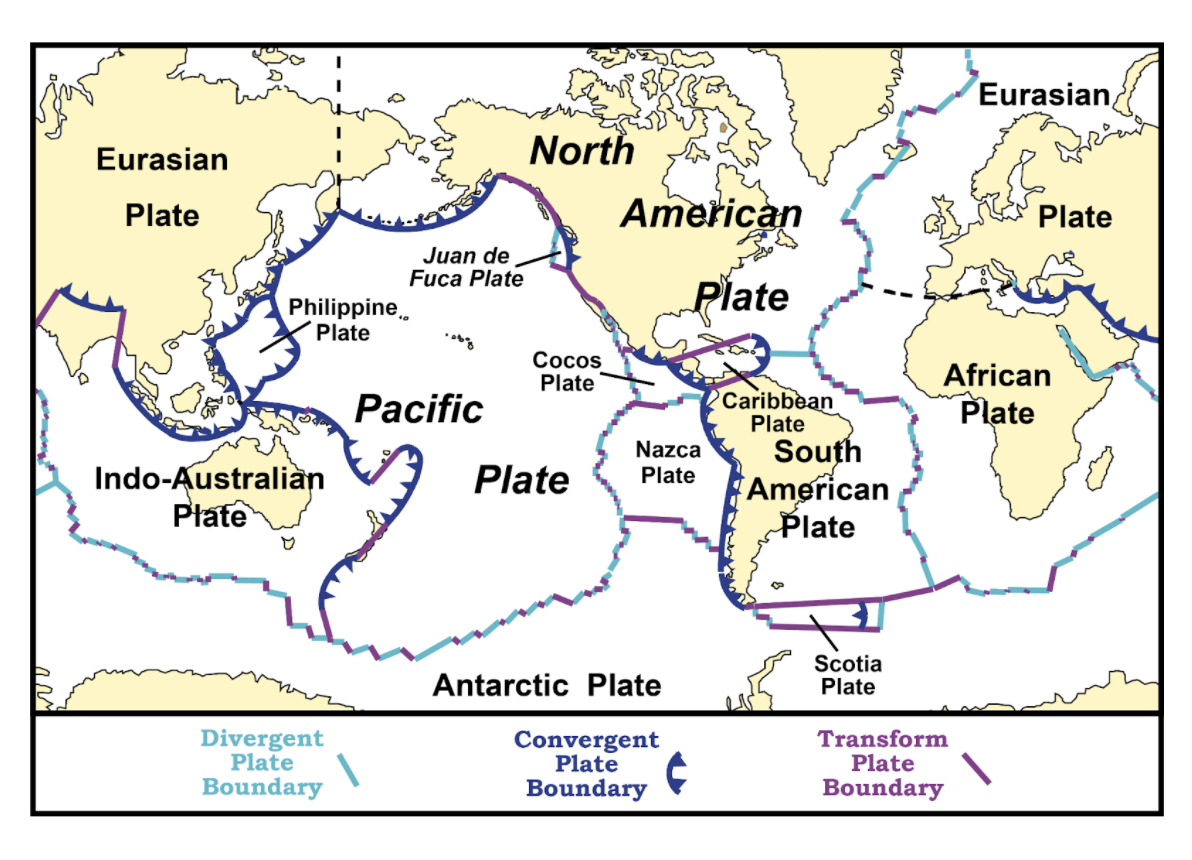
What are Plate Boundaries?
What are Plate Boundaries?
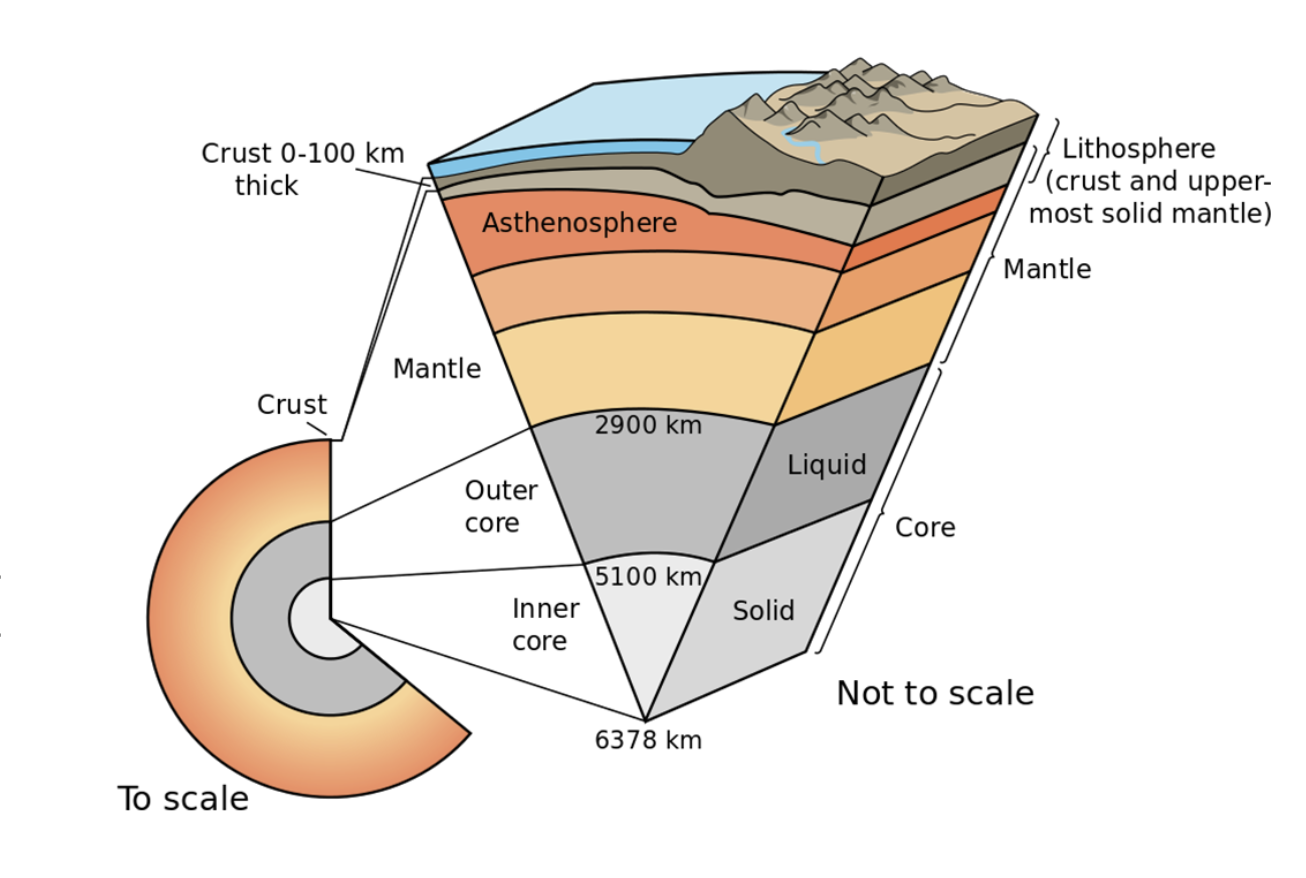
Earth is made of layers. Take notes about the layers and tectonics plates here.
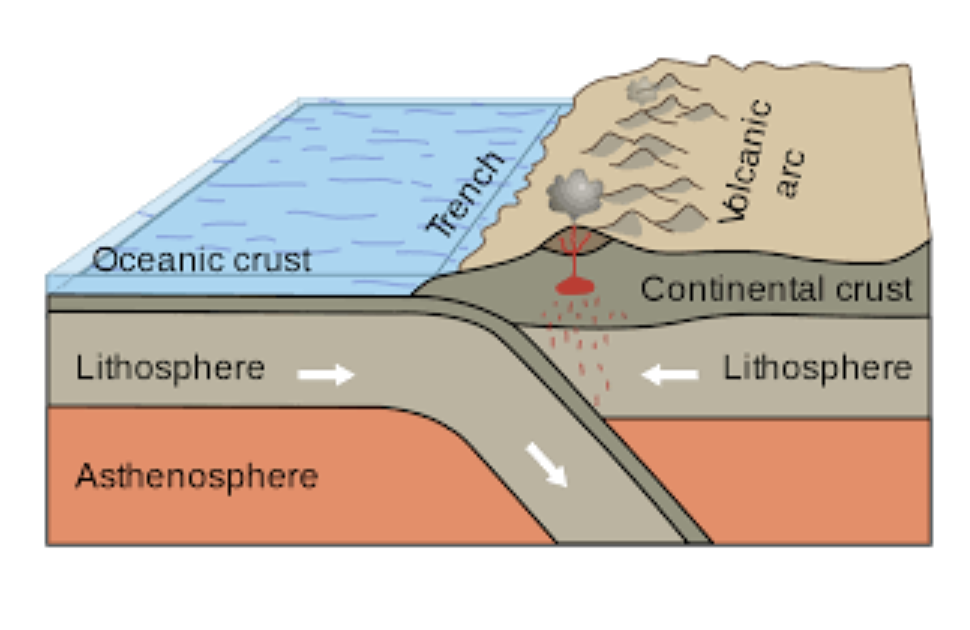
Convergent Plate Boundary
(Fill in information below while you watch the video. Blanks may indicate single words, short phrases or long phrases.)
Plates here push
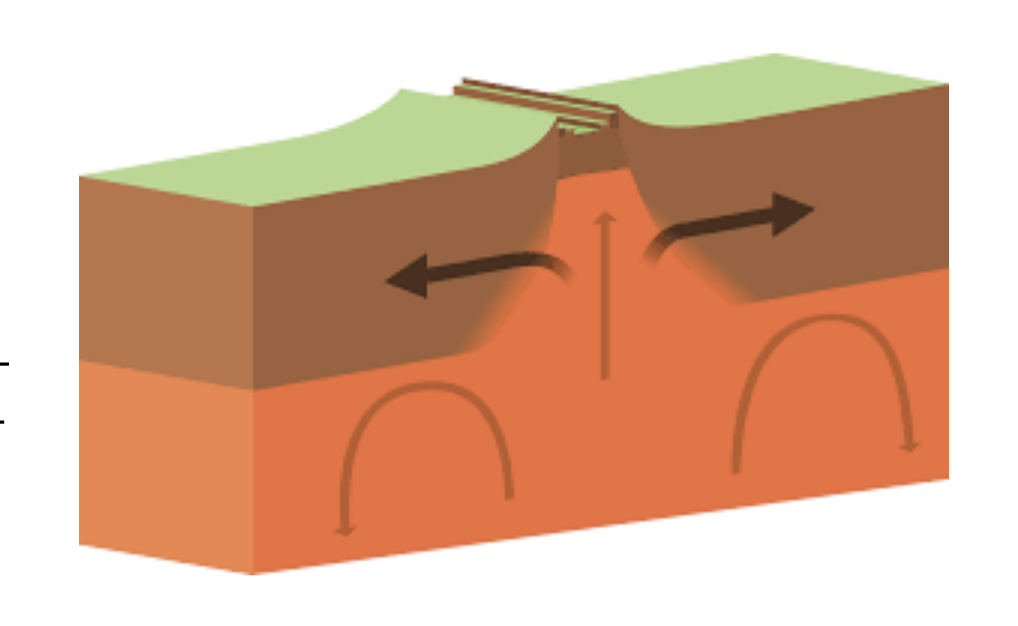
Divergent Plate Boundary
(Fill in information below while you watch the video. Blanks may indicate single words, short phrases or long phrases.)
Plates here push
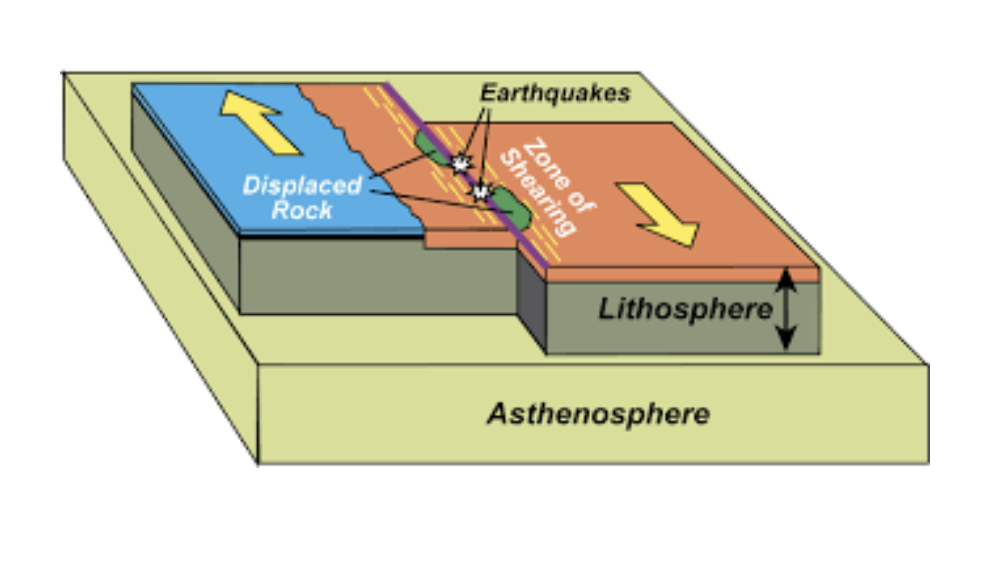
Transform or Strike/Slip Plate Boundary
(Fill in information below while you watch the video. Blanks may indicate single words, short phrases or long phrases.)
Plates here
In the figure, a
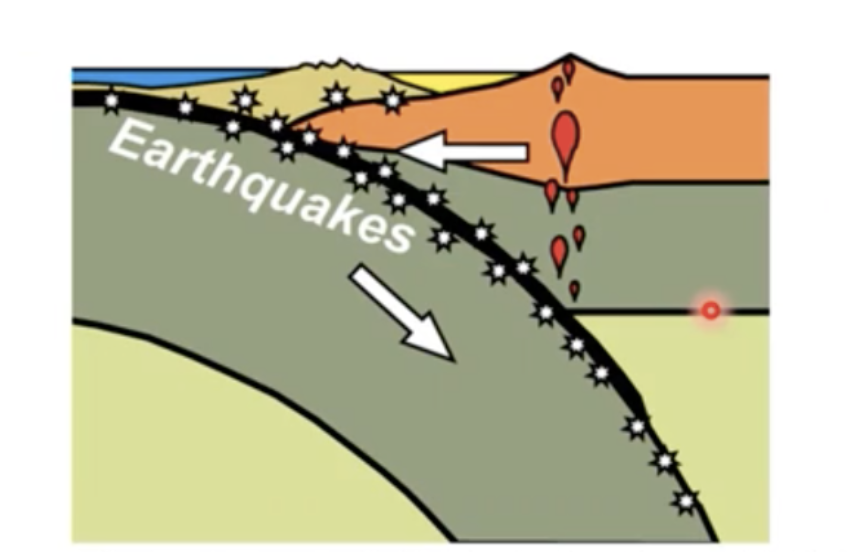
plate boundary is shown.
Which of the following boundary types is least likely to have have volcanic activity?
Big Take-Aways
The earth has layers and the plates where our oceans and land sit are the uppermost layer - the asthenosphere
The plate boundaries are divided into three types: convergent, divergent, and transform
Each plate boundary has identifiable characteristics depending on which type of boundary is formed.
Plates are moving
Each plate may have
Recall that the movement of the plates can determine geologic features at the boundary.
Examples?
Type of plate,
Examples?
Convergent & Divergent Boundaries
Plates can have multiple boundary types
Continental plates are
This can lead to several formations such as:
On the diagram below, identify the various geological formation you listed in your notes above.
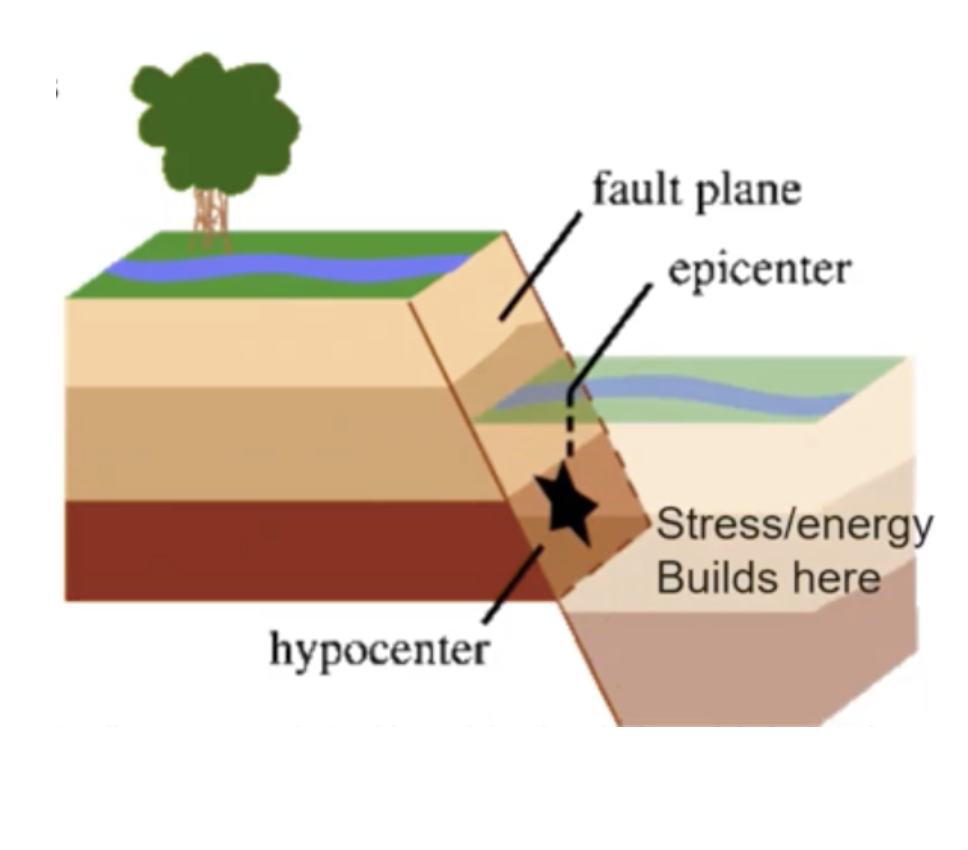
Earthquake Formation
Earthquakes occur at
Fault lines lock up -
Energy releases, causing an earthquake
At a convergent boundary, hotspots may form because one plate falls below another. This is called:
Earthquakes may form when stress builds as two plates slide past each other. Which of the following plate boundaries is described here?
Big Take-Aways
Each tectonic plate may have several boundaries with other plates.
Boundary and plate type determine the geologic features found at the site.
Earthquakes are a result of energy built up from plates locked in position for an extended period of time.
Geologic events help identify plates.
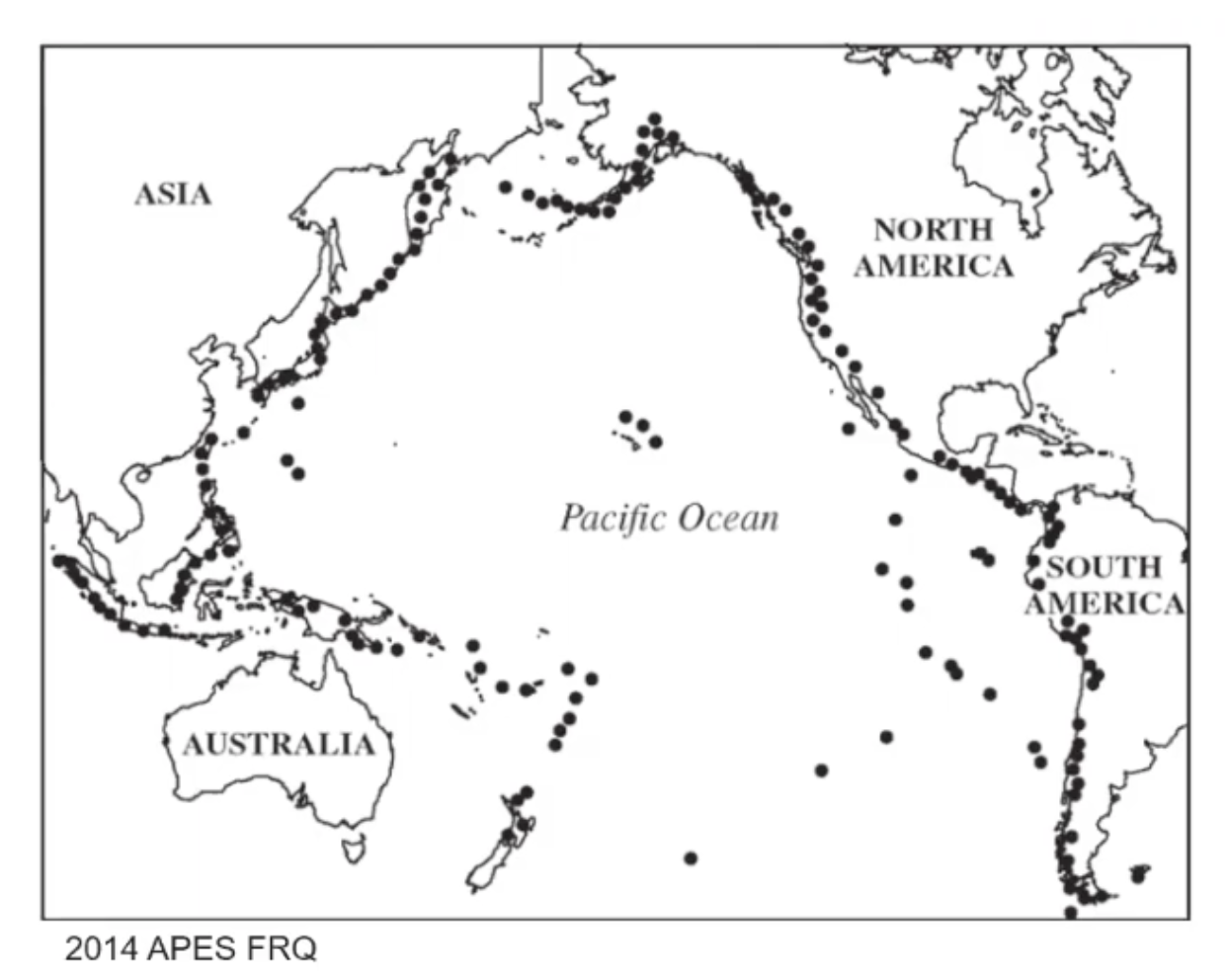
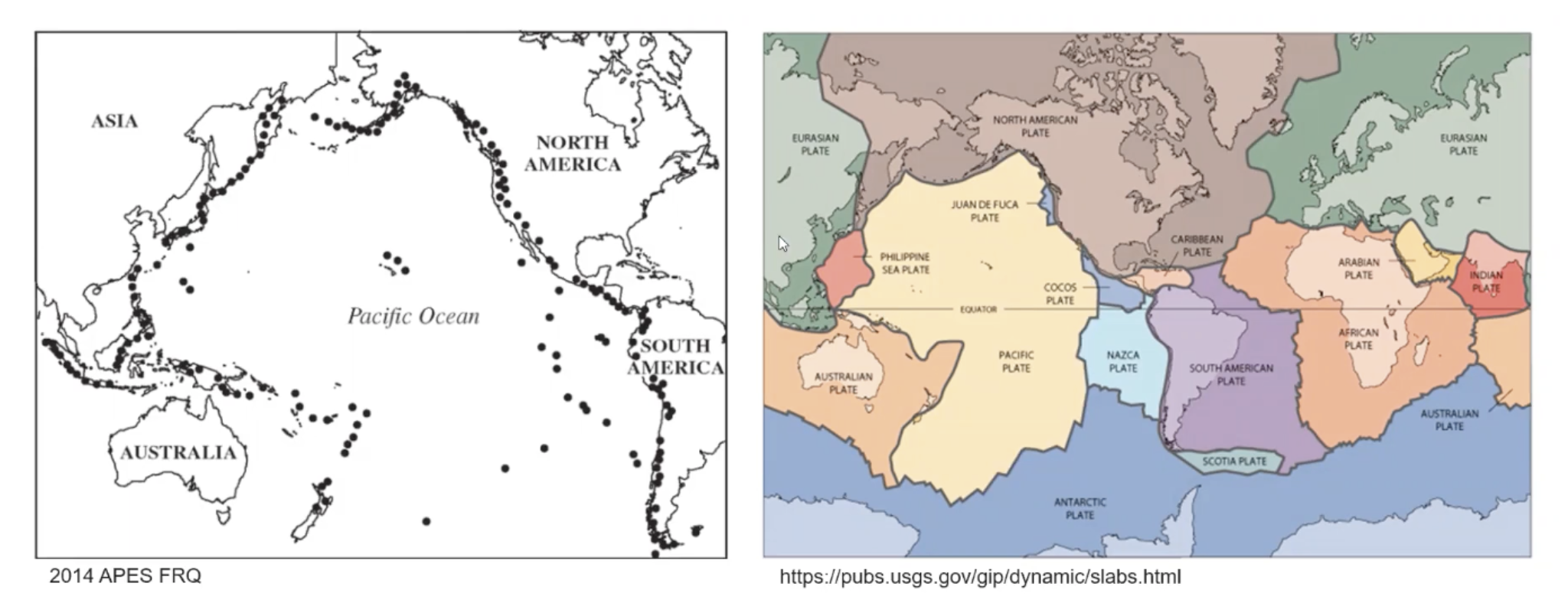
Each dot represents an earthquake or geologic event: e.g. volcano, hotspot.
Each of those events can have environmental consequences.
Tectonic Plates Consequences
Plates can have breaks in their surface, leading to volcanic island chains
Tsunamis
Tsunami -
Ecological consequences of Tsunamis -

Practice FRQ
Plate-tectonic theory states that the Earth’s lithosphere is broken into very slowly moving pieces or plates. Plate movements over vast stretches of time have led to the current orientation of our continents and oceans. Individual events along plate boundaries, such as earthquakes and volcanic eruptions, pose periodic threats to human activity and ecosystems. The “Ring of Fire” is a term that describes the location of increased seismic and volcanic activity around the margins of the Pacific Ocean basin. On the map, each dot represents a volcano or an earthquake.
Japan, Indonesia, and the Philippines are examples of volcanic island chains that have formed along subduction zones between plates in the western Pacific.
Describe what happens when two tectonic plates collide along a subduction zone.
Explain how subduction leads to volcanic activity.
In addition to volcanic activity, highly destructive tsunamis are generated along Pacific Plate subduction zones.
Explain how a tsunami is generated along a subduction zone.
Describe one negative ecological impact that tsunamis have on coastal environments.
Southern California experiences periodic devastating earthquakes along the San Andreas Fault, which is a transform boundary located along the eastern edge of the Pacific Plate.
Describe what happens to the tectonic plates along a transform boundary at the moment when an earthquake occurs.
Describe what happens to the tectonic plates along a transform boundary during the time between earthquakes.
Big Take-Aways
Seismic activity at plate boundaries is very active
This activity can lead to new land formations, such as volcanic islands and can cause tsunamis.
Earthquakes and tsunamis lead to environmental consequences.
For more information on these topics, please feel free to explore the videos below. (Optional)