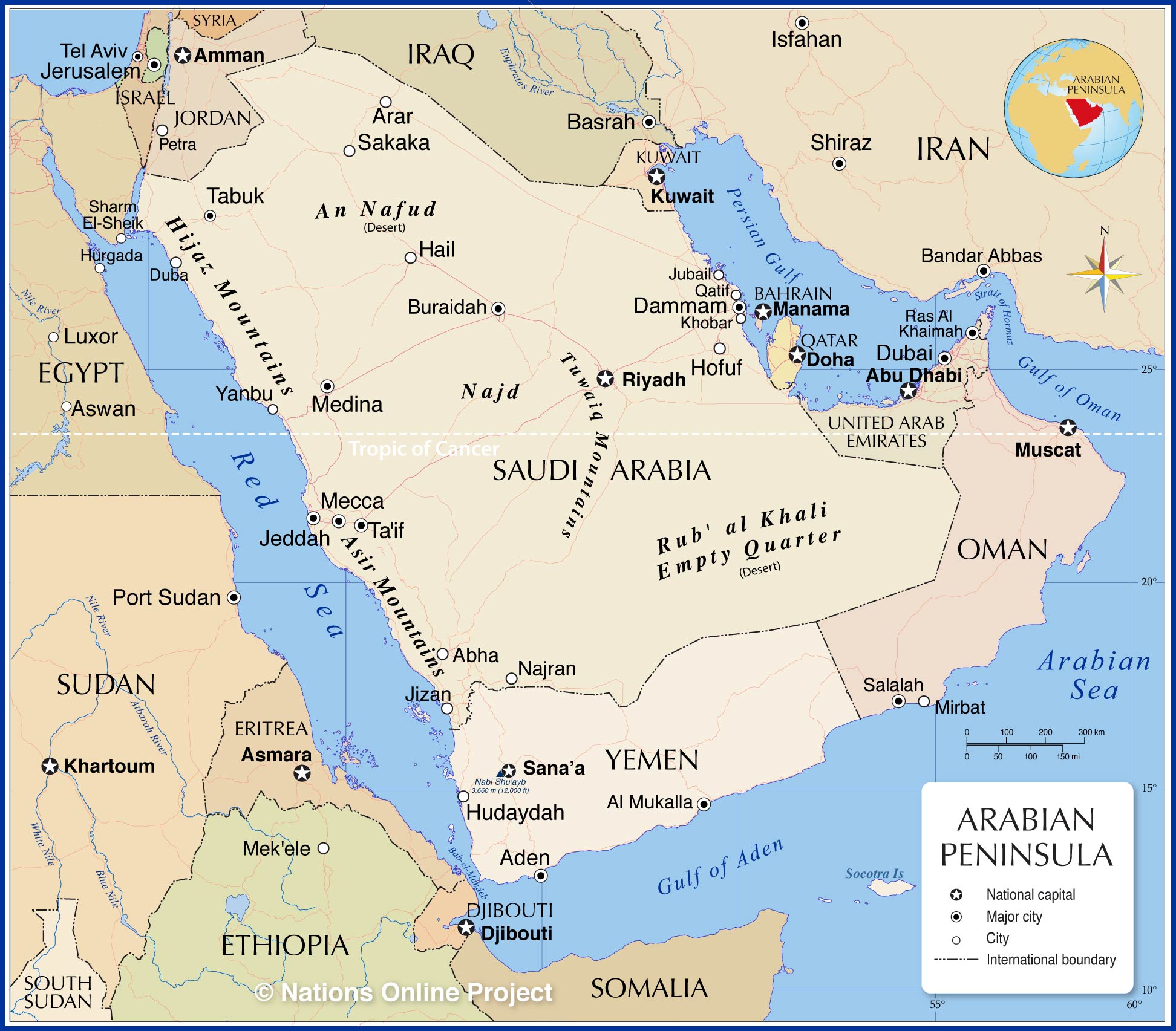
USE THE IMAGE (ANCIENT ARABIA MAP) TO ANSWER QUESTION 1.
(DOK 1) Muhammad was born in Mecca, eventually fled to Medina, then returned to Mecca as a Master. What modern-day nation do these ancient cities reside in?
(DOK 1) Which of God's archangels gave Muhammad his first revelation in 610?
(DOK 1) By Islamic law, all foods are considered lawful (halal) EXCEPT for _____.
(DOK 1) The dhimmi in early Muslim societies were
(DOK 1) Match each characteristic with the correct sect of Islam.
85% of the world's Muslim population
15% of the world's Muslim population
The principle of succession should go to the most qualified, regardless of blood connections with the Prophet.
Only blood descendants of the Prophet should become caliph.
Sunni
Shi'ite (Shia)
(DOK 2) Whcih of the following statements about Islamic faith is FALSE?
(DOK 2) Muhammad's religious awakening came
(DOK 2) The conflicts between Sunni and Shi'ite (Shia) Muslims centered in the
(DOK 2) Explain why Ramadan is celebrated.
(DOK 3) In what two ways does Islam connect to Christianity and Judaism?
(DOK 3) Explain how Muslims look at or view Christians and Jews.
USE THE TEXT (QUR'AN) TO ANSWER QUESTION 12.
"O you who have believed, prescribed for you is legal retribution (for those murdered – the free for the free, the slave for the slave, and the female for the female. But whoever overlooks from his brother anything, then there should be a suitable follow-up and payment to him with good conduct.This is an alleviation from your Lord and a mercy. But whoever transgresses after that will have a painful punishment." - Qur'an 5:45
(DOK 3) The Qur'an justifies Sharia law through the use of what ancient law code? (Be sure to include the less formal phrase to describe the punishment).