Log in
Sign up for FREE
arrow_back
Library

Evolutionary History Critical Juncture Quiz

star
star
star
star
star
Last updated almost 3 years ago
6 questions
1
1
1
1
1
2
Question 1
1.

Question 2
2.

Question 3
3.

Question 4
4.

Question 5
5.

Question 6
6.

Flor is studying the evolutionary history of house geckos, Pacific gulls, and wolves. All three species share some body structures, but they also have some differences in their body structures. Below is a table that includes information about the body structures that Flor is studying.
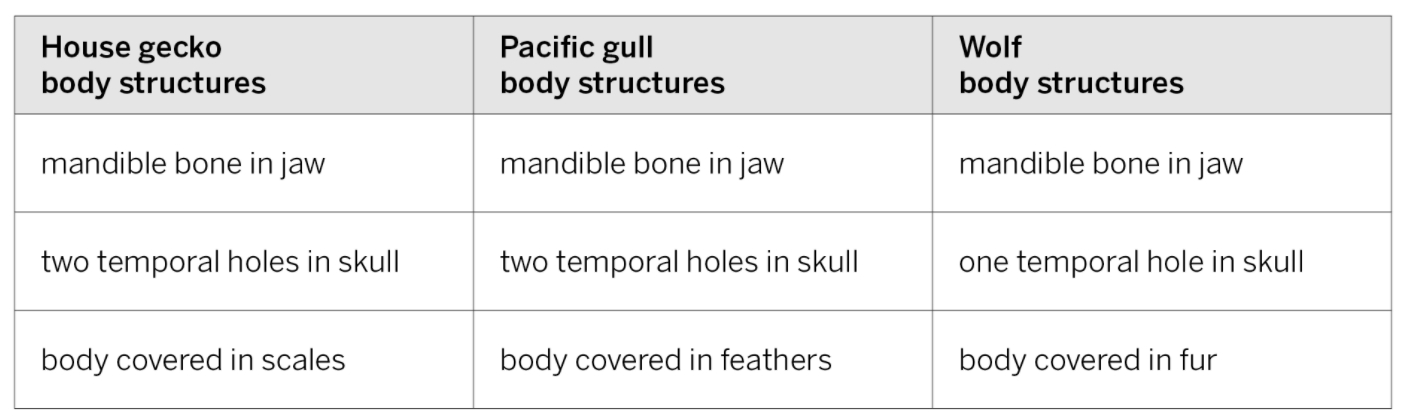

How could Flor explain why all three species share some body structures and have some differences? AND, why do only house geckos and Pacific gulls have two temporal holes in their skulls?
CFS:
  • student describes the relationship between anatomical similarities and differences in animal species
  • student describes the environmental difference between animal species with a common ancestor based on body structures
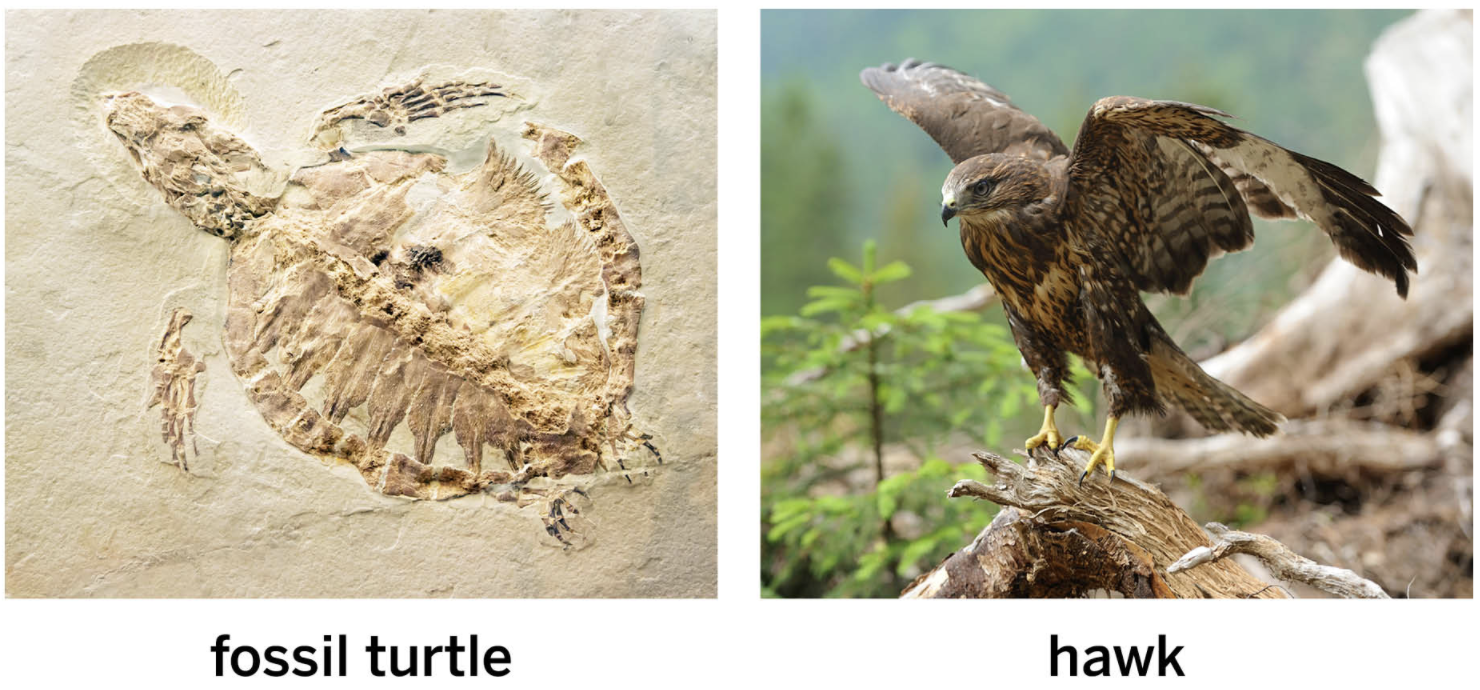
This fossil turtle and this living hawk both have a structure in their neck called the atlas bone. What best explains why both species have an atlas bone?
The turtle and hawk are different species, so they must not share an ancestor population. They inherited their atlas bone structure from separate ancestor populations.
The turtle and hawk both share the same ancestor population that had an atlas bone. They inherited this structure from the ancestor population.
It is impossible to say. Fossils are very old; therefore, we cannot make observations of the turtle’s ancestors, and we cannot explain its body structures.
All species have their own specific body structures, so it is a coincidence that this turtle and hawk each happen to have the atlas bone structure.

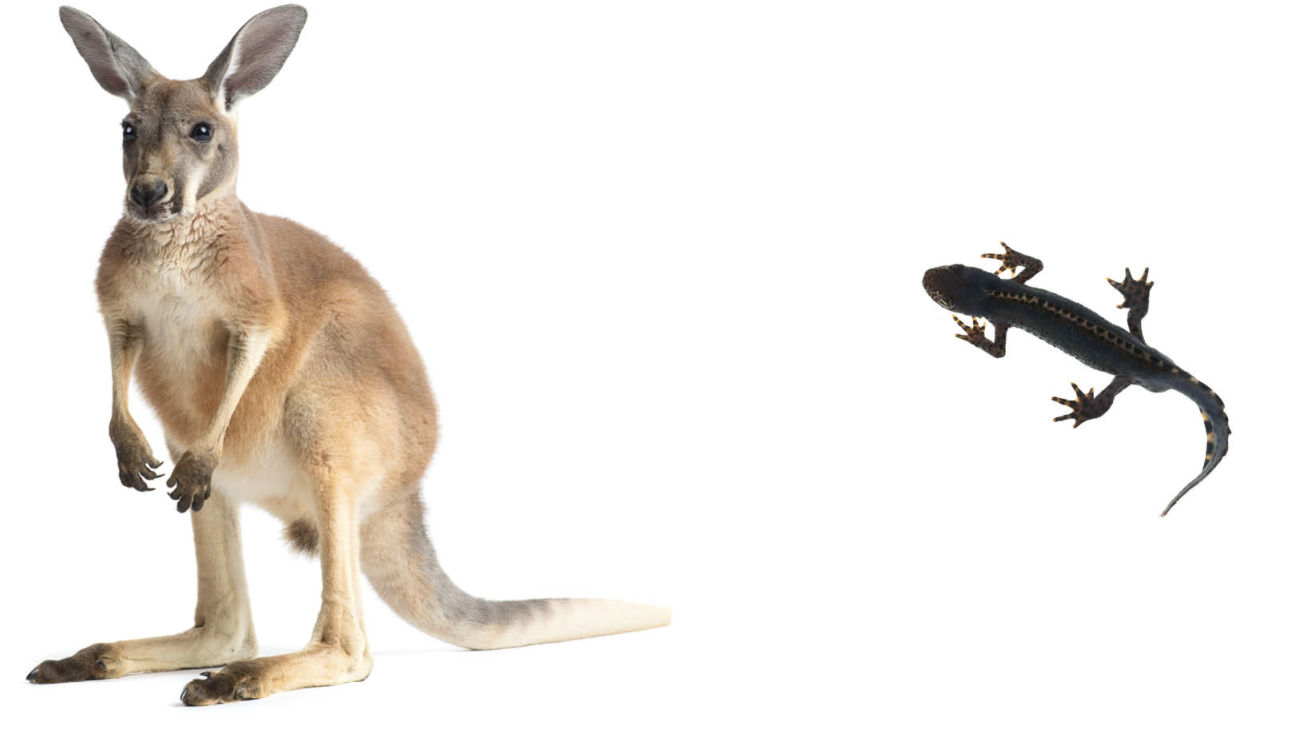
This red kangaroo and this alpine newt both have a femur bone in their back limbs. However, their femur bones are very different. The red kangaroo has long femur bones that help it jump very far. The alpine newt has short femur bones that help it swim. What most likely explains why both have back limbs with a femur and why the femur bones are different?
The red kangaroo and alpine newt are different species, so they do not share an ancestor population. These species had separate ancestor populations, and each evolved femur bones that help it survive in its environment.
It is impossible to explain the structures of different species. The way that structures change over time is very complex, and no one has ever observed these changes occurring.
The red kangaroo and alpine newt both inherited femur bones from a shared ancestor population, but this population separated into different environments. In each environment, different types of femur bone evolved, which helped the populations survive.
All species have their own specific body structures, so it is a coincidence that the red kangaroo and alpine newt each happen to have femur bones that are different.

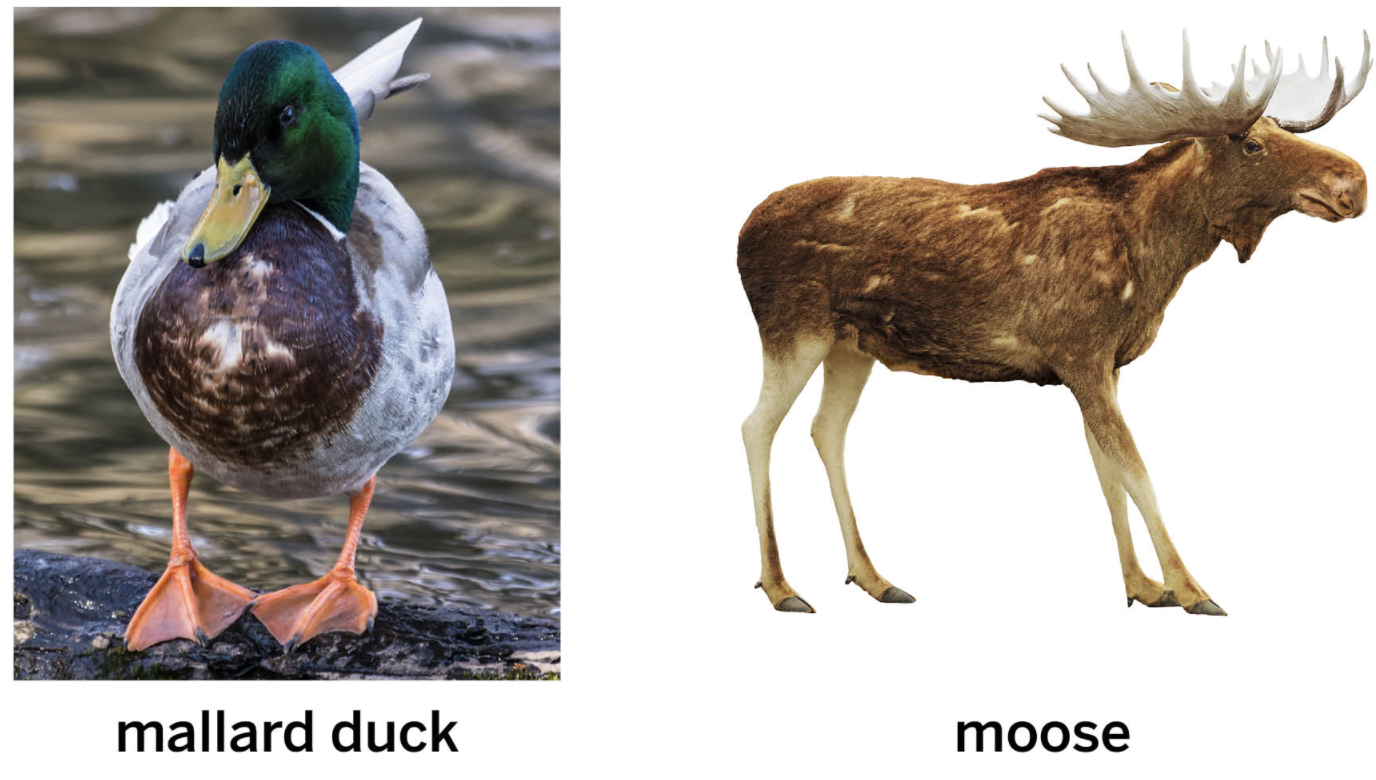
This mallard duck and this moose both have bones in their feet called metatarsals. However, they have different types of feet. The duck has webbed feet that help it swim in water. The moose has feet with hooves that help it walk on hard ground. What most likely explains why both the duck and moose have feet with metatarsals and why the feet are different?
The mallard duck and moose are different species, so they do not share an ancestor population. These species had separate ancestor populations, and each evolved feet with metatarsals that help it survive in its environment.
It is impossible to explain the body structures of different species. The way that structures change over time is very complex, and no one has ever observed these changes occurring.
All species have their own specific body structures, so it is a coincidence that this mallard duck and moose each happen to have different types of feet with metatarsals.
The mallard duck and moose both inherited metatarsals from a shared ancestor population, but this population separated into different environments. In each environment, different types of feet with metatarsals evolved, which helped the populations survive.

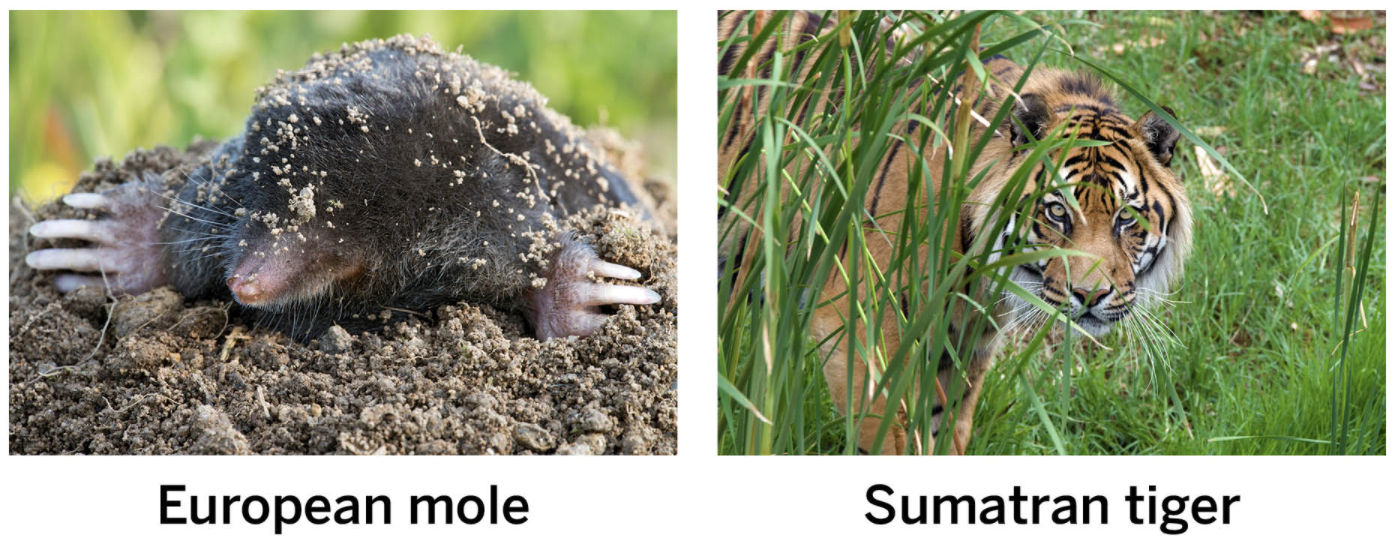
European moles and Sumatran tigers both have eyes. However, European moles live completely in the dark and have very small eyes, while Sumatran tigers have large eyes that can see prey from far away. What most likely explains why both European moles and Sumatran tigers have eyes and why their eyes are different?
The European mole and Sumatran tiger both inherited eyes from a shared ancestor population, but this population separated into different environments. In each environment, different eye types evolved, which helped the populations survive.
All species have their own specific body structures, so it is a coincidence that the European mole and Sumatran tiger each happen to have different types of eyes.
The European mole and Sumatran tiger are different species, so they do not share an ancestor population. These species had separate ancestor populations, and each evolved the type of eyes that help it survive in its environment.
It is impossible to explain the body structures of different species. The way that structures change over time is very complex, and no one has ever observed these changes occurring.

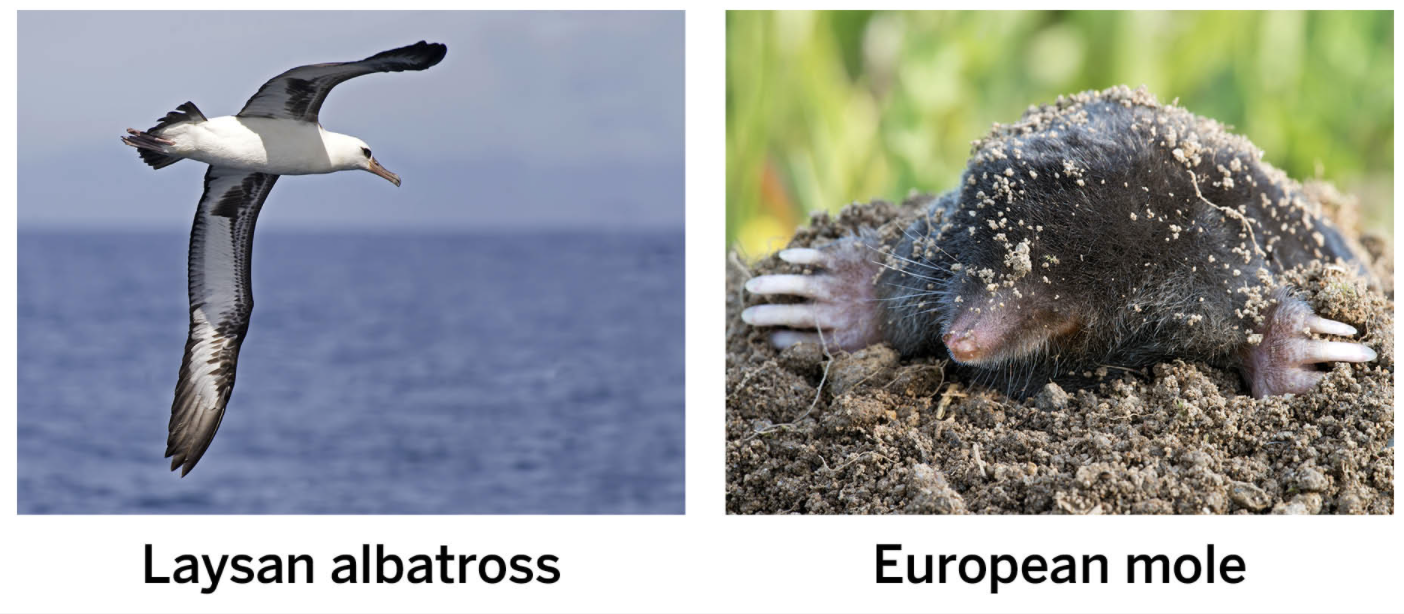
This Laysan albatross and this European mole both have bones in their front limbs called phalanges (finger bones). However, their phalanges are very different. The Laysan albatross has long phalanges in its front limbs, which support its long wings during flight. The European mole has short, thick phalanges in its front limbs, which help it dig in the dirt. What most likely explains why both have phalanges and why the phalanges are different?
They are different species, so they do not share an ancestor population. These species had separate ancestor populations, and each evolved phalanges that help it survive in its environment.
All species have their own specific body structures, so it is a coincidence that this Laysan albatross and European mole each happen to have phalanges that are different.
It is impossible to explain the structures of different species. The way that structures change over time is very complex, and no one has ever observed these changes occurring.
The Laysan albatross and European mole both inherited phalanges from a shared ancestor population, but this population separated into different environments. In each environment, different types of phalanges evolved, which helped the populations survive.