On the AP Environmental Science exam there is always a math problem involving energy conversions. You may be able to do some calculations in your head; nonetheless, it is MANDATORY TO SHOW ALL WORK for calculations on the free-response section of the APES exam. Show all work; ALWAYS WRITE UNITS throughout your work. The following should be good practice for these types of problems.
On the AP Environmental Science exam there is always a math problem involving energy conversions. You may be able to do some calculations in your head; nonetheless, it is MANDATORY TO SHOW ALL WORK for calculations on the free-response section of the APES exam. Show all work; ALWAYS WRITE UNITS throughout your work. The following should be good practice for these types of problems.
Background on Energy Units
calorie – amount of energy needed to heat 1 gram of water 1oC. Used to reflect energy expenditure in ecosystems
Calorie (Kilocalorie) (food Calorie) = 1000 calories
British Thermal Units (BTU) – amount of energy needed to heat 1 lb of water 1oF. Used in home heating/cooling units or appliances that utilize fossil fuels (Gas stove).
Watt – How much potential energy is being used up every second, = 1 joule per 1 second. Used to reflect electrical output.
Horsepower – a unit of power equal to 550 foot-pounds per second (745.7 watts).
Kilowatt-hour (kWh) – amount of energy expended by using 1 Kilowatt of electricity for 1 hour. Used by electrical appliances.
Common Conversions
Here are some common conversions. YOU DO NOT NEED TO MEMORIZE THESE. They are usually provided as part of the problem. You do need to be able to apply them.
1 mi2 = 640 acres
1 barrel oil = 42 gallons
1 kilowatt-hour = 3.4 x 10³ BTU= 8.6 x 10⁵ calories
1 acre = 0.405 hectares
1 metric ton (tonne) = 1 x 10³ kg
1 calorie = 4,184 J
1 L = 0.264 gallons
1 BTU = 1,055 J
1J = W x second or 1W = 1J/second
1kWh = 3.6 x 10⁶ J = 1 megajoules (MJ)
1 horsepower = 746 watts
How many Megawatts are equal to 3.25 kilowatts?
How many Joules are in 8.1 kJ?
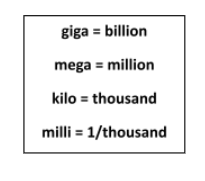
How many milliwatts are equal to 1.21 gigawatts? (write answer in standard notation)
Maybe we should put that last one into scientific notation. How would you write that? Put the answer from the previous question in scientific notation here.
How would you write 0.000051 in scientific notation?
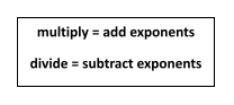
Scientific notation is great because it makes the math so easy. Solve the following problems using the method of adding or subtracting components according to the chart at right.
4.3 x 1014 X 2.0 x 1012
4.5 x 1025 / 3 x 10²²
6 x 1025 / 3 x 10¹²
2.2 x 1064 x 4
Power Plant Problems: The following problems involve calculating the efficiency of a power plant. To determine efficiency you calculate output/input x 100 (energy of kwh/Energy of Fuel x 100).
You first have to convert Mwh or kwh to BTUs. To do this, use the following conversion factor: 1kwh = 3400 BTU.
You will also have to convert tons to pounds
... and then pounds to BTUs.
To do this, use the following conversion factor: 1 ton = 2000 lbs.
Then use the BTU value of the fuel to calculate BTUs.
When calculating efficiency, your answers should range from 20-30%.
*You may use a calculator to determine efficiency for problems 10 – 12*
Ryegate Wood Chip Electrical Generating Plant (Average month)
Given info:
Electricity generated = 16000 Mwh (megawatt hours)
Wood chips consumed = 22000 tons
BTU value of the wood chips = 4700 BTU/lb
Calculate the efficiency of the power plant:
Efficiency = Output/input x 100 or Energy of kwh/Energy of fuel x 100
Grayling Wood Chip Generating Station (Average year):
Given information:
Electricity generated = 155,000,000 kwh (kilowatt hours)
Wood chips consumed = 250,000 tons
BTU value of the wood chips = 4500 BTU/lb
Calculate the efficiency of the power plant.
Waste Management (Average Month)
Given information:
Methane consumed = 26,000,000 cubic yards
Electricity generated = 26,000,000 kwh
BTU value of methane = 560 BTU/cubic foot
BTU value of electricity = 3400 BTU/kwh
Calculate the efficiency of the power plant.
Which of the above power plants is most efficient and which type of fuel does it use?
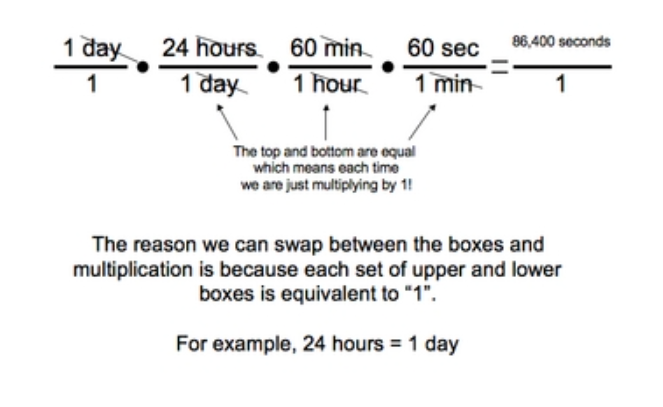
Home Energy Problems: Use unit conversions (Dimensional Analysis) to calculate the following energy problems. Therefore, your goal is to cancel out the units until you get what you're looking for.
A family is building a new home in Buffalo, NY. Buffalo experiences severe winters. Assume the following:
- the house has 4000 square feet
- 100,000 BTUs of heat per square foot are required to heat the house for the winter
- Natural gas sells for $5.00 per thousand cubic feet
- One cubic foot of natural gas supplies 1000 BTUs of heat energy.
- 1 kwh of electricity supplies 10,000 BTUs of heat energy.
- Electricity costs $50 per 500 kwh.
Use the above information to calculate the answers to the following questions. Make sure you show all the steps of your calculations, including units. If you do your work on paper, take a photo with your laptop and upload it to the "show your work" box.
What is the number of cubic feet of natural gas required to heat the house for the winter?
What is the cost of heating the house using natural gas?
What is the cost of heating the house using electricity?
Would you suggest the homeowners use natural gas or electricity to heat their house?
Coal from source A produces sulfur at a rate of 15g per 100kg of coal. Coal from source B produces sulfur at a rate of 50g per 400kg of coal. Source A sells coal for $0.50 per kilogram and Source B costs $1.25 per kilogram.
How many grams of sulfur would be released from the combustion of $100 of each source of coal?
Use the information from the previous question to calculate this answer.
We use about 7 billion metric tons of coal worldwide per year for electricity generation. Using the least polluting coal source, how many kilograms of sulfur would be released per year?