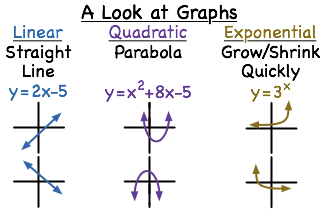
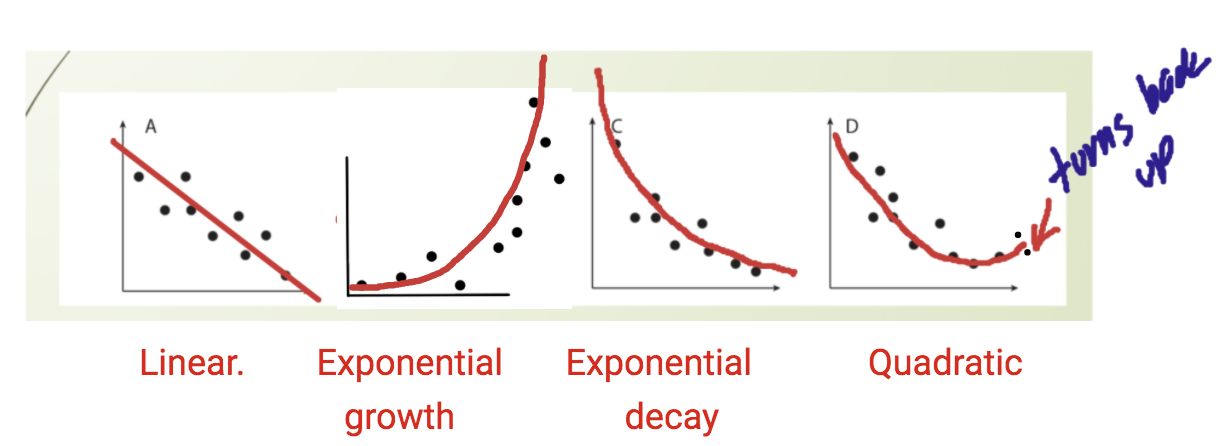
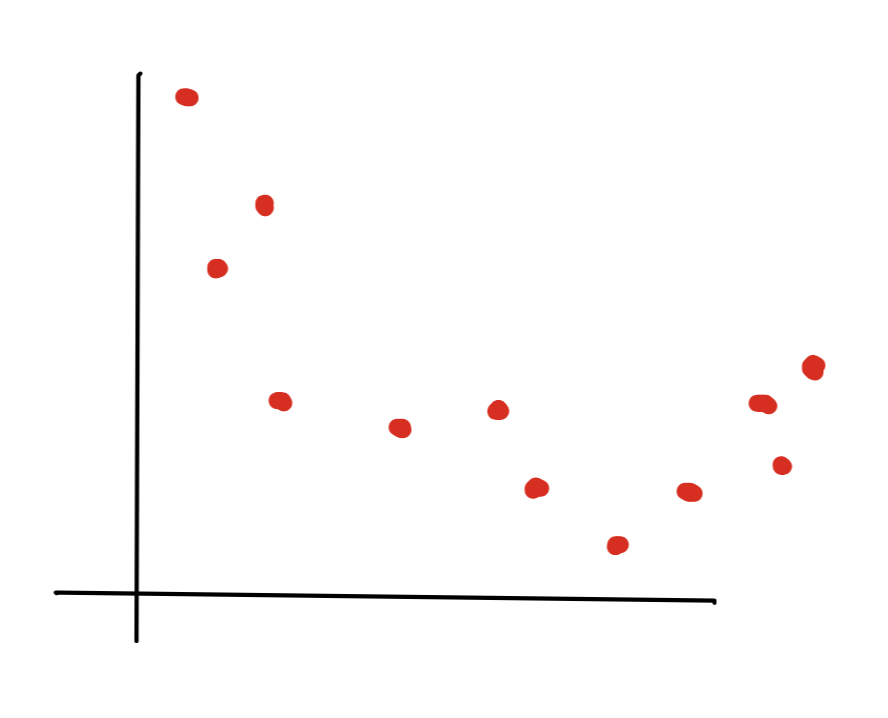
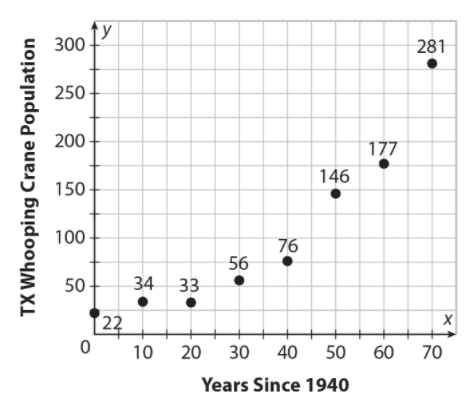
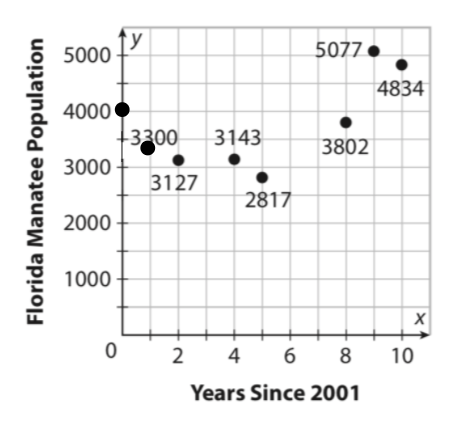
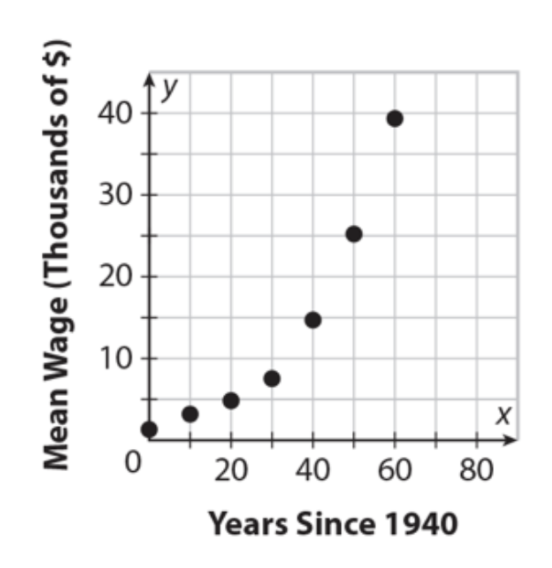
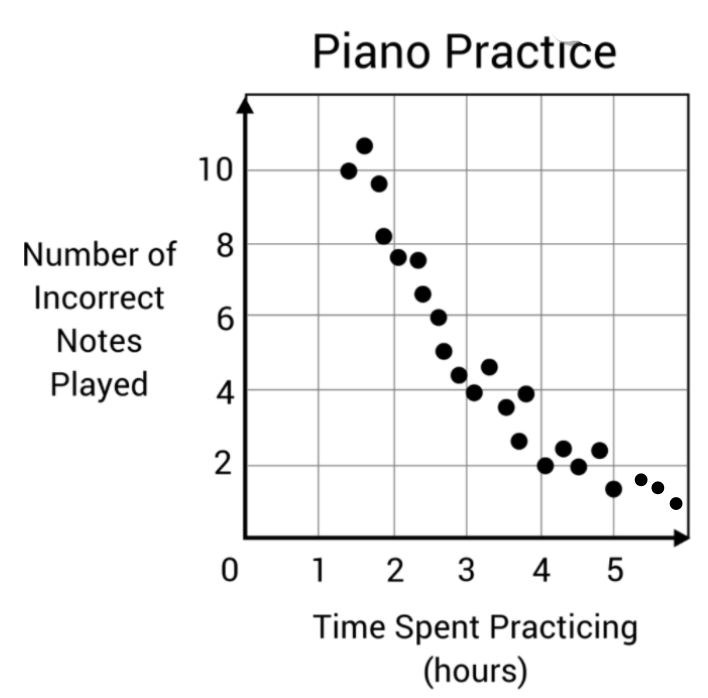
If we have a graph of a function, it is easy to tell if it is linear, quadratic or exponential. Practice a few!
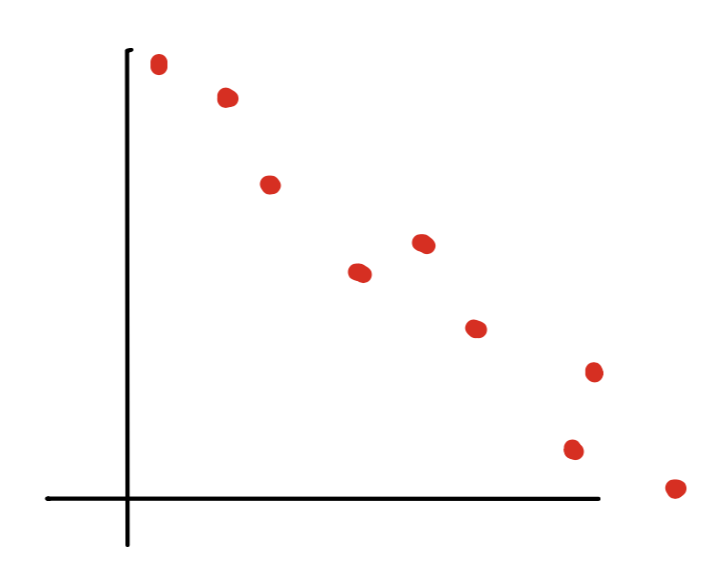
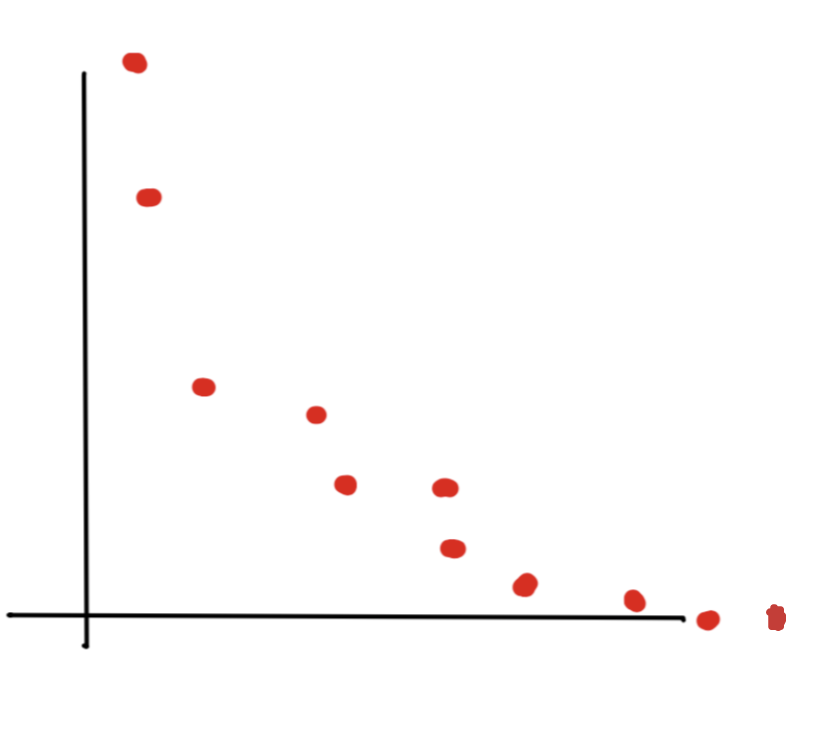
Is this graph linear, quadratic, exponential growth, or exponential decay?

Is this graph linear, quadratic, exponential growth, or exponential decay?

Is this graph linear, quadratic, exponential growth, or exponential decay?

Is this graph linear, quadratic, exponential growth, or exponential decay?

What type of function would BEST model this data?
Linear, quadratic, exponential growth, or exponential decay?
What type of function would BEST model this data?
Linear, quadratic, exponential growth, or exponential decay?
What type of function would BEST model this data?
Linear, quadratic, exponential growth, or exponential decay?
What type of function would BEST model this data?
Linear, quadratic, exponential growth, or exponential decay?
What type of function would BEST model this data?
Linear, quadratic, exponential growth, or exponential decay?
What do you think might have happened that caused the manitee population to go down and then back up again???
What type of function would BEST model this data?
Linear, quadratic, exponential growth, or exponential decay?
What type of function would BEST model this data?
Linear, quadratic, exponential growth, or exponential decay?
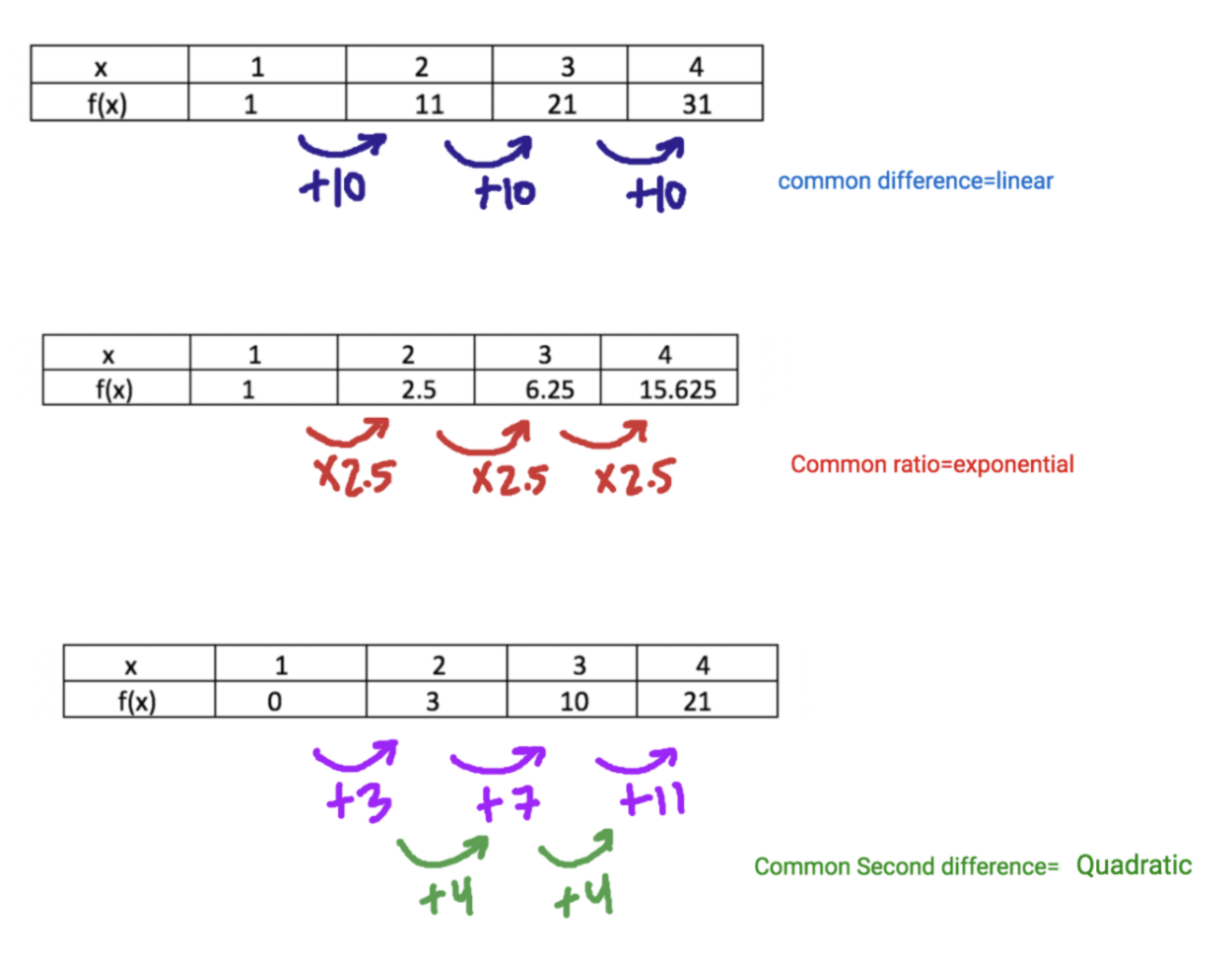
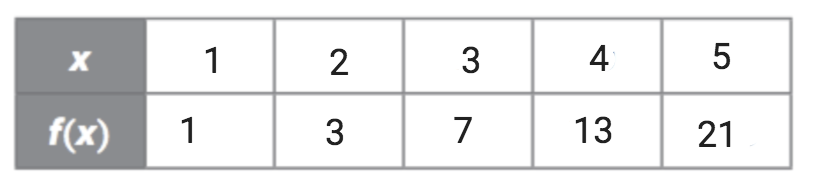
Sometimes, we are given data in a table, and we have to look for a pattern.
Linear-will have a COMMON DIFFERENCE-the same amount added or subtracted between terms
Exponential- will have a COMMON RATIO- multiply by the same amount to get the next term
Quadratic- will not have a comon difference or ratio. But you want to check the difference between the differences (referred to as the second difference). If this is the same, it will be quadratic.
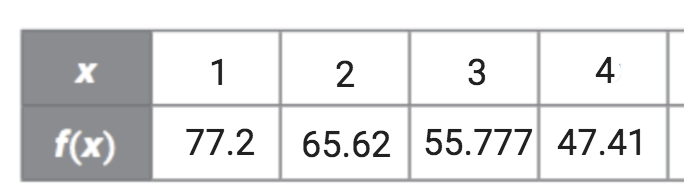
Select linear, exponential, or quadratic for the table.
Also, if it is linear, select the difference, if it is exponential, select the ratio.

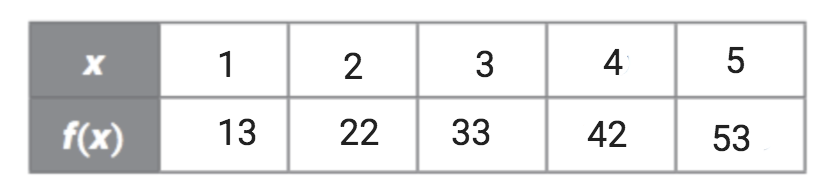
Select linear, exponential, or quadratic for the table.
Also, if it is linear, select the difference, if it is exponential, select the ratio.

Select linear, exponential, or quadratic for the table.
Also, if it is linear, select the difference, if it is exponential, select the ratio.

Select linear, exponential, or quadratic for the table.
Also, if it is linear, select the difference, if it is exponential, select the ratio.
remember...to find the ratio, take the 2nd term, and divide it by the 1st term
Select linear, exponential, or quadratic for the table.
Also, if it is linear, select the difference, if it is exponential, select the ratio.
Select linear, exponential, or quadratic for the table.
Also, if it is linear, select the difference, if it is exponential, select the ratio.
Select linear, exponential, or quadratic for the table.
Also, if it is linear, select the difference, if it is exponential, select the ratio.
REVIEW
What is the y-intercept for the function? Hint: sub in 0 for x.
Write as an ordered pair
REVIEW
What is equation for the horizontal asymptote?