Verbo Ser (A1 level) (Portuguese)

Last updated almost 4 years ago
33 questions
Note from the author:
Verbo Ser (A1 Level) Portuguese
Learning, memorising, practicing and using the verb Ser - to be (~permanent) in the present tense. 📖
Today we are going to study the verb Ser - to be (~permanent), in the presente do indicativo.
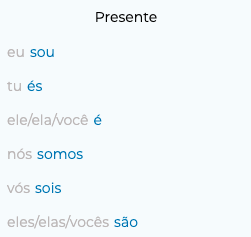
Review the verb Ser - to be (~permanent), by watching this small video.
When to use verb Ser - to be (~permanent)? (instead of verb Estar - to be (~temporary)

We usually use the verb Ser - to be (~permanent) to describe characteristics that don’t change easily or often.


8 commom uses of verb Ser - to be (~permanent)

1. Use Ser for introductions

  1. Eu sou Luciana. = I am Luciana.
  2. Meu nome é Luciana. = My name is Luciana.
  3. Este é Marcos. = This is Marcos.

2. Use Ser to express nationality or place of origin

  1. Eu sou brasileira. = I am Brazilian.
  2. Dani é do Brasil. = Dani is from Brazil.
  3. Eles são americanos. = They are Americans.

3. Use Ser to state your profession

  1. Eu sou professora. = I am a teacher.
  2. Márcio é médico. = Márcio is a physician.
I can change my profession, right? But this is not something I change from one moment to the next or according to my mood. This is the spirit of the verb Ser.

4. Use Ser to indicate marital status

  1. Joana é casada. = Joana is married.
  2. Nós somos solteiros. = We are single.
  3. Eles são divorciados. = They are divorced.

5. Use Ser to express relationships between people

  1. Elas são irmãs. = They are sisters.
  2. Vanessa e eu somos amigas. = Vanessa and I are friends.
  3. João é meu chefe. = João is my boss.

6. Use Ser to indicate ownership

  1. Este livro é meu. = This book is mine.
  2. Essa é a casa da Camila. = This is Camila’s house.

7. Use Ser to describe permanent or long-lasting characteristics of people, places, and objects

  1. Carol é muito engraçada. = Carol is very funny.
  2. Este livro é muito bom. = This book is very good.
  3. São Paulo é uma cidade fascinante. = São Paulo is a fascinating city.
  4. João é um cara alegre. = João is a joyful guy.
Notice that these examples describe how people, places, and things are in general, not how they are just now or how they feel at the moment (that is the verb Estar’s job).

8. Use Ser to express dates and time

  1. Hoje é quarta-feira. = Today is Wednesday.
  2. Hoje é dia 9 de novembro. = Today is November’s 9th.
  3. São onze horas. = It’s 11 am.
You may be thinking: “Wait! You just told me that I should use the verb Ser for permanent characteristics. It’s only 11 am for a minute.” I know, right? But we use the verb Ser for dates and the time. Rules can help us, but they won’t answer all our questions.
Required
8

Tell if the information about the uses of the verb Ser - to (~permanent) on the left are true ✅ or false ❌ .

Verdadeiro ✅
Falso ❌
1. Use Ser for introductions
2. Use Ser to express feelings and emotions
3. Use Ser to state your profession
4. Use Ser to indicate marital status
5. Use Ser to express relationships between people
6. Use Ser to explain how the weather isn't great
7. Use Ser to describe permanent or long-lasting characteristics of people, places, and objects
8. Use Ser to express travelling into the furete
Required
5
Drag and drop the correct conjugation of the verb Ser - to be (~permant) after the subject.
Eu ________
Tu _______
Ele/Ela/Você ______
Nós __________
Eles/Elas/Vocês ________
Other Answer Choices:
são
sou
somos
é
és
Required
5

Match the correct conjugation of the verb Ser - to be (~permanent) to the subject.

Draggable itemCorresponding Item
és
Eu
sou
Eles/Elas/Vocês
é
Tu
são
Nós
somos
Ele/Ela/Você
Required
5

Categorize the conjugations of the verb Ser - to be (~permanent) with the correct subject.

  • és
  • são
  • sou
  • somos
  • é
  • Eu
  • Tu
  • Ele/Ela/Você
  • Nós
  • Eles/Elas/Vocês
5
Pick the correct line with the conjugation of the verb Ser - to be (~permanent)
(There is only one correct answer per list).
______________________________ ____________________
Required
2

Eu _______ o João.

Required
2

Ele _______ o Manuel.

Required
2

Eles _______ o Rui e o Paulo.

Required
2

Nós _______ amigos.

Required
2

Tu _______ baixo.

Required
2

Eu _______ alto.

Required
2

Ele _______ baixo.

Required
2

Ele _______ baixo.

Required
2

Eles _______ portugueses.

Required
2

Nós _______ irlandeses.

Required
2

A Helena _______ professora.

Required
2

Tu _______ estudante.

Required
2

Você _______ solteira.

Required
2

Vocês _______ casados.

Required
2

Nós _______ irmãs.

Required
2

Eles _______ primos.

Required
2

O livro _______ meu.

Required
2

As canetas _______ nossas.

Required
2

As mesas _______ de madeira.

Required
2

A janela _______ de vidro.

Required
2

_______ 11 horas da manhã.

Required
2

_______ 1 hora da tarde.

Required
2

In one word answer the question:
Nós somos estudantes?

Required
2

In one word answer the question:
Nós somos engenheiros?

Required
2

Translate into english: Eles são amigos.

Required
2

Translate into english: Eu sou inteligente.

Required
10

In the box below you will find many examples of the verb Ser - to be (~permanent).
Select all the conjugations of the verb Ser - to be (~permanent) that you can find in the box below.
Not all the highlighted words are correct.

Eu sou a Helena. Sou de Belmonte, em Portugal. Sou professora de português na Irlanda.
Tu és estudante de português. Ele é irlandês. Ela é solteira. Você é minha prima. Nós somos inteligentes. Vocês são amigos. Eles são irmãos. Elas são criativas.
Required
10

The 4 amigos!
A boy describes his group of friends. Draw the picture and write their names under:
Nós somos 4 amigos. Eu sou o João e sou alto. O Manuel é gordo. O Rui é baixo. O Paulo é magro.
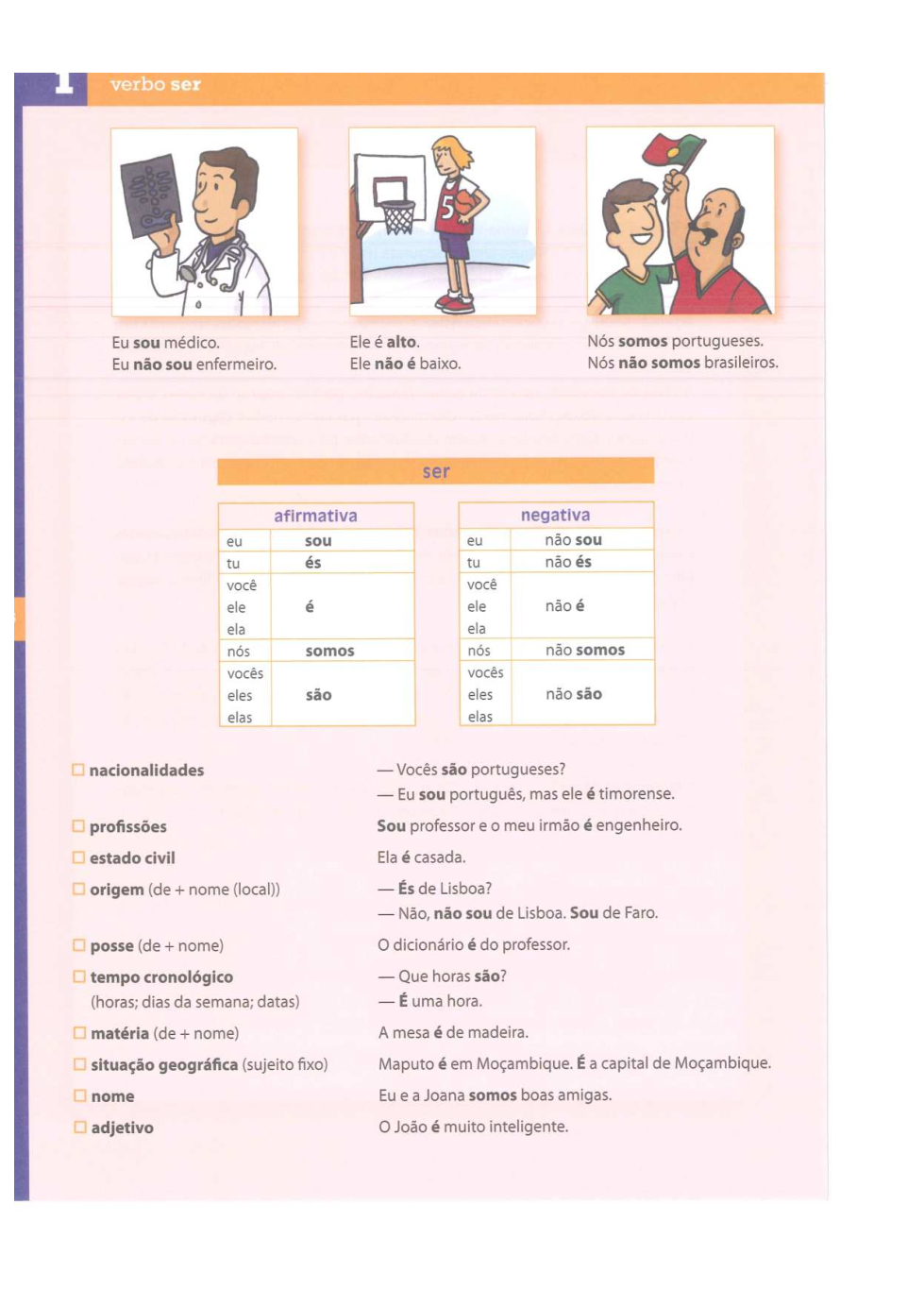
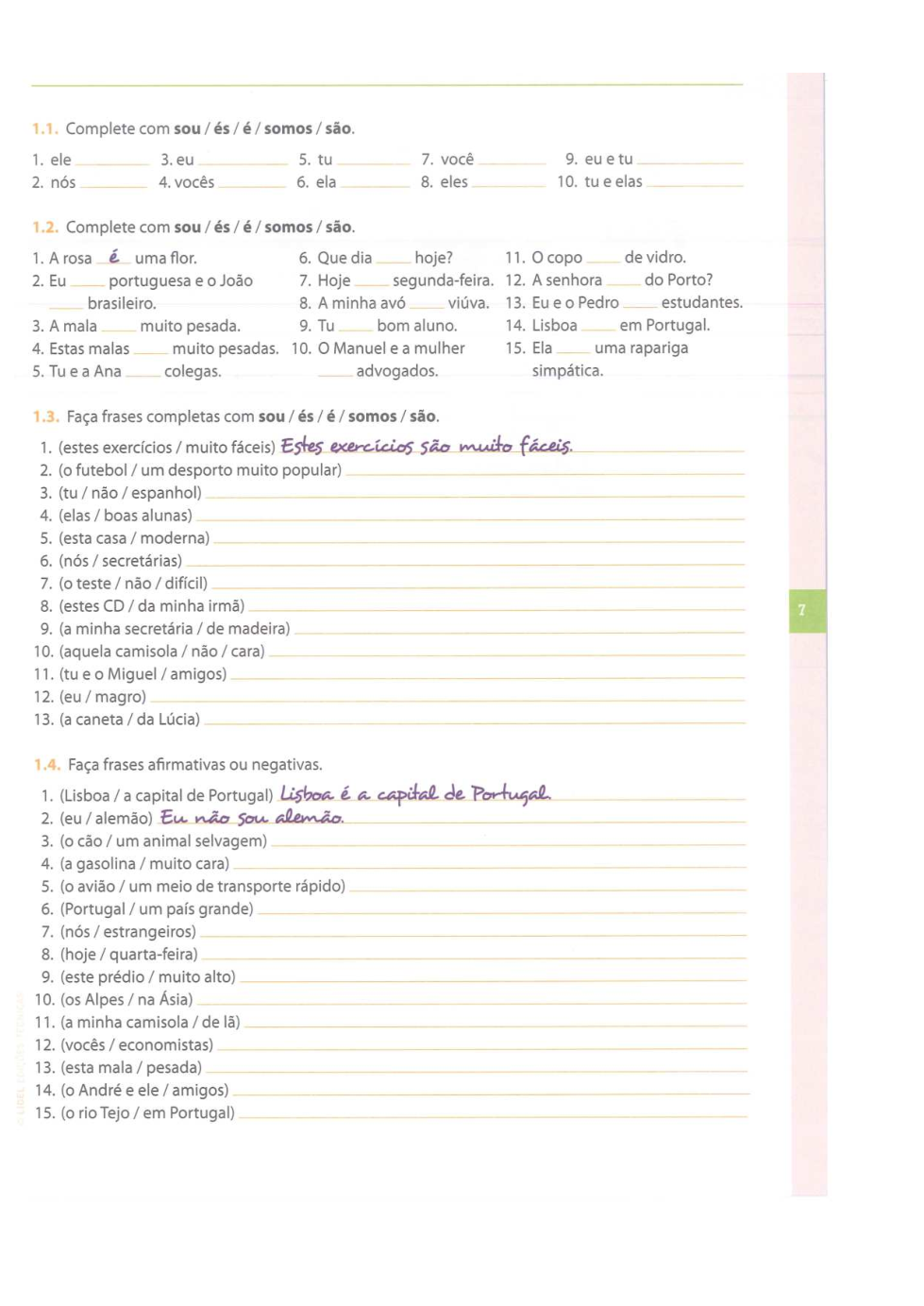
Share the drawing you made of The 4 amigos!

https://padlet.com/helena_bidarra/jmfmwbnggzih5pzq
Review the verb Ser - to be (~permanent), by playing around with this quizlet.
Extra (optional) homework from the book Gramática Ativa 1.
Extra (optional) homework from the book Gramática Ativa 1 (cont.).
Made by Helena Bidarra, Portuguese Development Officer
for Post-Primary Languages Ireland