Ɛhia
1
The author indicates that the nation should handle the aftermath of the Civil War by
The author indicates that the nation should handle the aftermath of the Civil War by
IIRC.01
Content Objective: I will be able to recognize the modern and historical significance of Juneteenth.
Standard Objective: I will be able to draw reasonable inferences and logical conclusions from text.
Link to slides from class is here
Content Objective: I will be able to recognize the modern and historical significance of Juneteenth.
Standard Objective: I will be able to draw reasonable inferences and logical conclusions from text.
Link to slides from class is here
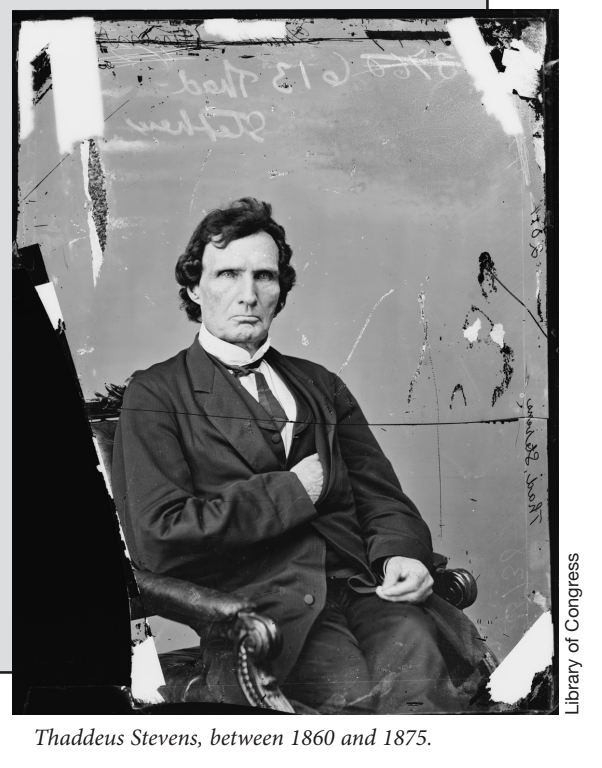
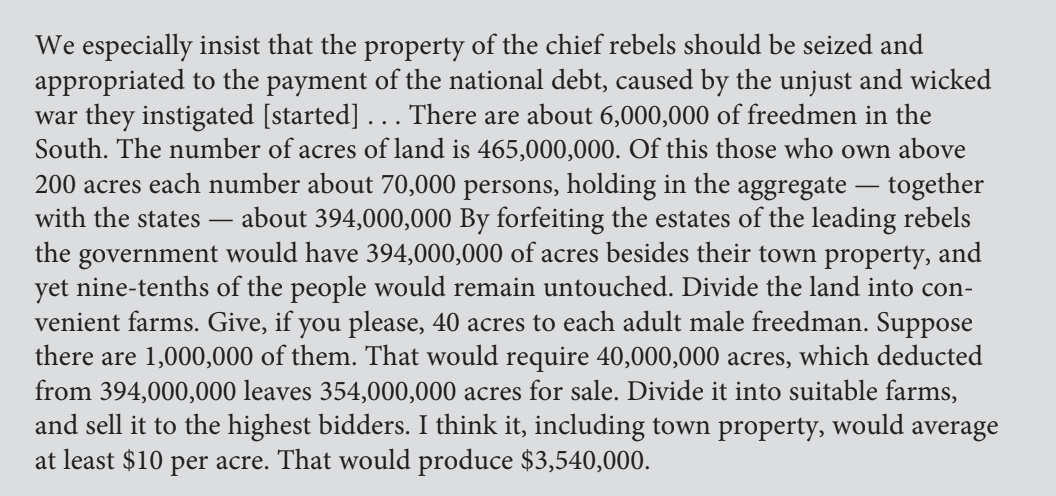
Please read the following excerpt from the Congressional Record, Thaddeus Stevens makes the case for confiscation and redistribution of land in the South.
The author indicates that the nation should handle the aftermath of the Civil War by
As used in line 8, "untouched" most nearly means
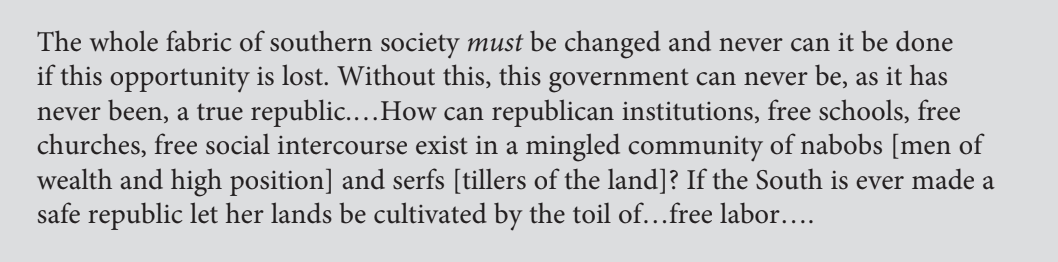
As presented in the passage, Stevens would most likely agree that
Which choice provides the best evidence for the answer to the previous question?
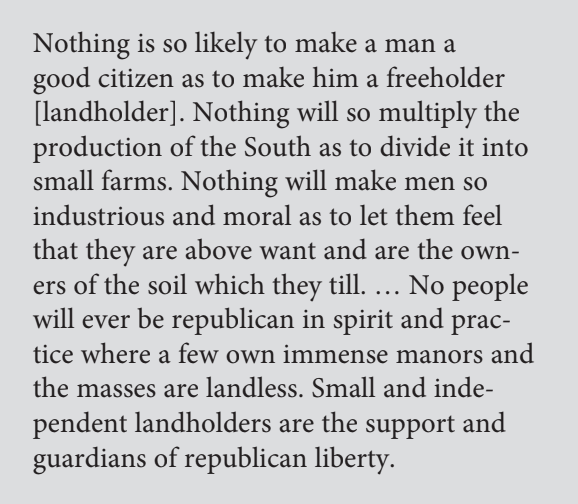
Based on this passage, Stevens believes his plan will work because
—Excerpts from speeches by Radical Republican Congressman Thaddeus Stevens, 1865, as published in the Congressional
Record

Warm Up: Please rate how well you understood last night's pre-work on a scale from 1 to 4. If you have any questions, drop them in the "Show Your Work" area.
Warm Up: What was your experience like growing up with Barack Obama as the first Black President? Do you feel like his role in history directly impacted your life or community?
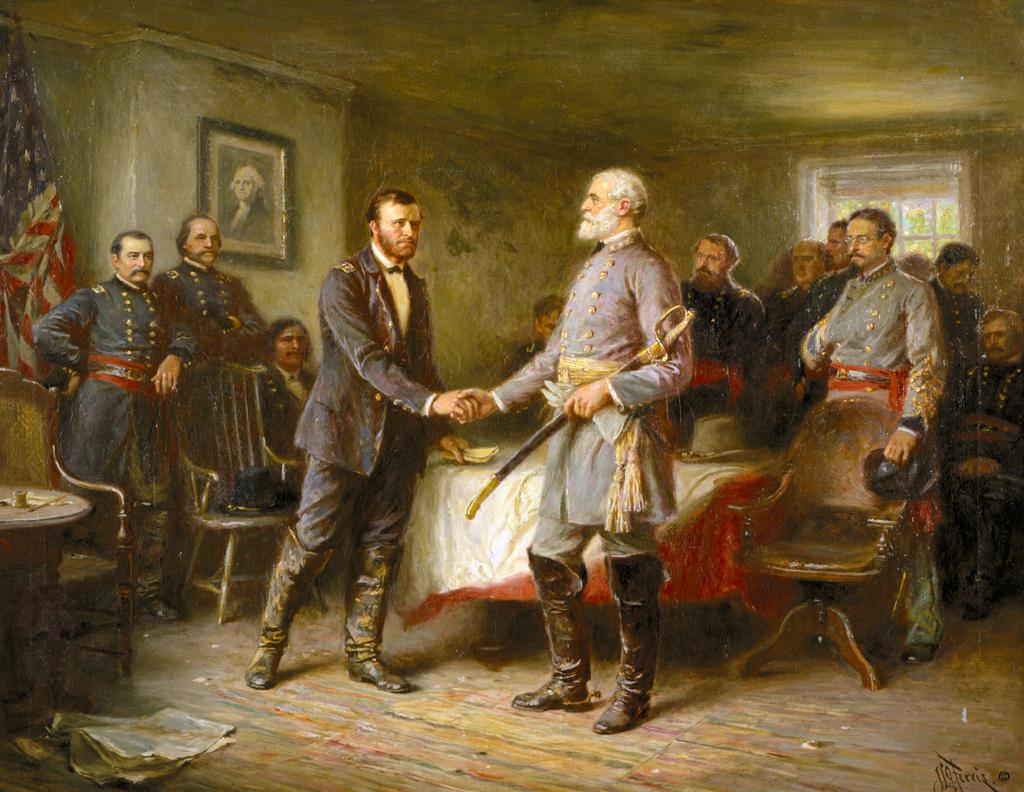
Although the official end of the Civil War was at Appomattox on April 9, 1865, not all enslaved Blacks knew until June 19, 1865, when General Lee finally arrived at Galveston, Texas to notify the last enslaved African Americans of their
More than
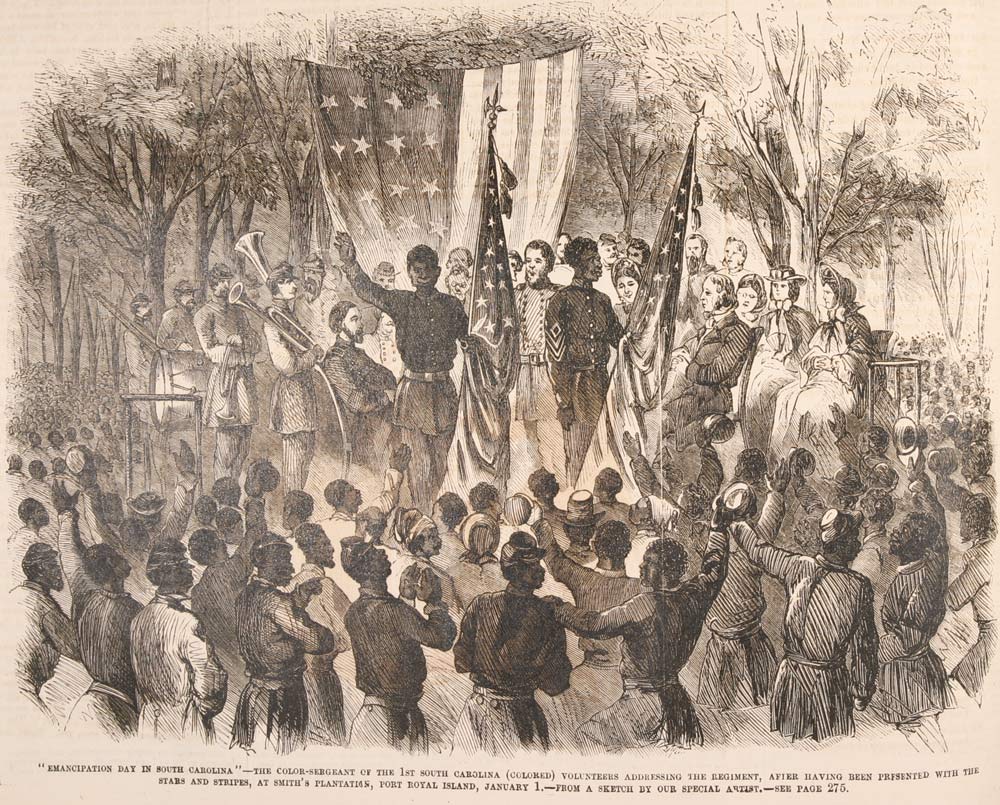
The Reconstruction era refers to the period
After the war, formerly enslaved African Americans responded to freedom in different ways. After celebrating the end of the war and their new freedom, most tried to
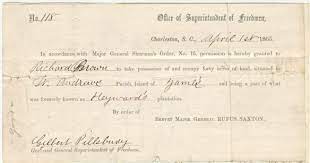
Although formerly enslaved African Americans were
For about 10 years after the Civil War, the federal government provided
Who was Hiram Revels?
Why do you think it is important for newly freed African Americans to be able to serve in public office?
Exit Ticket: Today, we learned about successful policies that were passed during Reconstruction as well as proposals that did not come to fruition. On the one hand, Hiram Revels was elected as the first Black Senator. On the other hand, Thaddeus Stevens’ proposal did not receive much support and was, ultimately, rejected by the U.S. Congress.
What do you think should come first in the fight for true racial equity -- political or economic freedom? Explain.
Exit Ticket: Please evaluate how well you understood today’s lesson on a scale from 1 to 4: