Period 6, Day 4: The Chinese Exclusion Act

Last updated over 1 year ago
10 questions
Note from the author:
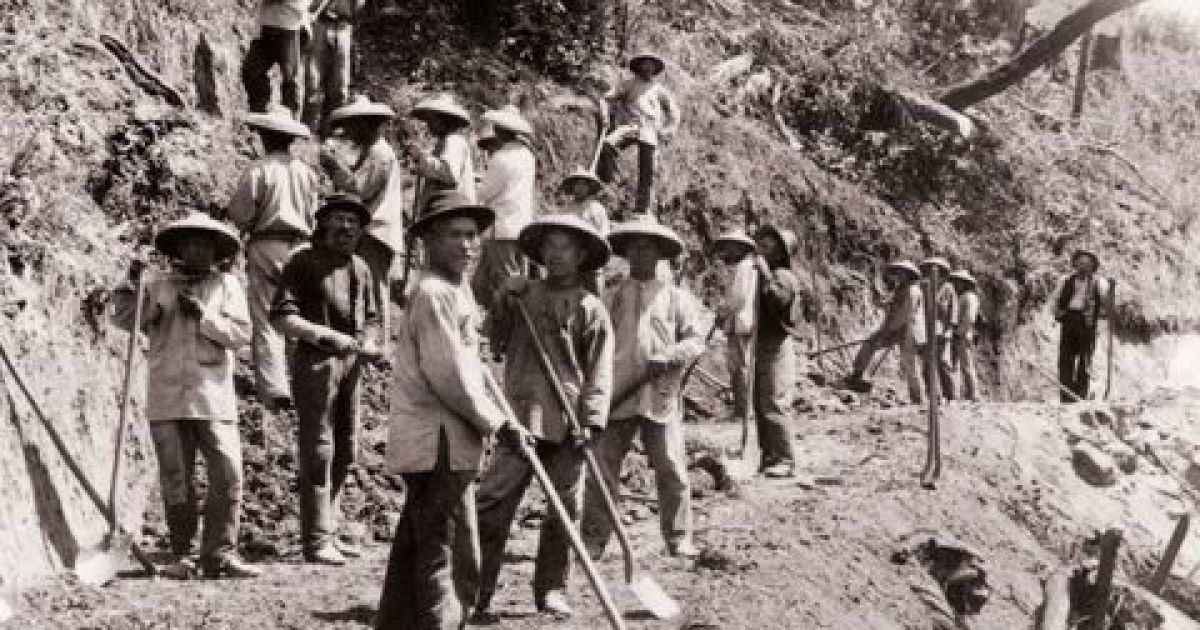
Content Objective: I will be able to explain how 19th-century Chinese immigrants helped to make America great.

Standard Objective: I will be able to identify claims and counterclaims explicitly stated in text or determine implicit claims and counterclaims from text.
Content Objective: I will be able to explain how 19th-century Chinese immigrants helped to make America great.

Standard Objective: I will be able to identify claims and counterclaims explicitly stated in text or determine implicit claims and counterclaims from text.
0

Warm Up: Please rate how well you understood last night's pre-work on a scale from 1 to 4. If you have any questions, drop them in the "Show Your Work" area.

1

Warm Up: How is your week going? Is there anything you are looking forward to or would like to share with Ms. Truong?

0

Warm Up: One interesting historical fact I learned from the pre-work is…

Required
1
Prohibited by law in 1790 from obtaining US citizenship through naturalization [legally becoming a citizen], Chinese immigrants faced harsh _______ and violence from American settlers in the West.

The Chinese community banded_______ in an effort to create social and cultural centers in cities such as San Francisco. They sought to provide services ranging from _______ to education, places of worship, and health facilities to their fellow Chinese immigrants.
1
But, as Chinese workers began competing with white Americans for jobs in California cities, anti-Chinese discrimination increased with the rise of _______ .

Racism and discrimination became law. The new California constitution of 1879 denied naturalized Chinese citizens the right to vote or hold state _______ .

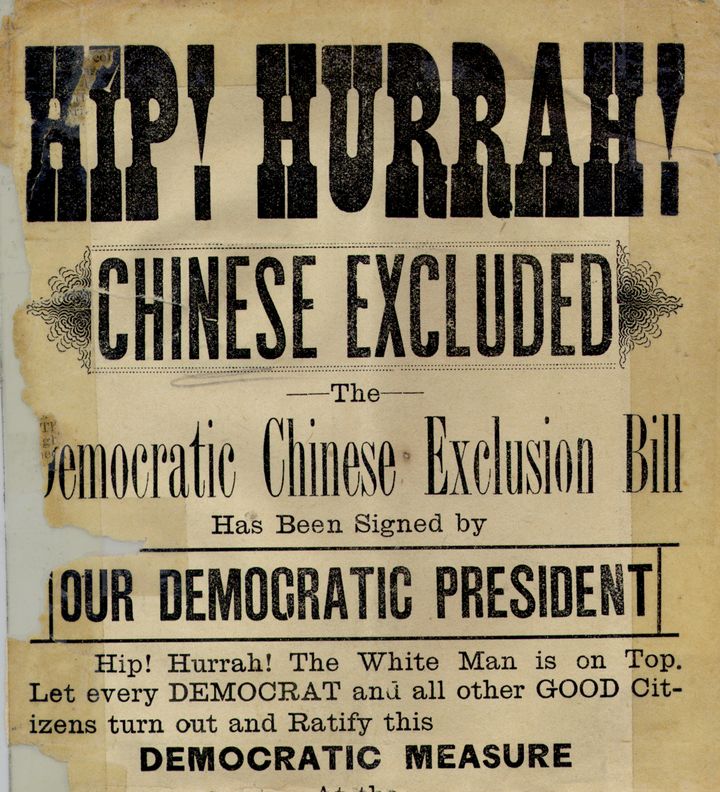
Furthermore the US Congress passed the Chinese Exclusion Act in 1882, which was the first significant law _______ immigration into the United States. The ban lasted for 10 years and was later extended on multiple occasions until its repeal in 1943.
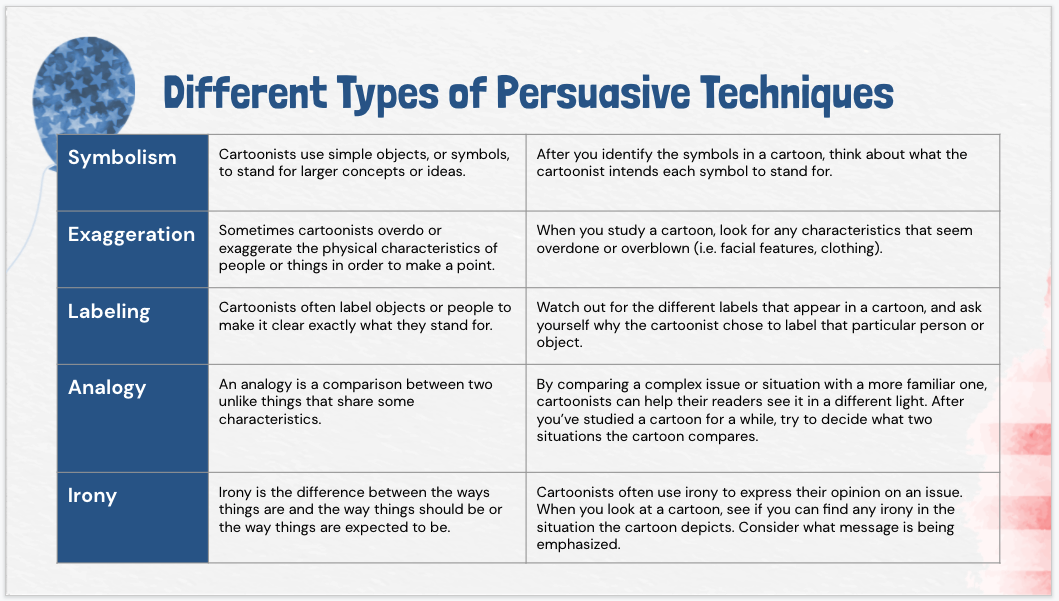
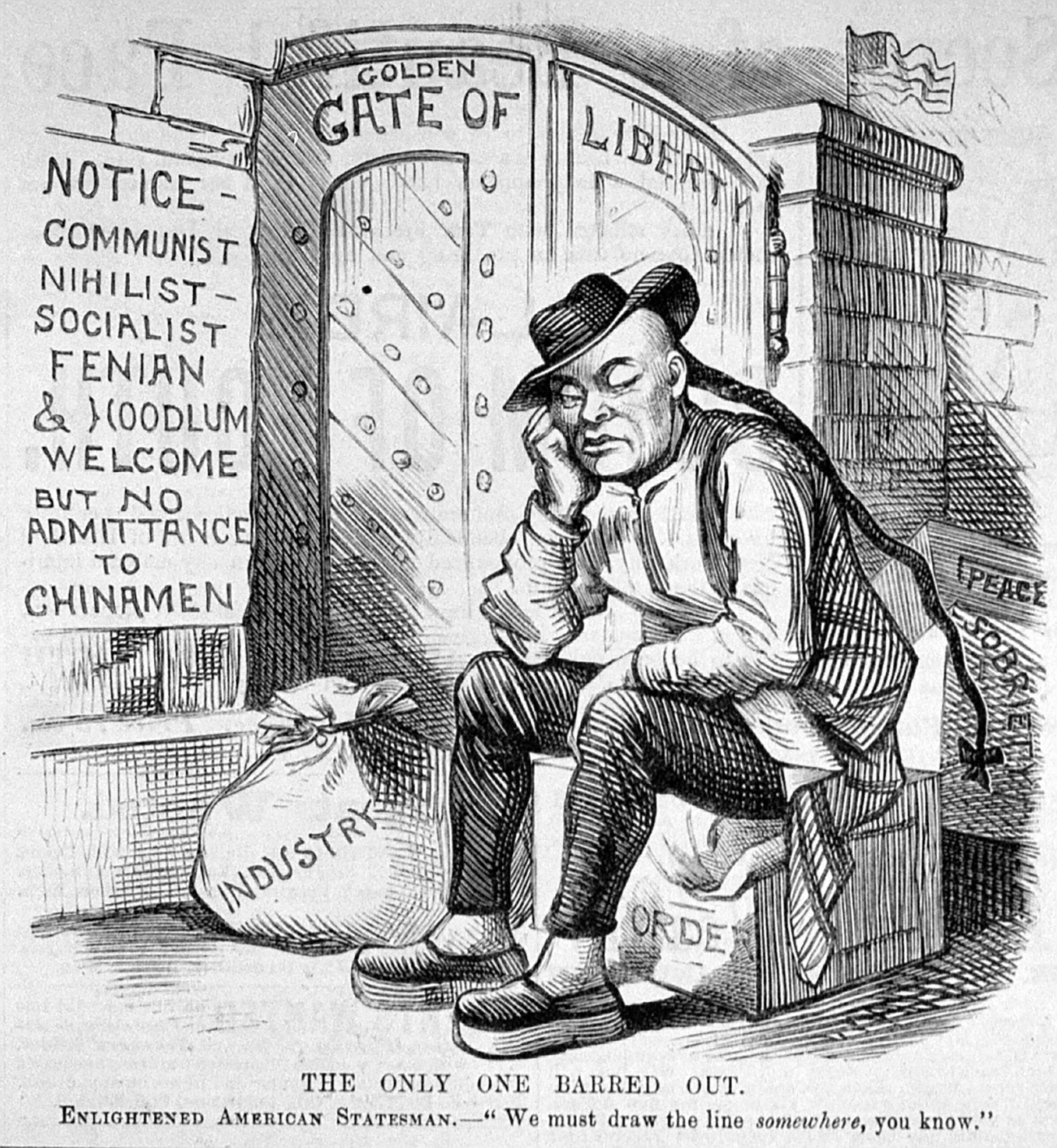
Applying Knowledge Together: Today, we are going to analyze a political cartoon from the time that the Chinese Exclusion Act was passed. Recall the persuasive techniques of political cartoons that we learned last week
If you need an example of a specific technique, check out slide #23-27 here.
1

Applying Knowledge: Let's take a look at another political cartoon from the time period we're studying.
  1. Meet the Cartoon: What do you notice first? (Circle the 3 most obvious elements in "Show Your Work")
  2. Observe the Visuals: List the people, objects, and places. Consider actions or activities as you caption each element. Which ones do you think are symbolic?
  3. Consider the Words: Which words or phrases are most significant? List adjectives that describe the emotions portrayed in your captions.

1

4. Dig Even Deeper: Who drew this cartoon? What do we know about them? When is it from? What was happening historically at the time it was created?

1

5. Use as Evidence: What is the overall message of this image?

1

Exit Ticket: Which persuasive techniques were used in the "Golden Gate of Liberty" political cartoon?

0

Exit Ticket: Please evaluate how well you understood today’s lesson on a scale from 1 to 4: