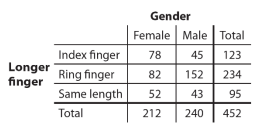
What is the explanatory variable?
What is the response variable?
Find the relative frequency of a female having a longer index finger. (give your answer using a % symbol round to the whole % (no decimals) )
Be sure to use the total's shown on the bottom of each column for your calculations.
Find the relative frequency of a female having a longer ring finger. (give your answer using a % symbol round to the whole % (no decimals) )
Be sure to use the total's shown on the bottom of each column for your calculations.
Find the relative frequency of a female having the same size index and ring finger. (give your answer using a % symbol round to the whole % (no decimals) )
Be sure to use the total's shown on the bottom of each column for your calculations.
Find the relative frequency of a male having a longer index finger. (give your answer using a % symbol round to the whole % (no decimals) )
Be sure to use the total's shown on the bottom of each column for your calculations.
Find the relative frequency of a male having a longer ring finger. (give your answer using a % symbol round to the whole % (no decimals) )
Be sure to use the total's shown on the bottom of each column for your calculations.
Find the relative frequency of a male having the same size index and ring finger. (give your answer using a % symbol round to the whole % (no decimals) )
Be sure to use the total's shown on the bottom of each column for your calculations.
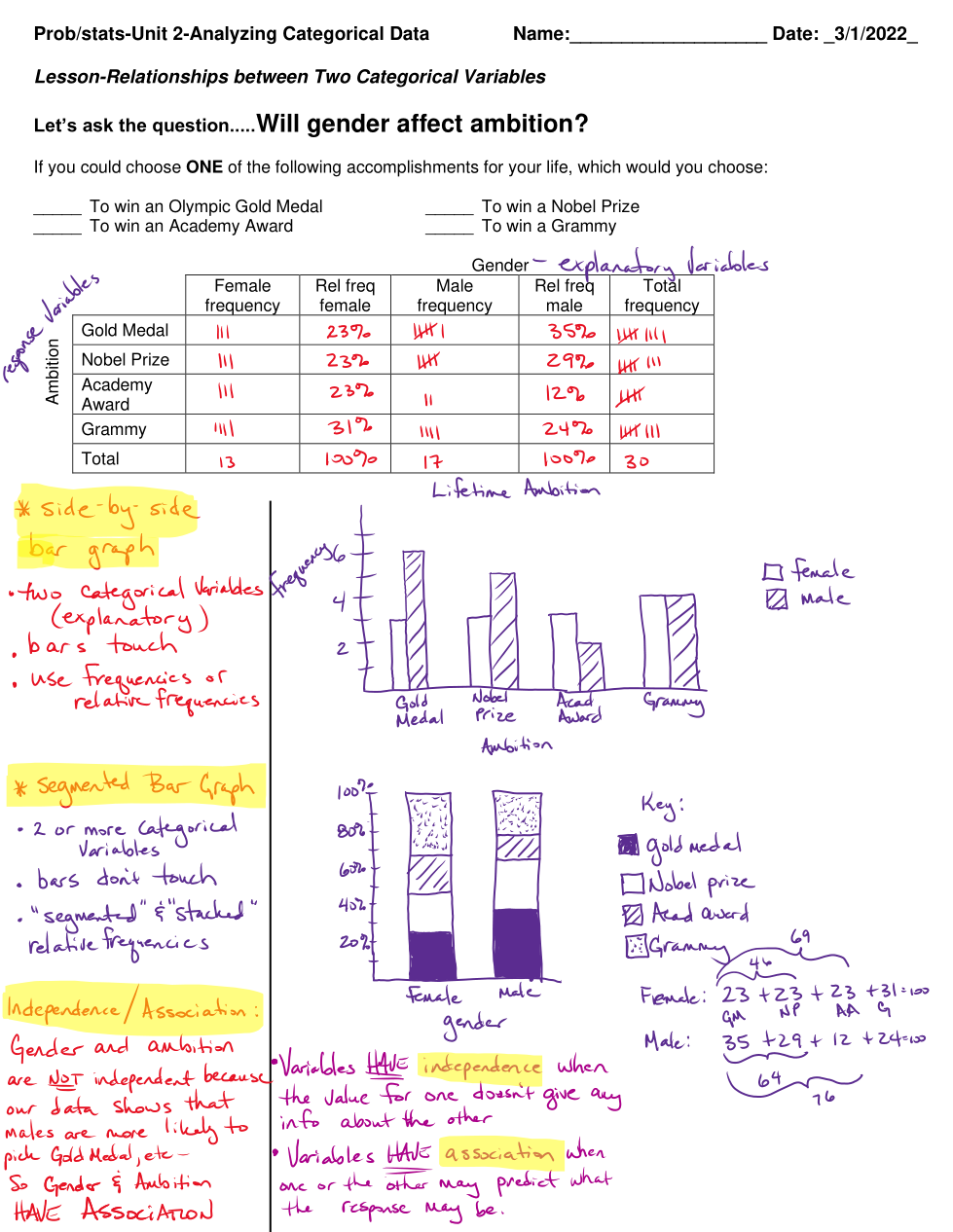
Draw a side-by-side bar graph to describe the data. Be sure to label each axis, provide a key, and provide a title and appropriate scale.
Draw a segmented bar graph to describe the data. Be sure to label each axis, provide a key, and provide a title and appropriate scale.
Given the data, is there associated between gender and the size of certain fingers? Explain.
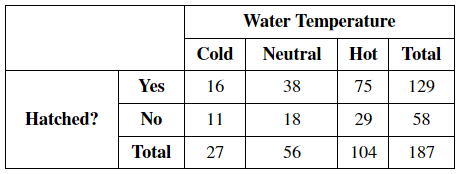
How is the hatching of water python eggs influenced by the temperature of the snake’s nest? Researchers randomly assigned newly laid eggs to one of three water temperatures: hot, neutral, or cold. Hot duplicates the extra warmth provided by the mother python, and cold duplicates the absence of the mother. The two-way table summarizes the data on whether or not the eggs hatched.
What is the explanatory variable?
How is the hatching of water python eggs influenced by the temperature of the snake’s nest? Researchers randomly assigned newly laid eggs to one of three water temperatures: hot, neutral, or cold. Hot duplicates the extra warmth provided by the mother python, and cold duplicates the absence of the mother. The two-way table summarizes the data on whether or not the eggs hatched.
What is the response variable?
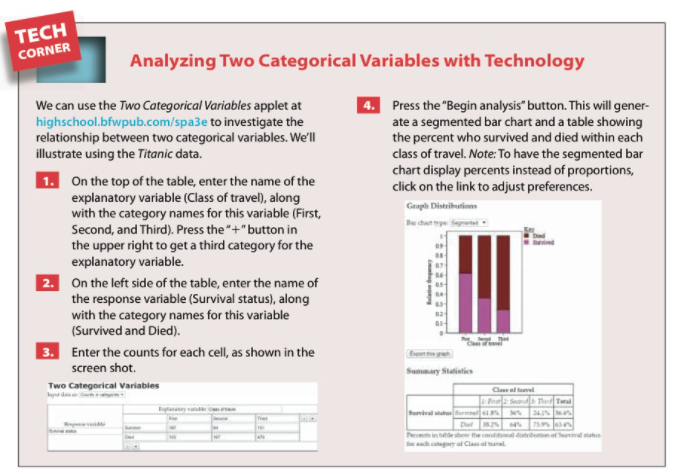
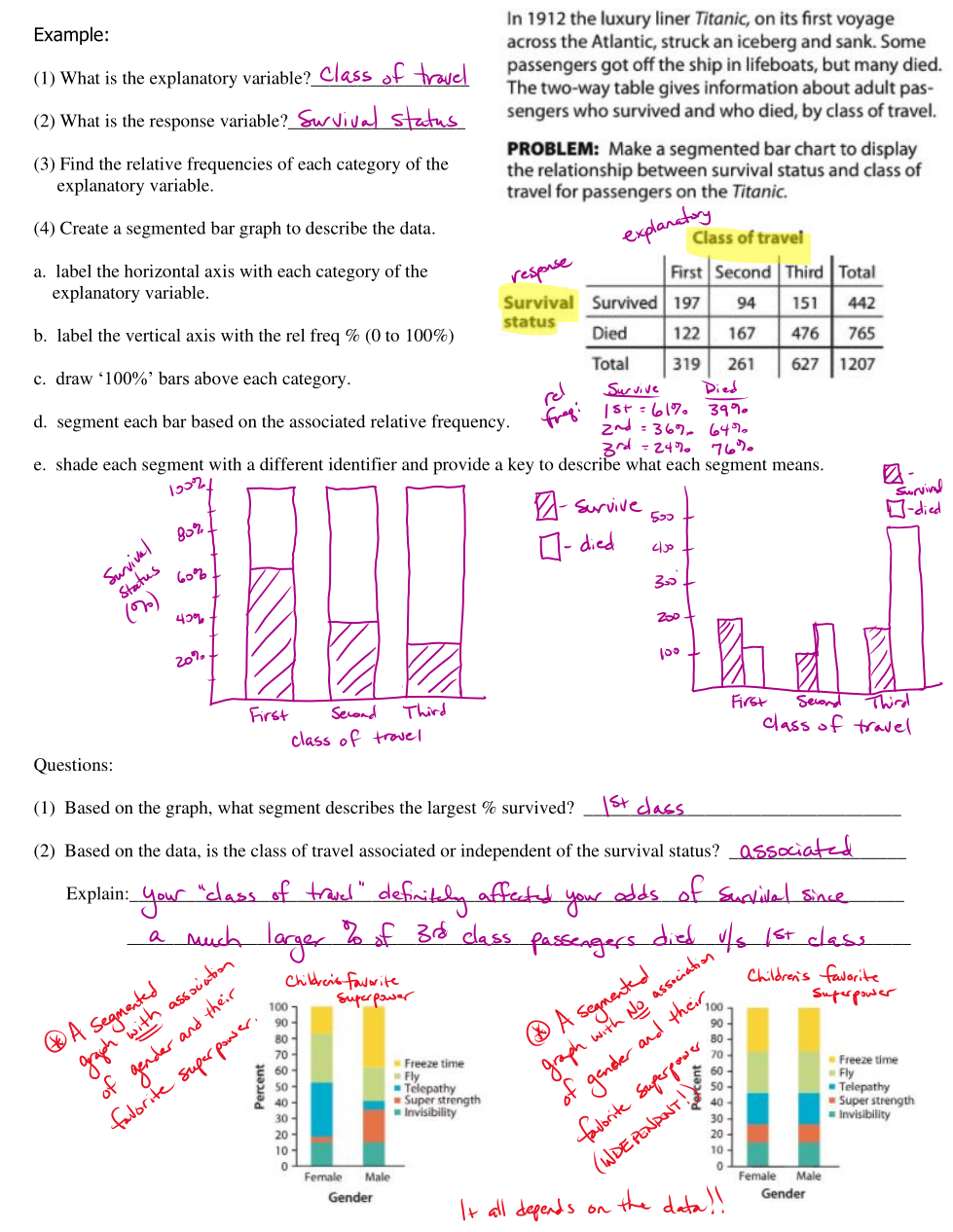
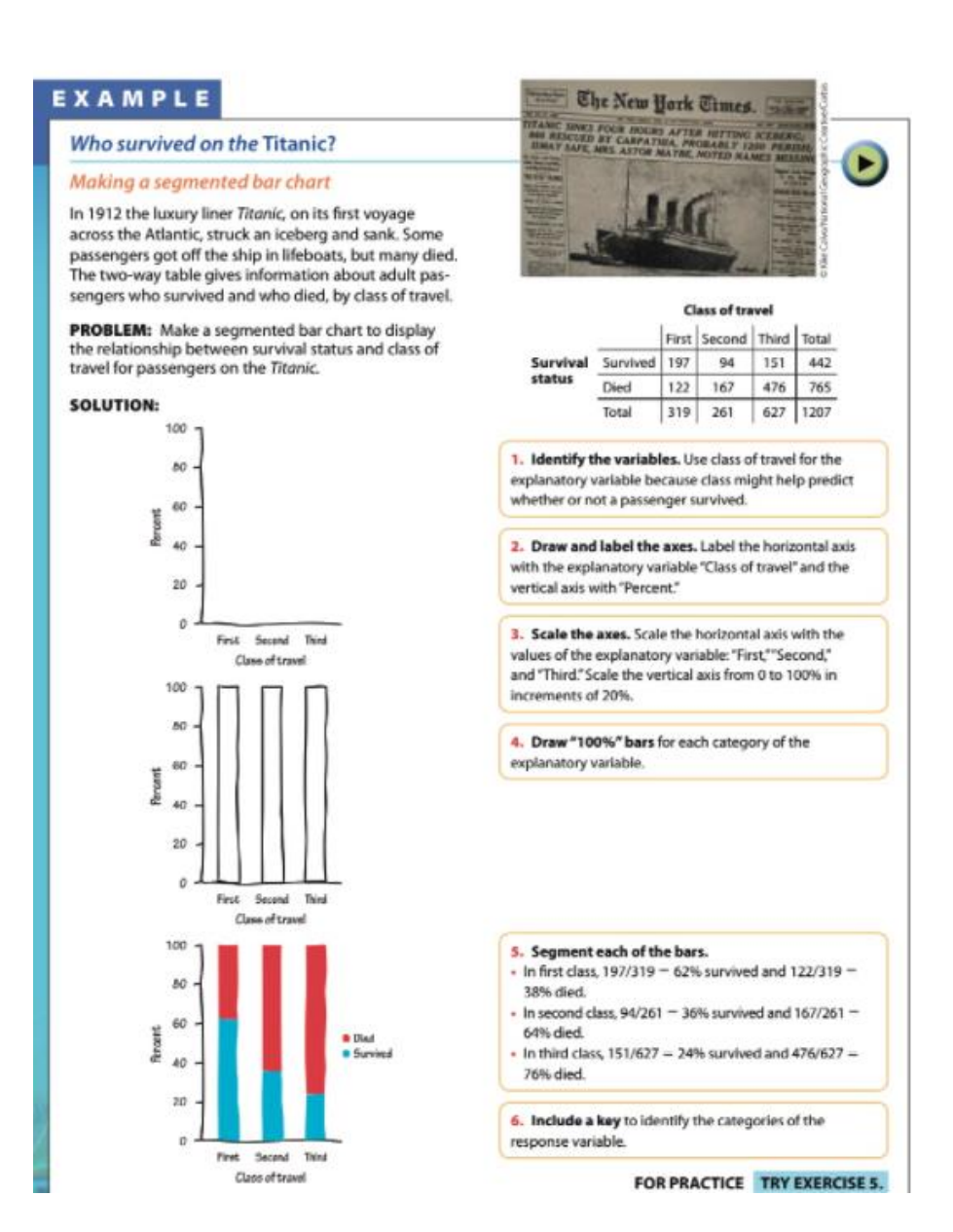
The following provides instructions for using the graph making applet below. The example describes how to create a graph of the data we looked at today regarding the survival status of certain class travelers on the titanic. Refer to this for support if necessary.
How is the hatching of water python eggs influenced by the temperature of the snake’s nest? Researchers randomly assigned newly laid eggs to one of three water temperatures: hot, neutral, or cold. Hot duplicates the extra warmth provided by the mother python, and cold duplicates the absence of the mother. The two-way table summarizes the data on whether or not the eggs hatched.
Click the link below and input the data from the table (you don't need to include the total column or row) into the 2-variable analzyer applet (instructions are above). Once you input the data, click 'begin analysis' to create a side-by-side graph and a segmented graph.
Take a screenshot of the side-by-side graph and upload it into show your work.
(use either the relative frequency version or the frequency version)
https://www.stapplet.com/cat2v.html
If you're having issues with the applet, you may draw it by hand or create in show your work.
How is the hatching of water python eggs influenced by the temperature of the snake’s nest? Researchers randomly assigned newly laid eggs to one of three water temperatures: hot, neutral, or cold. Hot duplicates the extra warmth provided by the mother python, and cold duplicates the absence of the mother. The two-way table summarizes the data on whether or not the eggs hatched.
Click the link below and input the data from the table (you don't need to include the total column or row) into the 2-variable analzyer applet. Once you input the data, click 'begin analysis' to create a side-by-side graph and a segmented graph.
Take a screenshot of the segmented graph and upload it into show your work.
https://www.stapplet.com/cat2v.html
If you're having issues with the applet, you may draw it by hand or create in show your work.
How is the hatching of water python eggs influenced by the temperature of the snake’s nest? Researchers randomly assigned newly laid eggs to one of three water temperatures: hot, neutral, or cold. Hot duplicates the extra warmth provided by the mother python, and cold duplicates the absence of the mother. The two-way table summarizes the data on whether or not the eggs hatched.
Given the data, is there association between water temperature and whether the eggs hatched? Explain.