LNM1 Ch 9: Talking and Getting Dressed for a Party
star
star
star
star
star
Last updated almost 4 years ago
3 Nsɛmmisa
18
10
1
| Draggable item | arrow_right_alt | Corresponding Item |
|---|---|---|
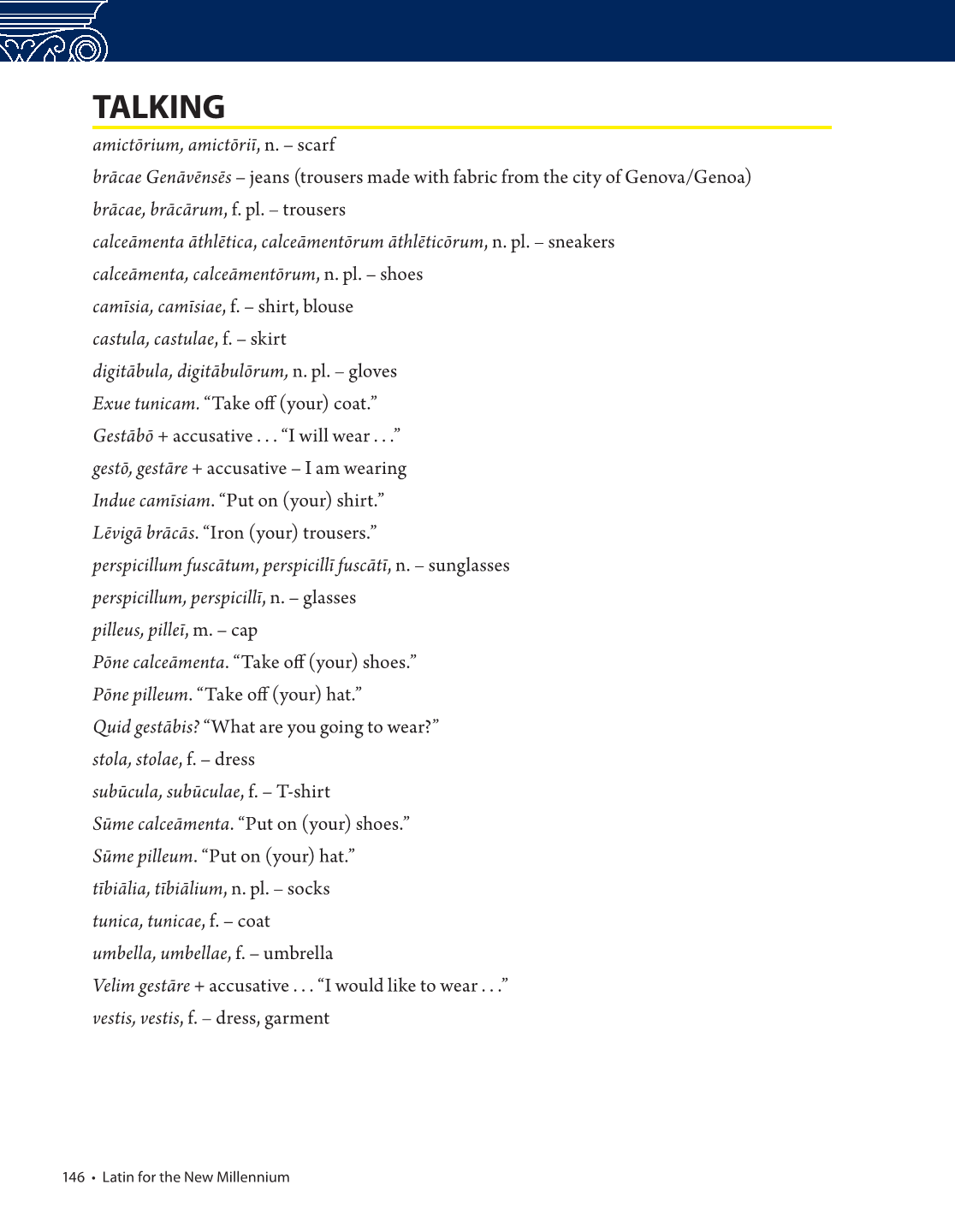
perspicillum fuscātum, perspicillī fuscātī, n. | arrow_right_alt | scarf |
perspicillum, perspicillī, n. | arrow_right_alt | jeans |
umbella, umbellae, f. | arrow_right_alt | trousers |
castula, castulae, f. | arrow_right_alt | sneakers |
stola, stolae, f. | arrow_right_alt | shoes |
calceāmenta, calceāmentōrum, n. pl. | arrow_right_alt | shirt, blouse |
amictōrium, amictōriī, n. | arrow_right_alt | skirt |
vestis, vestis, f. | arrow_right_alt | gloves |
subūcula, subūculae, f. | arrow_right_alt | I am wearing |
pilleus, pilleī, m. | arrow_right_alt | sunglasses |
gestō, gestāre + accusative | arrow_right_alt | glasses |
brācae, brācārum, f. pl. | arrow_right_alt | cap |
calceāmenta āthlētica, calceāmentōrum āthlēticōrum, n. pl. | arrow_right_alt | dress |
digitābula, digitābulōrum, n. pl. | arrow_right_alt | T-shirt |
tunica, tunicae, f. | arrow_right_alt | socks |
camīsia, camīsiae, f. | arrow_right_alt | coat |
brācae Genāvēnsēs | arrow_right_alt | umbrella |
tībiālia, tībiālium, n. pl. | arrow_right_alt | dress, garment |
| Draggable item | arrow_right_alt | Corresponding Item |
|---|---|---|
Sūme pilleum. | arrow_right_alt | “Take off (your) coat.” |
Exue tunicam. | arrow_right_alt | “I will wear . . .” |
Lēvigā brācās. | arrow_right_alt | “Put on (your) shirt.” |
Gestābō + accusative . . . | arrow_right_alt | “Iron (your) trousers.” |
Sūme calceāmenta. | arrow_right_alt | “Take off (your) shoes.” |
Pōne calceāmenta. | arrow_right_alt | “Take off (your) hat.” |
Pōne pilleum. | arrow_right_alt | “What are you going to wear?” |
Velim gestāre + accusative . . . | arrow_right_alt | “Put on (your) shoes.” |
Quid gestābis? | arrow_right_alt | “Put on (your) hat.” |
Indue camīsiam. | arrow_right_alt | “I would like to wear . . .” |
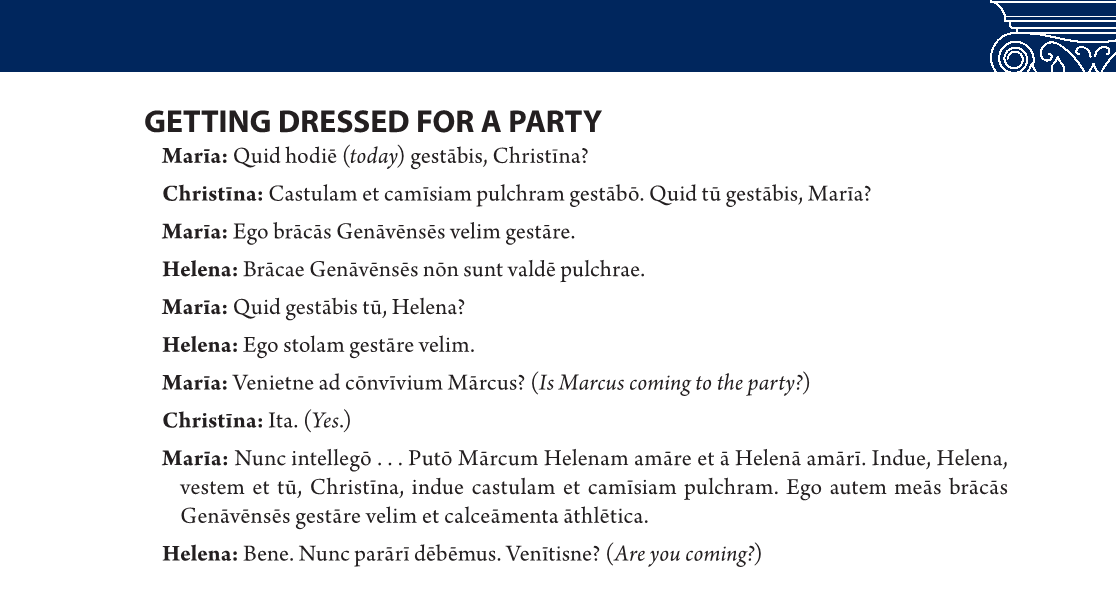
Create a new conversation, modeled on the one above, but substituting different names of articles of clothing for the ones used in the original dialogue.
• breviōrēs brācae, breviōrum brācārum, f. pl. – shorts
• cingulum, cingulī, n. – belt
• digitālia, digitālium, n. pl. – gloves
• fōcāle, fōcālis, n. – tie (necktie)
• pērula, pērulae, f. – purse
• sandalium, sandaliī, n. – sandal
• soccī, soccōrum, n. pl. – slippers
• subligar natātōrium, subligāris natātōriī, n. – swim trunks
• thōrax lāneus, thōrācis lāneī, m. – sweater
• tunica, tunicae, f. – jacket
• vestis natātōria, vestis natātōriae, f. – swimsuit
Marīa: Quid hodiē (today) gestābis, Christīna?
Christīna:
Marīa: Ego
Helena:
Marīa: Quid gestābis tū, Helena?
Helena: Ego
Marīa: Venietne ad cōnvīvium Mārcus? (Is Marcus coming to the party?)
Christīna: Ita. (Yes.)
Marīa: Nunc intellegō . . . Putō Mārcum Helenam amāre et ā Helenā amārī. Indue, Helena,
Helena: Bene. Nunc parārī dēbēmus. Venītisne? (Are you coming?)