Spring Spiral Review Day 1: (3/15)
star
star
star
star
star
Last updated about 3 years ago
8 Nsɛmmisa

0
0
0
0
0
0
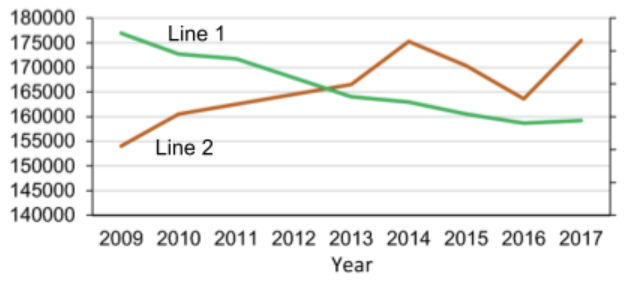
What evidence do you have for which line represents an adaptive trait?
What evidence do you have for which line represents a non-adaptive trait?
Critical thinking:
Eider ducks live in the ocean and have a layer of warm feathers underneath their regular feathers. They can have feathers of different thicknesses. These feathers help the ducks stay warm in cold water. Ducks with thicker feathers are more likely to stay warm and survive in cold water. But, in warm water, thicker feathers can make the ducks overheat and die.
Over time a population of Eider ducks got separated from each other. One of the Populations now lives in colder water. The other population migrated to warmer water.
Using this information and the graph above, which population represent Line 1 and Line 2? Explain using supporting evidence.
CFS:
accurately identify the relationship between environmental changes and population variations
describes the cause and effect relationship between environmental factors and species traits
There is a kind of snake that can be born with red or green skin. Eagles hunt these snakes, but snakes that are the same color as their environment are harder for the eagles to see and catch.
A population of snakes once lived in an environment where there was sand and dirt, but no grass. The environment changed so that green grasses and plants now grow there.
Do: Create a graph that represents the change in red and green snakes over time once eagles are introduced and the environment turns green.
Guppies are small fish that live in South American rivers. They can have different-sized spots on their bodies.
The river bottoms are covered in rocks. Guppies with spots that are the same size as the rocks on the bottom are harder for bigger fish to see and catch. Over time a new trait is introduced that causes the Guppies to not have any spots on them.
Using your scientific knowledge, predict how the new trait of being spotless will survive in the existing environment.
CFS:
accurately identify the relationship between environmental changes and population variations
describes the cause and effect relationship between environmental factors and species traits
Tree squirrels can have different fur colors. Squirrels live in forests where foxes also live and foxes hunt squirrels for food. Squirrels that have fur the same color as the trees are harder for the foxes to see and catch. Over time the environment is introduced with large trees that offer lots of shade for animals, additionally the area closest to the ground is much darker as it is consistently in the shade. Over time a new trait is introduced that causes the squirrels to appear to have black fur.
Using your scientific knowledge, predict how the new trait of black fur will survive in the existing environment.
CFS:
accurately identify the relationship between environmental changes and population variations
describes the cause and effect relationship between environmental factors and species traits
Harbor seals live in northern oceans and have a layer of blubber (fat) that keeps them warm. Seals can have blubber of different thicknesses. Seals with thicker blubber are more likely to stay warm and survive in cold ocean waters. But, in warm ocean waters, thicker blubber can make the seals overheat and die. Over time the environment turns much warmer as historic environmental trends have suggested.
Using your scientific knowledge, predict how the traits of having more AND less blubber will survive in the existing environment.
CFS:
accurately identify the relationship between environmental changes and population variations
describes the cause and effect relationship between environmental factors and species traits
Harbor seals live in northern oceans and have a layer of blubber (fat) that keeps them warm. Seals can have blubber of different thicknesses. Seals with thicker blubber are more likely to stay warm and survive in cold ocean waters. But, in warm ocean waters, thicker blubber can make the seals overheat and die. Over time the environment turns much warmer as historic environmental trends have suggested.
Do: Create a graph that represents the warm environment where some species have the trait for high blubber and some have the trait for low blubber.