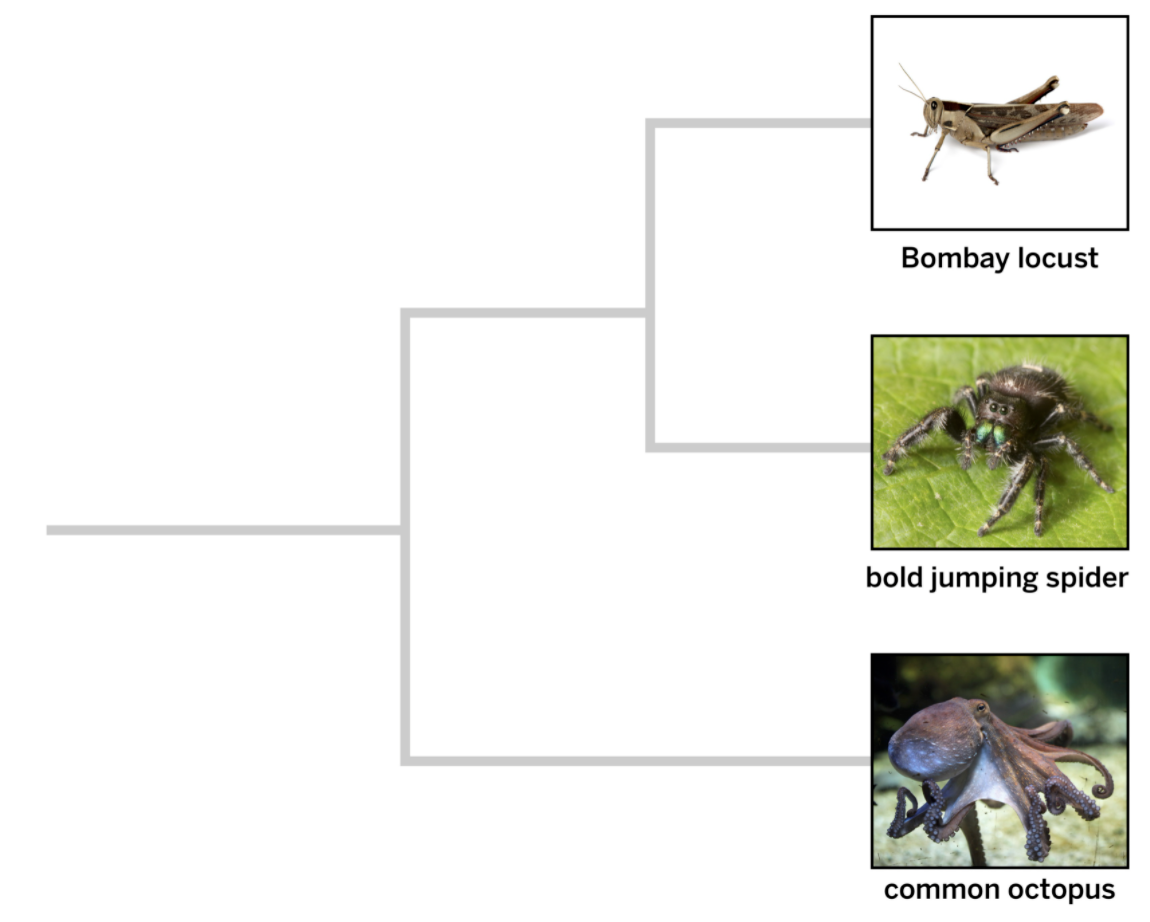
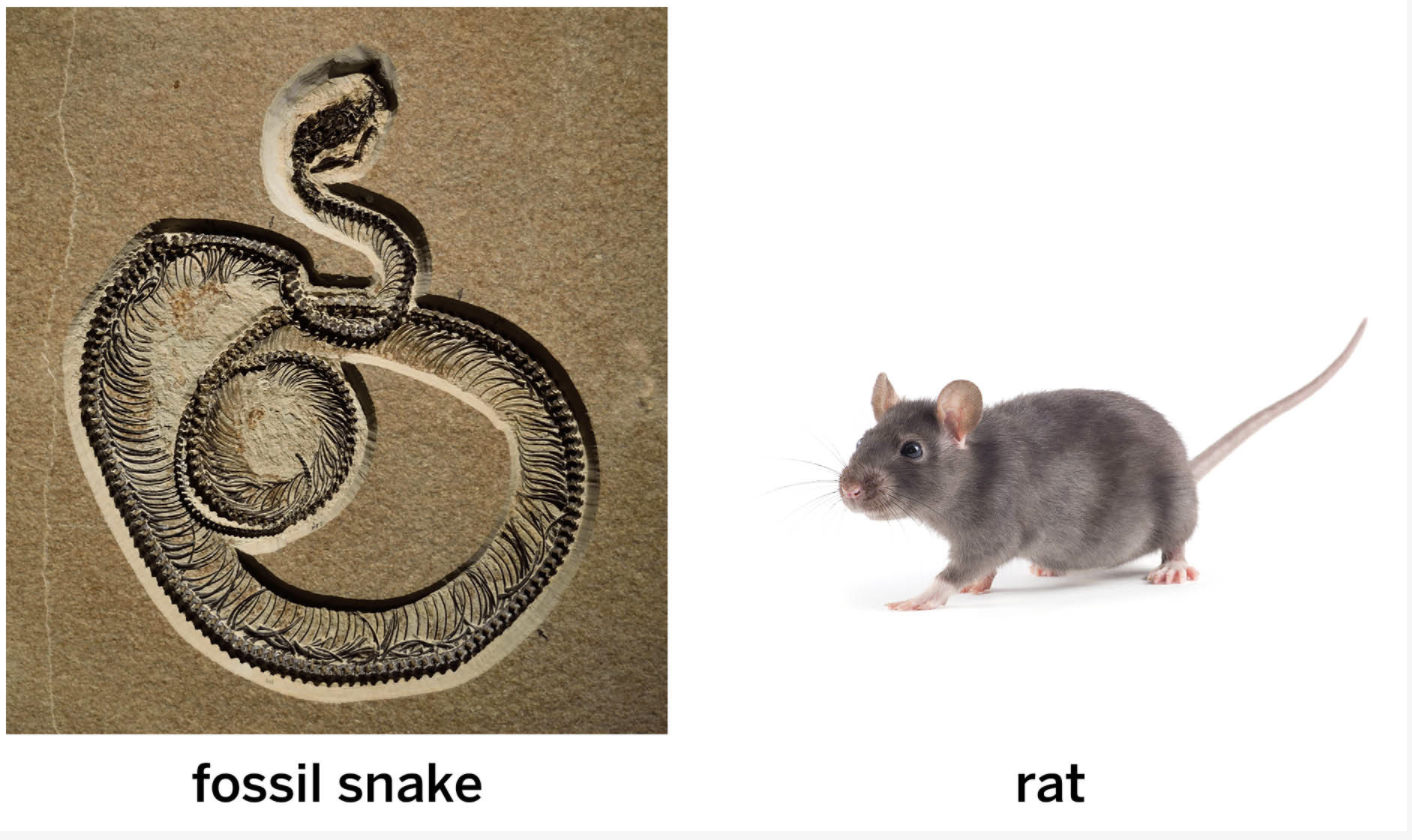
This fossil snake and this living rat both have a structure in their skull called the quadrate bone. What best explains why both species have a quadrate bone?
1 point
1
Question 2
2.
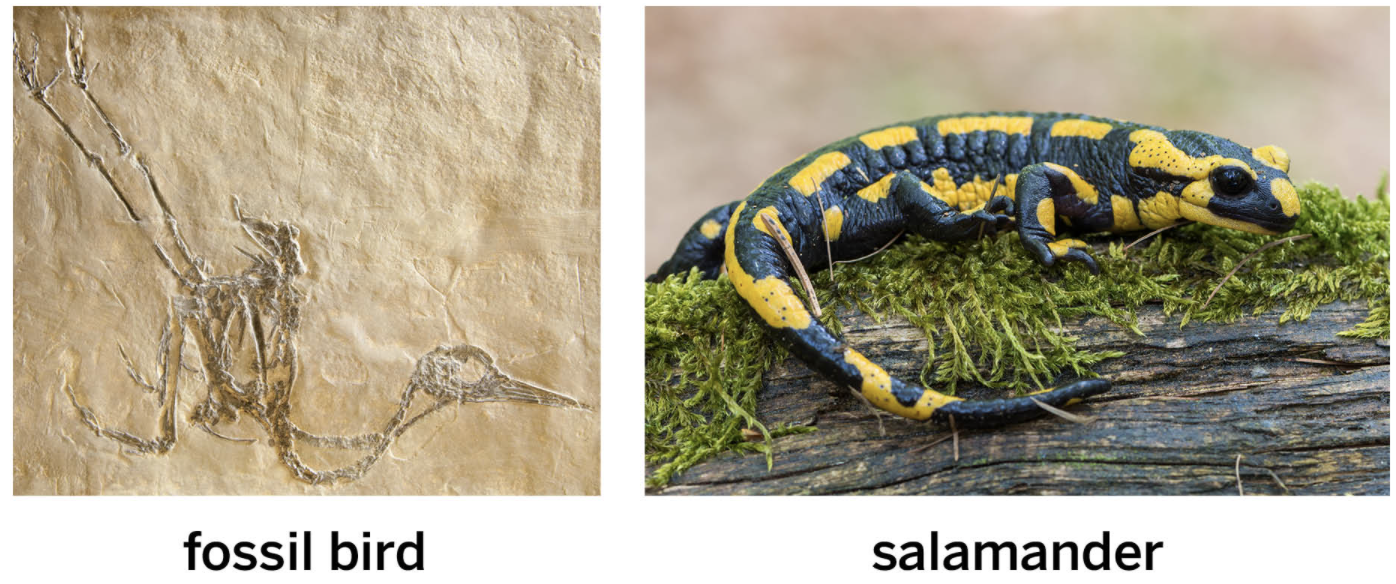
This fossil bird and this living salamander both have tails. However, they have different tail structures. The bird has a very short tail made of just one bone that helps it have a light skeleton for flying. The salamander has a long tail with many bones that helps it balance while it runs. What most likely explains why both the bird and salamander have tails and why the tails are different?
1 point
1
Question 3
3.
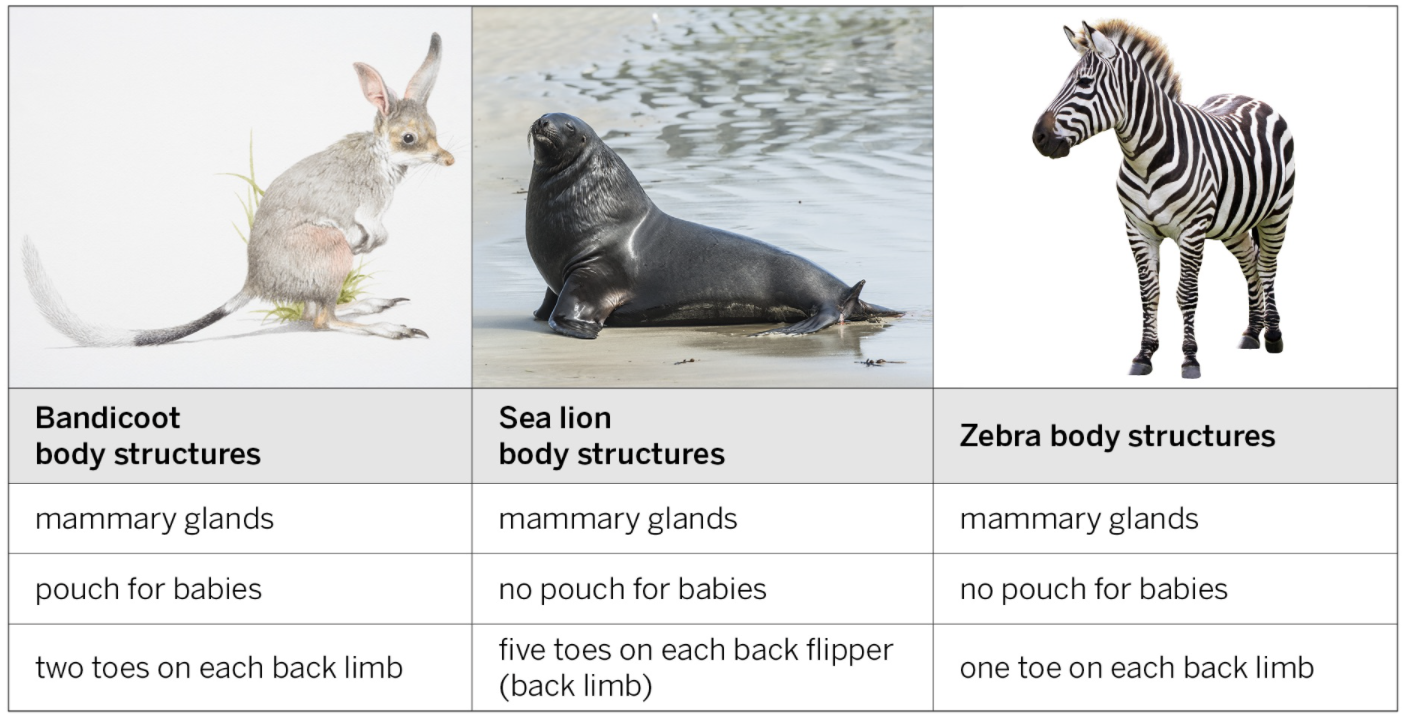
This bandicoot, this sea lion, and this zebra have similarities and differences in their body structures. What does the information about these structures tell you about the ancestors of these species?
1 point
1
Question 4
4.
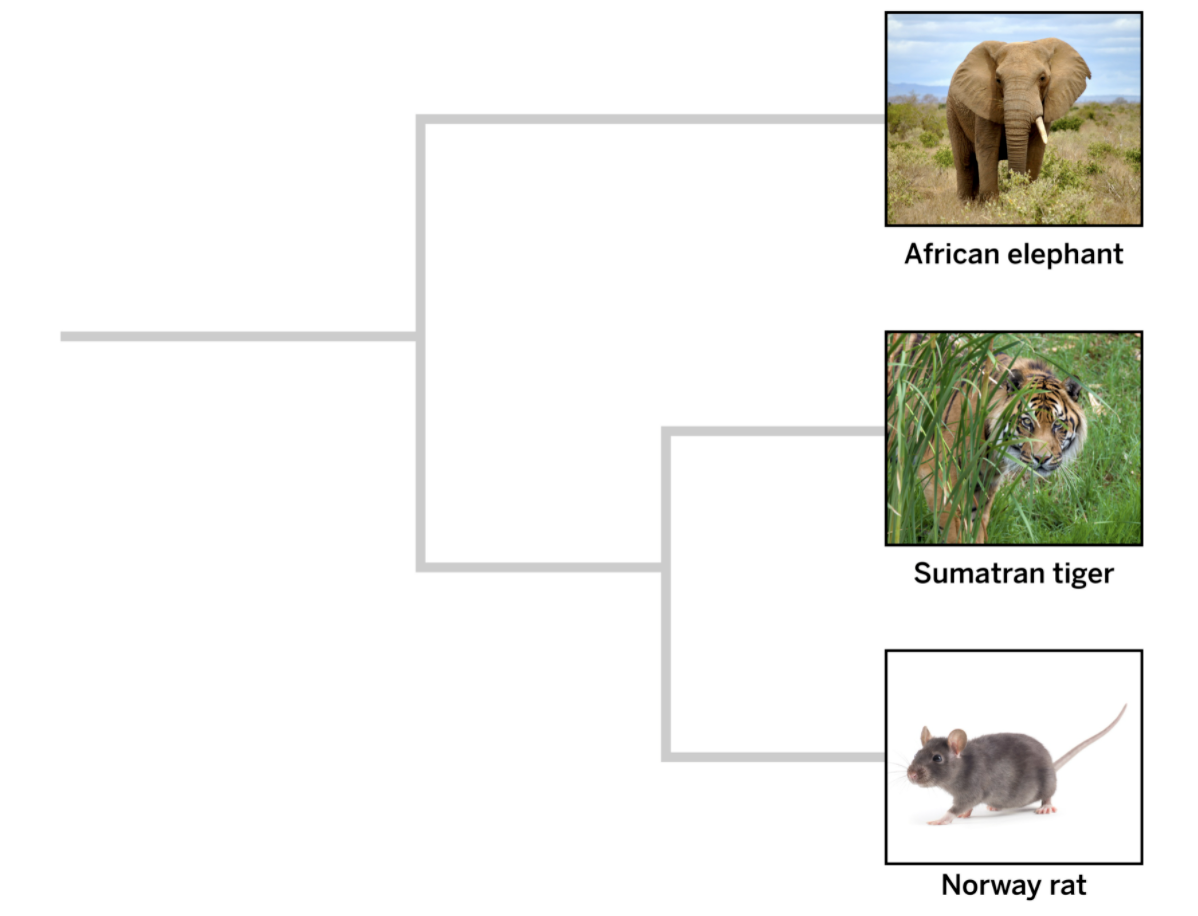
What does this diagram show?
1 point
1
Question 5
5.
The body structures for a population of green herons (a species of bird that lives near water) were stable for a long time. Then, their body structures changed to make the green herons taller. Why did this happen?
1 point
1
Question 6
6.
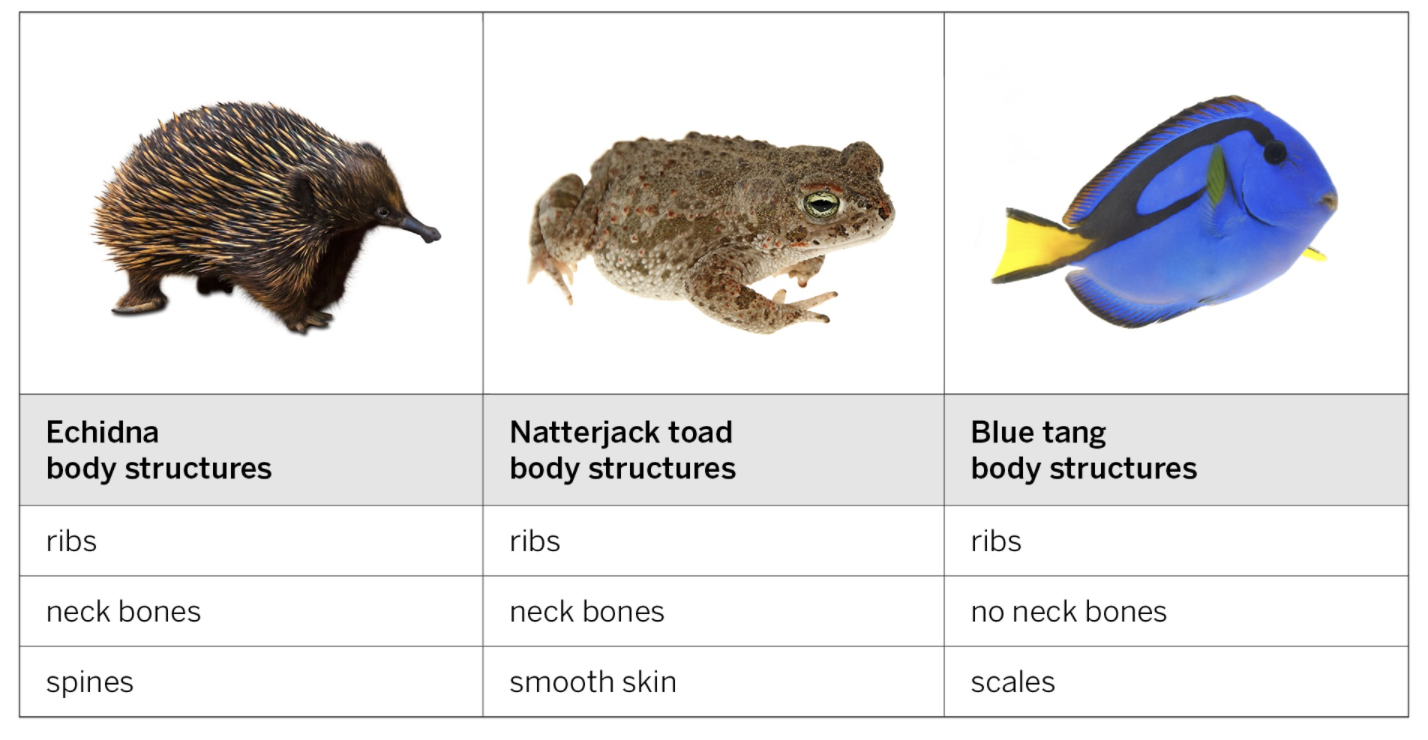
This echidna, this natterjack toad, and this blue tang have similarities and differences in their body structures. What does the information about these structures tell you about the ancestors of these species?
1 point
1
Question 7
7.
What does this diagram show?
2 points
2
Question 8
8.
Julio is studying the evolutionary history of desert cottontail rabbits, sea otters, and grizzly bears. All three species share some body structures, but all three also have some differences in their body structures. Below is a table that includes some of the body structures Julio is studying.
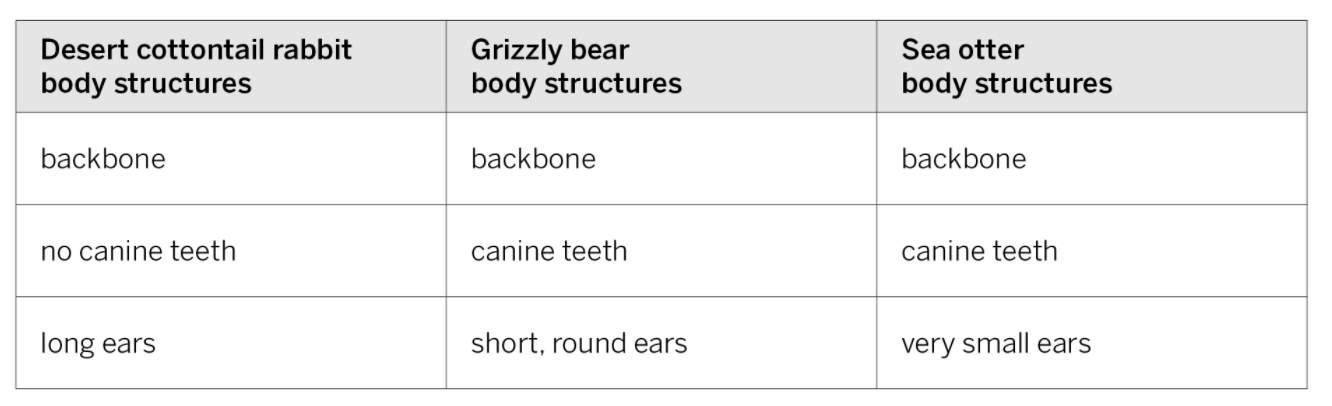
How could Julio explain why all three species share some body structures and have some differences? Why do only grizzly bears and sea otters have canine teeth?
CFS:
student describes the relationship between anatomical similarities and differences in animal species
student describes the environmental difference between animal species with a common ancestor based on body structures
1 point
1
Question 9
9.
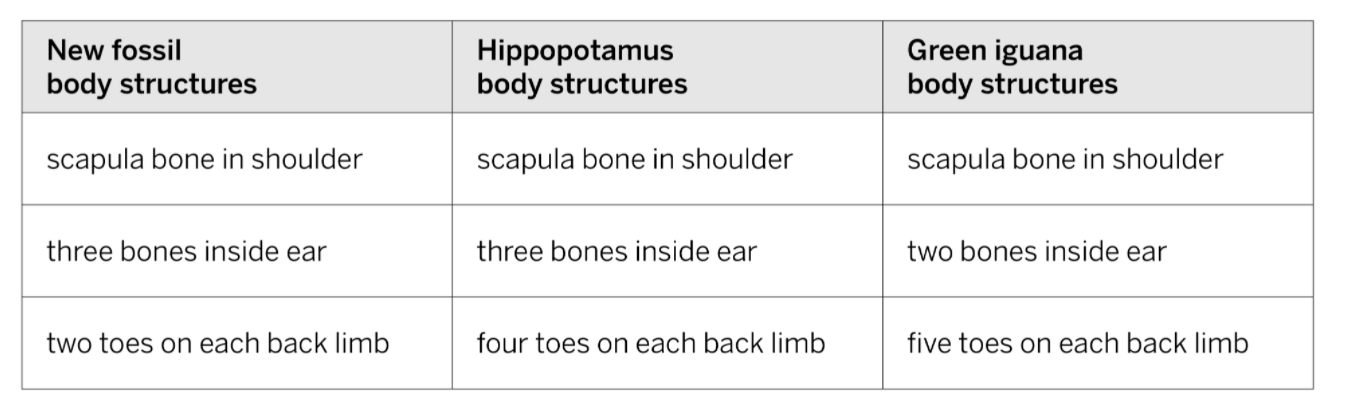
Xiao is studying a fossil that was recently discovered. She wants to determine whether the fossil is more closely related to the hippopotamus or the green iguana. She has information about the body structures of the three species in the table below.
Help Xiao by using the structures to determine if the new fossil is more closely related to hippopotamuses or green iguanas by completing the evolutionary tree below.