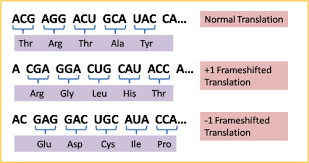
The following shows...
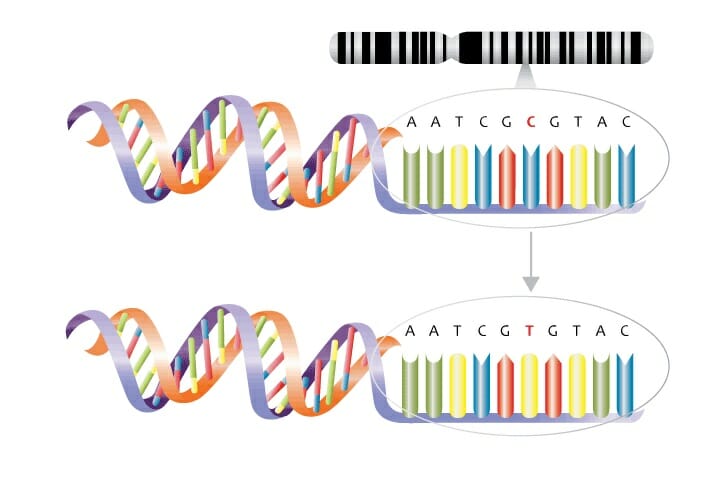
The following shows...
Categorize the three types of mutations
DNA bases are matched to an incorrect base, deleted, or inserted into a DNA strand improperly.
Genes are switched to different places, deleted, or inserted into a chromosome.
The cell does not divide correctly in mitosis or meiosis and the daughter cells contain an unequal amount of chromosomes.
Chromosmal mutation
Mutation in the DNA code
Nondisjunction
Label the diagram with the following words from the word bank:
Word bank: DNA base deletion DNA base substitution DNA base insertion
The following shows...
The image below shows the mutation known as "". In this type of mutation an is added to the DNA code. The extra base added in this example is .
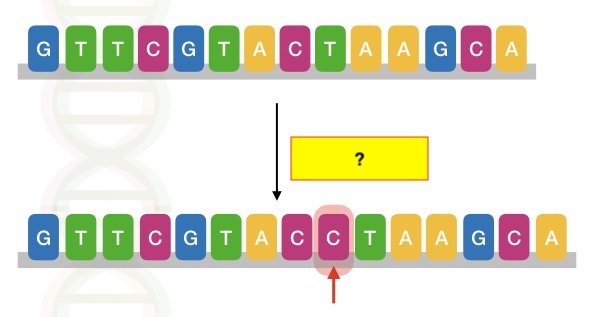
The type of mutation seen below is a . The reason why is because a DNA base was from the DNA sequence. The DNA then shifts in the frame.
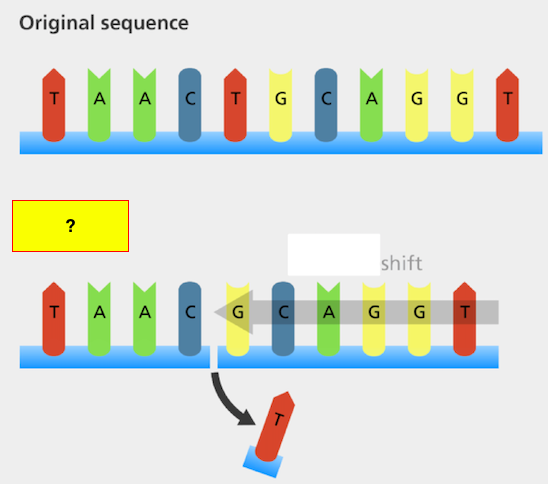
The image below shows an example of...
DNA framshifts are caused by (adding) or (removing) DNA. Frameshifts are usually not good for an organism and leads to death. Every amino acid brought by before the mutation will be good but after deleting or removing DNA every made after is incorrect. So an incorrect protein is made.