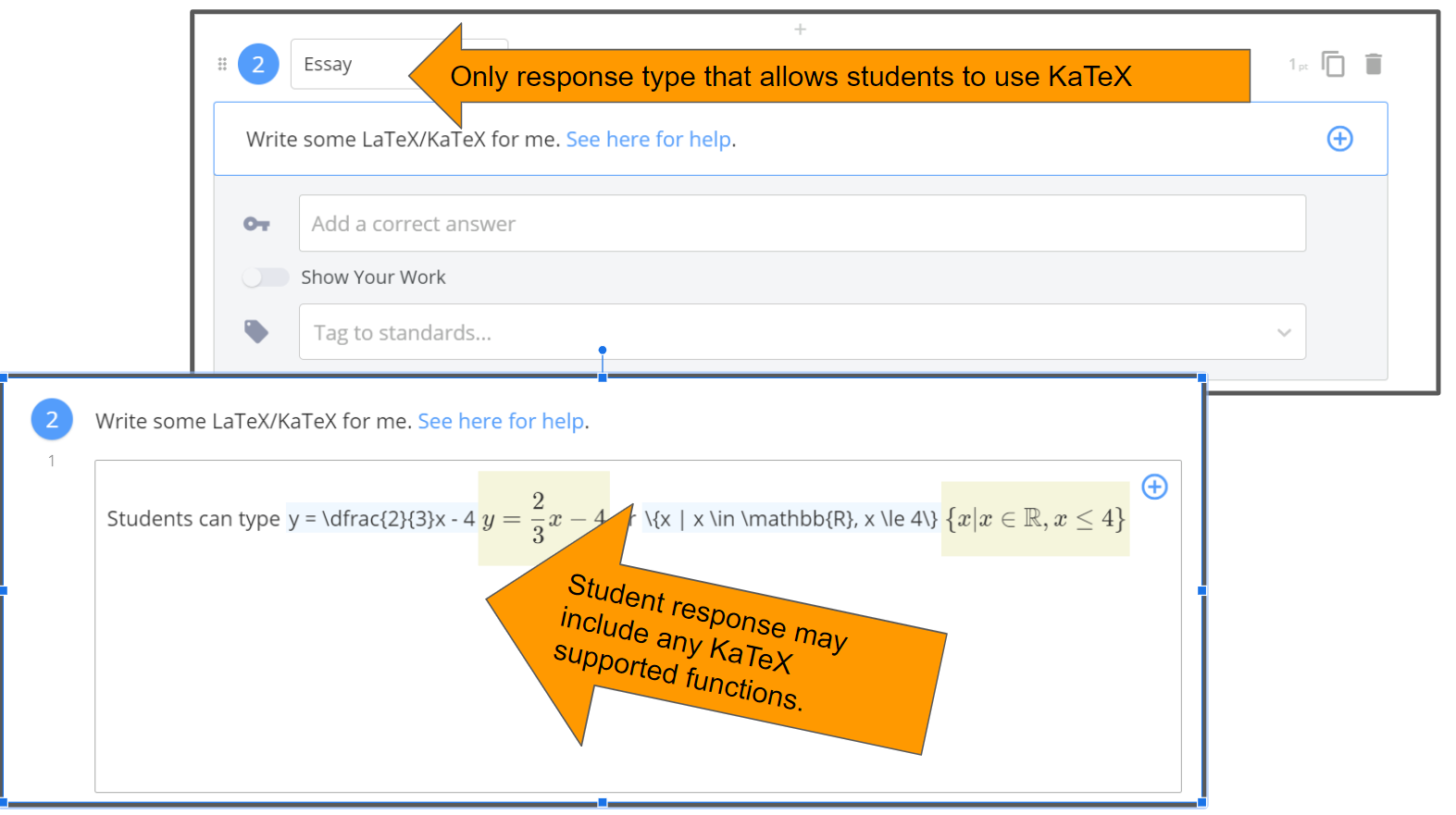
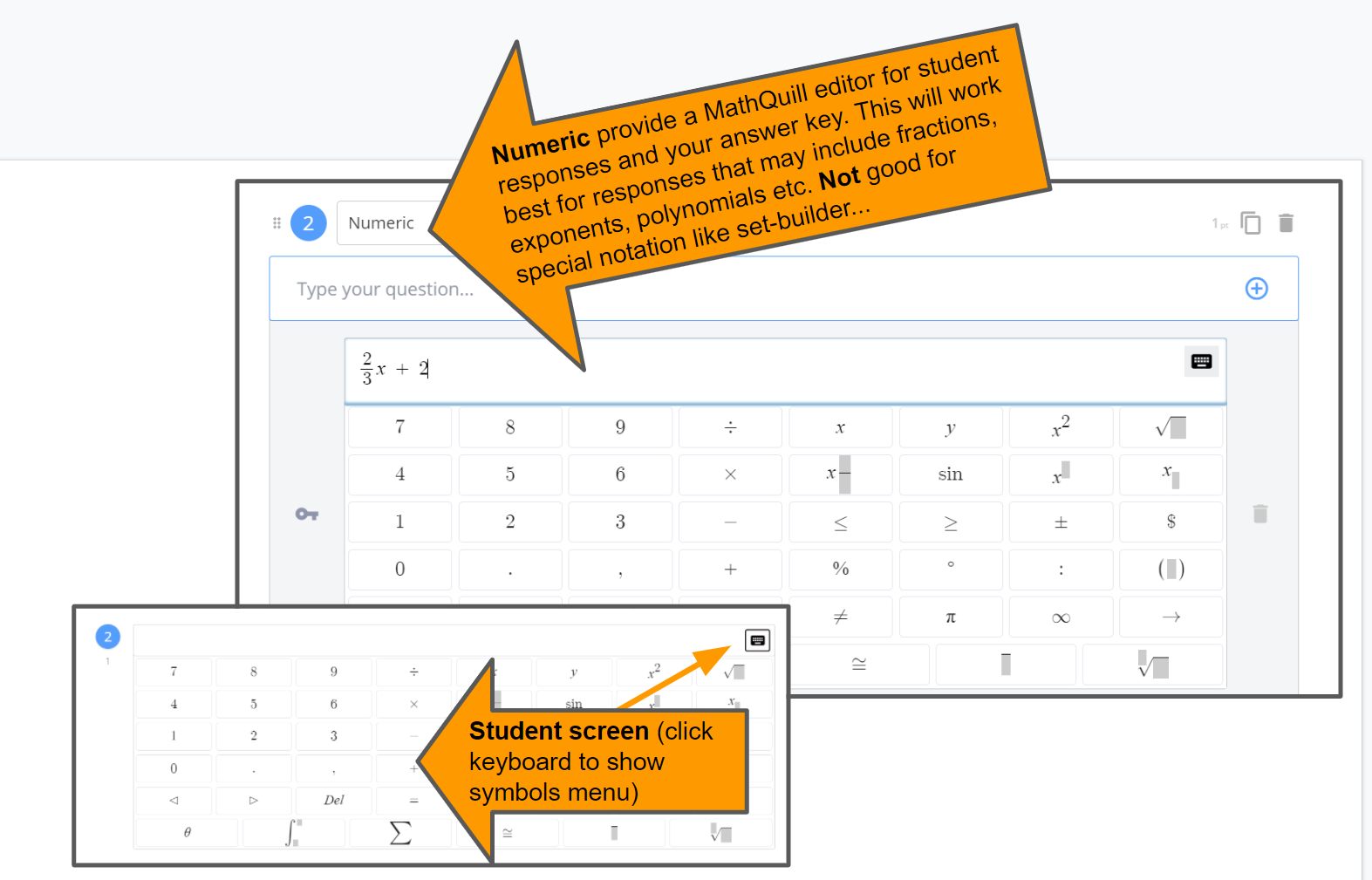
Using \LaTeX in GoFormative
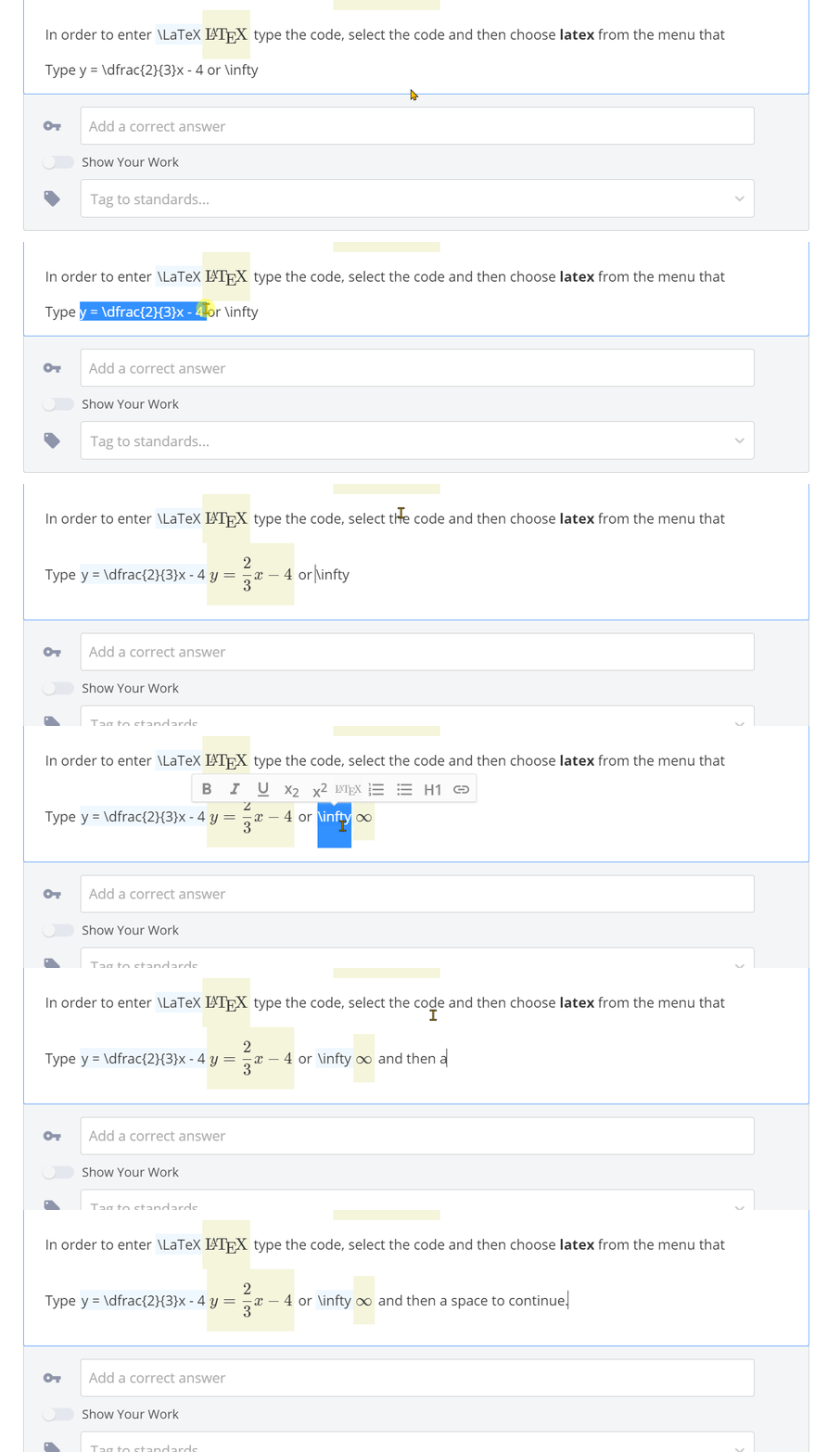
When you want to enter a \LaTeX expression type the code, select it and choose LaTeX. For reference, the supported KaTeX functions will all work here. The LaTeX source code you selected will be highlighted in blue and hidden on students' screens while the rendered output will appear highlighted in yellow-ish(?) and be shown to students. (see below👇👇👇)
Using \LaTeX in GoFormative
When you want to enter a