APUSH Chapter 27 - Empire and Expansion (1890-1909)
star
star
star
star
star
Last updated about 2 years ago
27 Nsɛmmisa
1
1
IIRC.02
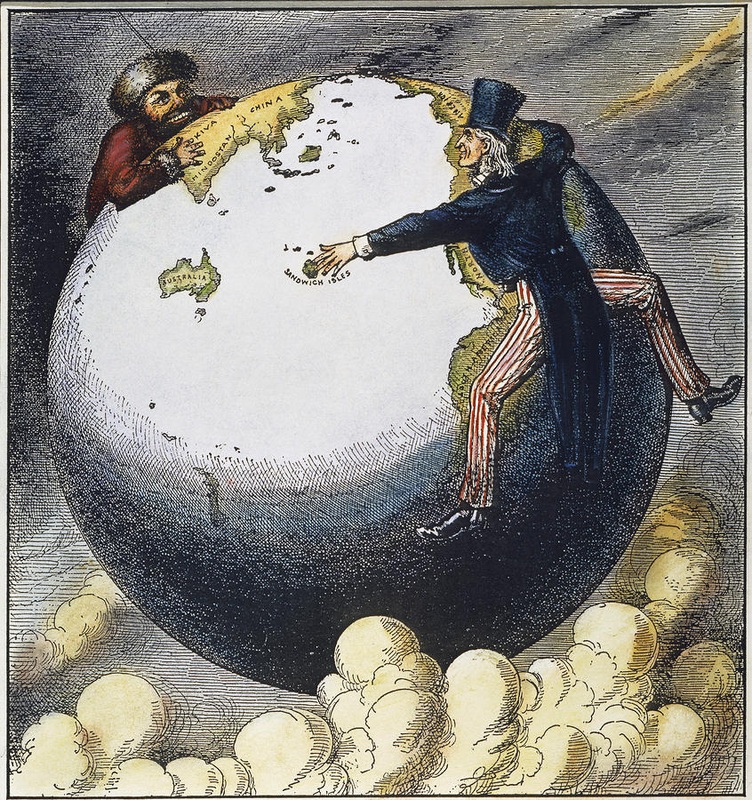
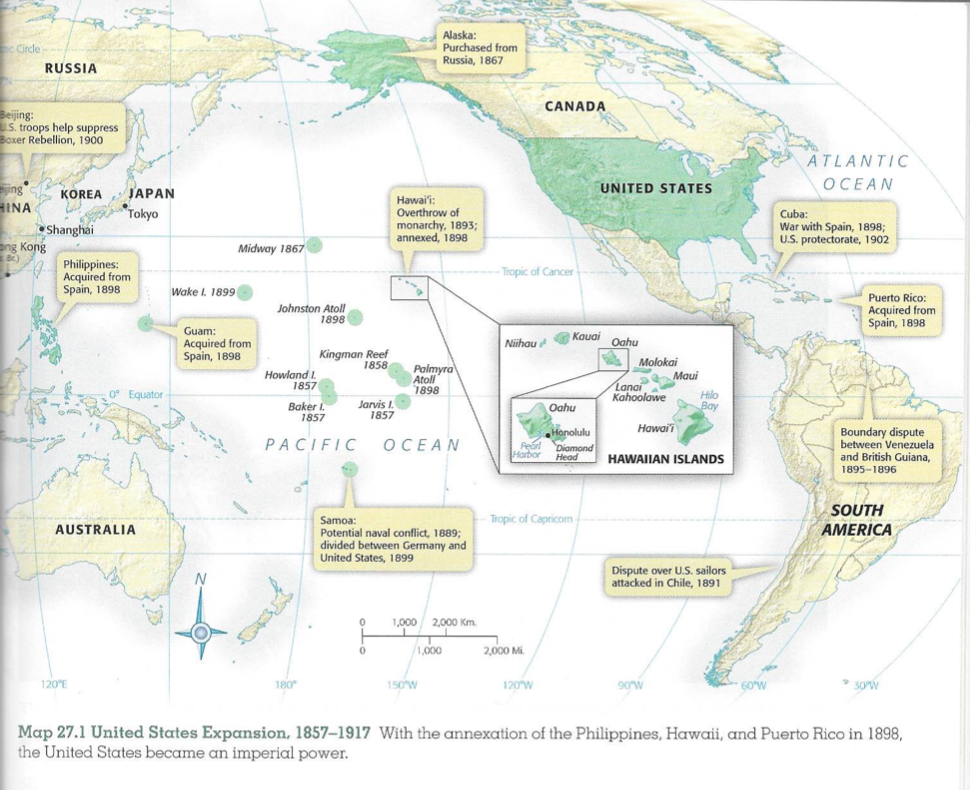
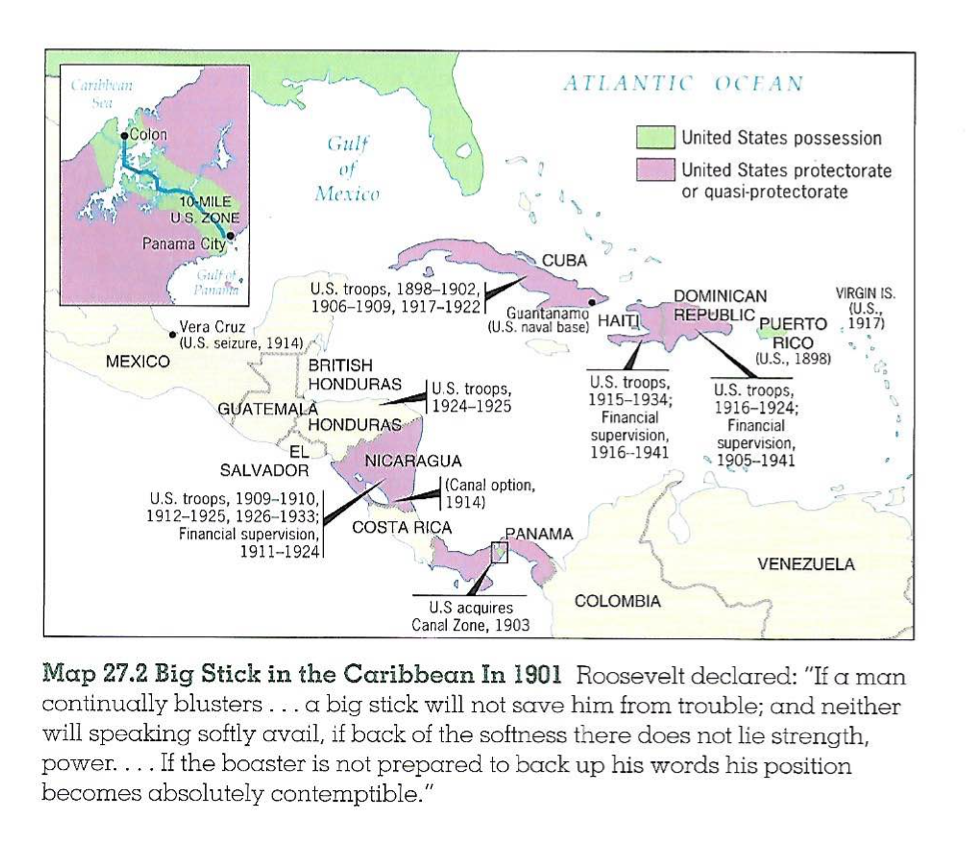
What do you remember noticing about this map back in September? If you cannot recall, what do you notice?
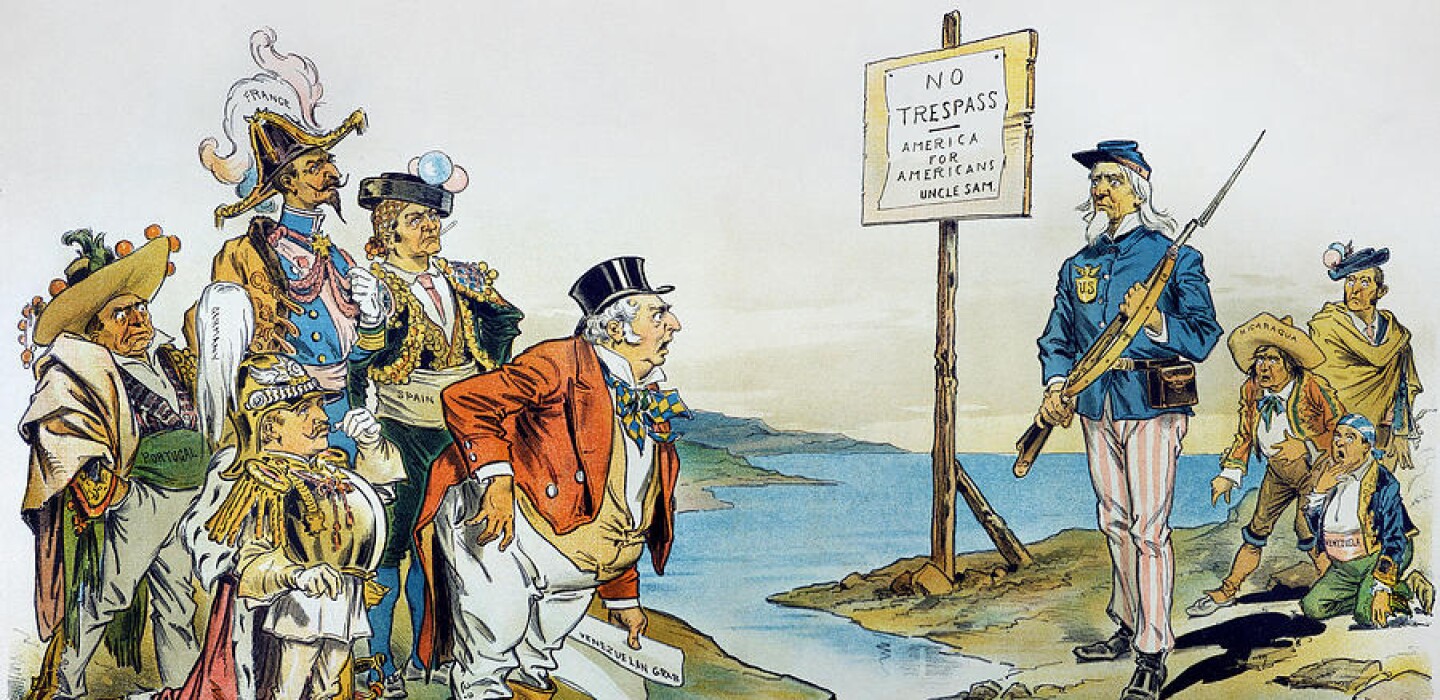
Review: The United States had once been a
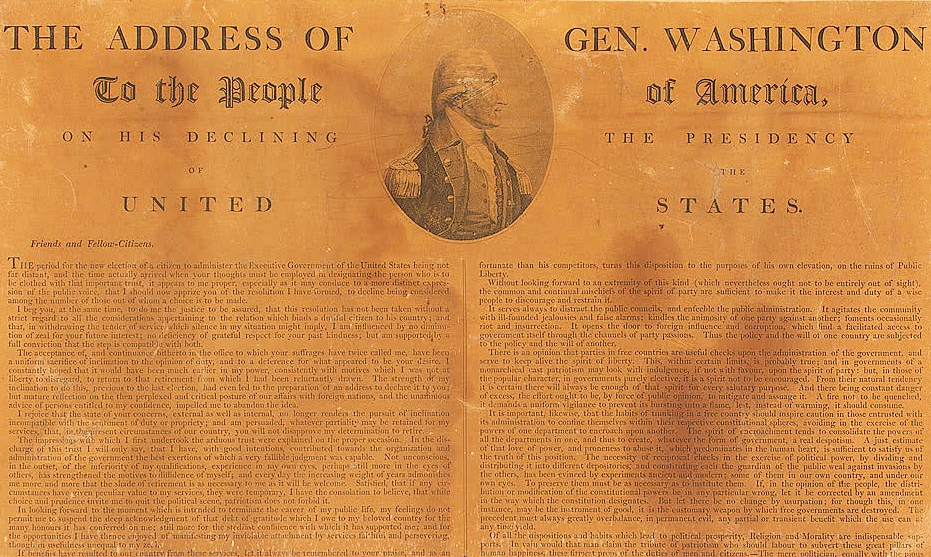
For one hundred years, with few exceptions, Washington's successors obeyed. With an
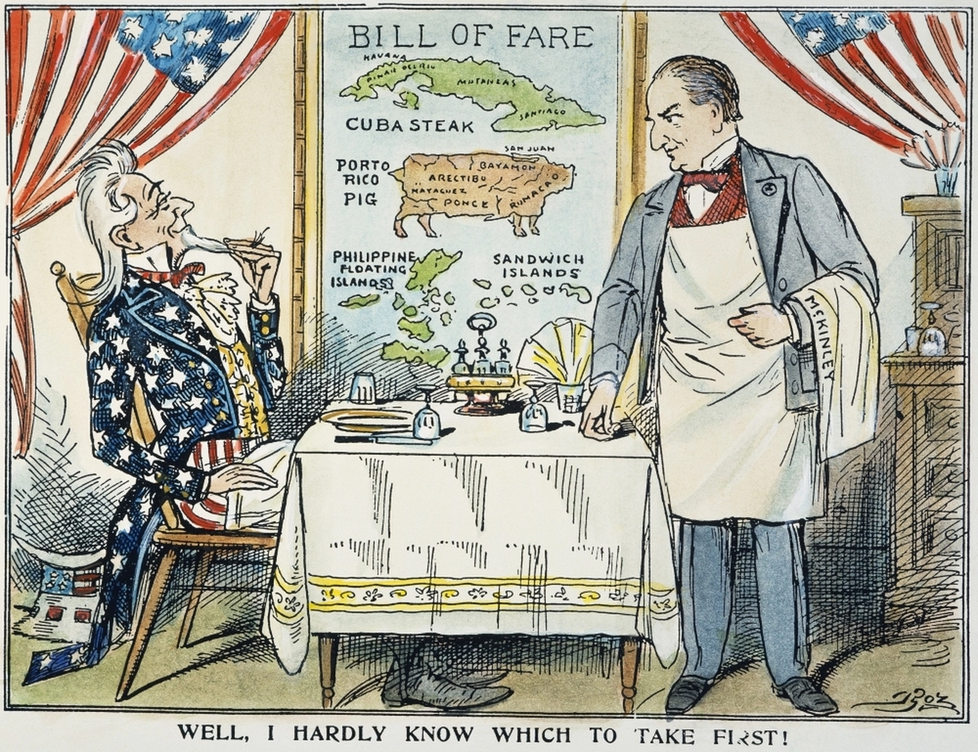
But in the late nineteenth century all of that changed rapidly. In the space of just
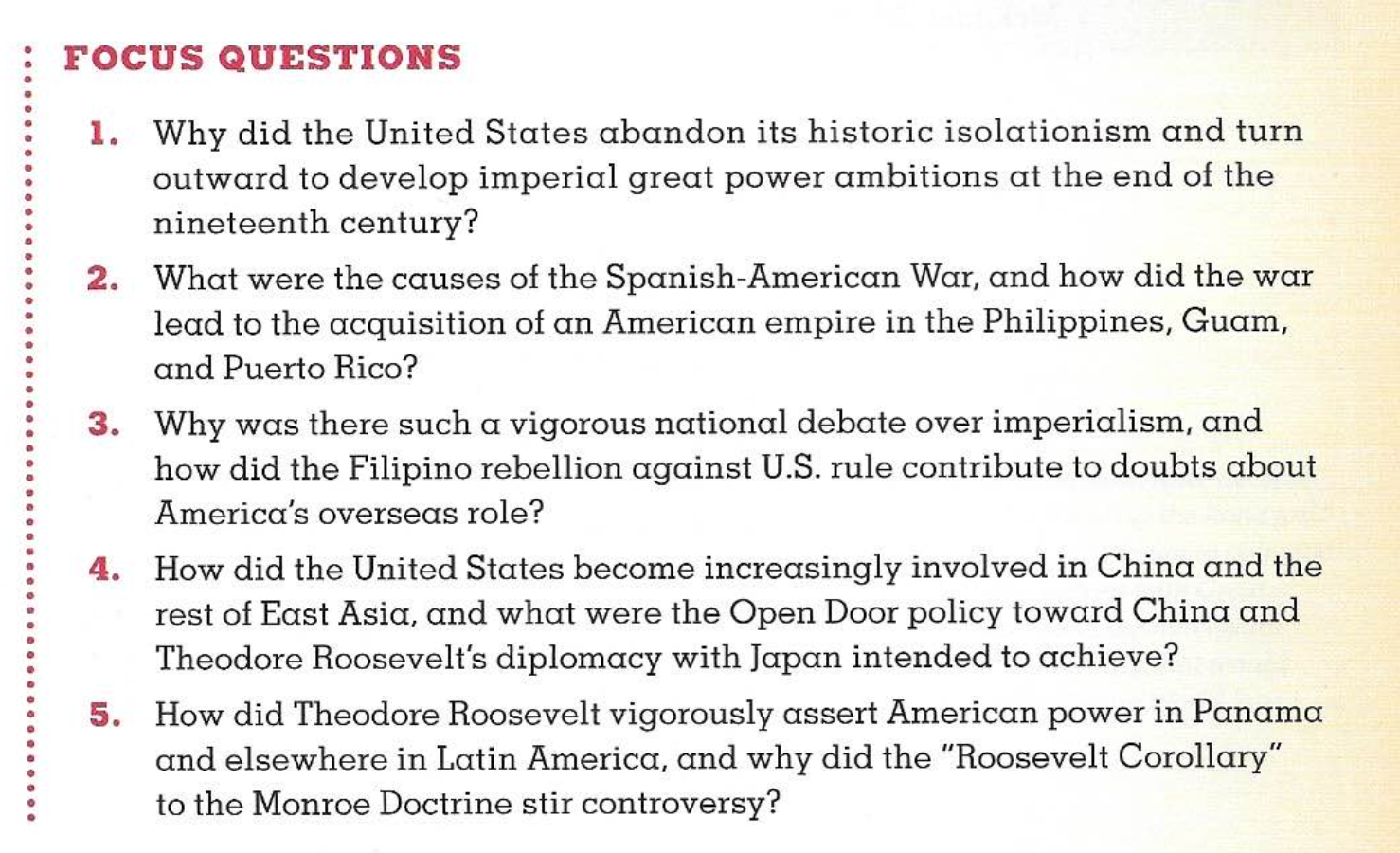
Why, in such a short time, did the United States abandon its policy of isolationism and take on

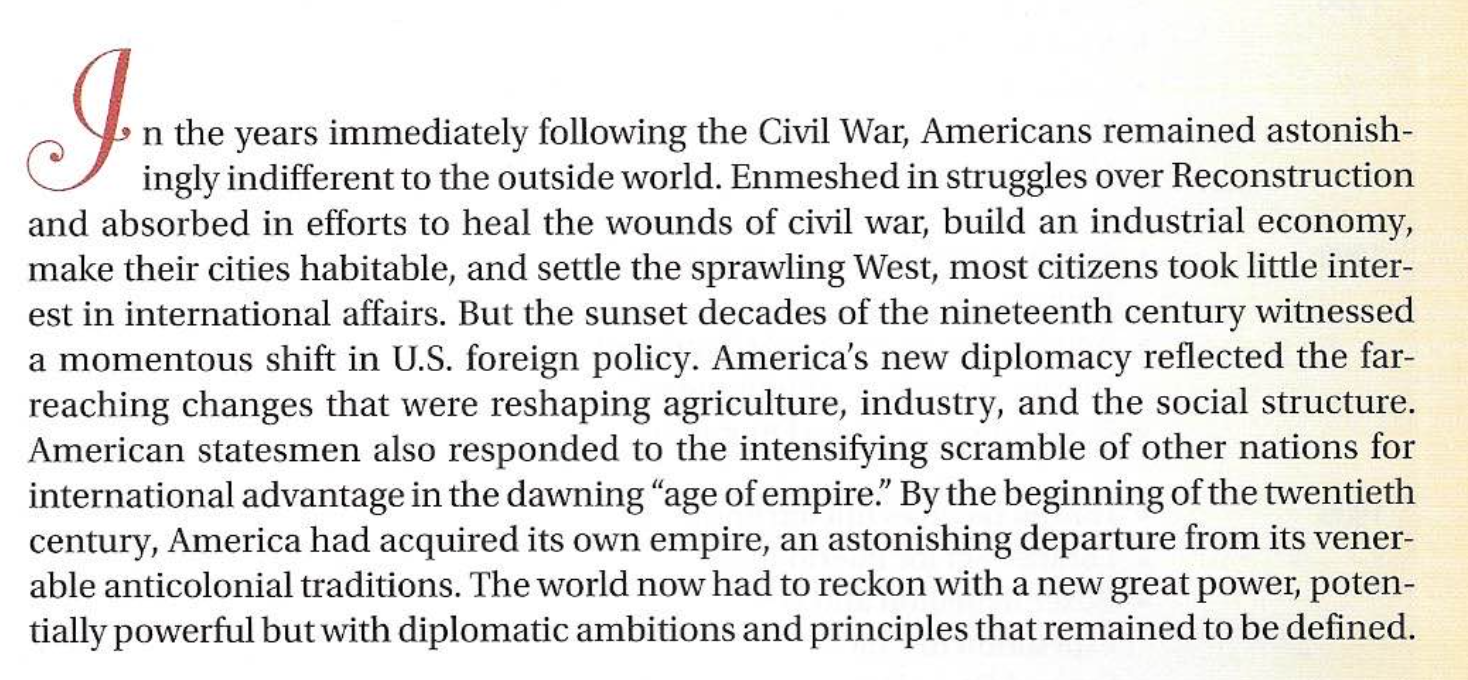
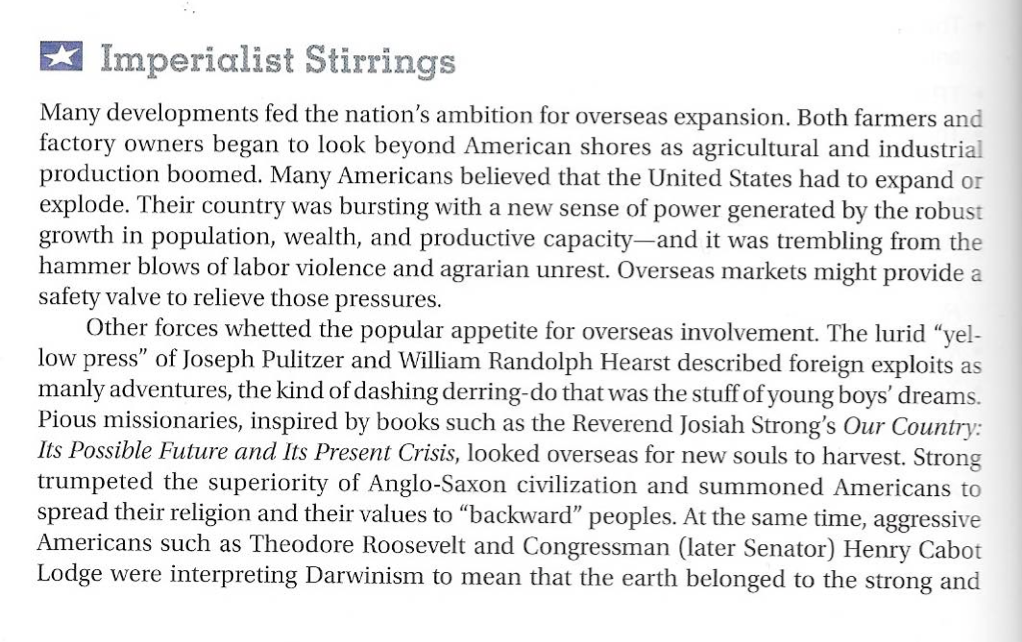
A major factor in the shift in American foreign policy toward imperialism in the late
nineteenth century was the
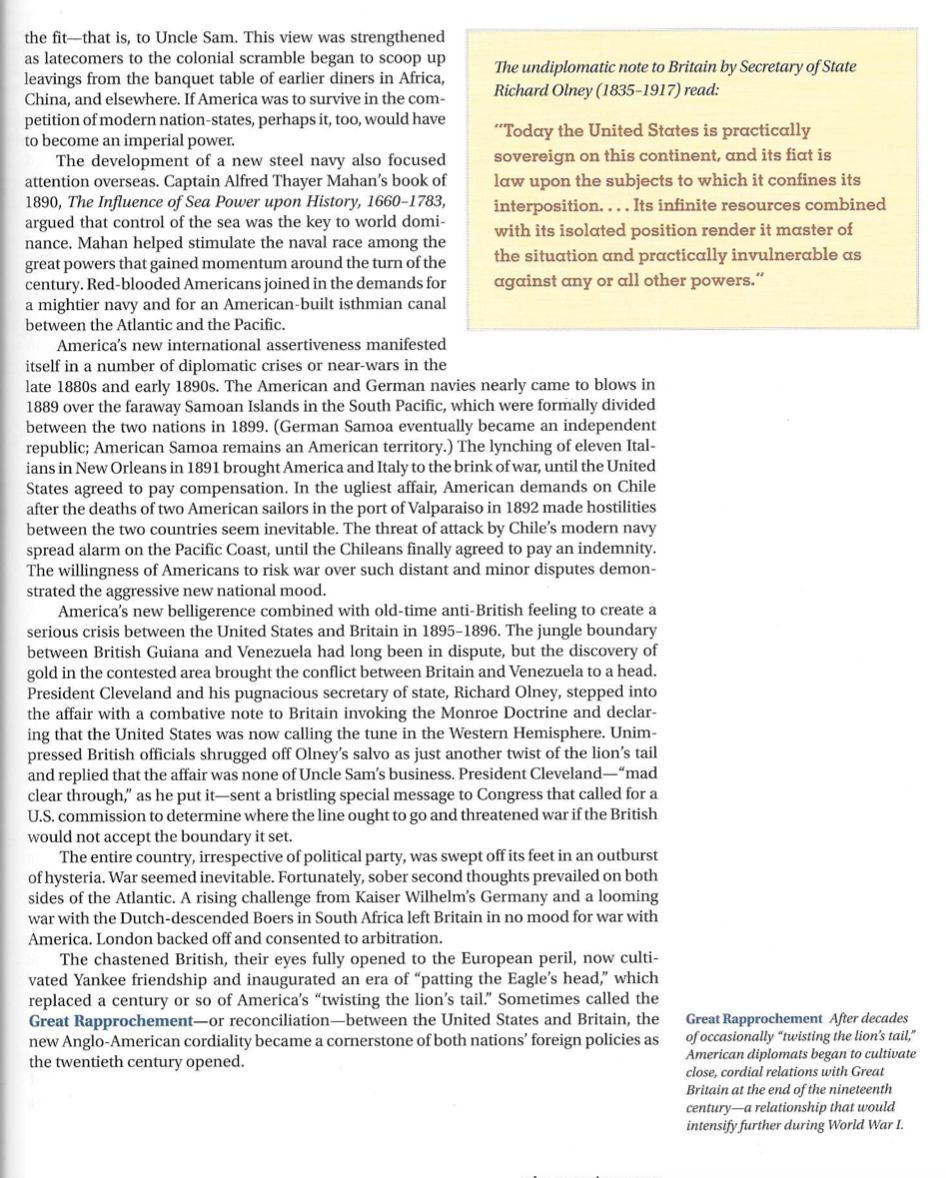
American authors who supported overseas expansion wanted to
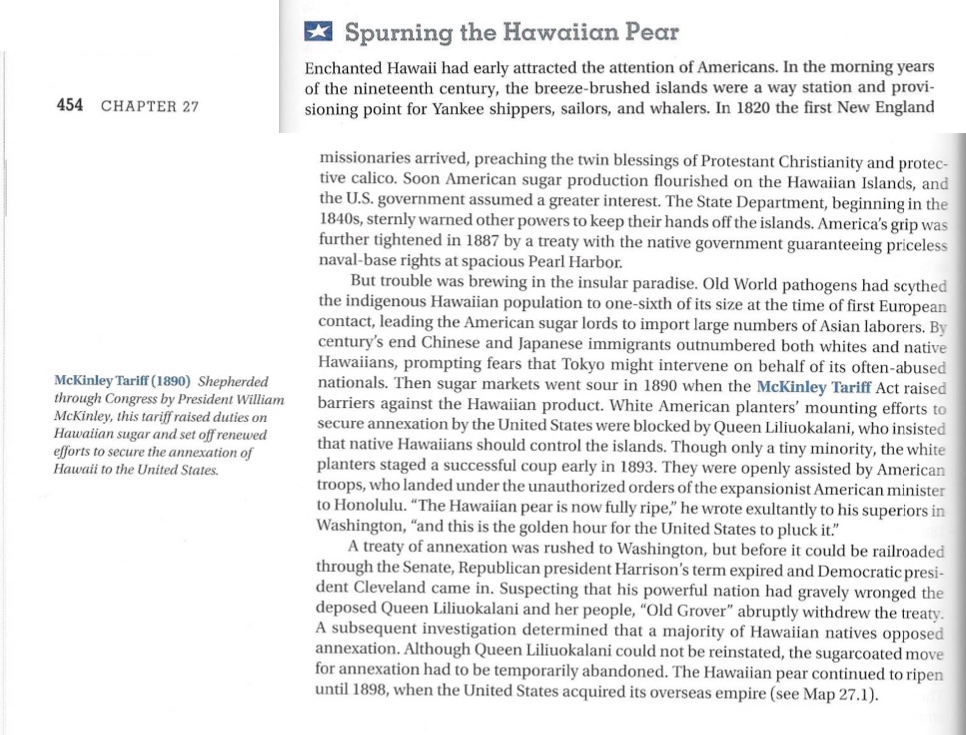
It can be reasonably inferred that Hawaii's Queen Liliuokalani was removed from power because

That's all that is due for Tuesday, 3/15/2022. Any questions?
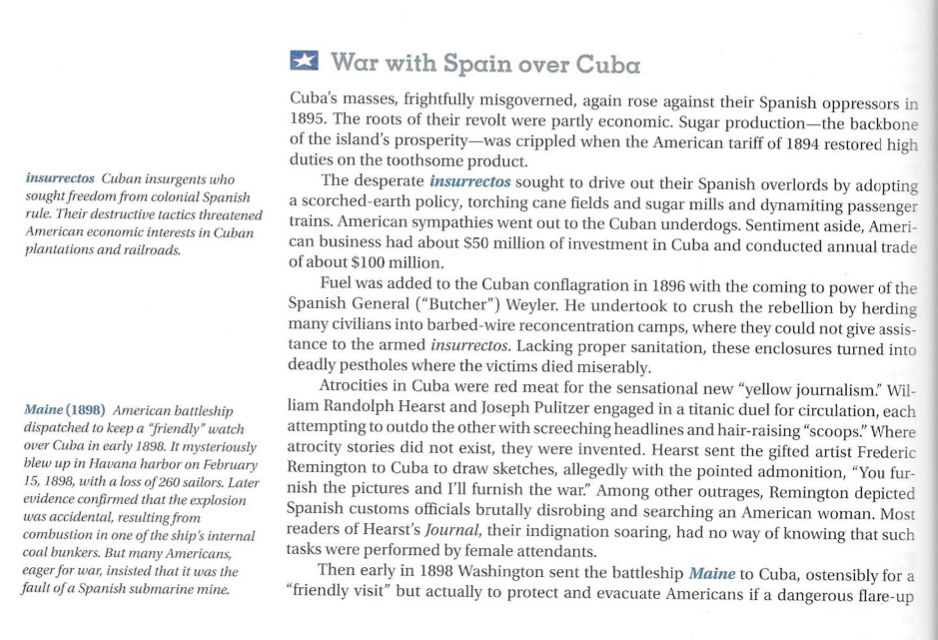
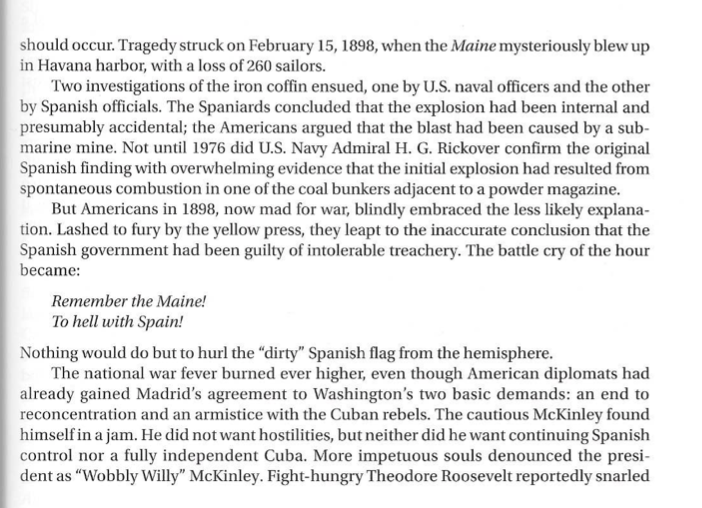
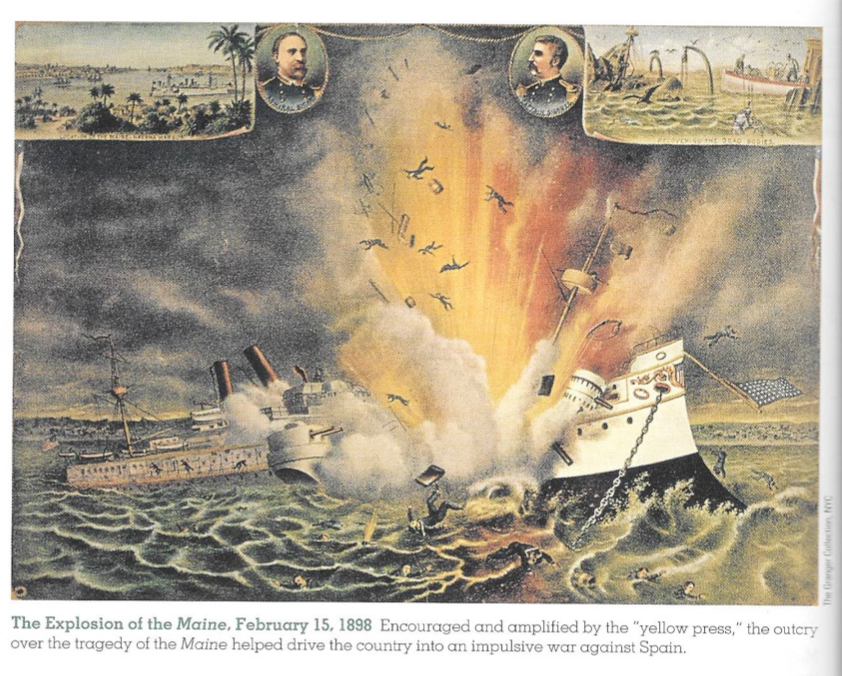
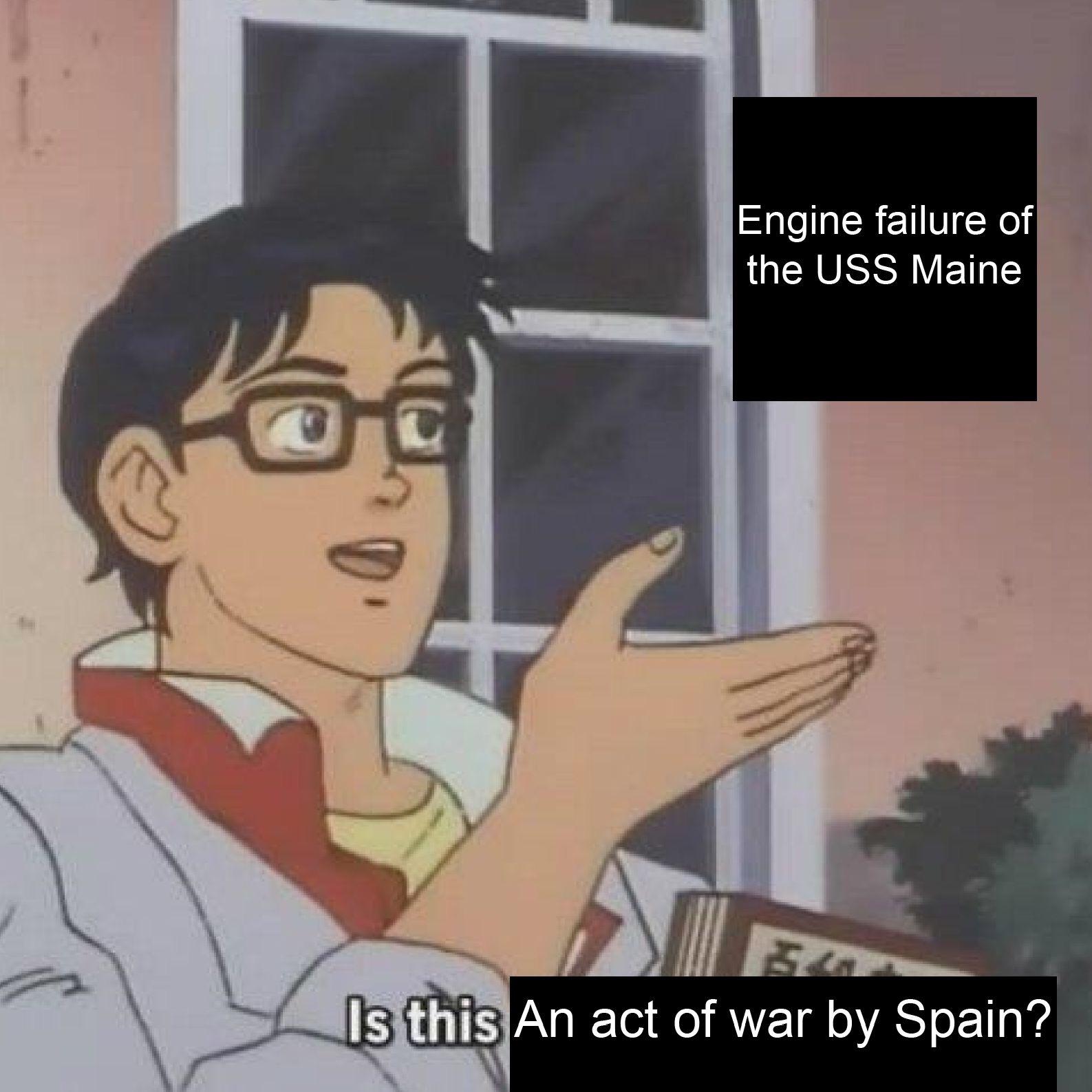
Later investigations showed that the battleship Maine was sunk by
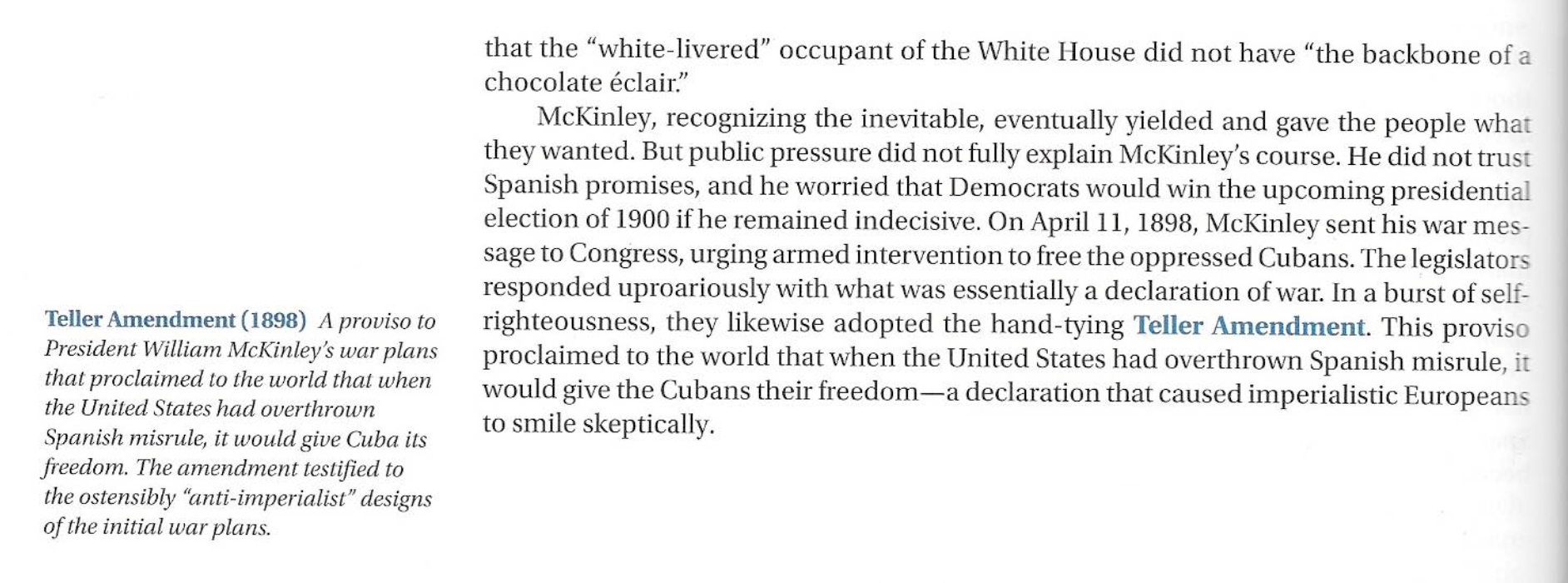
The Teller Amendment proclaimed the U.S. promise to ____ once it won the war against Spain.
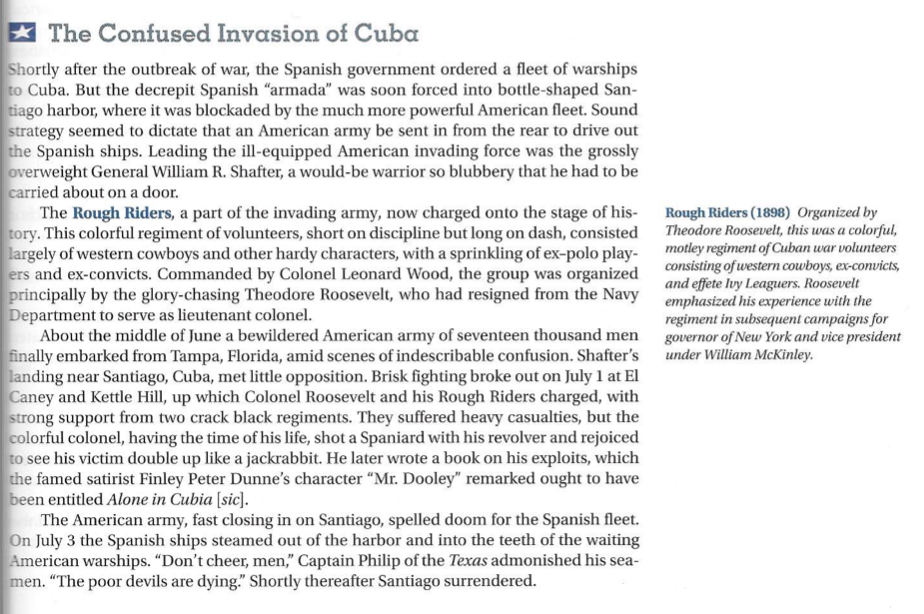
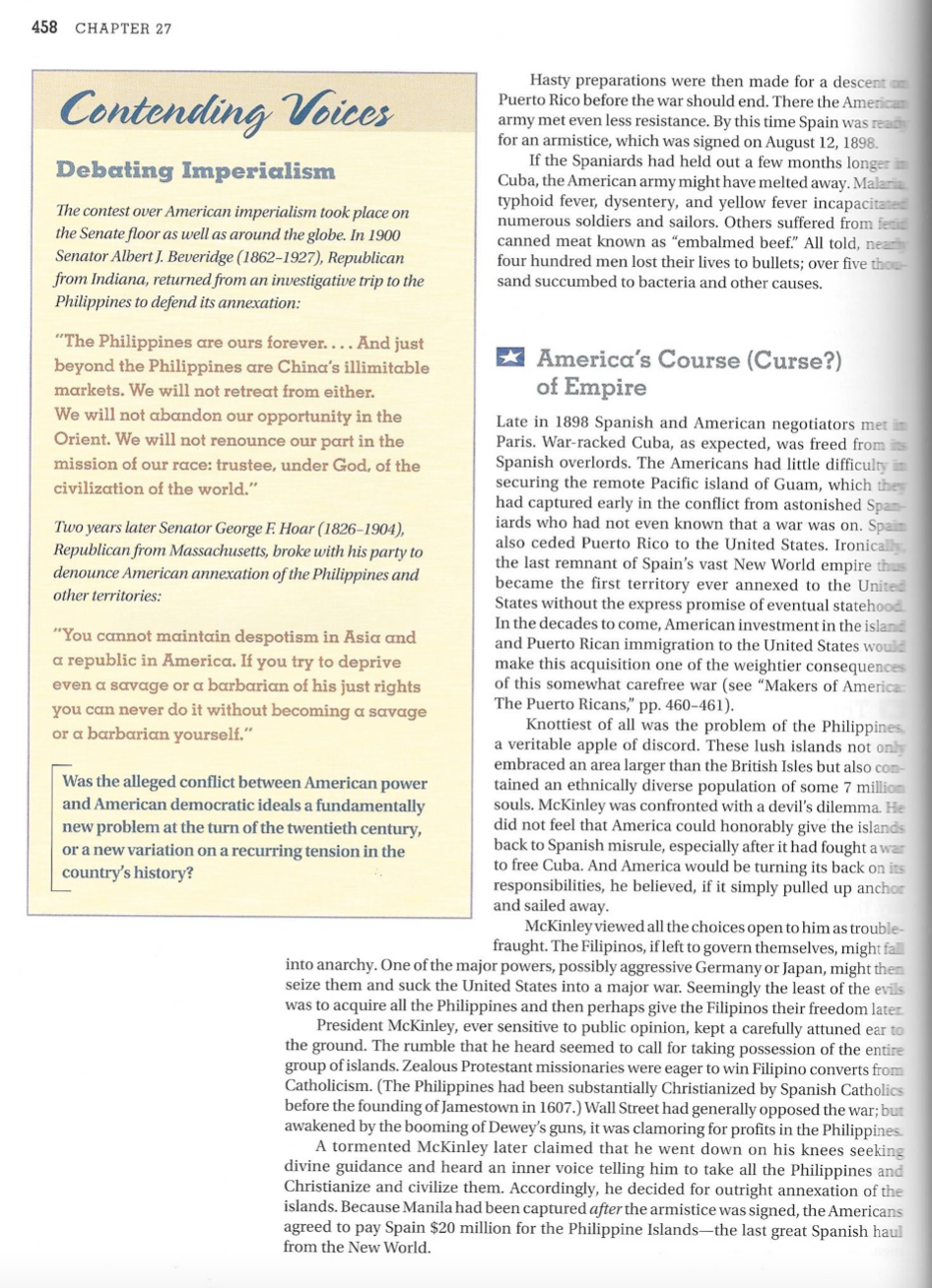
All of these island countries became possessions of the United States in 1898−1899 EXCEPT
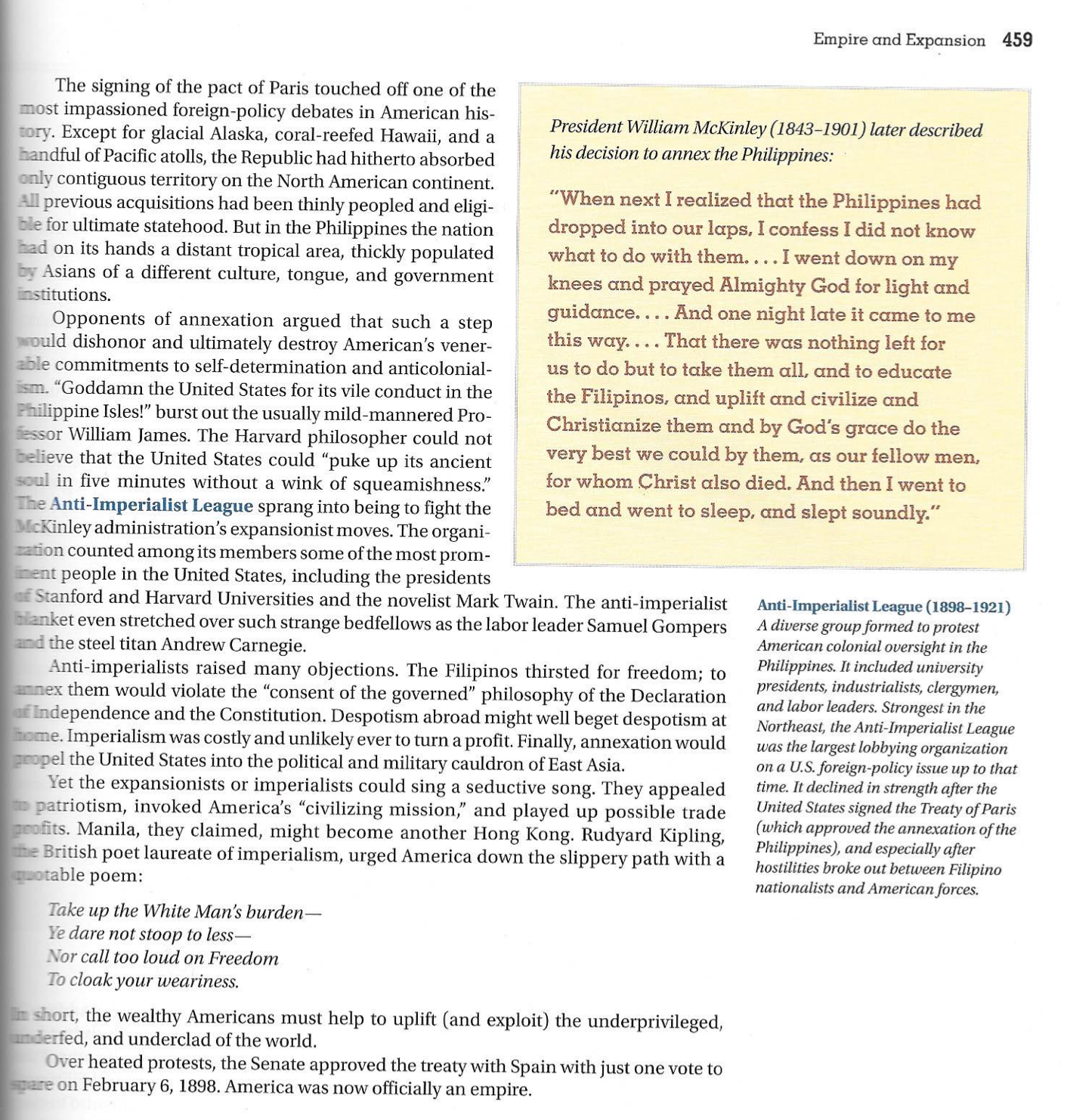
Anti-imperialists were outraged by the U.S. acquisition of the Philippines, claiming that
That's all that is due for Wednesday, 3/16/2022. Any questions?
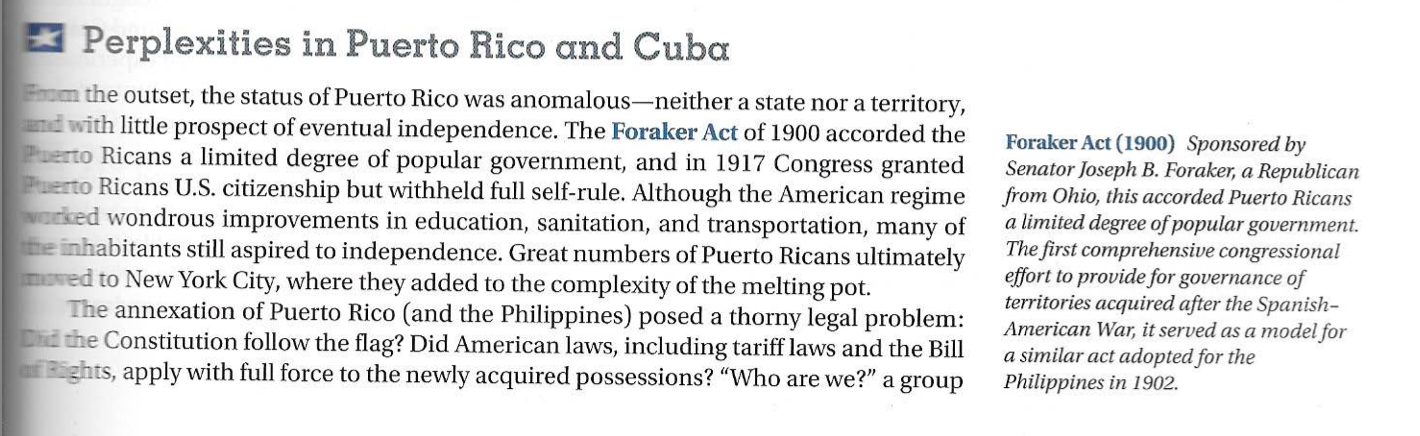
As used in line 6, "aspired to" most nearly means
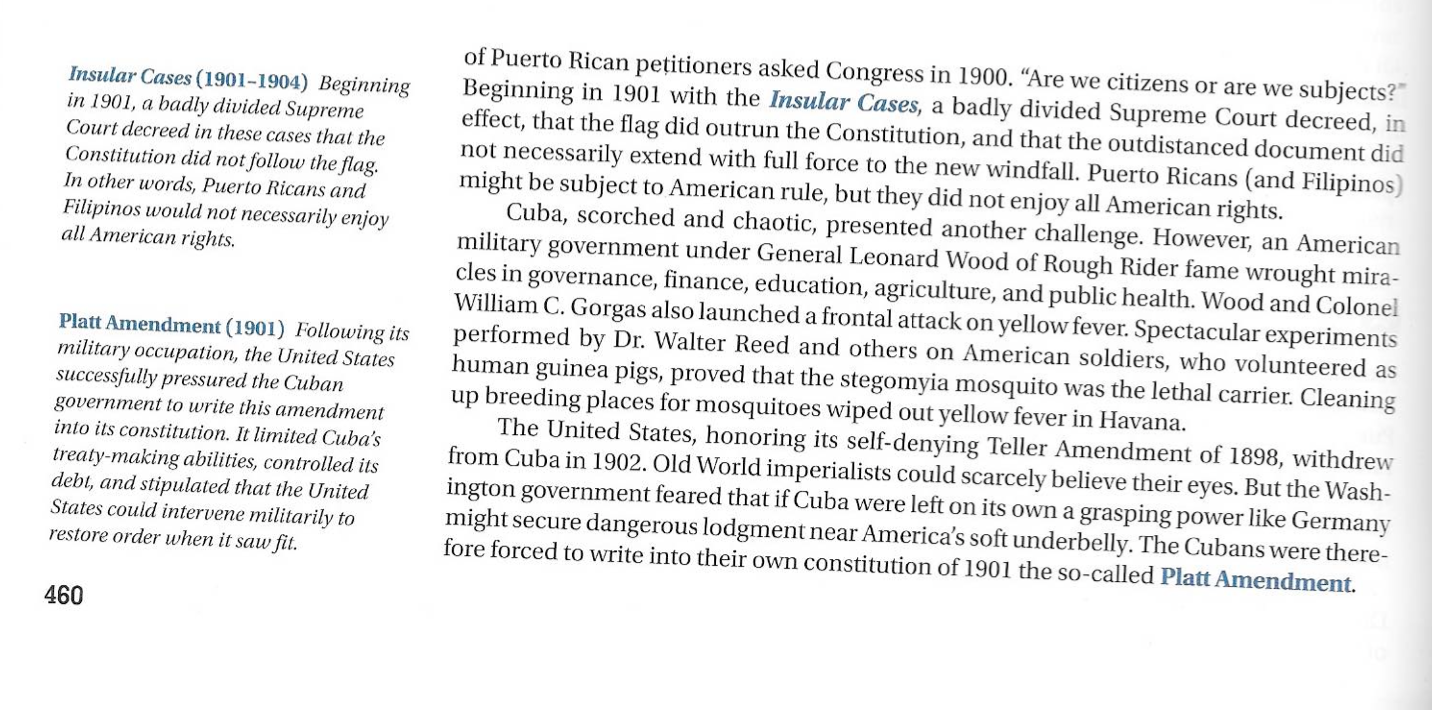
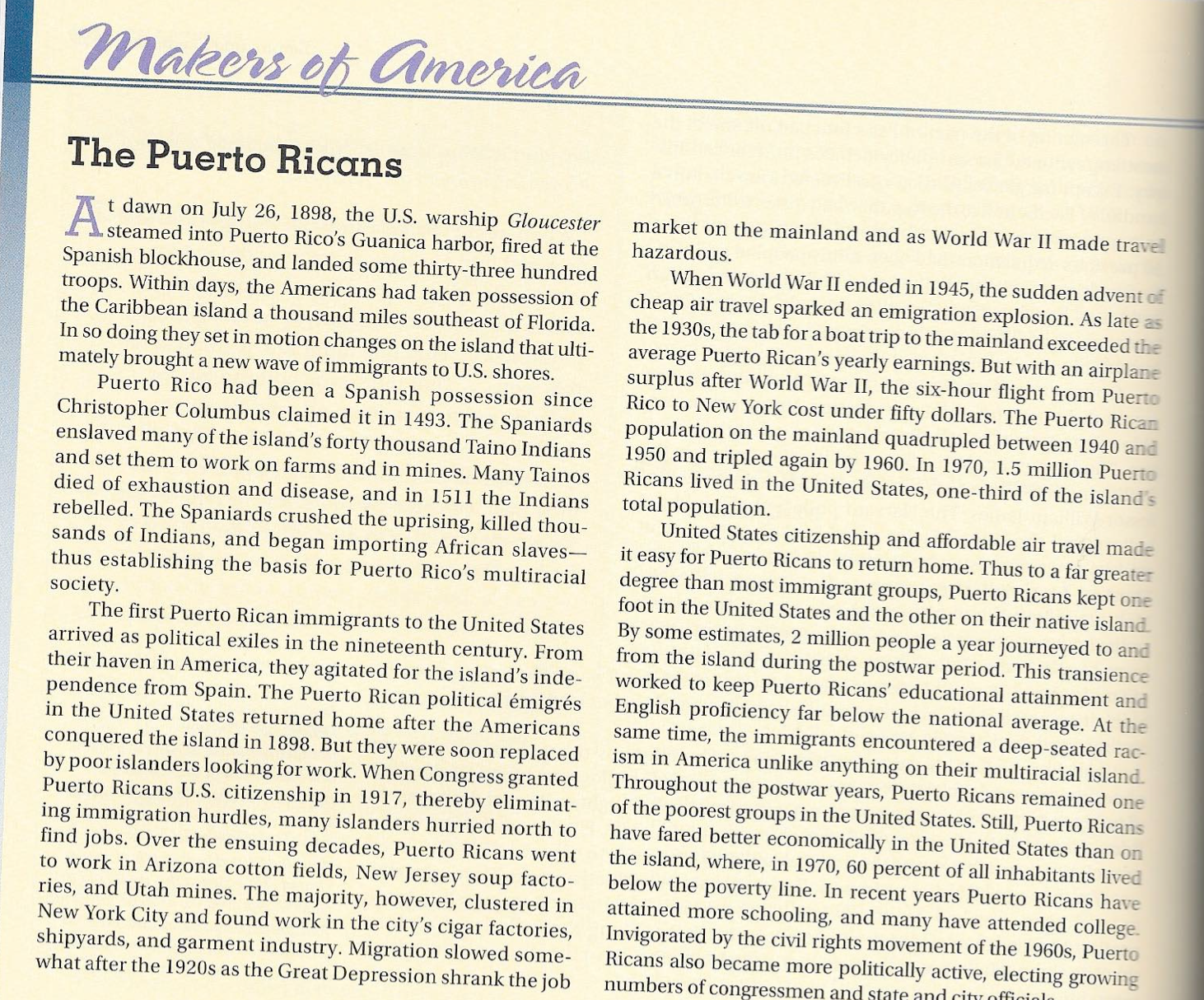
Starting in 1917, many Puerto Ricans came to the mainland United States seeking
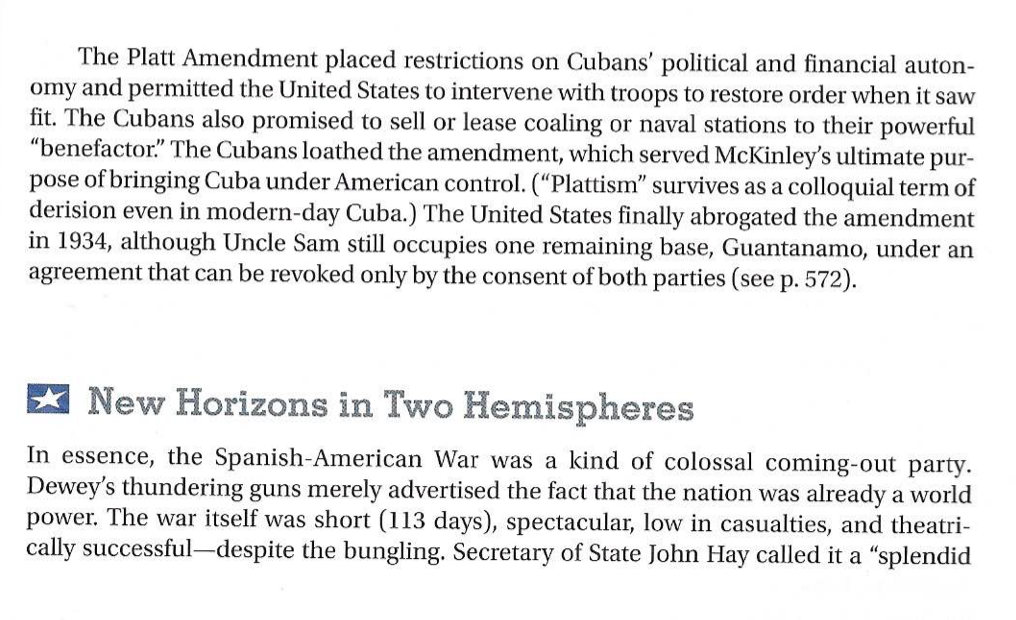
All of the following were ways that the U.S. used the Platt amendment to control Cuba EXCEPT
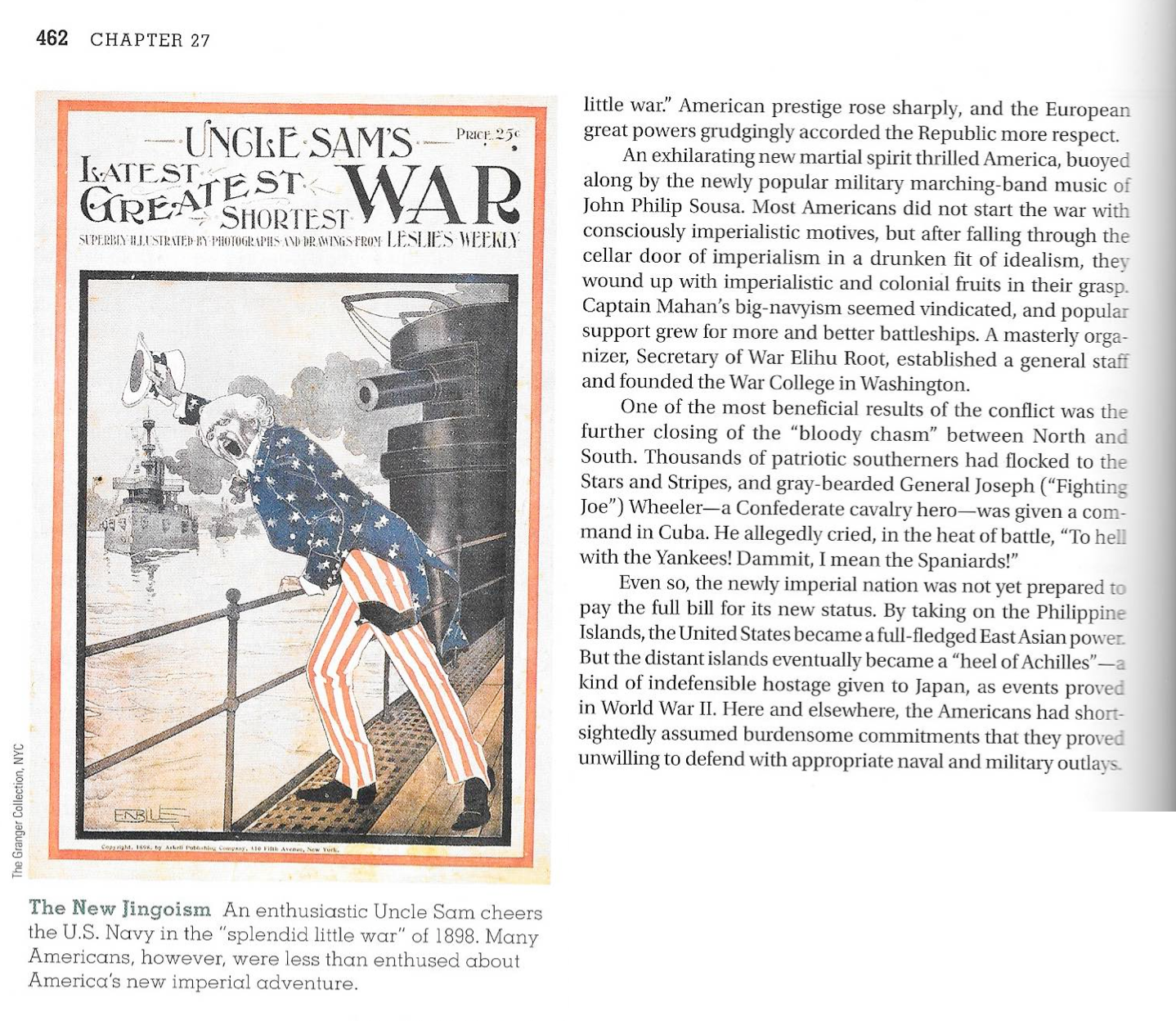
As used in line 3, "martial" most nearly means
The 1899 Philippine insurrection began because
The author uses the phrase "little brown brothers" mainly to suggest that
That's all that is due for Thursday, 3/17/2022. Any questions?
The American desire to construct a canal across Central America was motivated primarily by
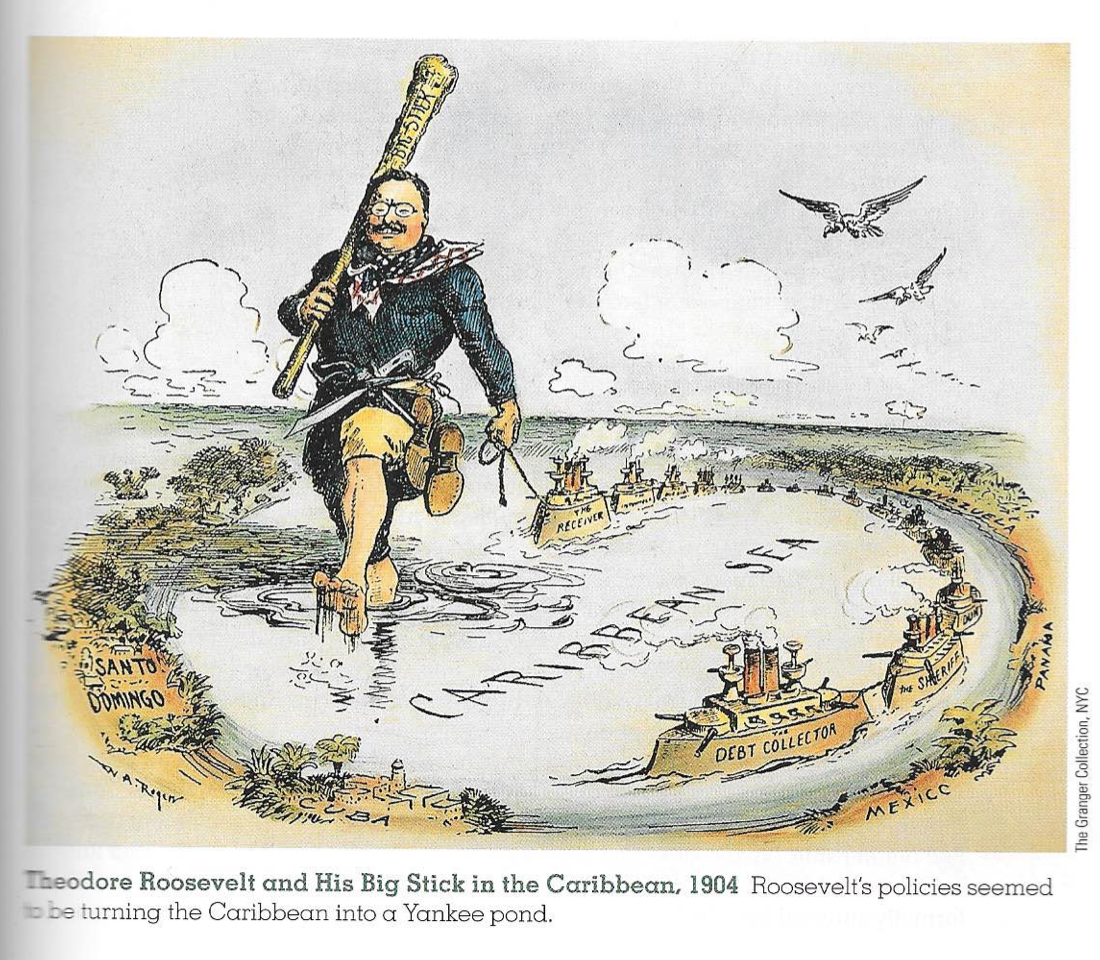
What did the Roosevelt Corollary to the Monroe Doctrine declare?
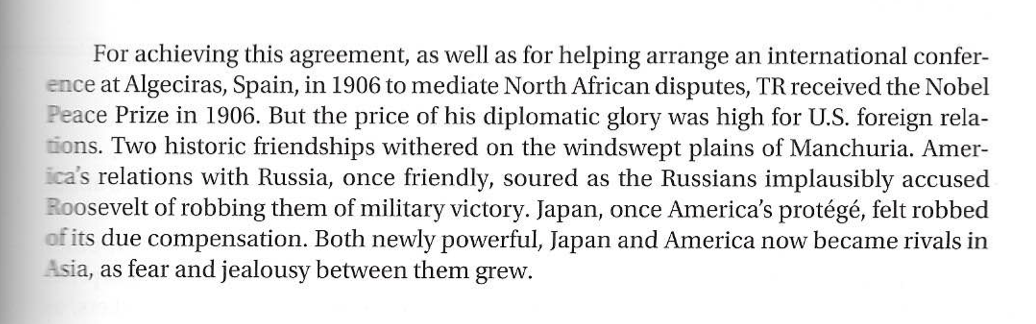
As used in line 7, "compensation" most nearly means
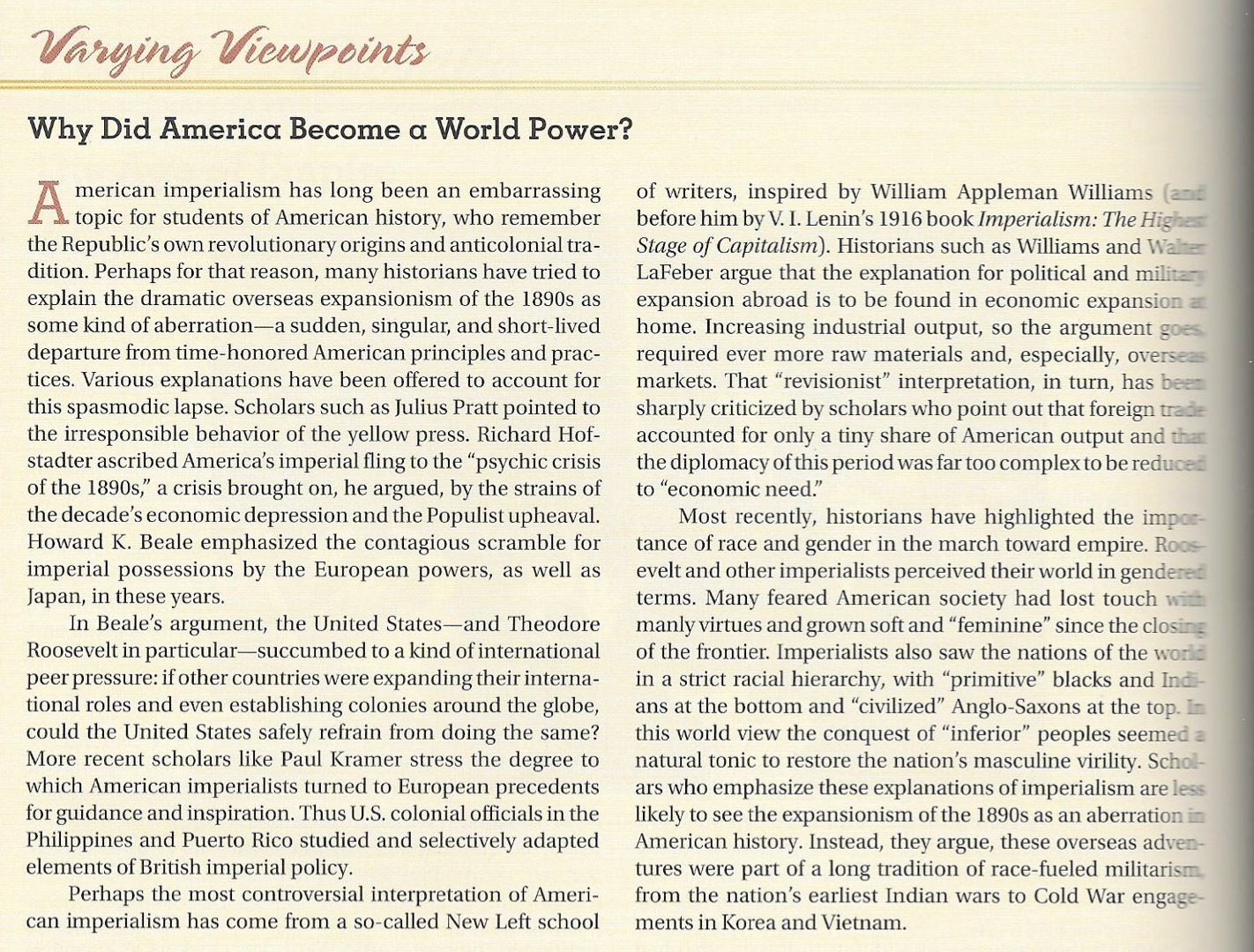
Do you think American imperialism is hypocritical or beneficial for the country? Explain.
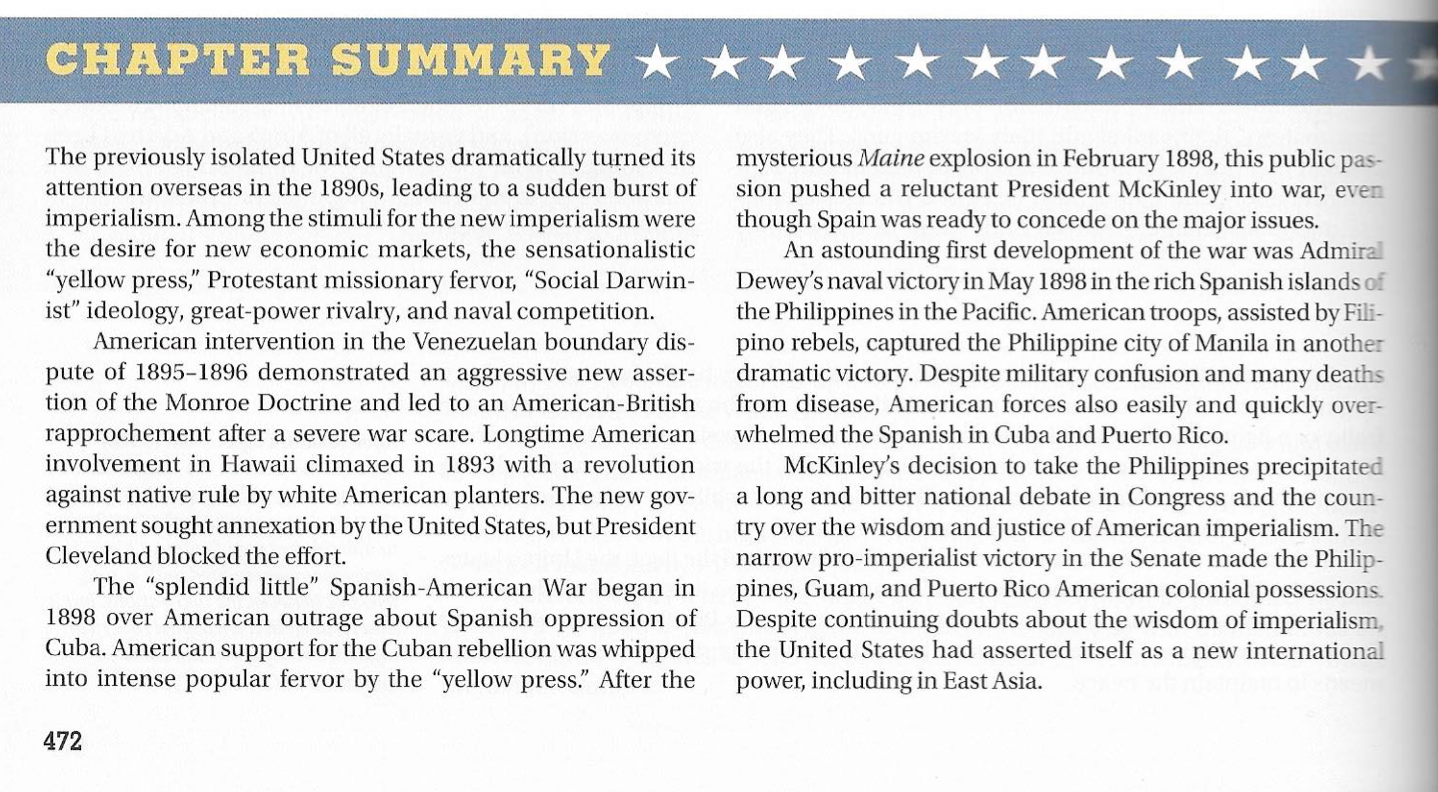
Excellent reading! Close out this Chapter by reviewing the "Chapter Summary" and using the "rectangle" tool to box the 5 most important key terms in the space provided.
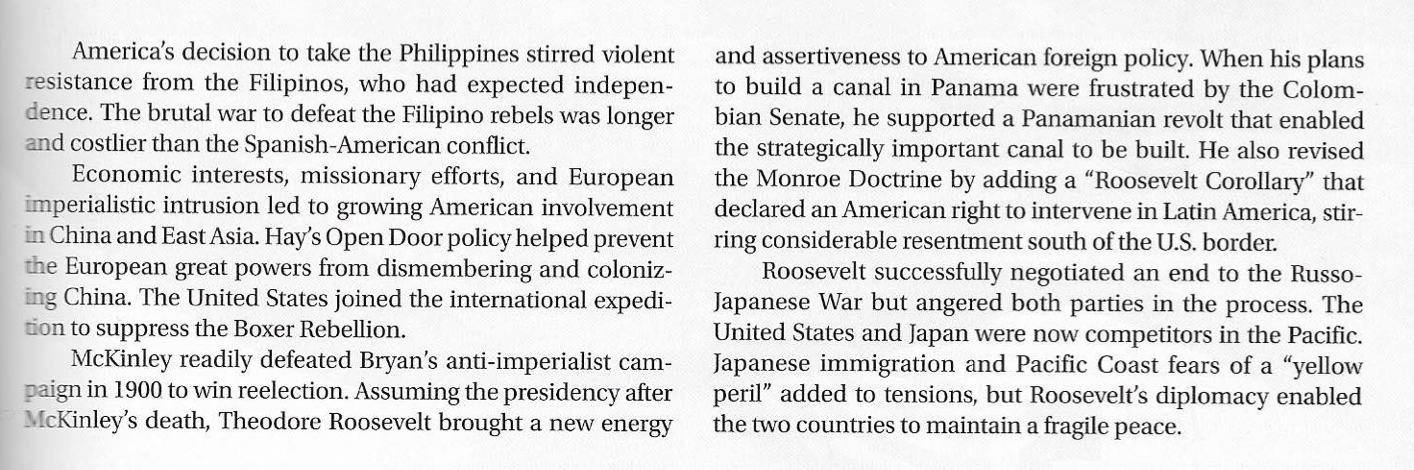
Chapter 27 complete! Any questions?
Advocates of imperialism like Theodore Roosevelt and Henry Cabot Lodge argued that America
should acquire colonies because