Log in
Sign up for FREE
arrow_back
Library

Unit 7: Evolution IntroDoc

star
star
star
star
star
Last updated about 4 years ago
14 questions
Watch this introductory video.
1
2
1
1
Watch this short video about the “ingredients” for natural selection.
1
Question 5
5.

What three things MUST occur for natural selection to happen? (Use complete sentences)
Watch this video about adaptation.
1
1
1
1
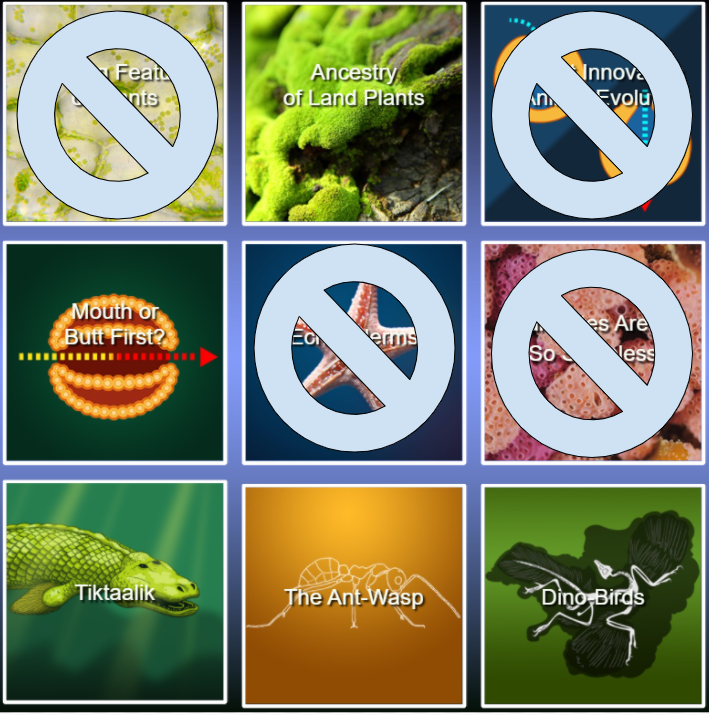
Click this link and examine these tiles (the ones NOT marked out):
Ancestry of Land Plants, Mouth or Butt First?, Tiktaalik, The Ant-Wasp, and Dino-Birds.

For each tile, list the type(s) of evidence used by scientists when studying the evolution of organisms.
2
1
2
3
3
Question 1
1.

If organisms survive and reproduce at higher rates, they have higher _____.

Question 2
2.

Name two sources of variation in populaions:

Question 3
3.

Question 4
4.

Explain your answer for the question above.

Question 6
6.

Why do some populations of organisms look similar over long periods of time?

Question 7
7.

Give an example from the video for question 6.

Question 8
8.

Why do some populations of organisms look different over time?

Question 9
9.

Give an example from the video for question 8.

Question 10
10.

Question 11
11.

Question 12
12.

Question 13
13.

Question 14
14.

Traits that vary in populations can be neutral, negative, or positive. Which is/are likely to increase in frequency in populations?
Positive (will increase)
Neutral (will persist)
Negative (will decrease)
Positive and/or Neutral
Ancestry of Land Plants?
molecular (DNA/genes/proteins)
common characteristics
anatomical structures
embryo development
fossils
Mouth or Butt First
molecular (DNA/genes/proteins)
common characteristics
anatomical structures
embryo development
fossils
Tiktaalik
molecular (DNA/genes/proteins)
common characteristics
anatomical structures
embryo development
fossils
The Ant-Wasp
molecular (DNA/genes/proteins)
common characteristics
anatomical structures
embryo development
fossils
Dino-Birds
molecular (DNA/genes/proteins)
common characteristics
anatomical structures
embryo development
fossils