| Draggable item | arrow_right_alt | Corresponding Item |
|---|---|---|
Homozygous | arrow_right_alt | the form of a gene that can mask the other |
Dominant | arrow_right_alt | the form of a gene that can be covered up when present with another form |
Heterozygous | arrow_right_alt | the way an organism looks |
Recessive | arrow_right_alt | the genetic make up of an individual |
Phenotype | arrow_right_alt | having two of the SAME version of a gene (dominant or recessive) |
Genotype | arrow_right_alt | having two DIFFERENT versions of a gene |
In humans the ability to taste Phenylthiocarbamide (PTC) is dominant. “Tasters” (TT) or (Tt) taste an extremely bitter taste from PTC, while “non-tasters” (tt) do not taste anything.
What are the genotypes of Mr. and Mrs. Jones if they can taste PTC but have a child who is a non-taster?
In horses, having black hair is dominant (B) to having chesnut colored hair (b).
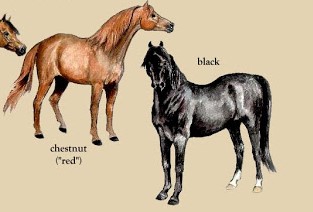
If a homozygous dominant horse is crossed with a chesnut colored horse, then what are the chances they will have a foal (a baby horse) with chesnut colored hair?
What would the phenotype of the foal produced in the previous question be?
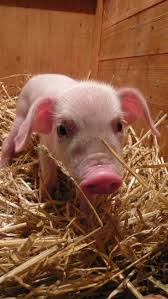
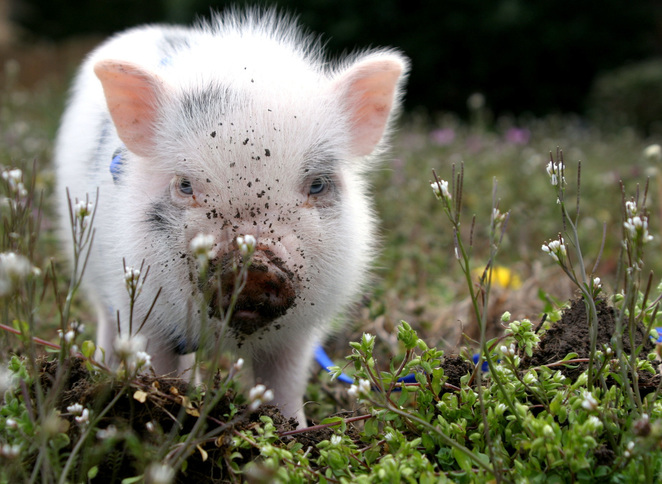
In pigs, having erect ears that stick up (E) is dominant to having droopy ears (e).
![]()
![]()
If a pig has droopy ears what must its genotype be?