APUSH Chapter 31-32: The Politics of Boom and Bust (1920-1932) & The Great Depression and the New Deal (1933-1939)
star
star
star
star
star
Last updated about 2 years ago
27 Nsɛmmisa
1
1
IITE.01
1
IITE.01
1
IITE.01
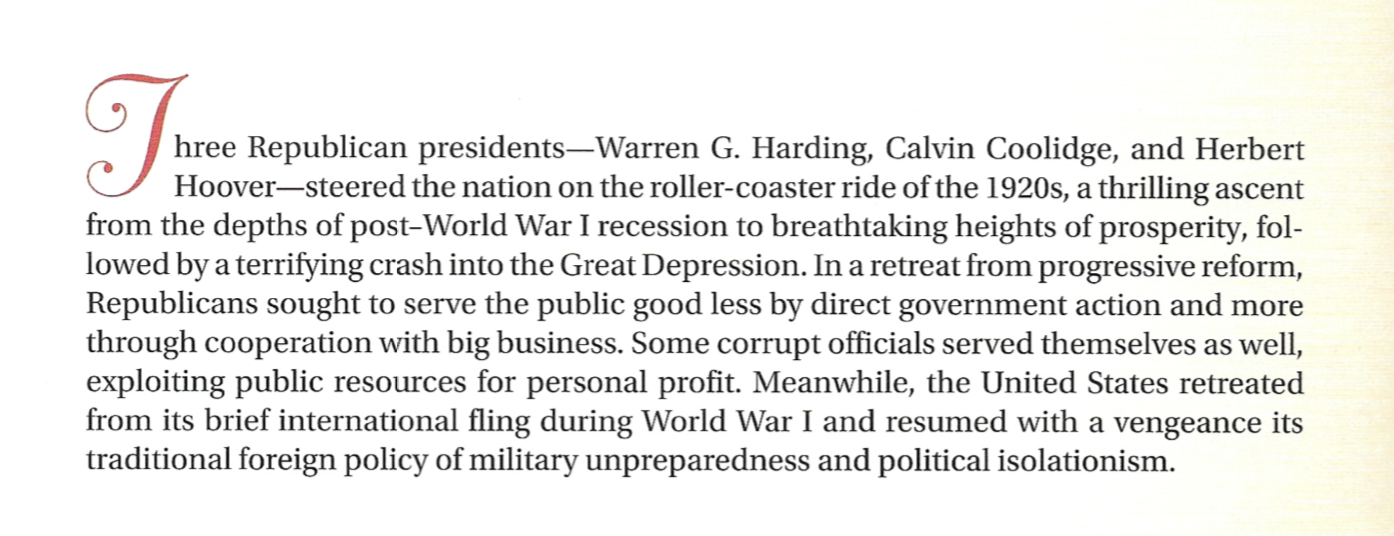
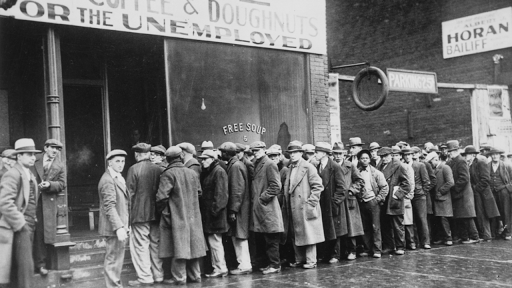
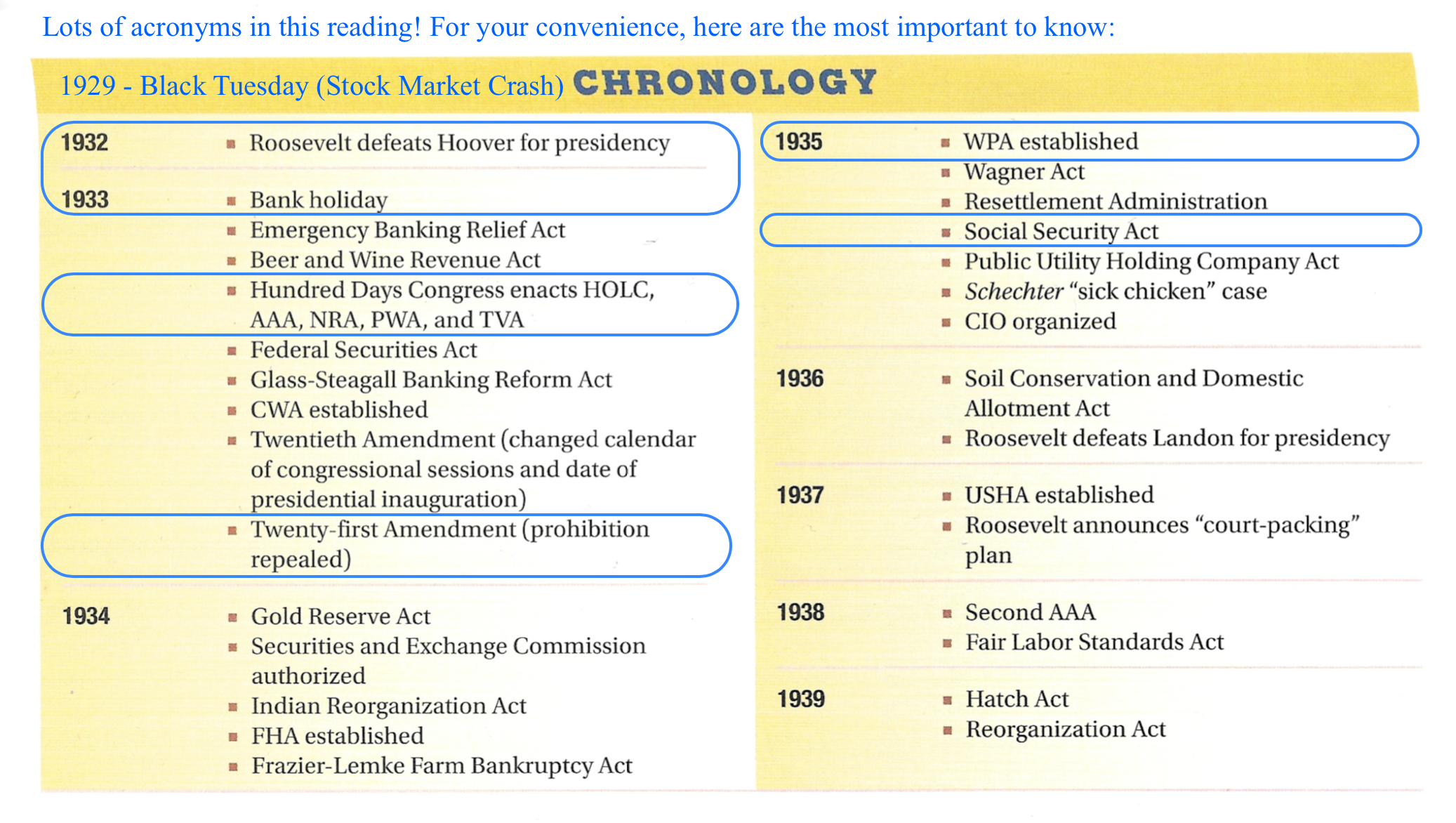
What do you already know about the Great Depression?
This next section is about the effects of World War I, which we skipped in the interest of time. Remember:
Allied Powers: Won
Great Britain, the United States, France
Axis Powers: Lost
Germany, Austria-Hungary, and the Ottoman Empire (which no longer exists)
Here is a quick video about the terms of the post-WWI negotiations in case you need a refresher from World History.
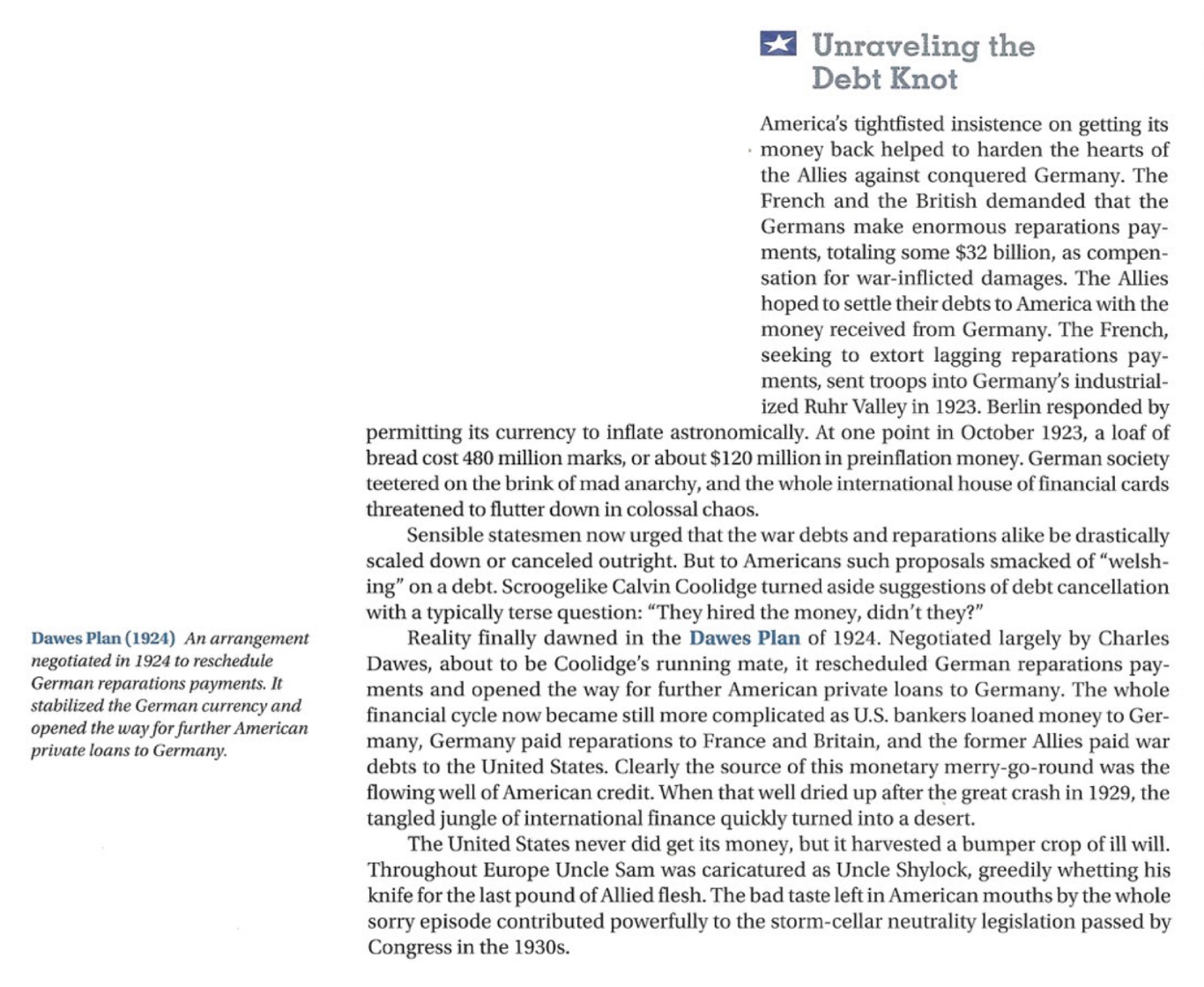
According to the passage, America's insistence that all Allied debts from World War I be repaid directly resulted in
Which choice provides the best evidence for the answer to the previous question?
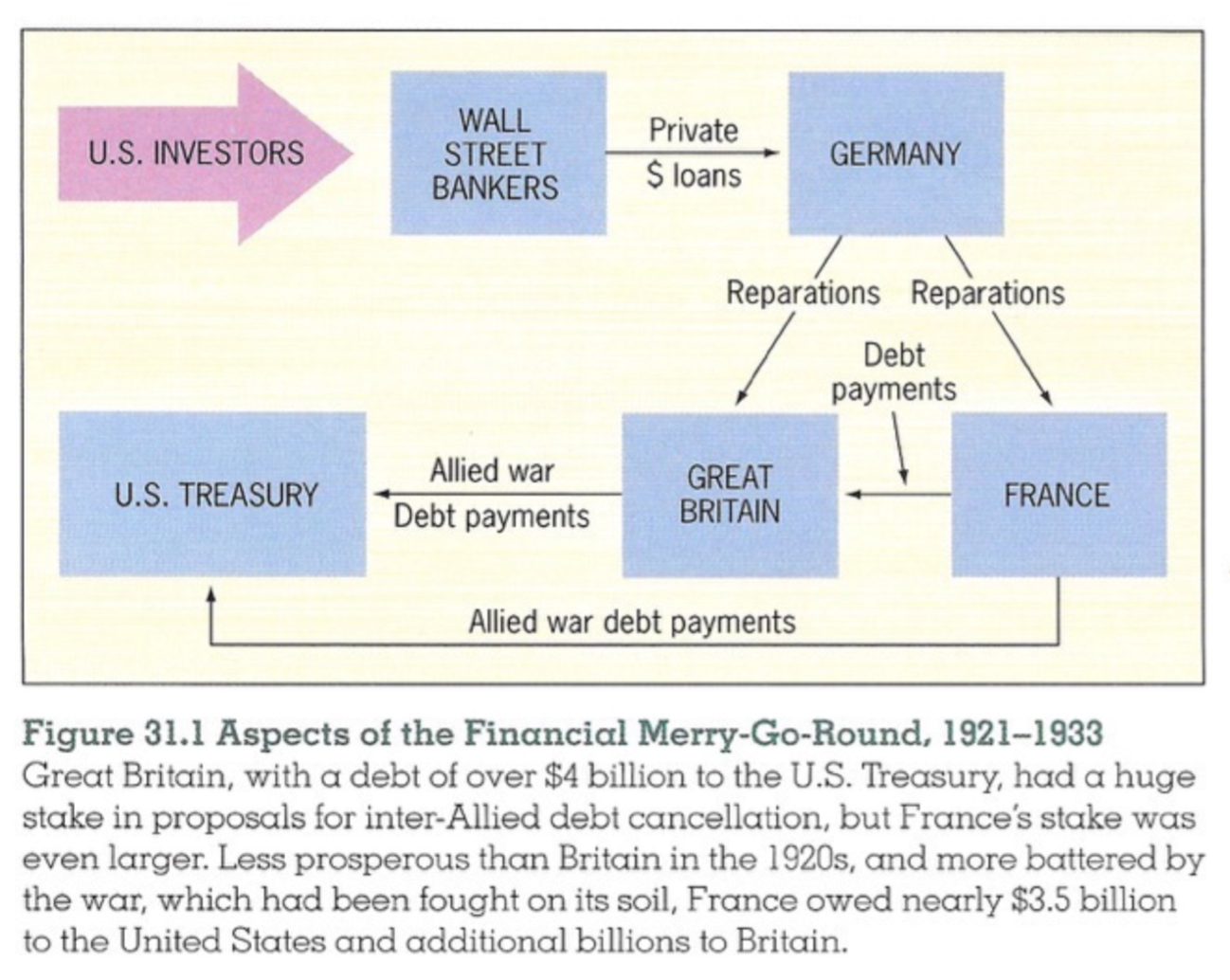
Which statement is best supported by the graph and the information in the passage?
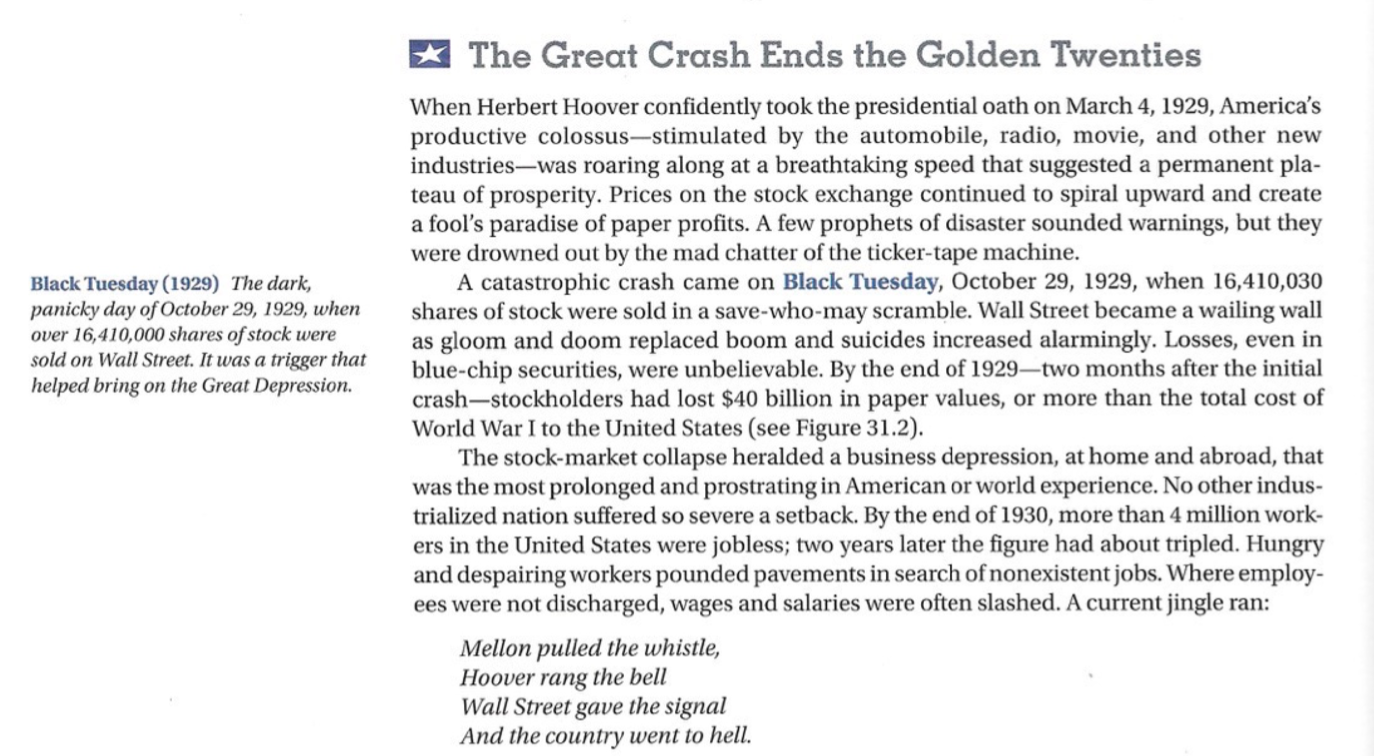
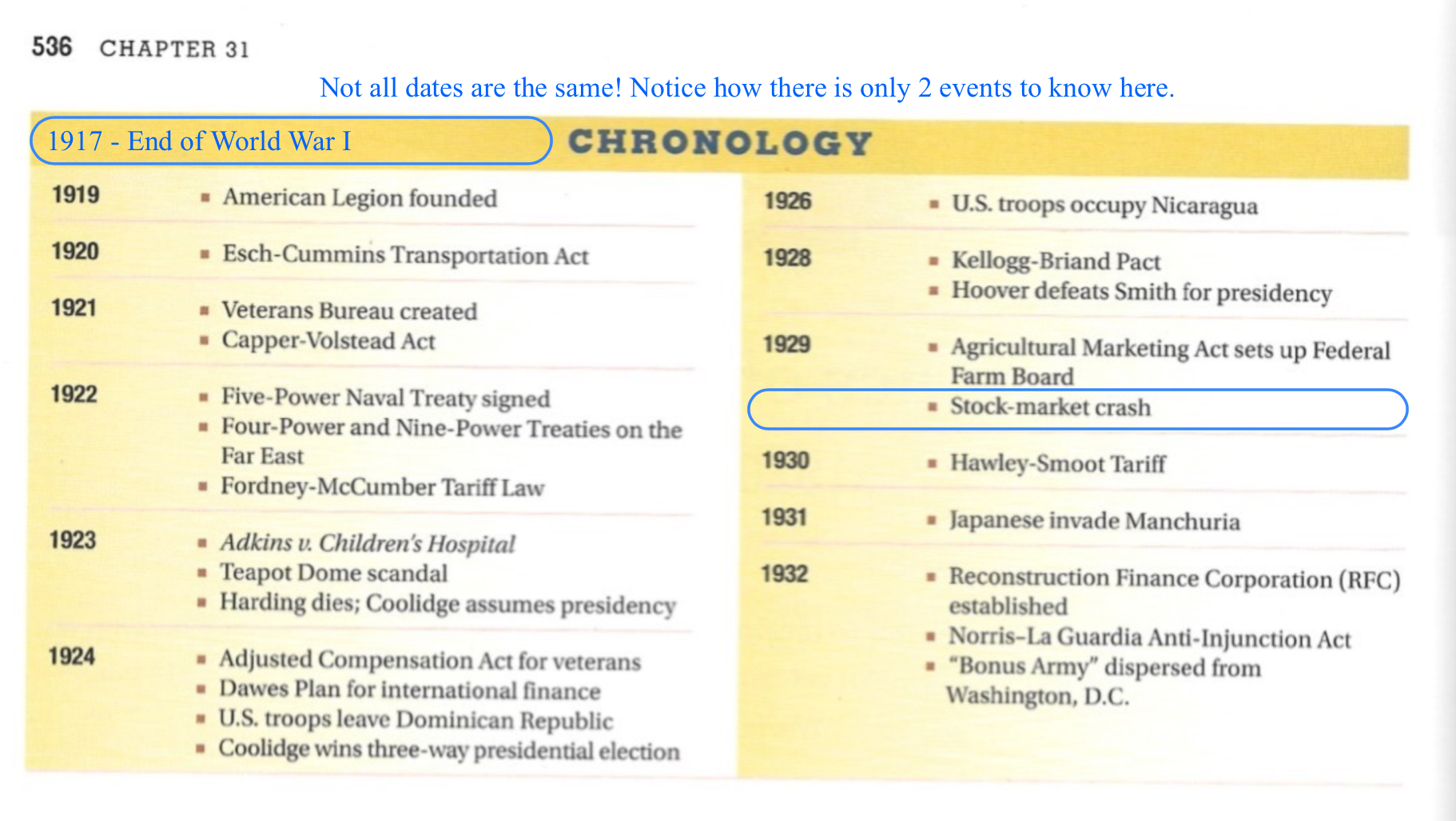
The economic mood of Americans just before the stock market crashed in 1929 could best be described as
Which choice provides the best evidence for the answer to the previous question?
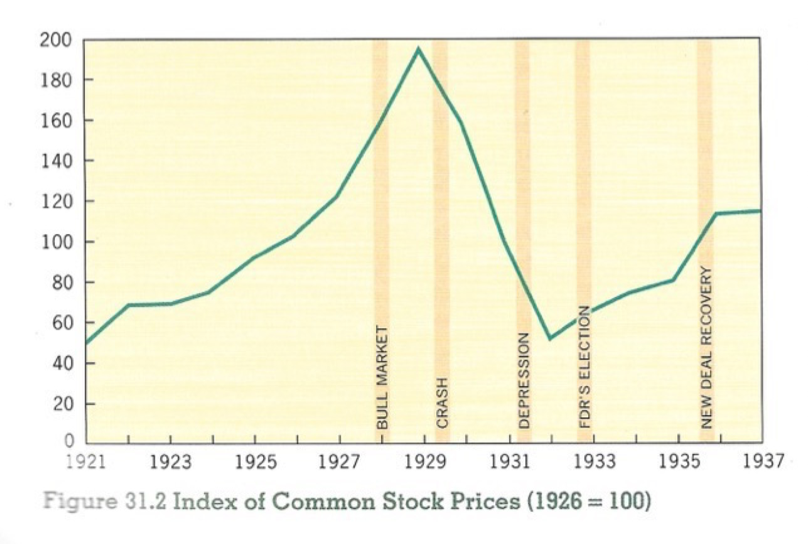
In the graph, which range of years displays a decrease in Common Stock Prices?
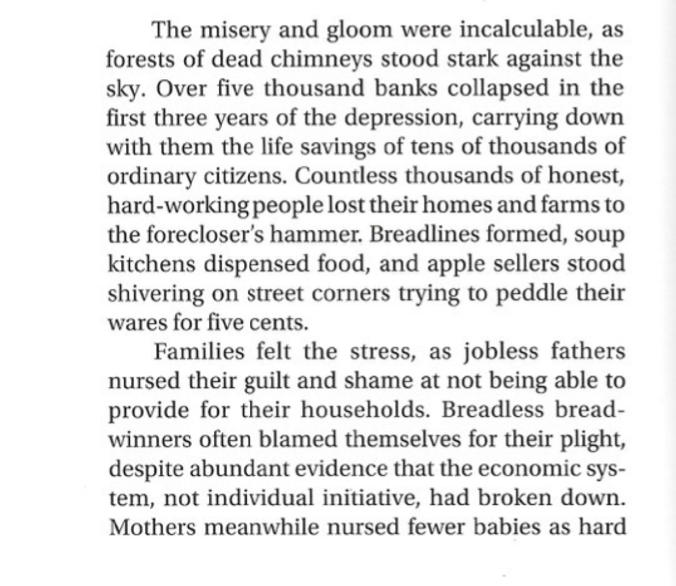
As used in line 3, "collapsed" most nearly means
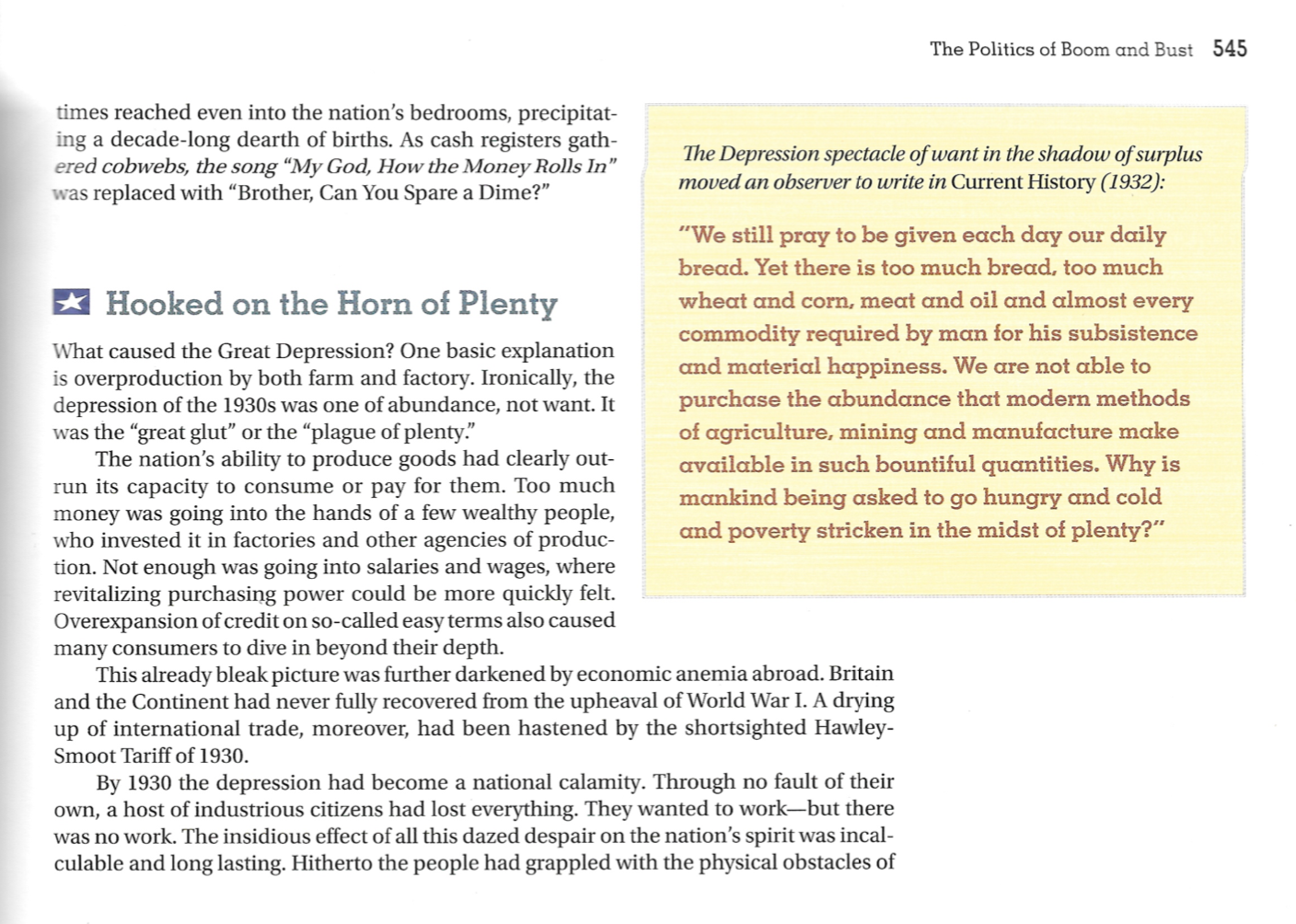
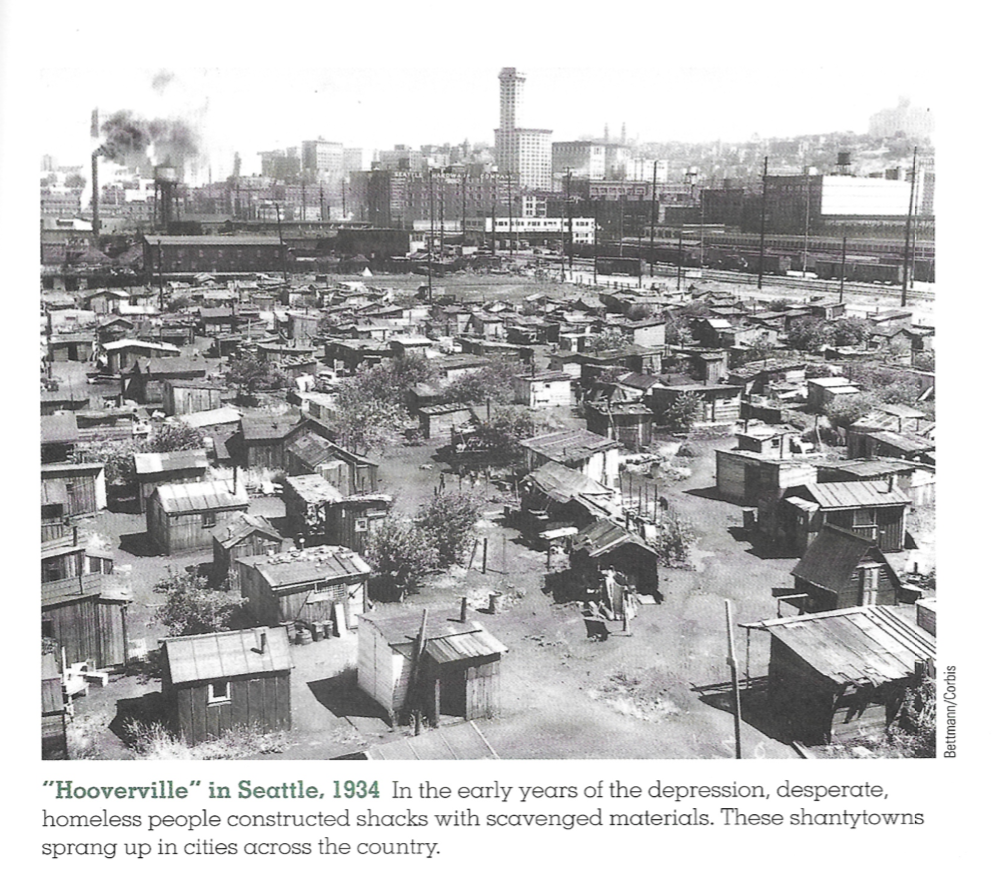
In explaining the causes of the Great Depression, your textbook asserts, "Ironically, the depression of the 1930s was one of abundance, not want. It was the 'great glut' or 'plague of plenty" (Kennedy and Cohen, 545).
Explain the meaning of this quote using complete sentences.
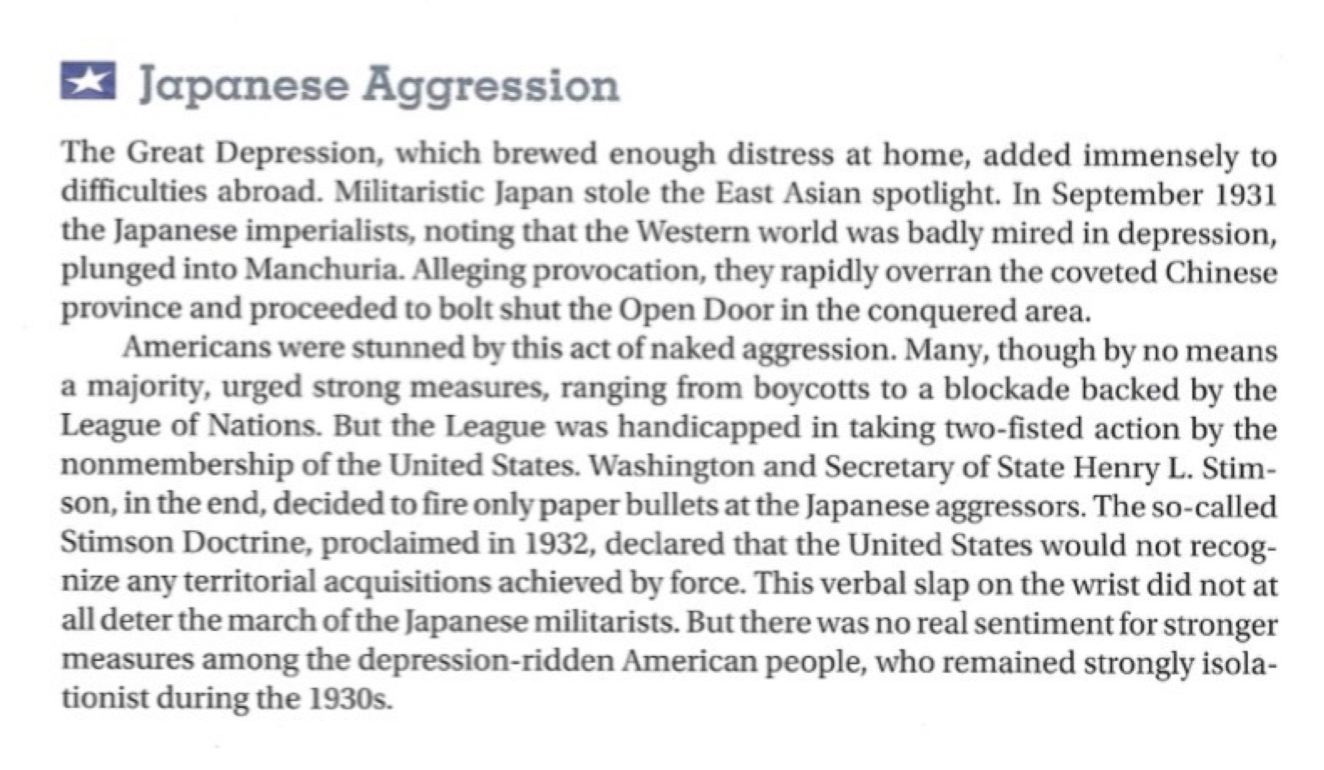
As used in line 1, "brewed" most nearly means
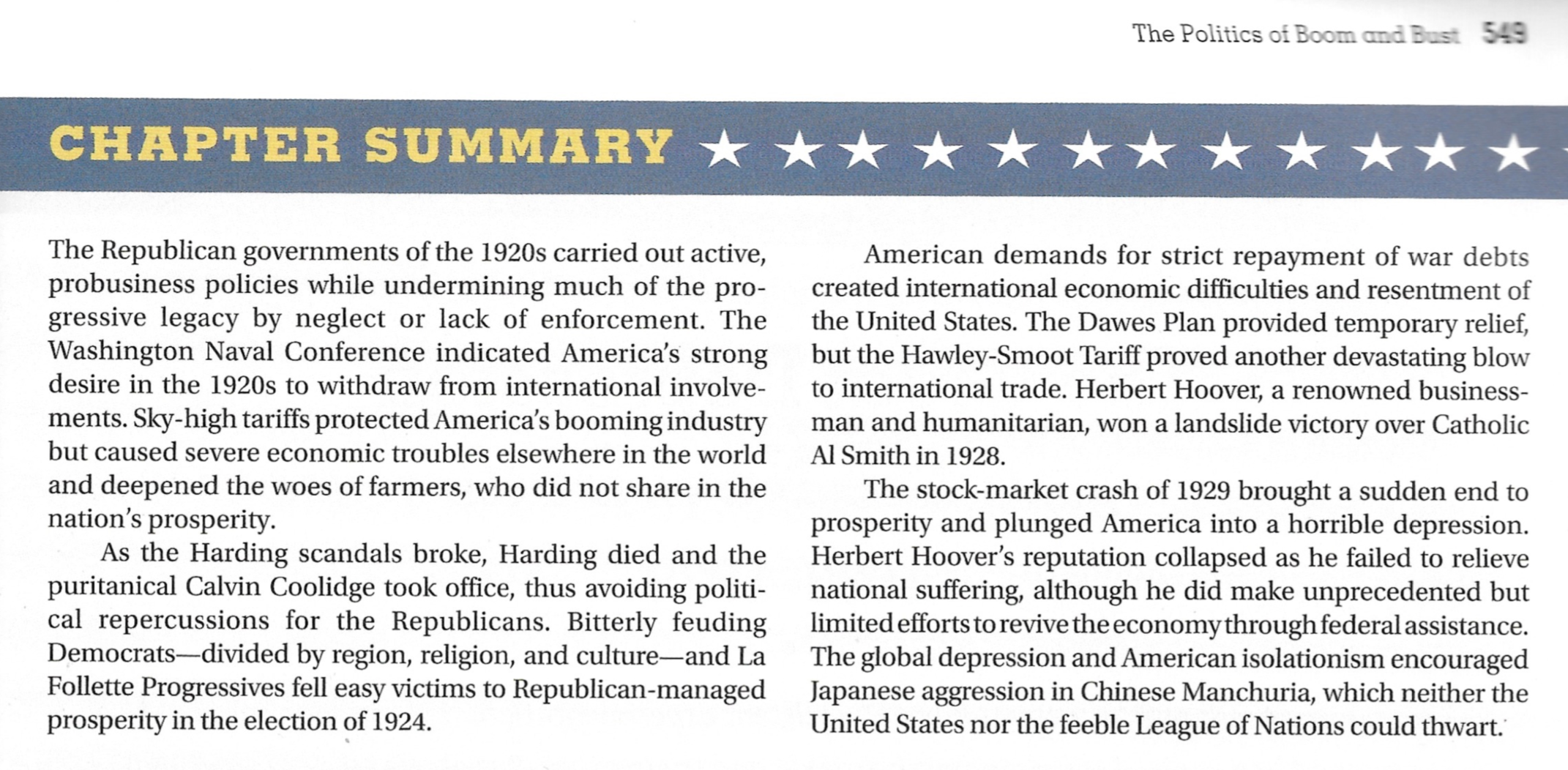
Excellent reading! Close out this Chapter by reviewing the "Chapter Summary" and using the "rectangle" tool to box the 5 most important key terms in the space provided.
That's all for classwork on Monday, 3/28! Any feedback or questions that you want to go over in class?
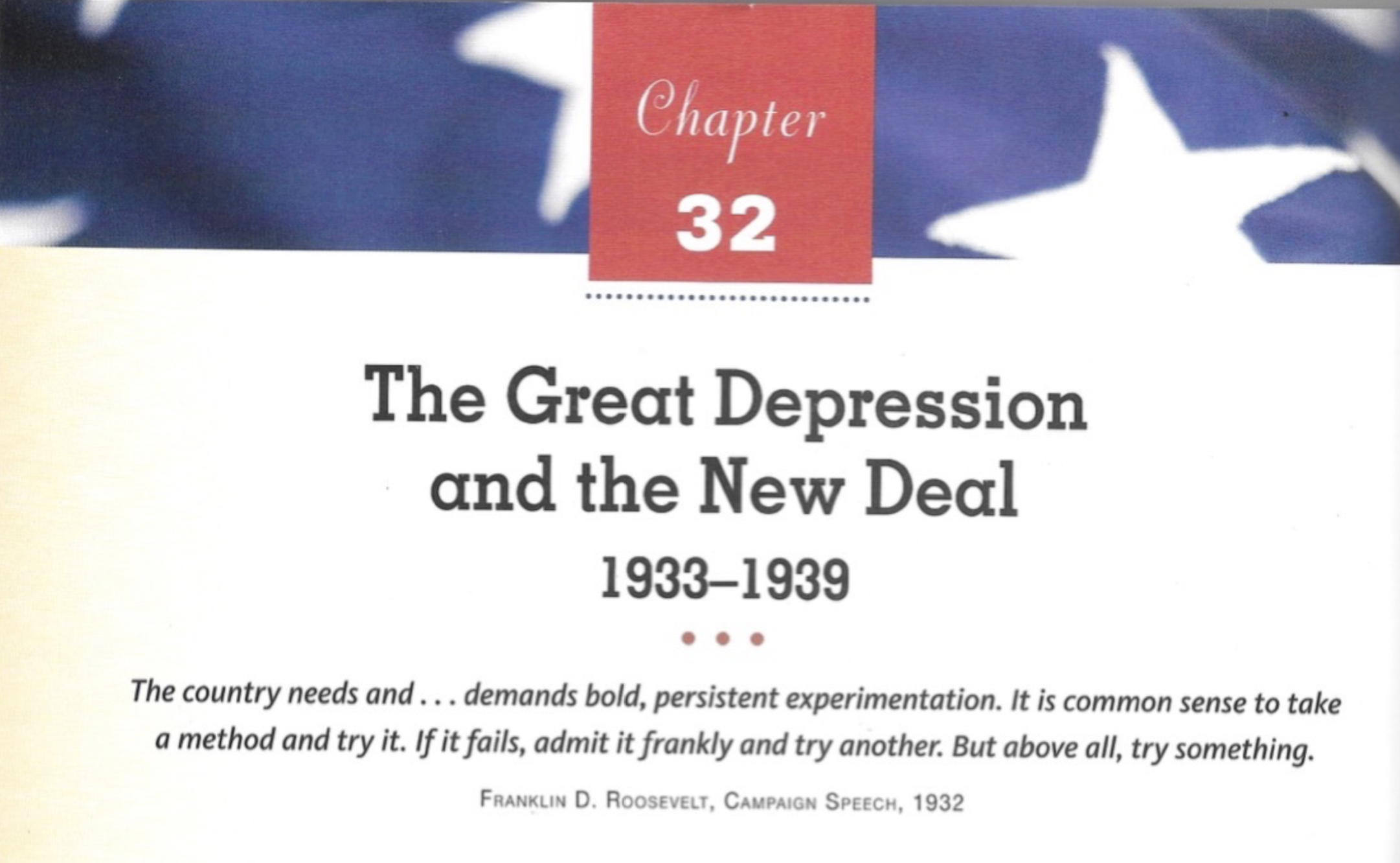
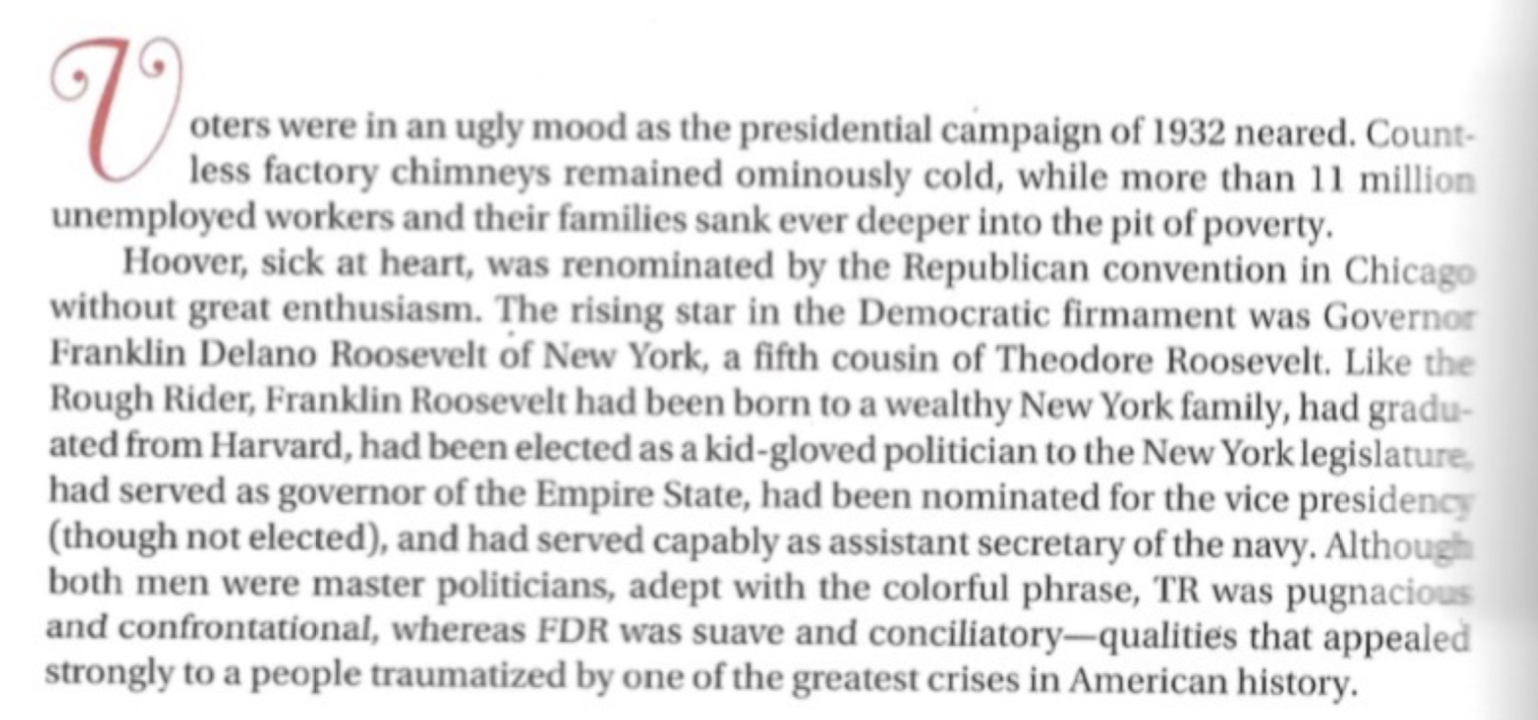
The last economic depression that the U.S. experienced was in 2008! While you were too young to recall it, you should ask your prents/guadriaans bout it nd record their response here.
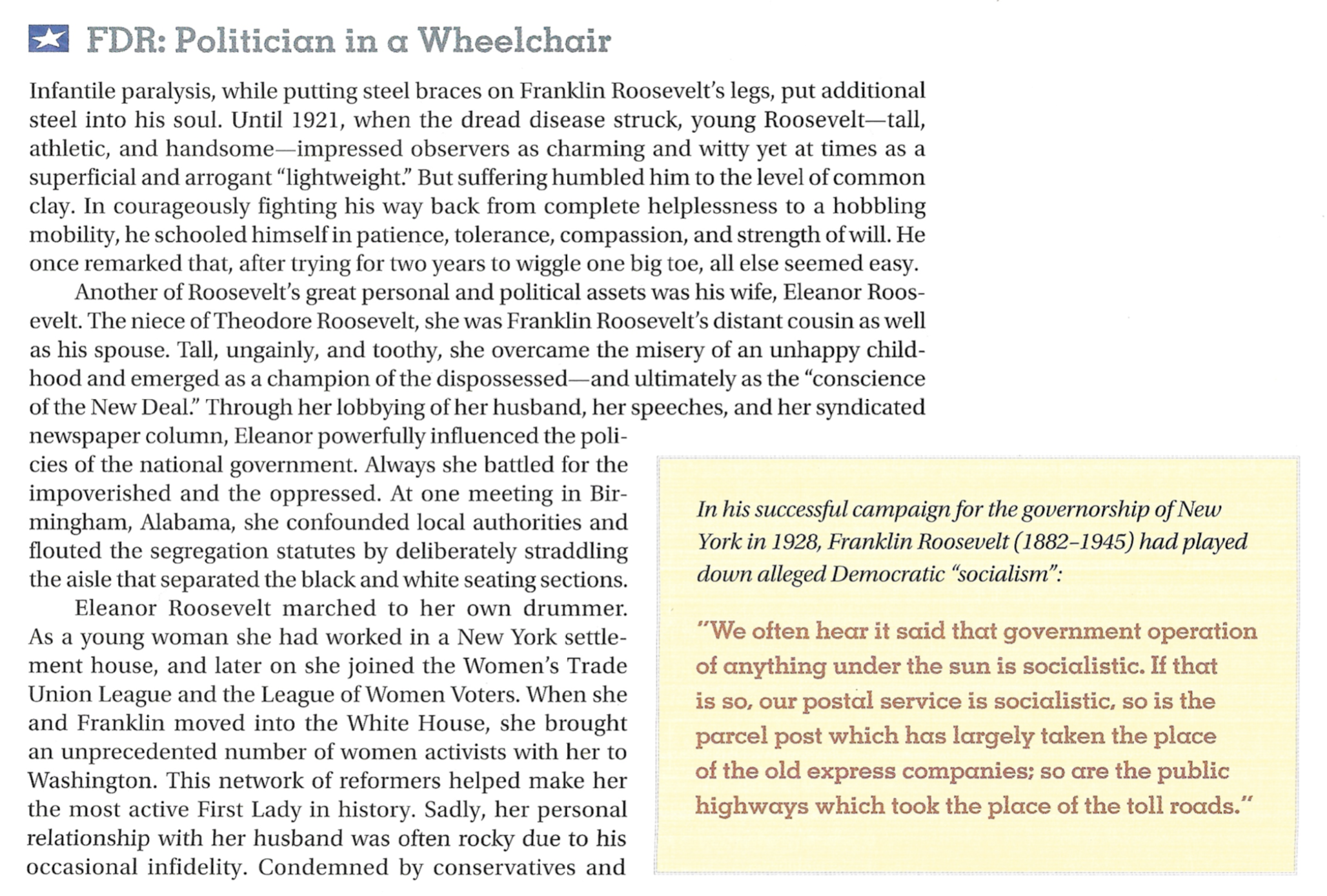
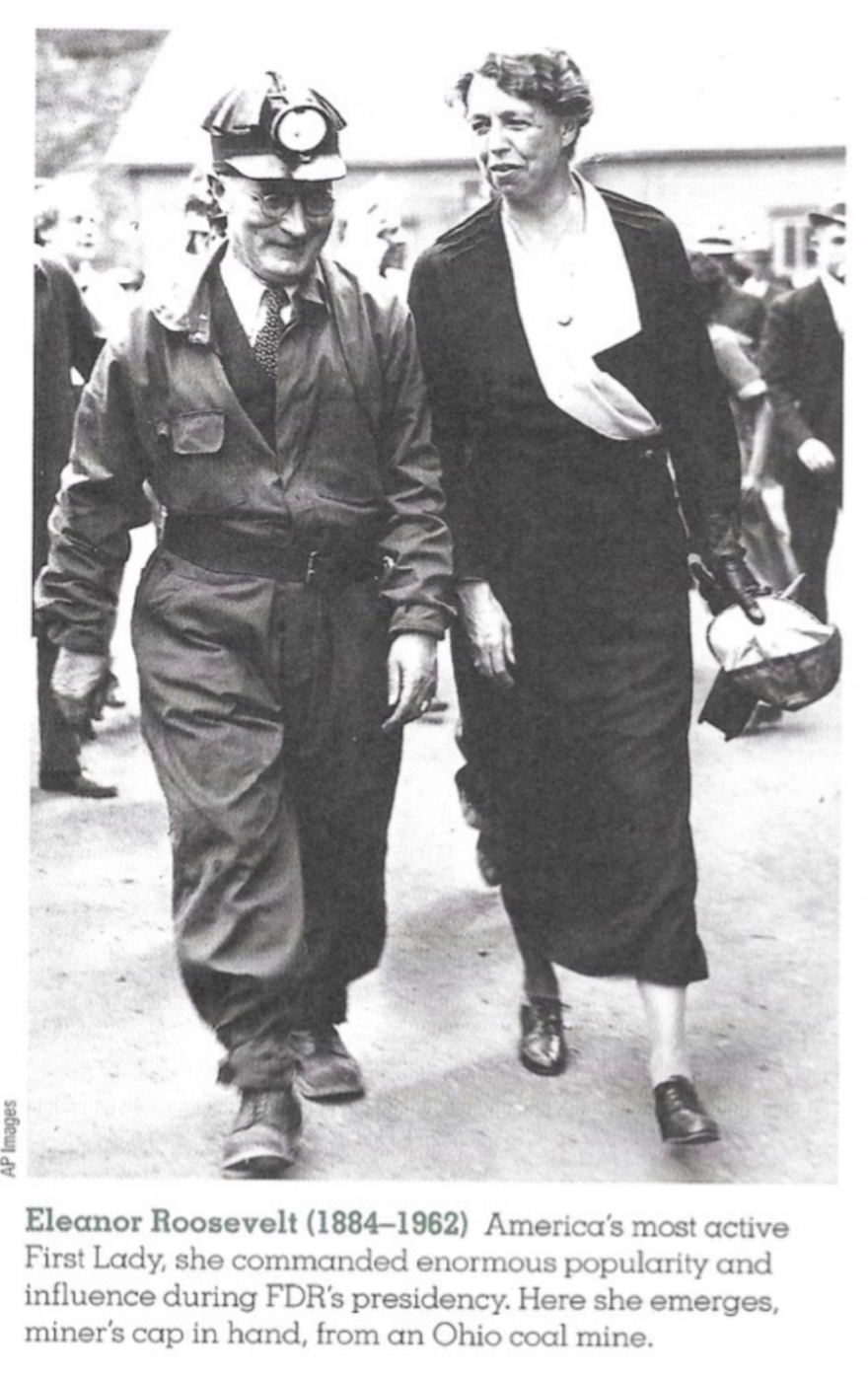
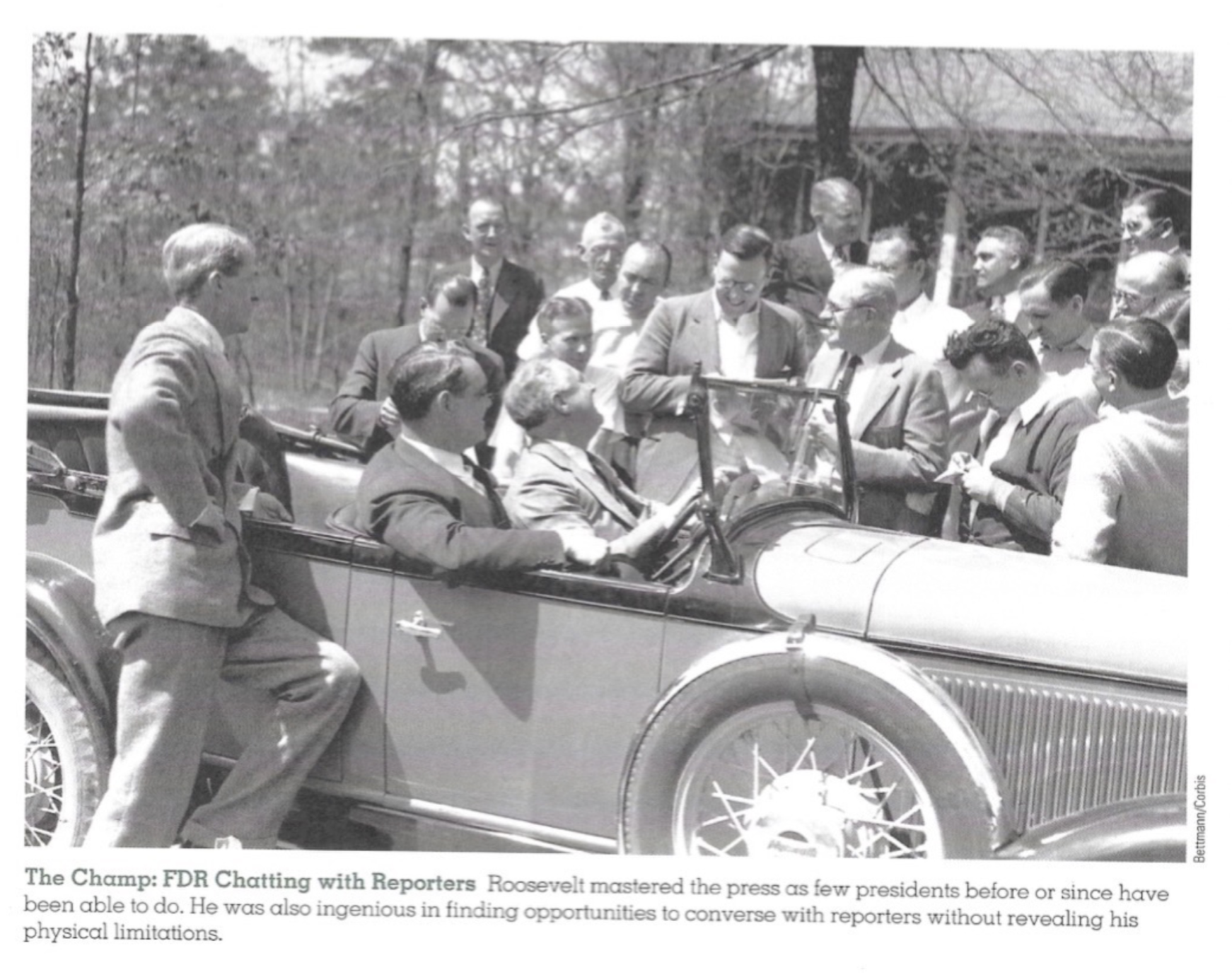
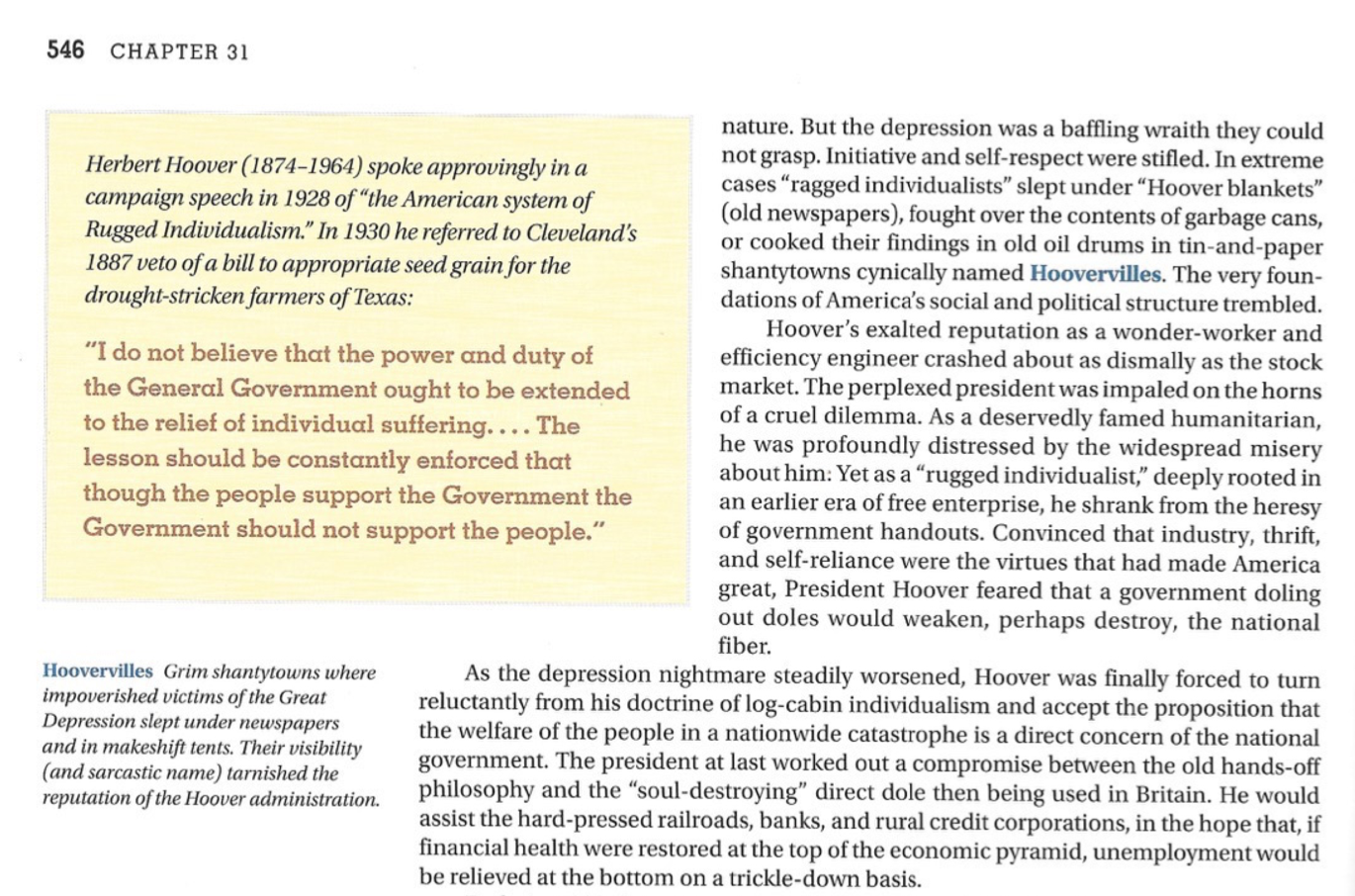
It can be reasonably inferred that President Franklin Roosevelt's compassion and strength of will can be attributed to his
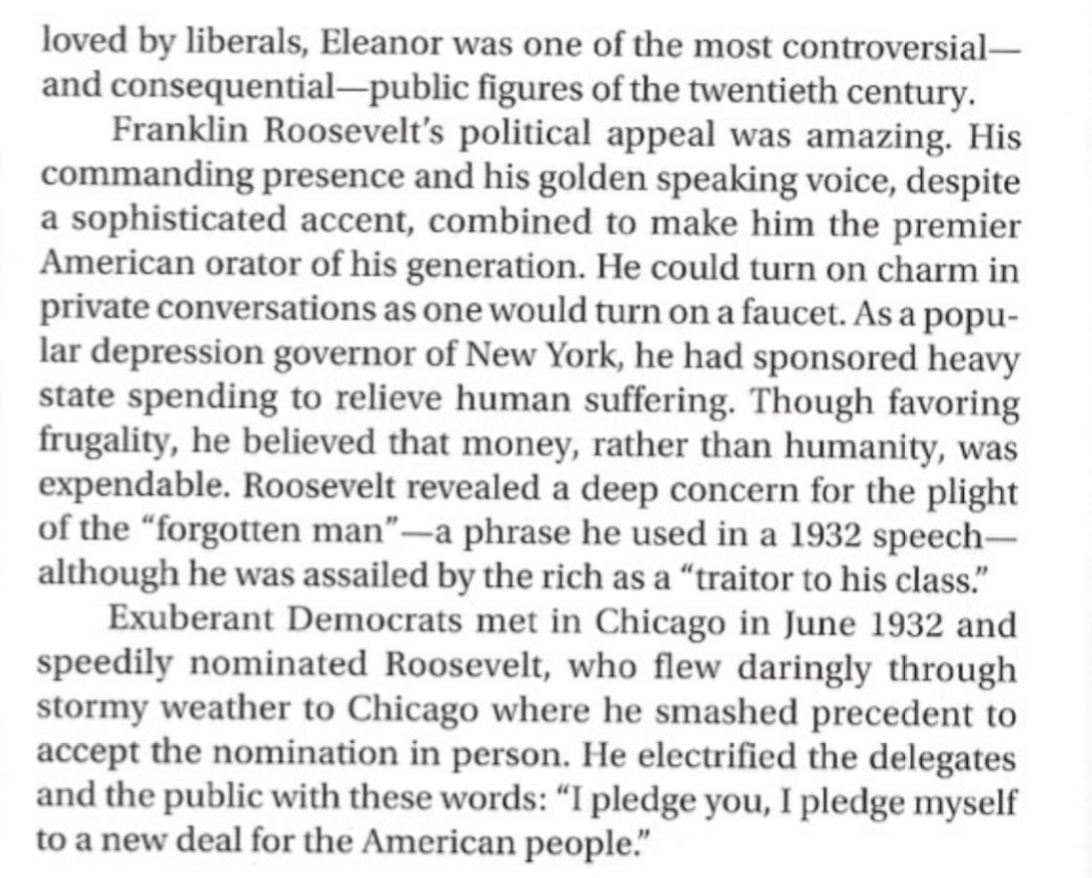
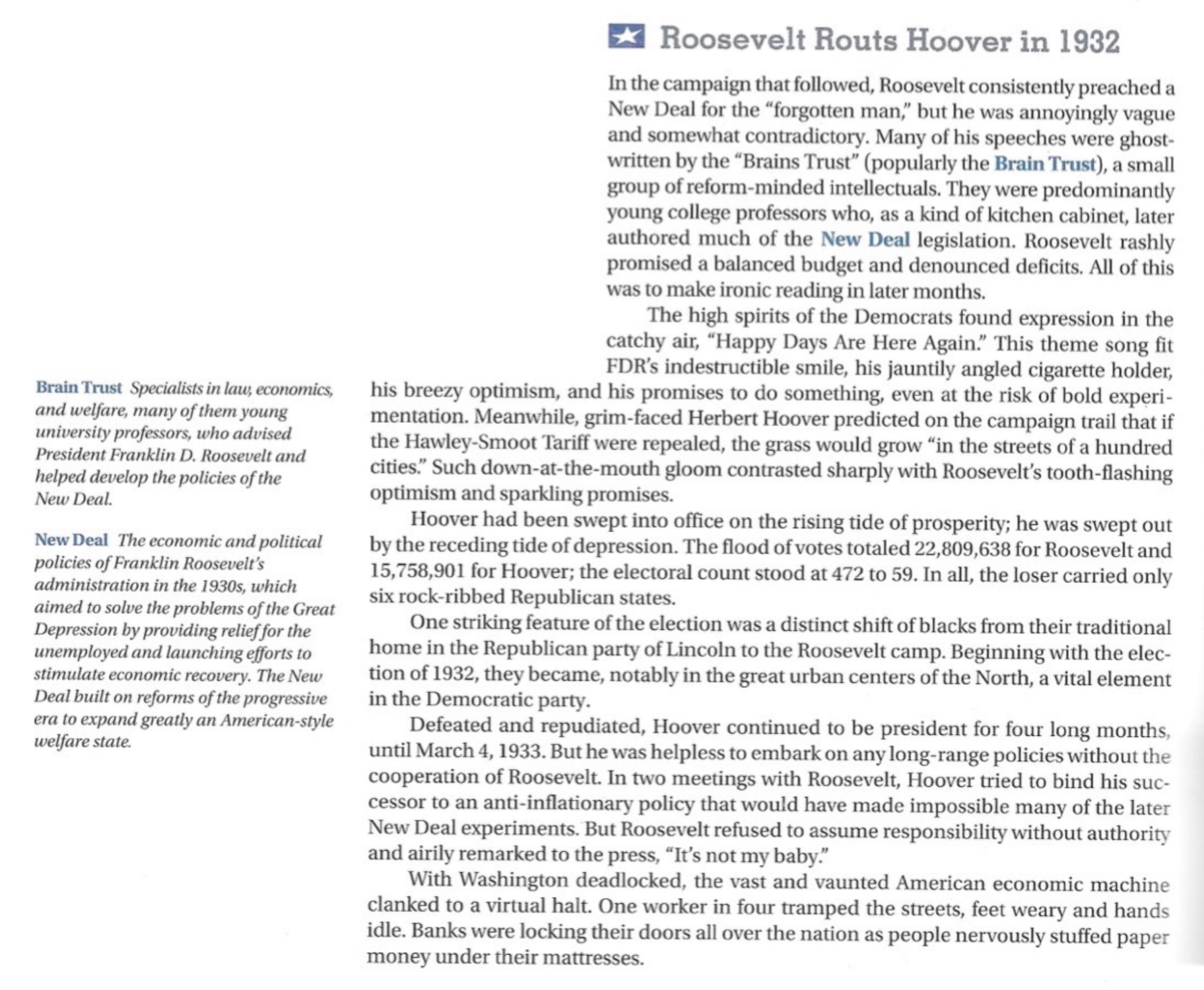
As used in line 3 of paragraph 5, "bind" most nearly means
That's all due for class on Tuesday, 3/29! Any feedback or questions that you want to go over in class?
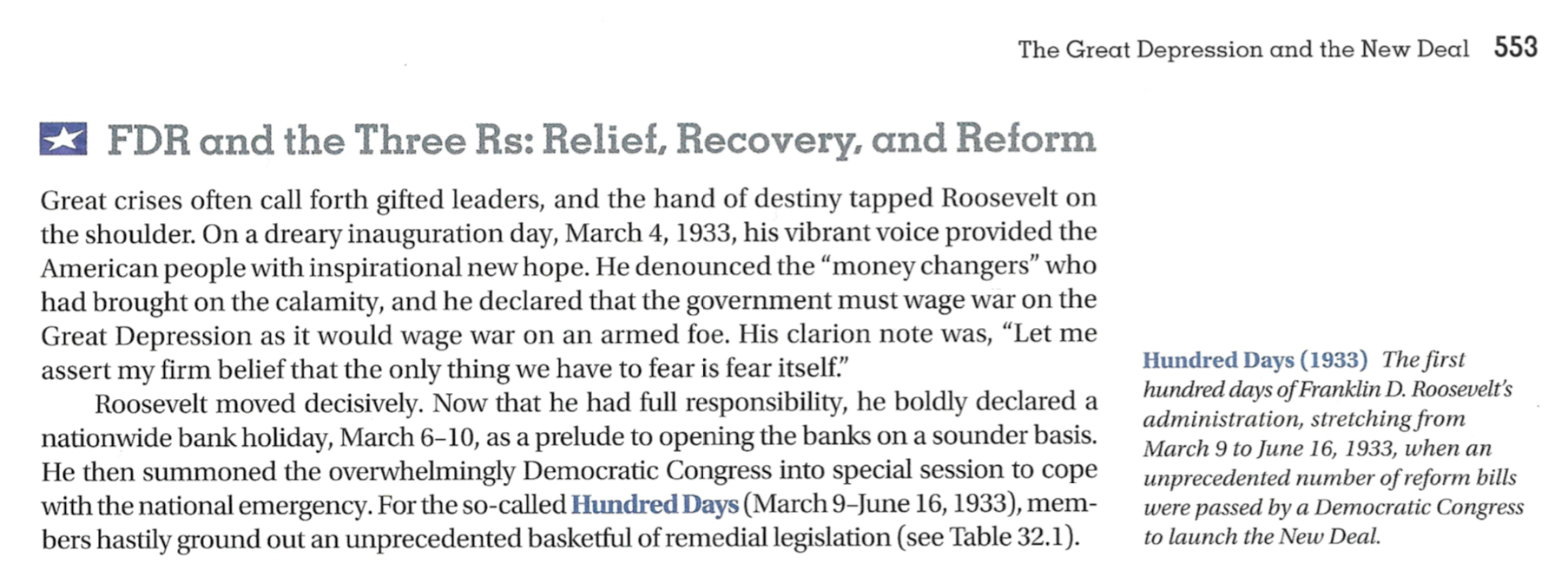
The phrase "Hundred Days" refers to the
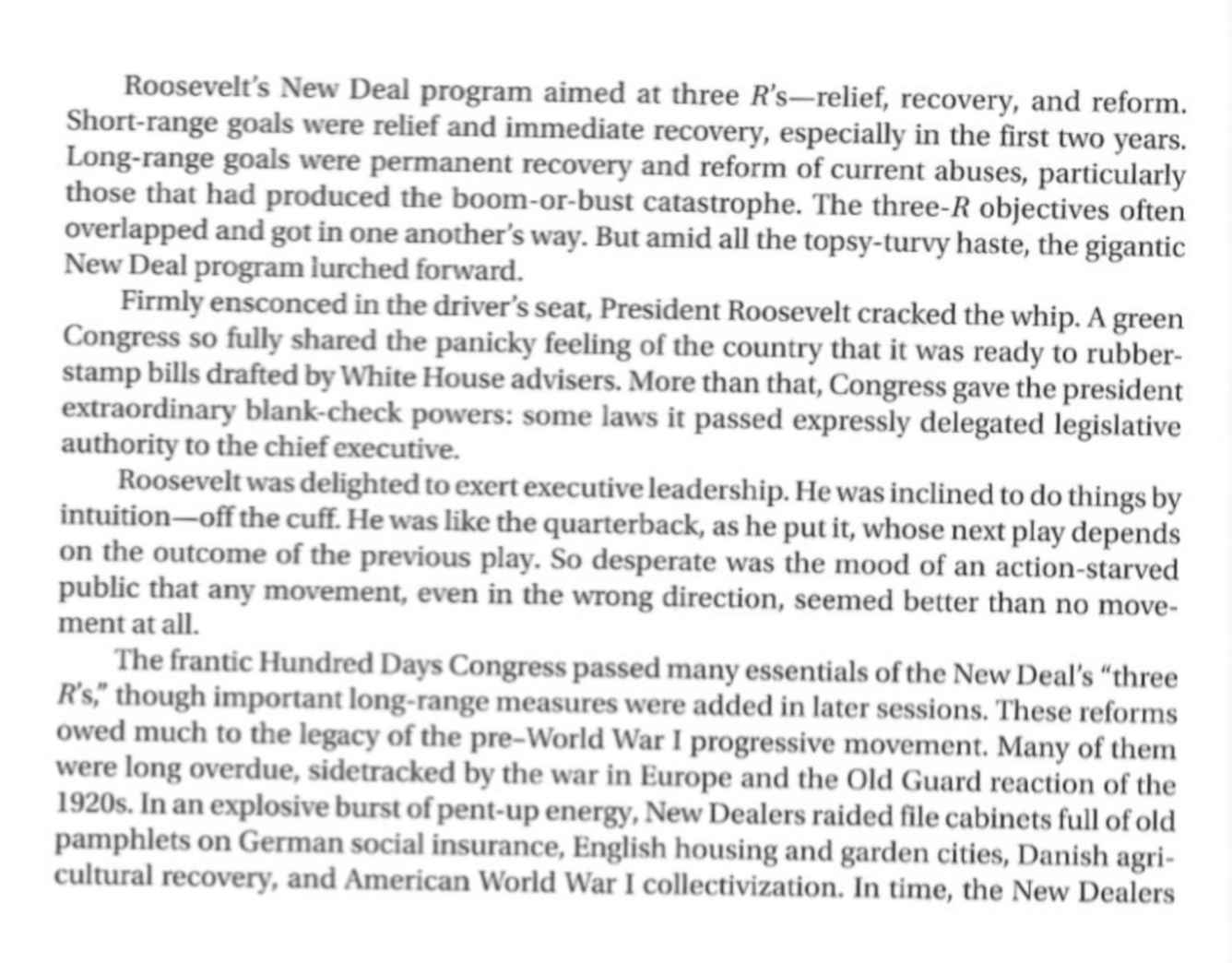
The passage suggests that, when FDR became President in March 1933,
Which choice provides the best evidence for the answer to the previous question?
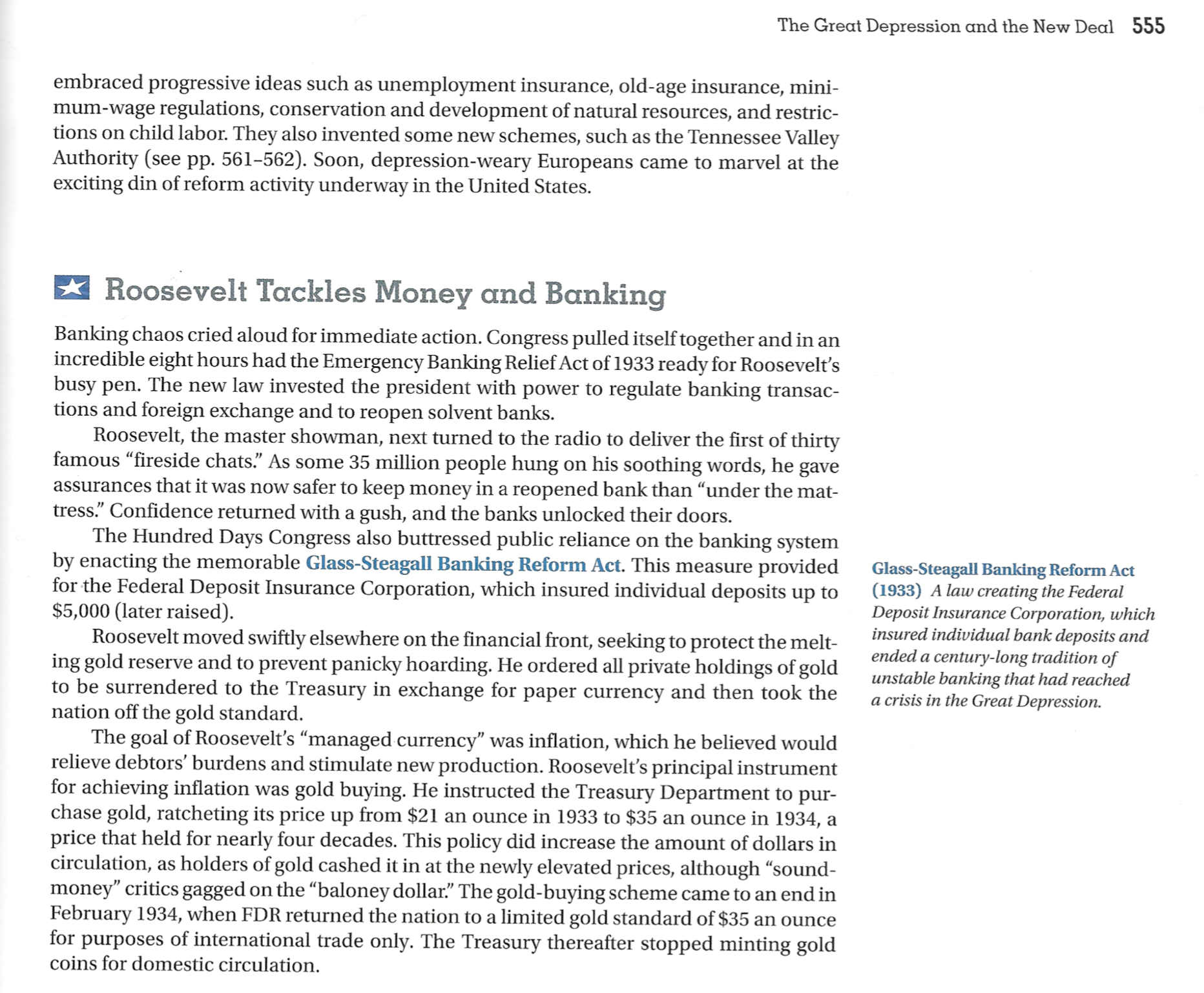
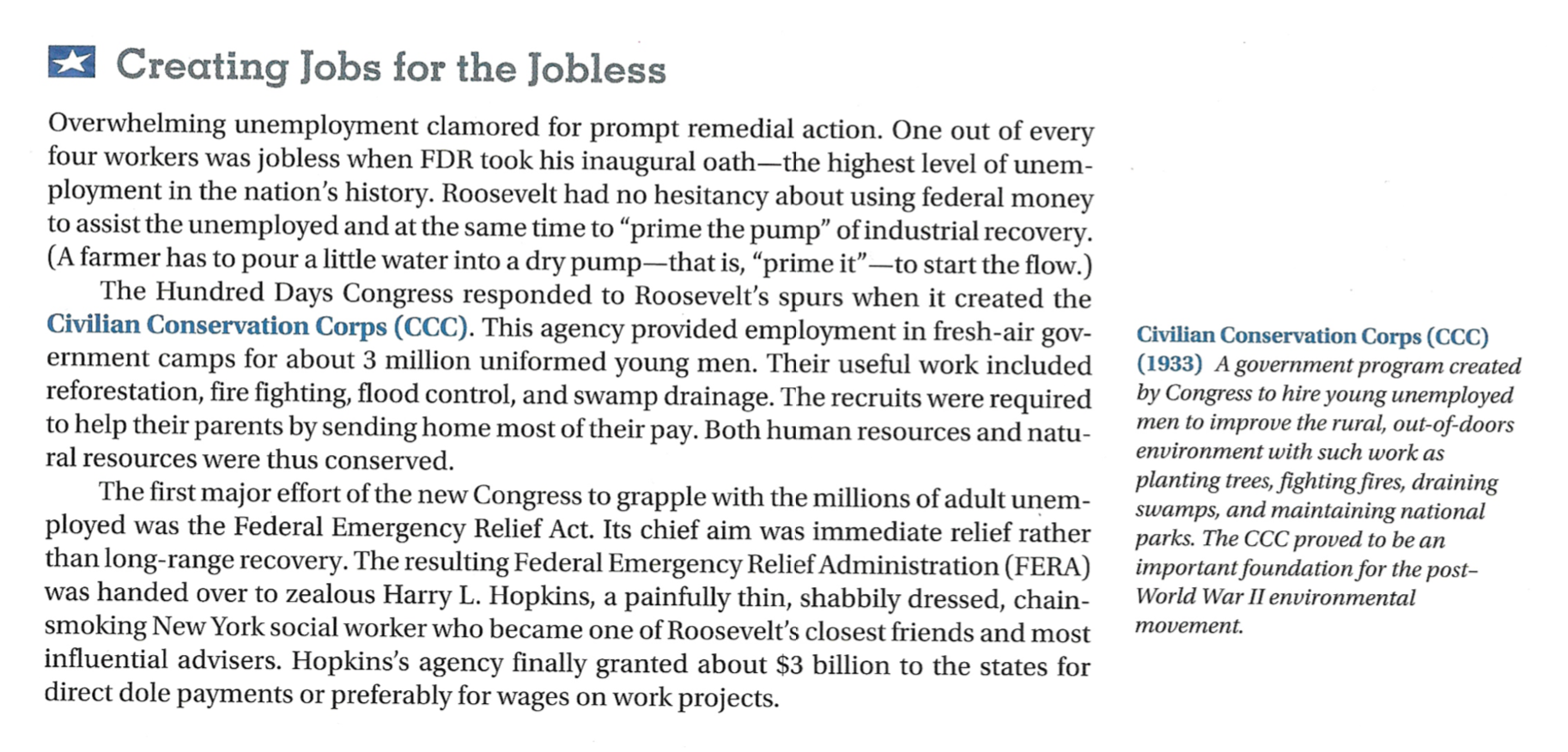
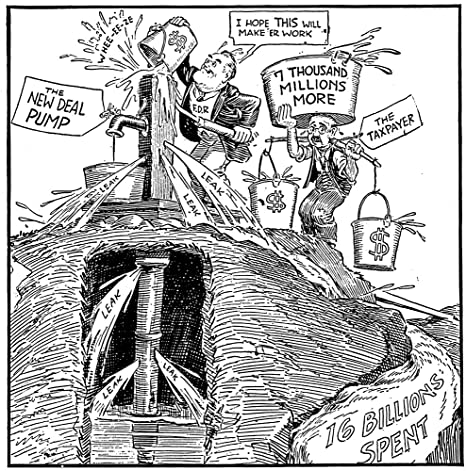
The phrase "prime the pump" (line 4) is used mainly to emphasize the fact that
That's all due for class on Wednesday, 3/30! Any feedback or questions that you want to go over in class?
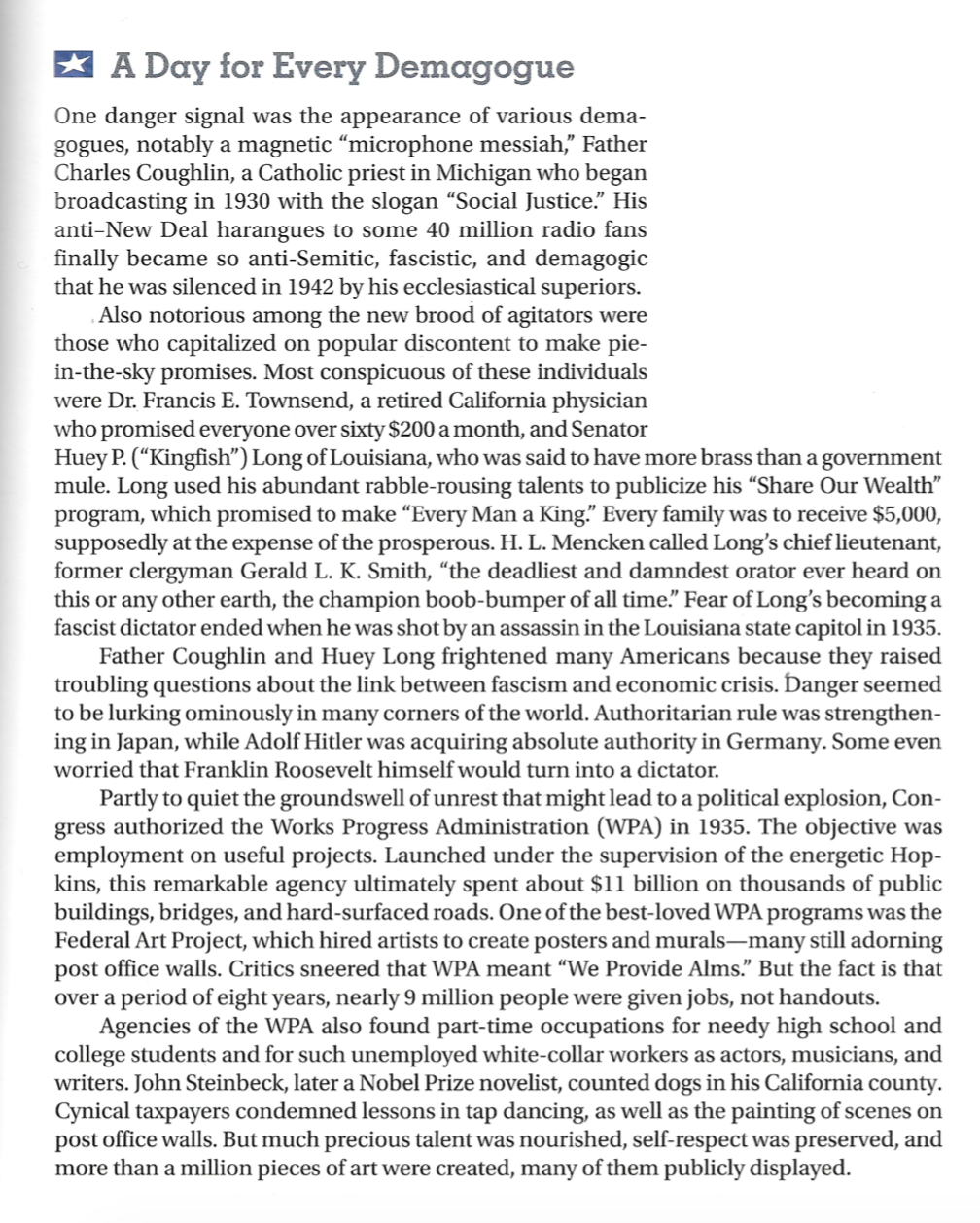
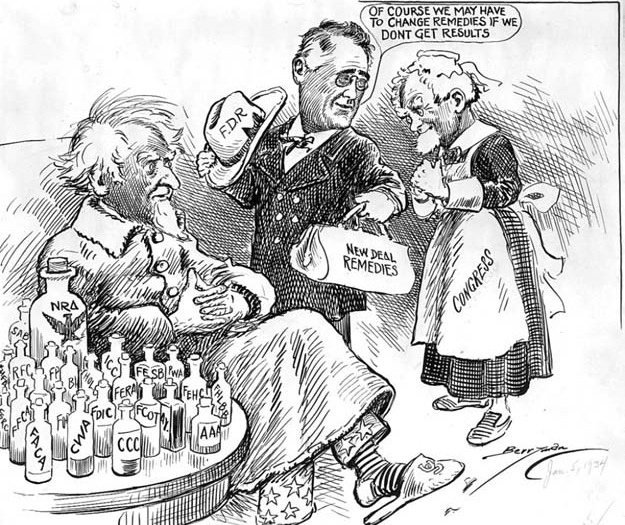
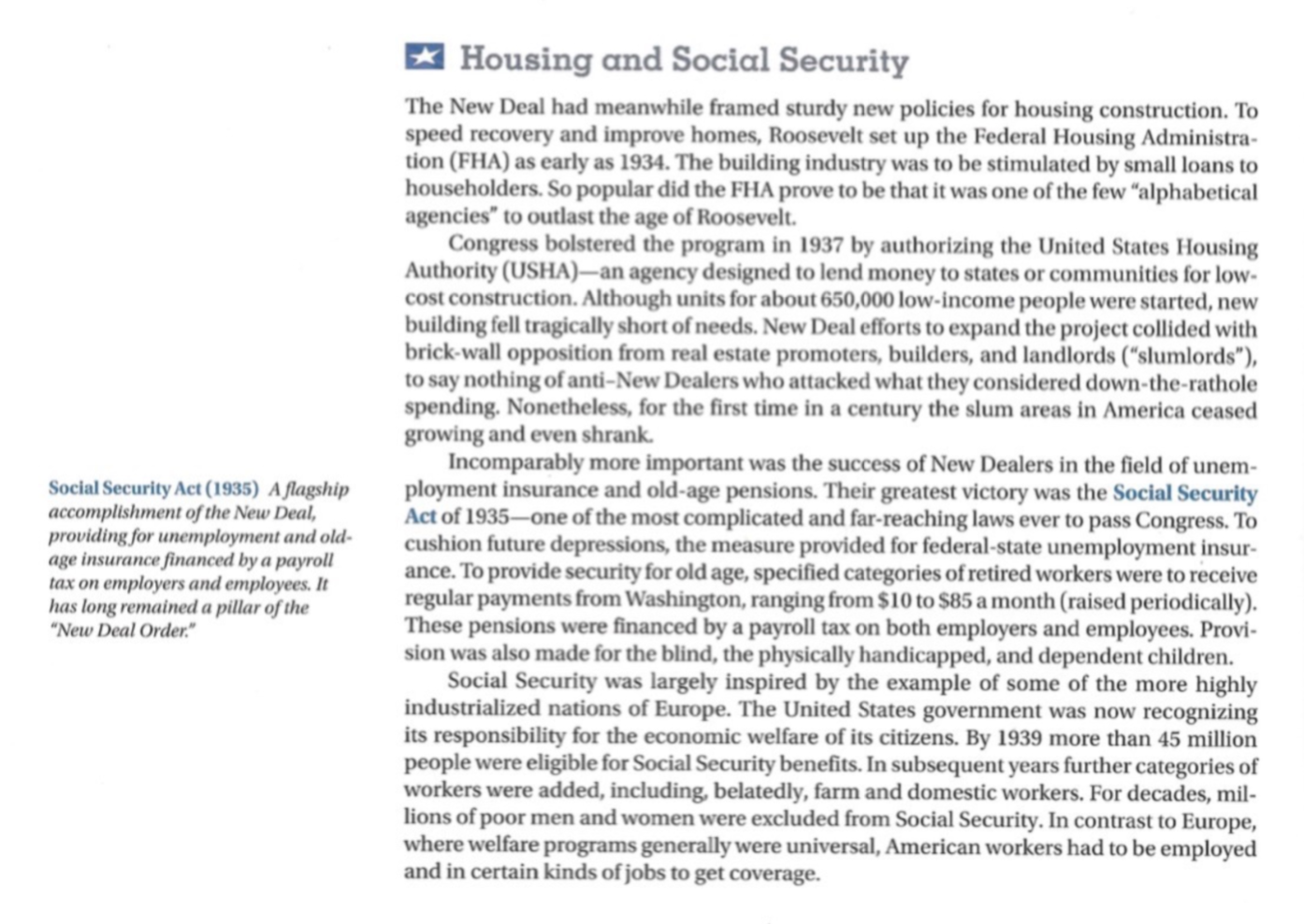
The passage suggests that a particularly important feature of the Social Security Act of 1935 was its provision of
Which choice provides the best evidence for the answer to the previous question?
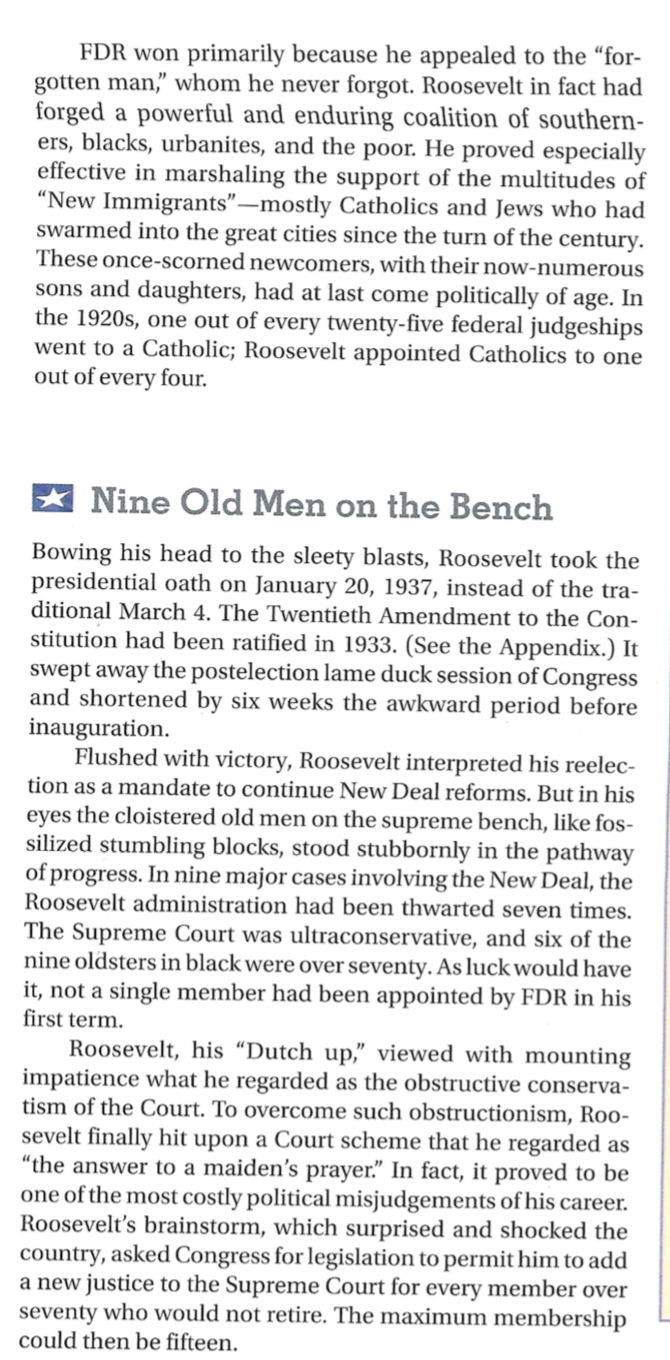
As used in line 4, paragraph 4, "costly" most nearly means
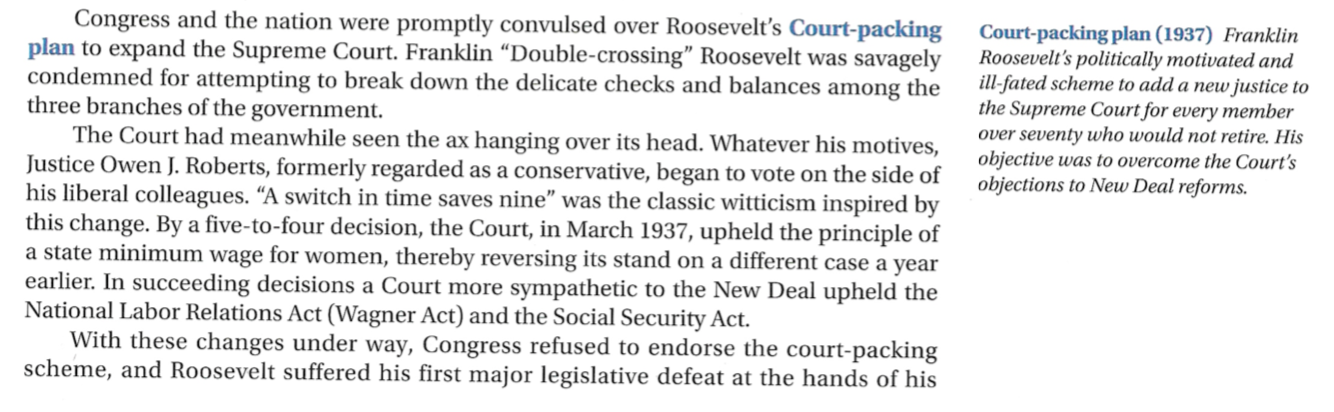
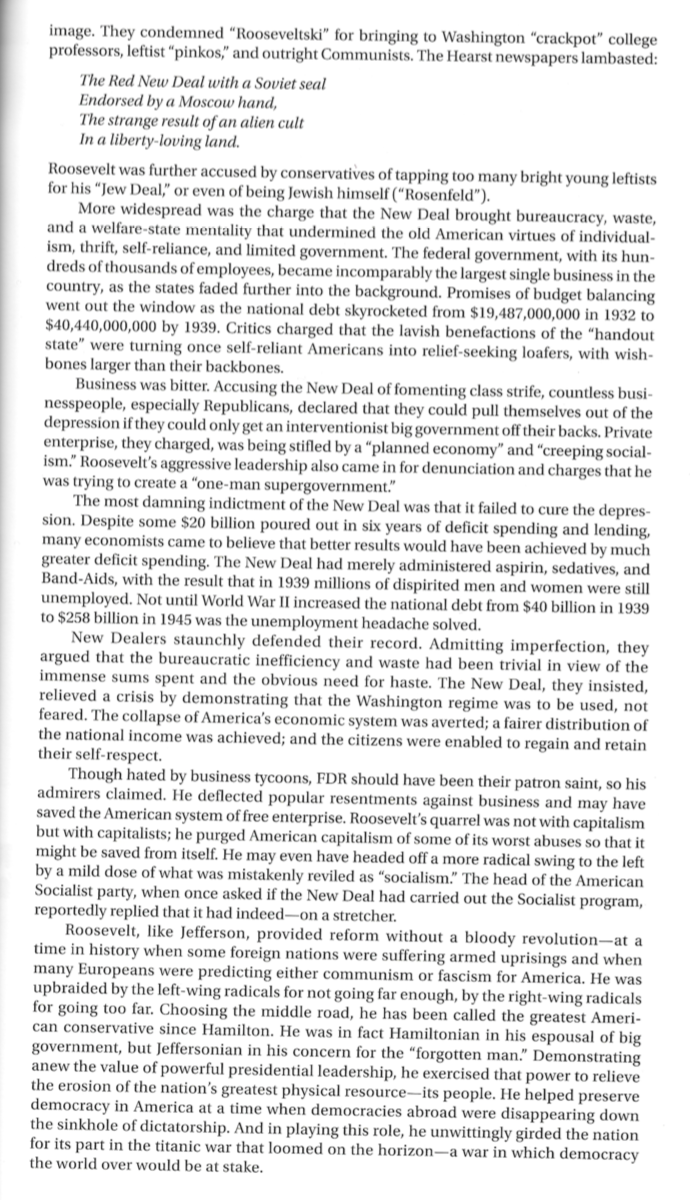
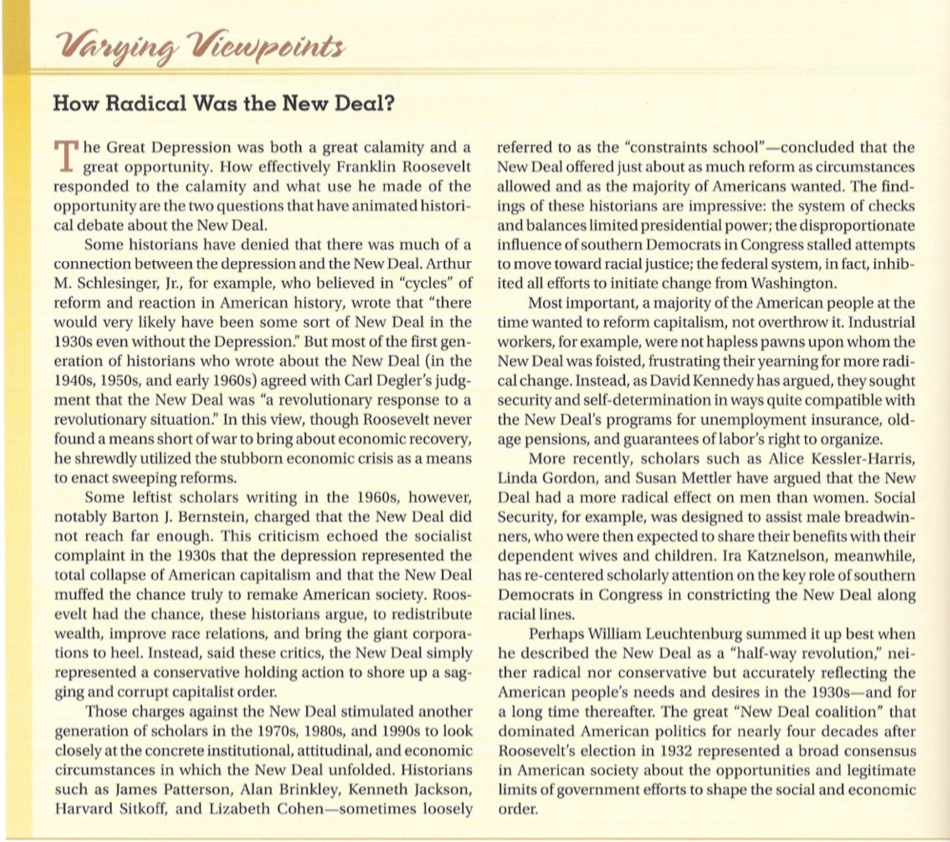
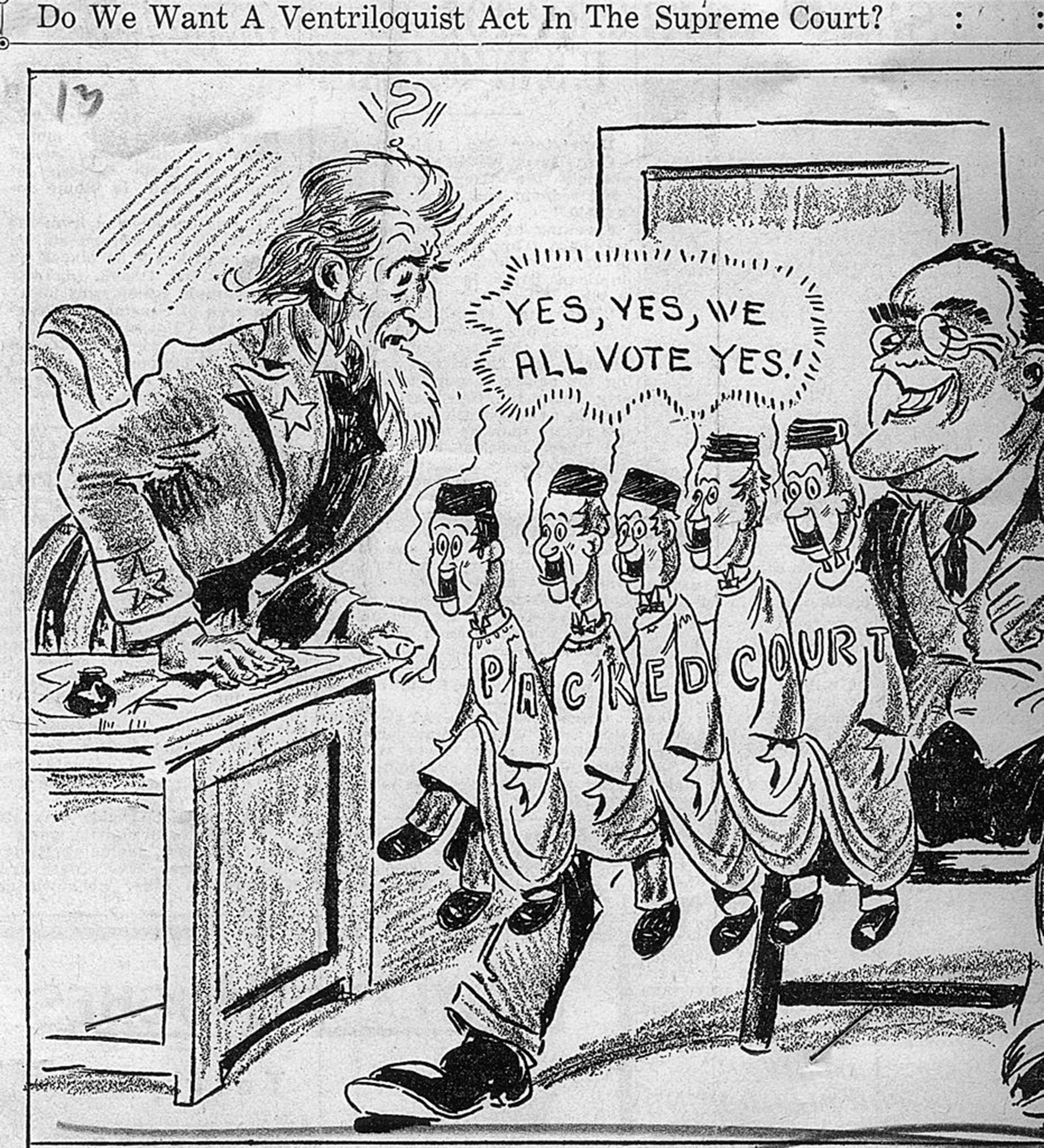
What do you think? Do you think that President Roosevelt was able to effectively address the crisis of the Great Depression with New Deal?
Explain why or why not using complete sentences with text evidence from the reading in order to receive full credit.
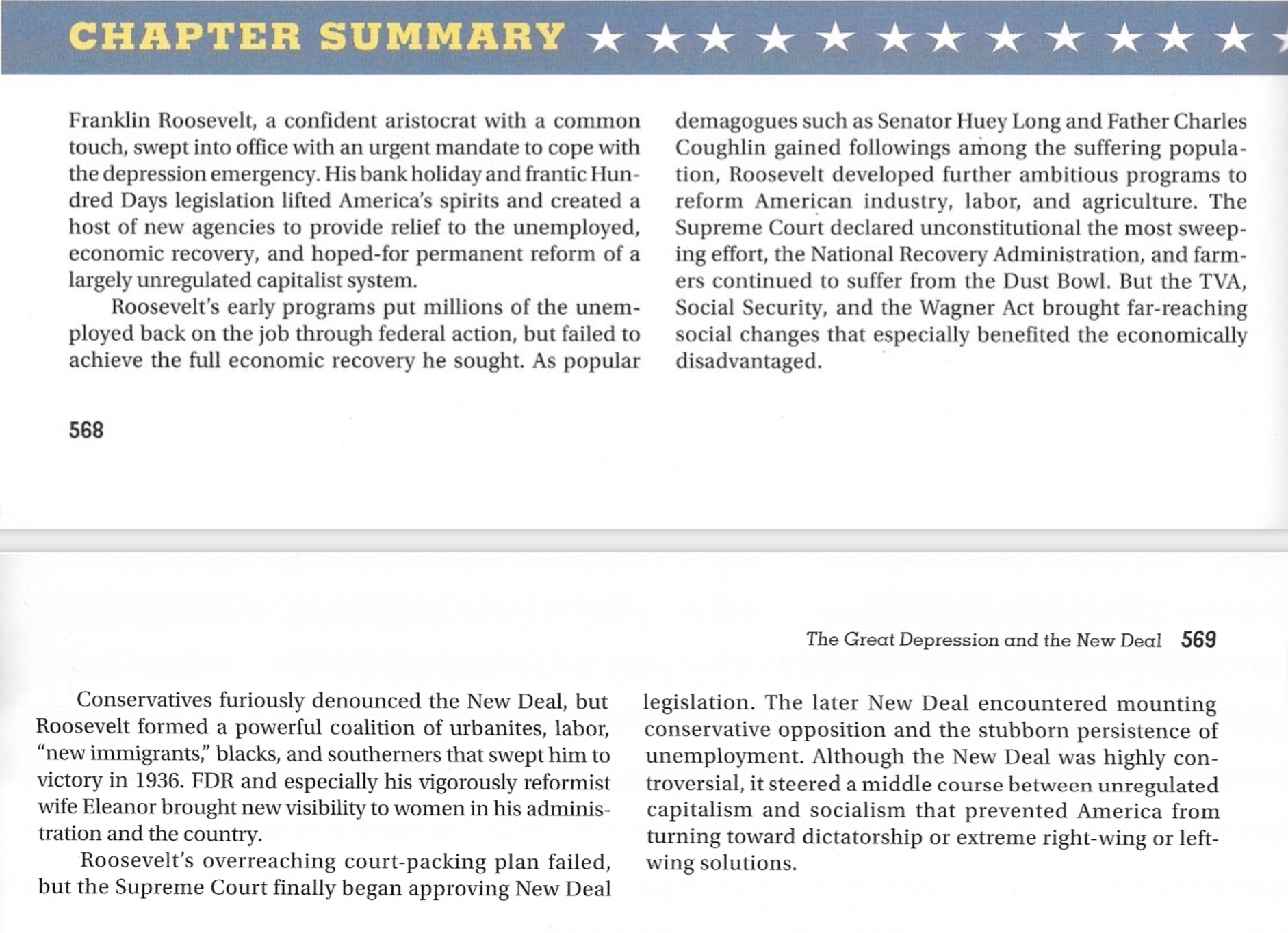
Excellent reading! Close out this Chapter by reviewing the "Chapter Summary" and using the "rectangle" tool to box the 5 most important key terms in the space provided.

That's all due for class on Thursday, 3/31! Any feedback or questions that you want to go over in class?