Log in
Sign up for FREE
arrow_back
Library

Earth, Moon, and Sun Critical Juncture Assessment

star
star
star
star
star
Last updated almost 3 years ago
4 questions
1
1
1
2
Question 1
1.

Question 2
2.

Question 3
3.

Question 4
4.


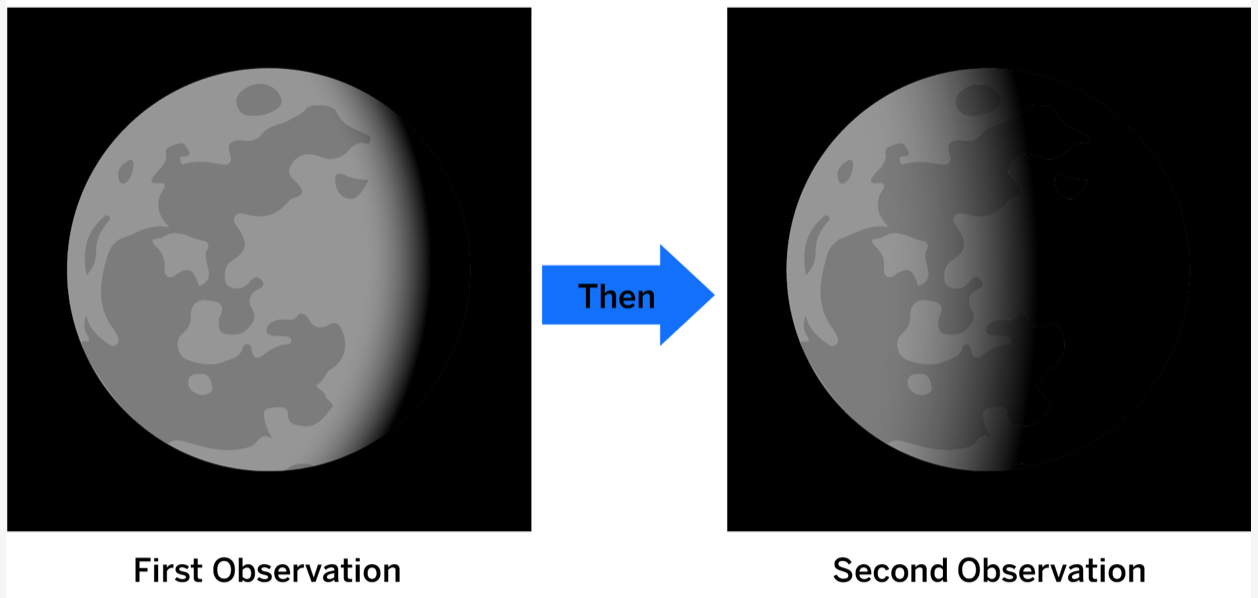
A student astronomer went outside and made two observations of the Moon that were several days apart. Her observations are shown in the diagram above. The light part of the Moon appeared to get smaller over time. Why did this happen?
CFS:
  • accurately describes the relationship between light and the moon’s appearance
  • describes the cause and effect relationship between rotational movements and illuminated objects
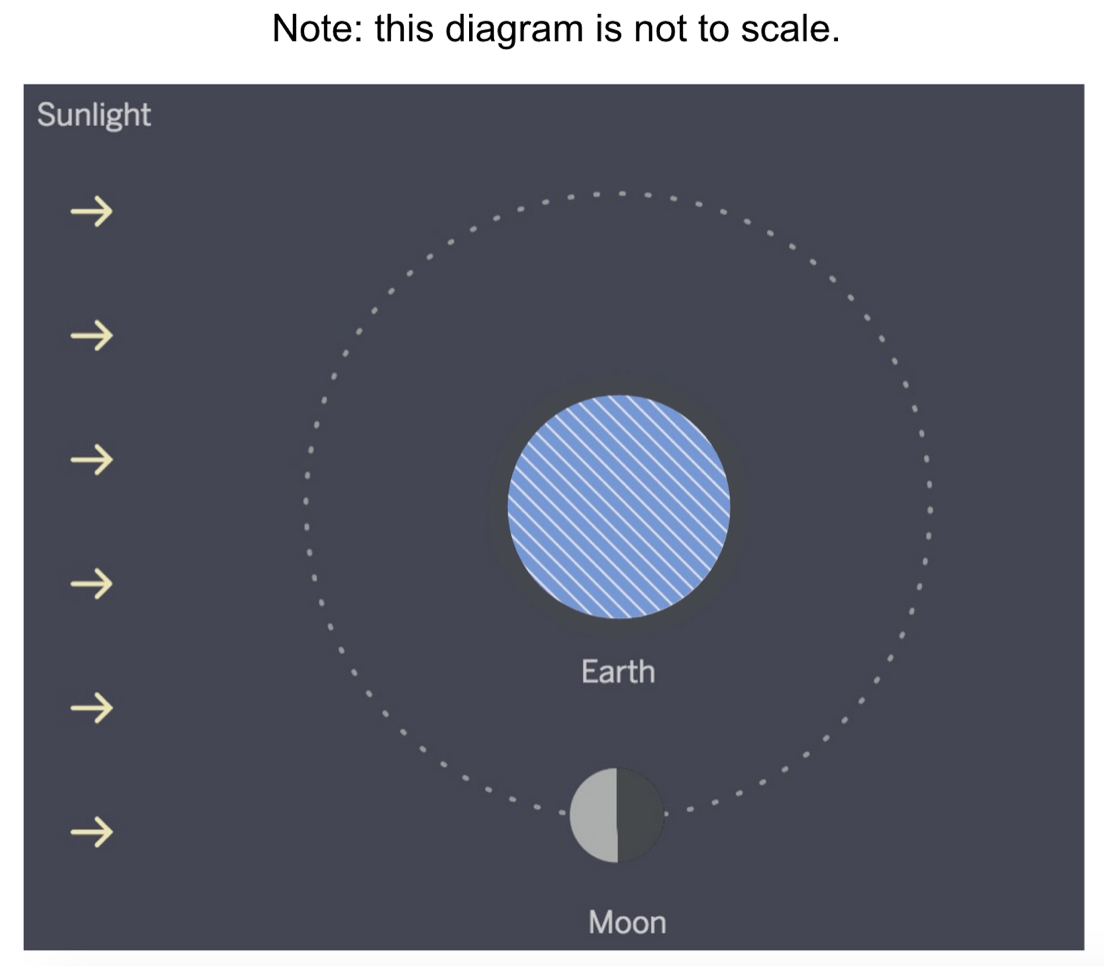
Susan is a space scientist who made this diagram of the Moon and Earth, as seen from above (top view), with sunlight coming from the left, as shown by the arrows. Why does Susan’s diagram show that it’s bright on the left half of the Moon?

Because as the Moon gets closer to the sun more of it is lit by the sun, so Susan’s diagram is showing sunlight on half of the Moon.
Because the Moon has some lighter-colored rock and some darker-colored rock, and Susan’s diagram is showing that the half of the Moon with the lighter-colored rock has rotated to the left.
Because there is a shadow from Earth falling on half of the Moon, and Susan’s diagram is showing that shadow on the right half of the Moon.
Because Susan’s diagram is showing that the half of the Moon that is facing the sun is lit by the sun, and the other half is dark.
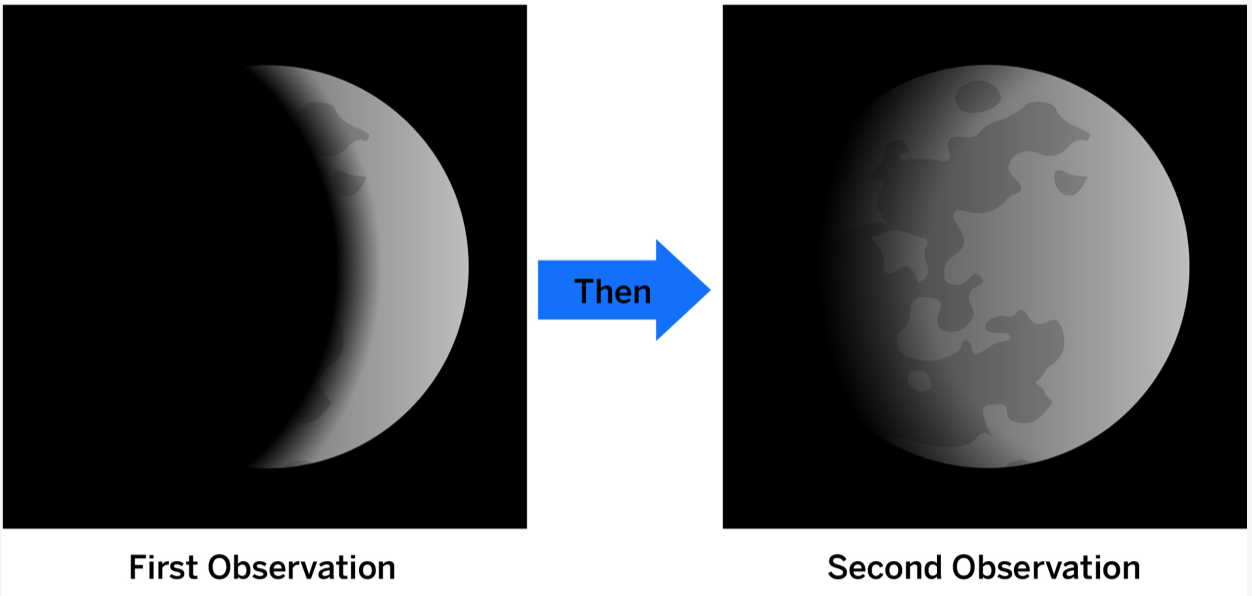
Astronomers made two observations of the Moon that were several days apart. Their observations are shown in the diagram above. The light part of the Moon appeared to get larger over time. Why did this happen?
Between the first observation and the second observation, the Moon rotated so that more of the light-colored rock on the Moon’s surface faced Earth.
Between the first observation and the second observation, the Moon moved so that the astronomers were able to see more of the half that faces the sun.
Between the first observation and the second observation, the Moon moved closer to the sun so more sunlight reached the Moon’s surface.
Between the first observation and the second observation, Earth moved so its shadow was blocking less of the Moon so the astronomers were able to see more of it.
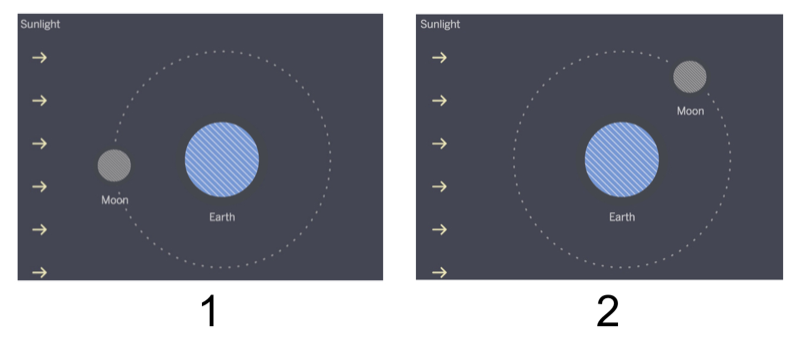
The diagrams above show Earth and the Moon in different positions, as seen from above (top view). Sunlight is coming from the left, but these diagrams do not show what parts of Earth or the Moon are light or dark.


Could the half of the Moon that faces Earth ever be completely dark in any of these diagrams?
No, the Moon is always lit by the sun.
Yes, always in Diagram 1 and sometimes in Diagram 2.
Yes, always in Diagram 2, but never in Diagram 1.
Yes, always in Diagram 1, but never in Diagram 2.