Astronomers made two observations of the Moon that were several days apart. Their observations are shown in the diagram above. The light part of the Moon appeared to get larger over time. Why did this happen?
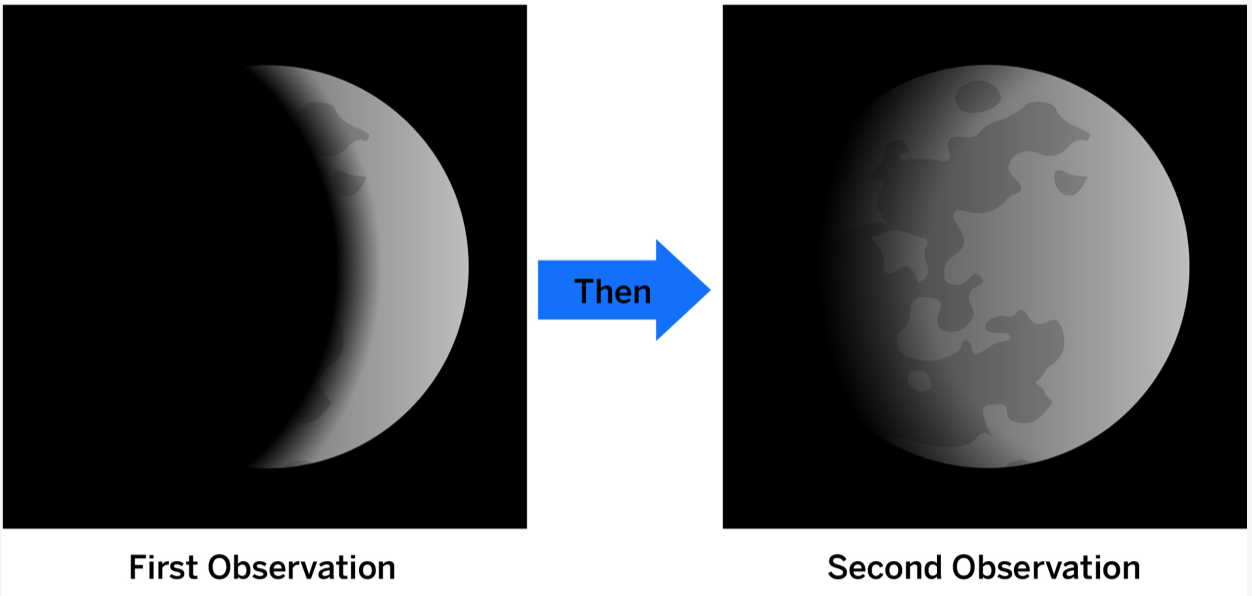
Astronomers made two observations of the Moon that were several days apart. Their observations are shown in the diagram above. The light part of the Moon appeared to get larger over time. Why did this happen?
The diagrams above show Earth and the Moon in different positions, as seen from above (top view). Sunlight is coming from the left, but these diagrams do not show what parts of Earth or the Moon are light or dark.
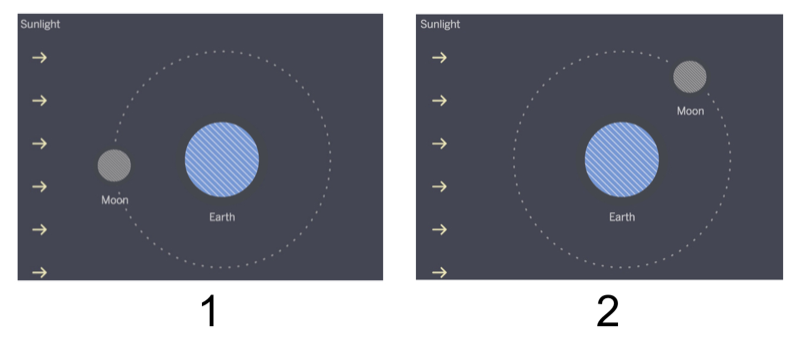
Could the half of the Moon that faces Earth ever be completely dark in any of these diagrams?

A student astronomer went outside and made two observations of the Moon that were several days apart. The observations are shown in the diagram above. The light part of the Moon appeared to get larger over time. Why did this happen?
CFS:
accurately describes the relationship between light and the moon’s appearance
describes the cause and effect relationship between rotational movements and illuminated objects