Unit 5.1 Classwork & Reading: The Roaring 20s
star
star
star
star
star
Last updated over 1 year ago
15 questions
Note from the author:
Directions: Please click here for the slides from class.
1
What is one advertisement you've been getting targeted for online? Explain whether or not you are tempted to buy it and, if so, how (i.e. saving up money, asking parent/guardian for money, charging it on your credit card).
Finish early? Find an online exmple of that product and upload under "Show Your Work."
What is one advertisement you've been getting targeted for online? Explain whether or not you are tempted to buy it and, if so, how (i.e. saving up money, asking parent/guardian for money, charging it on your credit card).
Finish early? Find an online exmple of that product and upload under "Show Your Work."

1
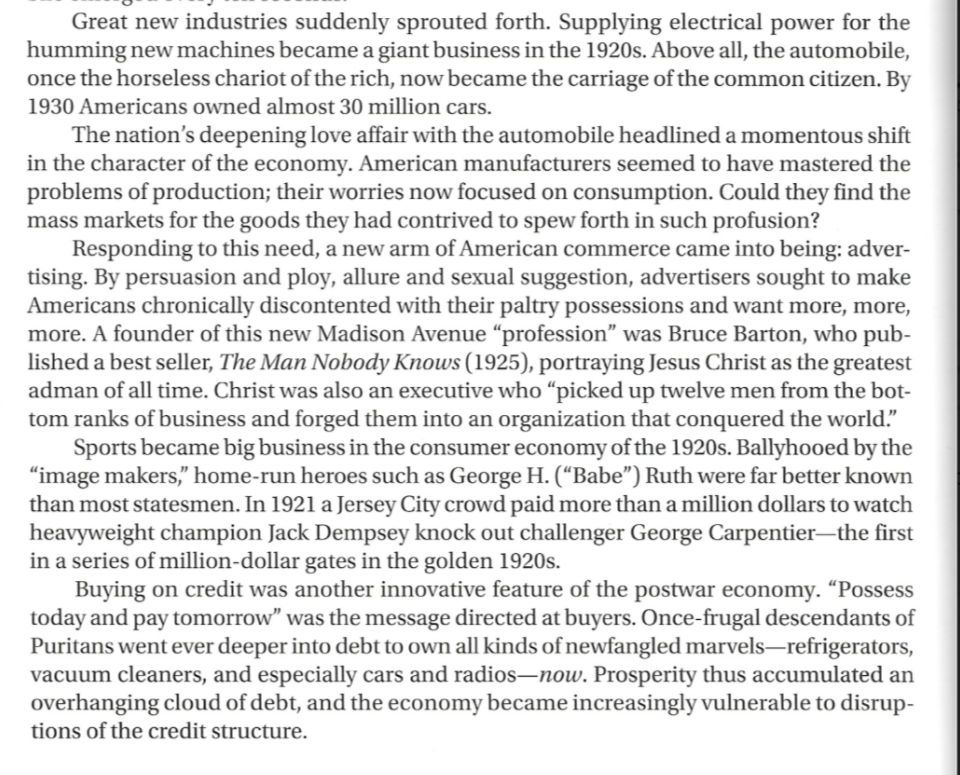
For many middle-class Americans, the Roaring 1920s was a decade of unprecedented _______ , which led to new patterns of _______ , or purchasing consumer goods like radios, cars, vacuums, beauty products or clothing.
The expansion of _______ in the 1920s allowed for the sale of more consumer goods and put _______ within reach of average Americans. Now individuals who could not afford to purchase a car at full price could pay for that car over time -- with interest, of course!
With so many new products and so many Americans eager to purchase them, _______ became a central institution in this new consumer economy.
1
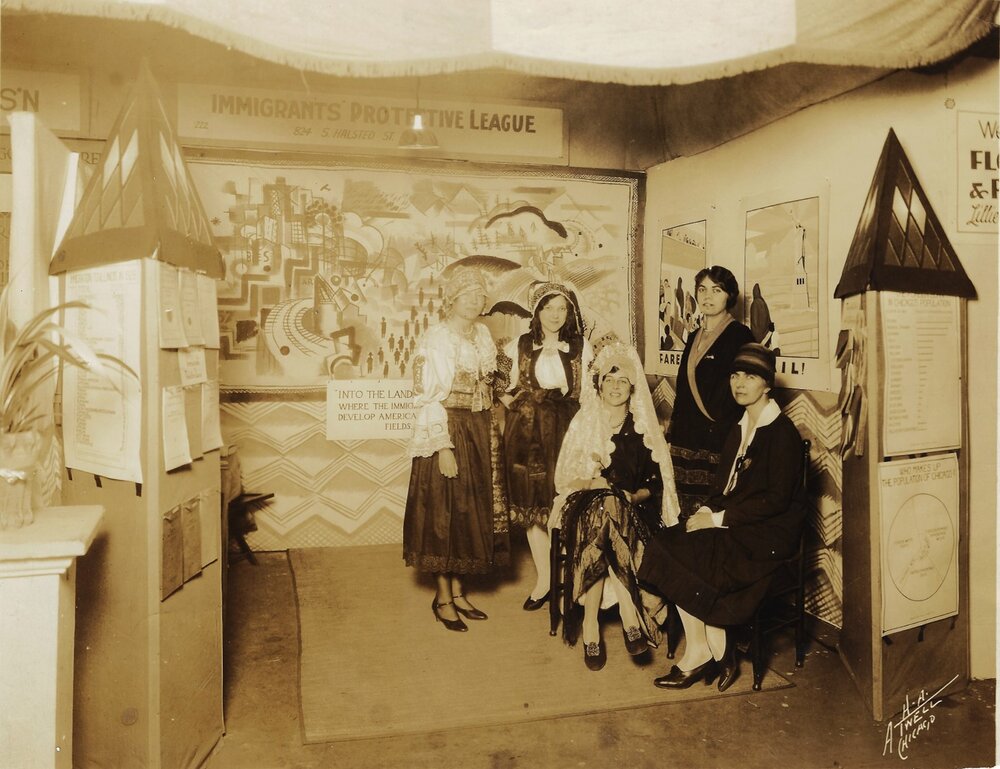
By the 1920s, a _______ of the US population lived in cities rather than in rural areas. Cities, like _______ , offered economic opportunities to women, migrants, and immigrants, as well as the passage of new immigration restrictions. For Example, Jane Addams sought to improve the lives of women, children, and immigrants. At the _______ House, Addams taught immigrants English and how to adjust to city life.
1
- WWI _______ a business boom!
- Mass produced consumer goods were now _______
- Radio, _______ , and film contributed to boom of national popular culture
- Americans enjoyed the _______ standard of living in the world with new machines, cheaper goods, higher wages, and more leisure time

1
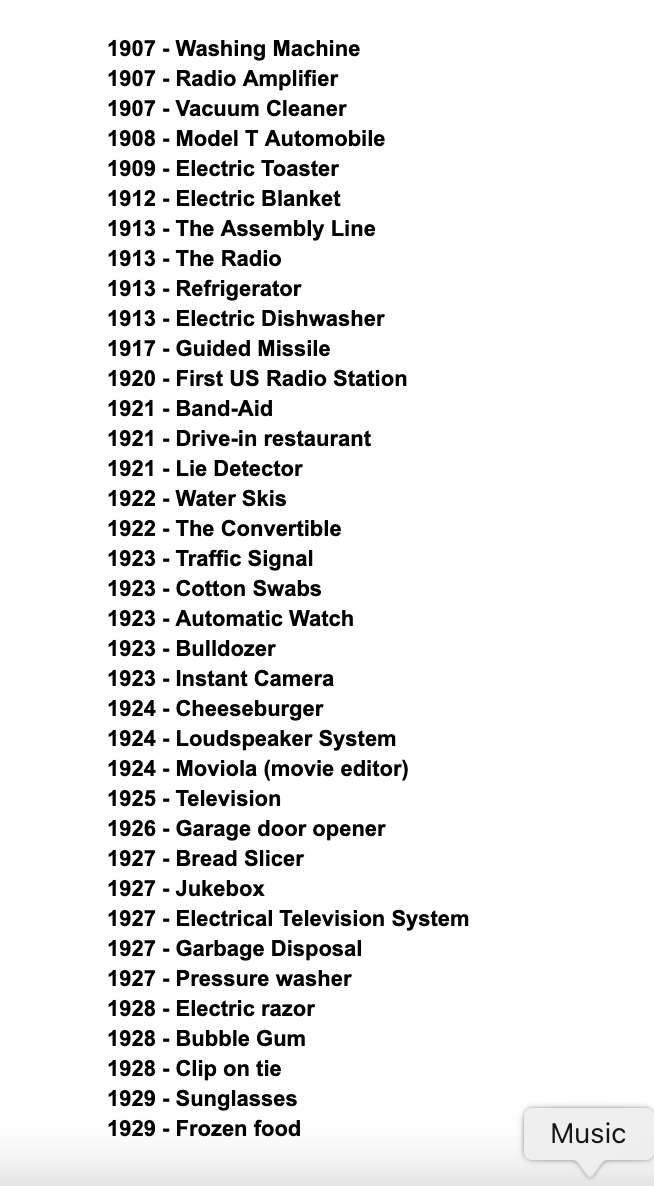
How many objects do you currently use today?
1
Which three objects does your group use the most?
1
In the 1920s, Americans were so eager to buy the items listed above -- even if they really couldn’t afford it. Why do you think that is?
Well done! Now you might be wondering how Americans were convinced to buy so many goods, which is largely a result of the advertisments that emerged in this time period. Take a look at some examples here.
1
What do all of these 1920s advertisements have in common?


1
Exit Ticket: What do these examples suggest about the values of American society in the Roaring 20s?
0
That's our classwork for Monday, 3/28/2022! Our new unit will cover the Roaring 20s, Great Depression, New Deal, and World War II.
Let Ms. Truong know if you are looking forward to learning about any topics in particular here.
That's our classwork for Monday, 3/28/2022! Our new unit will cover the Roaring 20s, Great Depression, New Deal, and World War II.
Let Ms. Truong know if you are looking forward to learning about any topics in particular here.
1
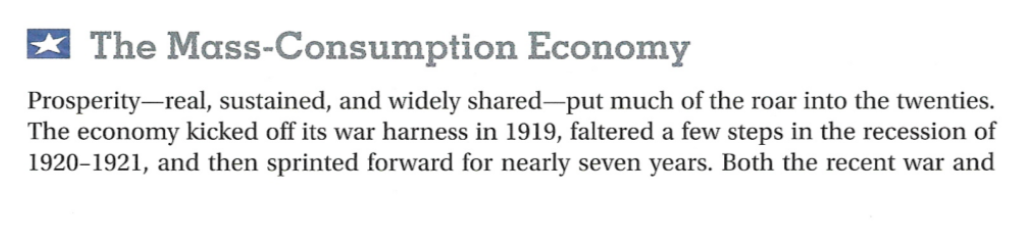
A significant cloud that hung over the prosperity of the 1920s was the
1
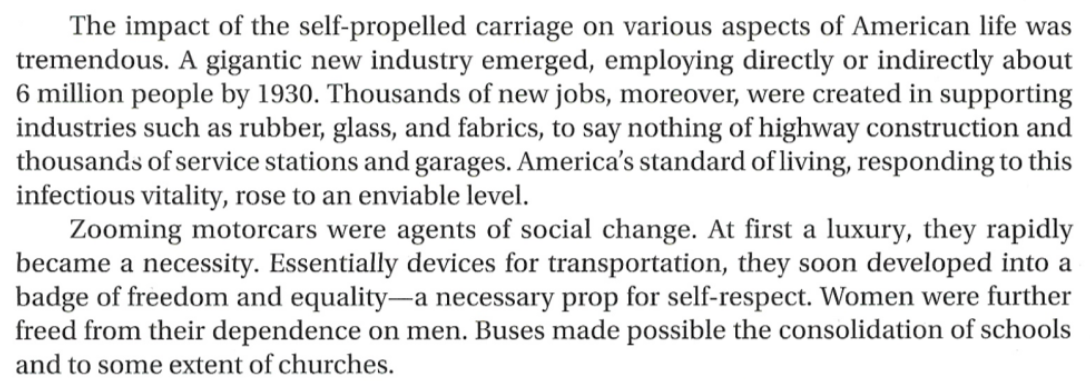
As used in line 9, "badge" most nearly means
1
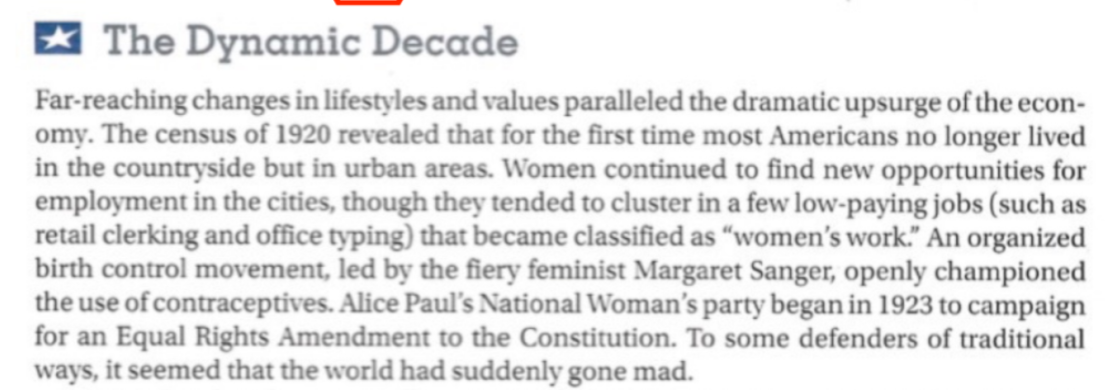
The passage indicates that female activist Margaret Sanger was known for her advocacy of
1
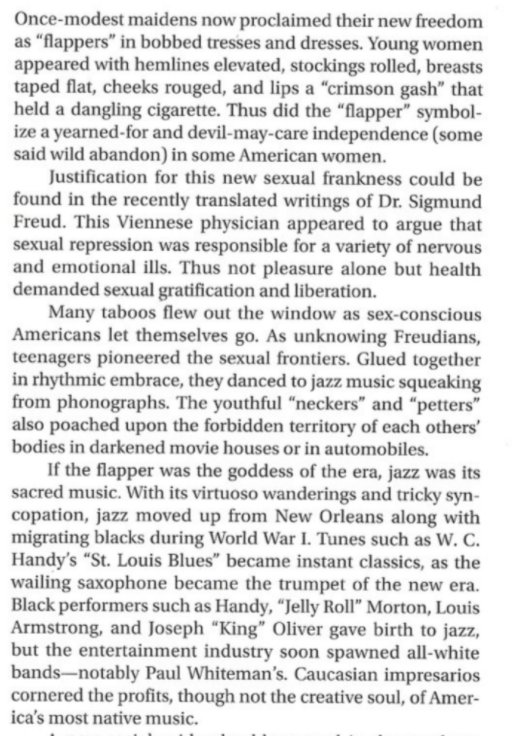
The passage is primarily focused on establishing the 1920s “flapper” as a symbol for
1
Which choice provides the best evidence for the answer to the previous question?