
That's all we're covering for Thursday, 11/18/2021.
Stay tuned tomorrow for the Indian Removal Act! Don't forget to read + submit the "Abridged Ch. 13" Formative tonight.
Content Objective: I will be able to compare and contrast the Trump presidency with the Jackson presidency.
Standard Objective: I will be able to identify explicitly stated relationships between individuals (e.g. comparison-contrast).
Content Objective: I will be able to compare and contrast the Trump presidency with the Jackson presidency.
Standard Objective: I will be able to identify explicitly stated relationships between individuals (e.g. comparison-contrast).
Warm Up: Please rate how well you understood last night's pre-work on a scale from 1 to 4. If you have any questions, drop them in the "Show Your Work" area.
Warm Up: Please identify at least 2 differences and 1 similarity between Donald Trump and Andrew Jackson.
When you discuss in your table groups, please use the graphic organizer in the "Show Your Work" area to capture ideas discussed.
Warm Up: One interesting historical fact I learned from the pre-work is…
Warm Up #2: How would you react if someone forced you to move out of Chicago, Illinois and forced you to settle in the middle of Oklahoma?
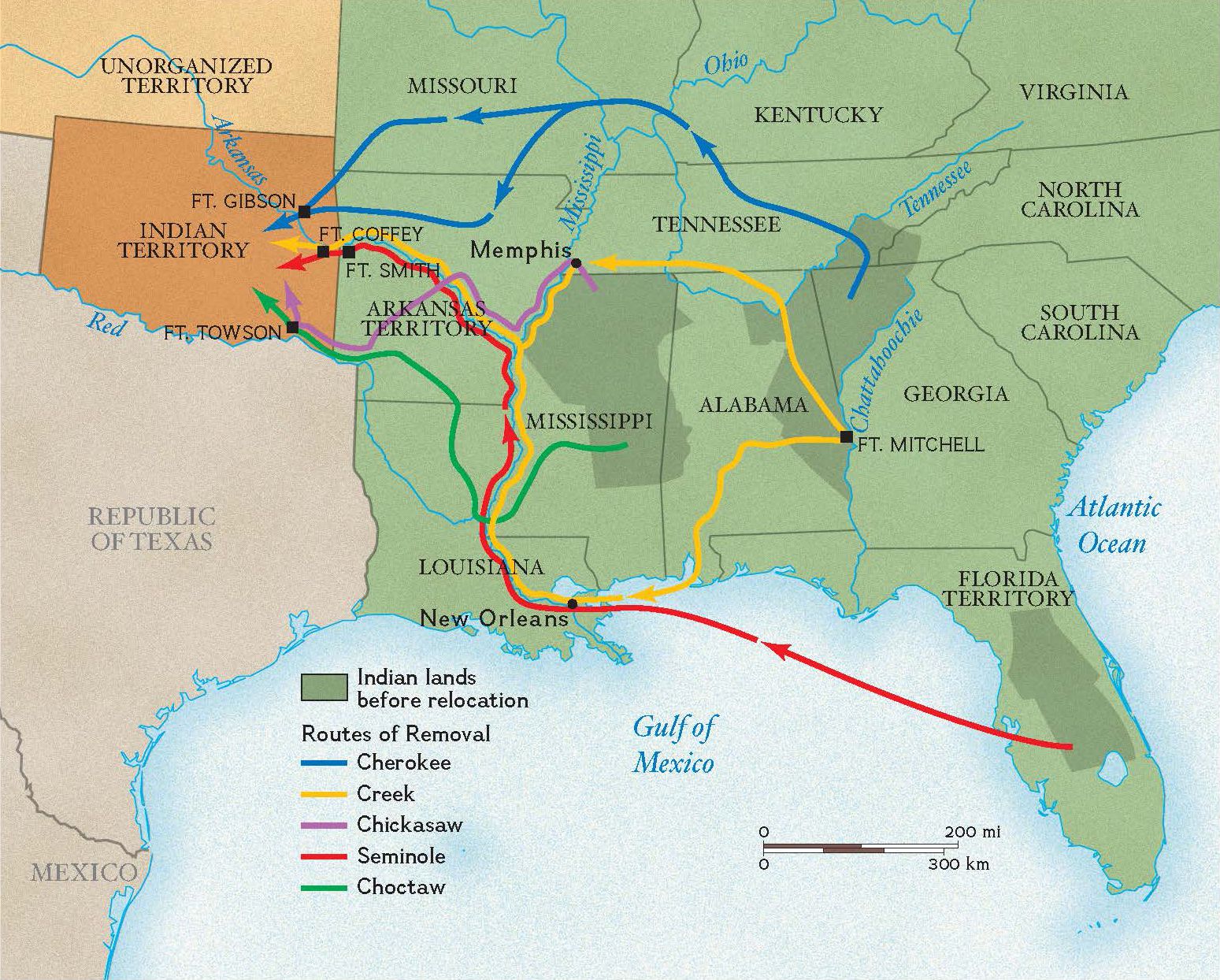
The Indian Removal Act of 1830 was a key feature of Andrew Jackson’s presidency that gave the president power to negotiate removal treaties with Indian tribes living east of the Mississippi.
By the end of the Jackson administration,
What was the intended purpose of the Indian Removal Act of 1830?
How did the Indian Removal Act affect enslaved Blacks at the time?
Which Native American tribes were affected by the Indian Removal Act?

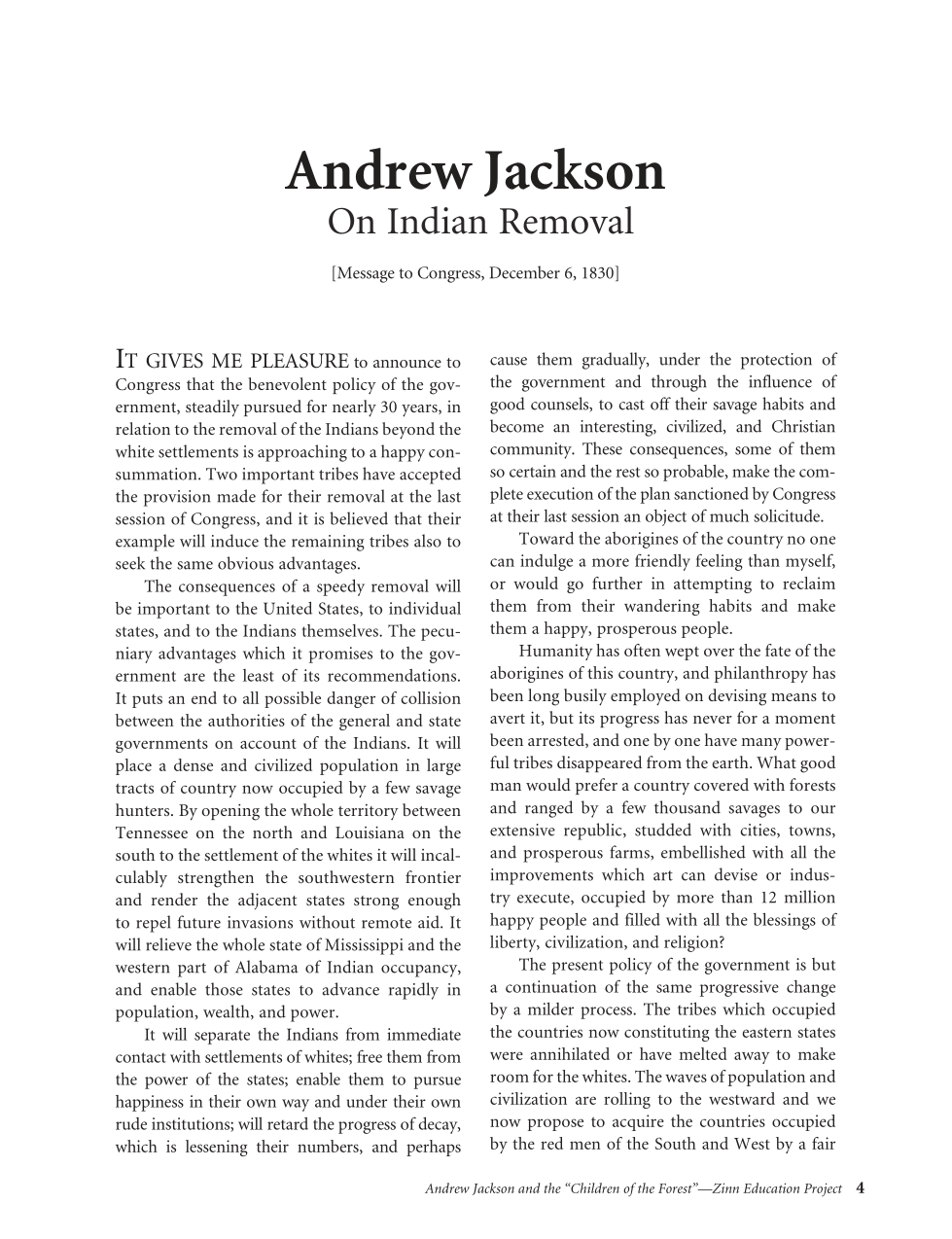
Applying Knowledge: What specific words or phrases do you believe was true in Jackson’s speech? What don’t you believe? Explain why.
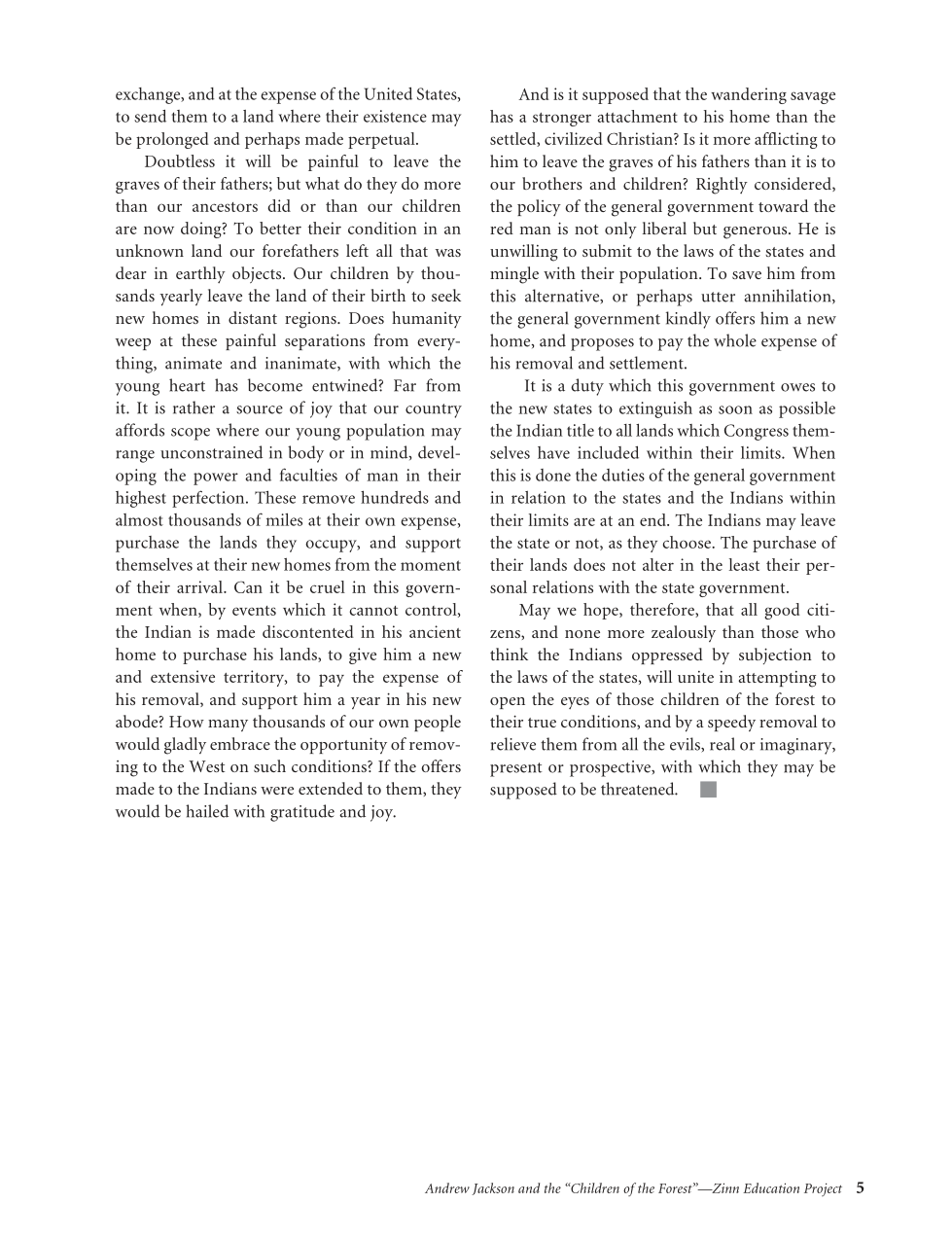
Jackson calls the eastern Indians “children of the forest.” What does this description imply about the relationship between whites and Indians?
Monday, 11/21/2021 Exit Ticket: Which perspective do you plan on writing your 1-2 page Op-Ed* critique of President Jackson’s “On Indian Removal Speech” from?
*An Op-Ed is a piece of writing that expresses a personal opinion of someone who is not the newspaper editor; the name is because it is usually printed in a newspaper opposite the page on which the editorial is printed.
Exit Ticket: Please evaluate how well you understood today’s lesson on a scale from 1 to 4: