Discover Properties of Logarithms
star
star
star
star
star
Last updated about 3 years ago
50 Nsɛmmisa

1
1
1
1
1
1

1
1
1
1
1
1
1
1
1
1
1
1
1
1
1
1
1
1
1
1
1


1
1
1
1
1
1
1
1
1
1
1
1
1
1
1
1
1
1
1
1
1
1
1
What's the pattern?
Select TWO: the correct "math" and "words" that describe the pattern.
Copy your answers on your paper for Pattern #1.
What's the pattern?
Select TWO: the correct "math" and "words" that describe the pattern.
Copy your answers on your paper for Pattern #2.
What is the value of x?
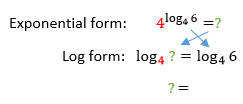
This one is tricky! It's actually in Exponent form right now, so let's change it into Log form so we can figure out the answer:
What is the answer?
Notice a pattern from the previous example so you don't need to write out log form every time.
Same property, but now back to Log form again!
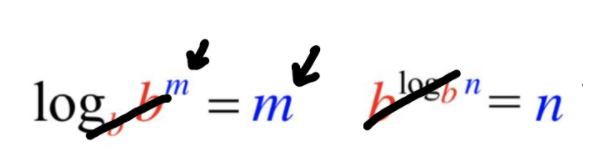
Here's a visual of what's happening in the inverse property:
Use your calculator to evaluate the following. Round all answers to the nearest tenth.
Therefore, we can expand
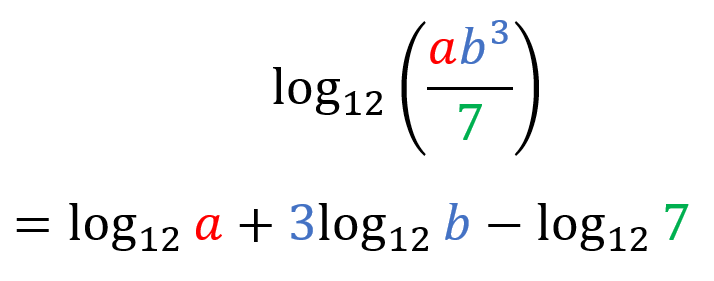
Expand
Expand
Expand
*Hint: Any factors of 15 should work.
Condense into one logarithm.
*Hint: your answer should only have one number inside the log
Expand into 3 separate logs.
Condense into one logarithm.
Condense into a single logarithm and evaluate.
Hint: your answer should be one number.
What is the Product Property?
Select TWO: the correct "math" and correct "words" that describe the property.
Copy your answers on your paper for Product Property.
Use your calculator to evaluate the following. Round all answers to the nearest tenth.
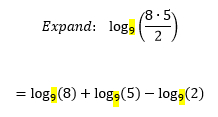
Therefore, we can expand
Expand
Expand
Expand into two logarithms.
Condense into one logarithm.
What is the Quotient Property?
Select TWO: the correct "math" and correct "words" that describe the property.
Copy your answers on your paper for Quotient Property.
Expand into 3 logarithms.
Remember to keep the base 11 on all of the logs in your answer!
Condense into one logarithm.
Condense into one logarithm and evaluate.
Your answer should be one number.
Condense into one logarithm and evaluate.
Your answer should be one number.
Use your calculator to evaluate the following. Round all answers to the nearest tenth.
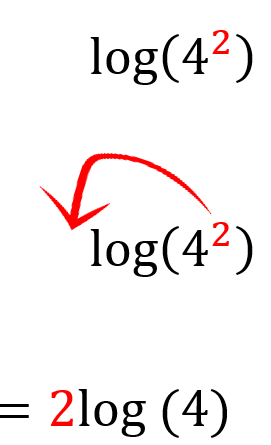
Therefore, when taking the log of a power, we can bring the exponent down infront of the log without changing the value of the logarithm:
Use the power property to expand
Use the power property to expand
Use the power property to expand the logarithm.
Use the power property to expand the logarithm.
Use the power property to condense the logarithm.
What is the Power Property?
Select TWO: the correct "math" and correct "words" that describe the property.
Copy your answers on your paper for Power Property.
Example for "expand"
Expand.
Expand.
Condense into a single logarithm.
Condense into a single logarithm and evaluate.
*Your answer should be one number.
Condense into a single logarithm and evaluate.
*Your answer should be one number.
Condense into a single logarithm and evaluate.
*Your answer should be one number.
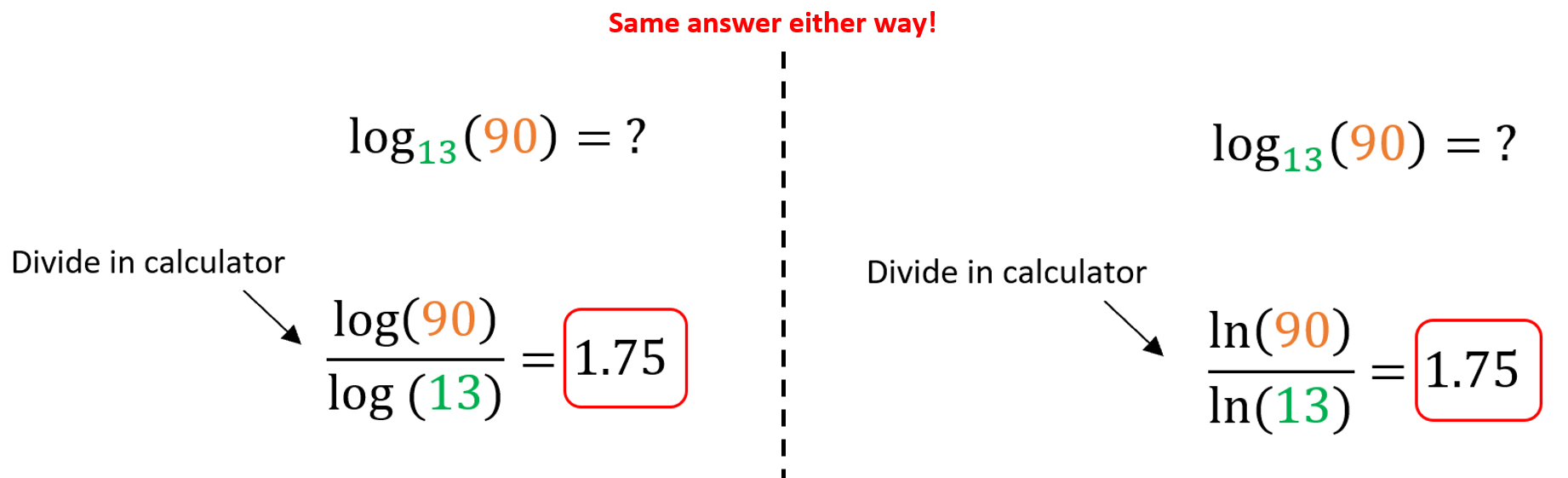
Use your calculator to evaluate the following. Round all answers to the nearest tenth.
Therefore, when evaluating a log, we can divide the log of the inside number by the log of the base without changing the value of the logarithm. This will work for any base, but it makes sense for us to use
Use the change of base formula to evaluate in the calculator:
What is the Change of Base Formula?
Copy your answer on your paper for Change of Base Formula.
What is the Inverse Property?
Select THREE: two correct "math" examples and one "words" example that describe the property.
Copy your answers on your paper for Inverse Property.