7th Math 5.8
star
star
star
star
star
Last updated over 3 years ago
9 Nsɛmmisa
Partner Work
1
1
Independent Practice

1
1
1
1
1
1

ET

4
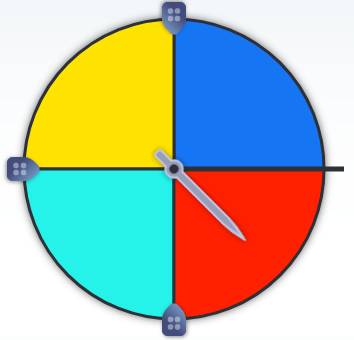
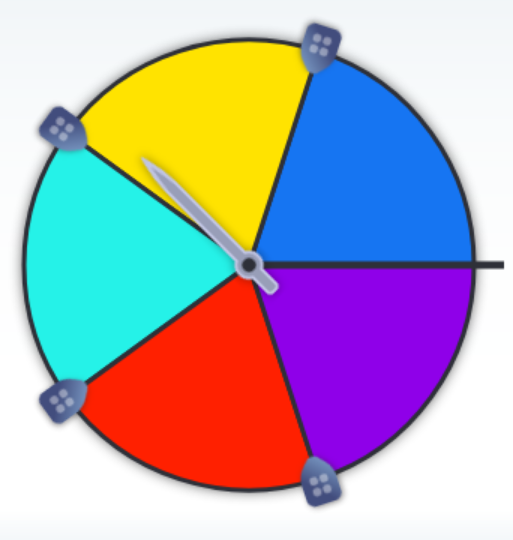
Spinner Winners--Use the image of the spinner to answer the following questions. You and your partner can collaborate, but you should have different answers.
a) What is the theoretical probability of landing on red?
b) If you spun the spinner 12 times, how many times would you expect it to land on red? Why? (give a fraction or percent and type your answer in the box to be auto-graded)
c) We will try spinning 12 times together as a class. Were we close to the theoretical probability? How could we get even closer to the theoretical probability?
CFS:
#1: Accurately calculates experimental probability: Number of occurrences / Total observations
#2: Cites mathematical evidence
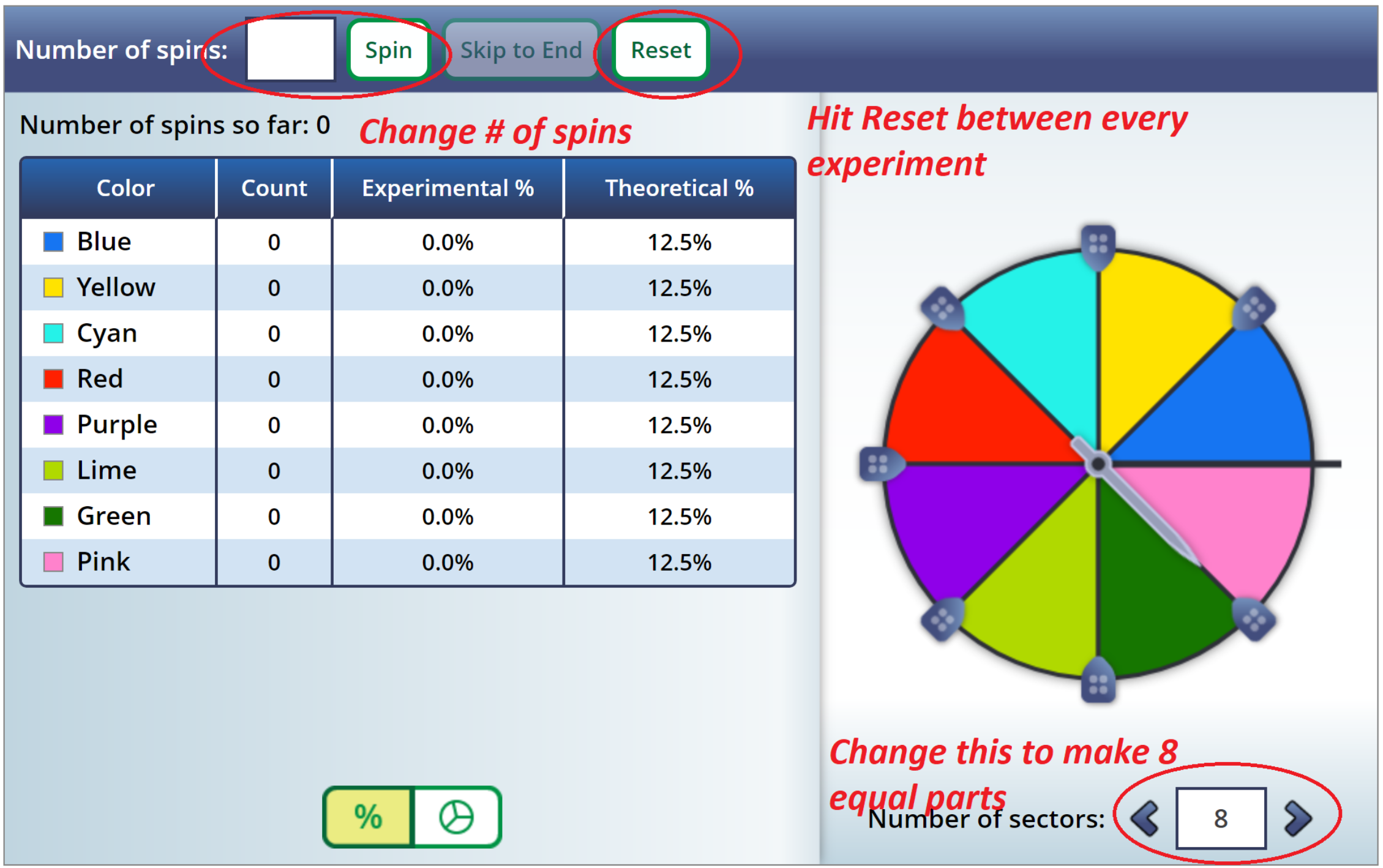
Bigger Spinner--Create a spinner with 8 sectors by going to this link. Set it up to look like the picture below:
Answer question a) in the box to be auto-graded.
Answer the rest in the SYW section and be ready to share with the class.
a) What is the theoretical probability of landing on red? (give a fraction or percent and type your answer in the box to be auto-graded)
Answer for a): "The theoretical probability of landing on red is..."
CFS:
#1: Accurately calculates experimental probability: Number of occurrences / Total observations
#2: Cites mathematical evidence
New Spinner--You are suspicious about the spinner used at a carnival game and want to see if it is “fair”.
a) Complete the table in the SYW section to calculate the relative frequencies (the experimental probability) of landing on "3"
b) Do you think the spinner is fair? Explain why or why not using evidence from your table. You can type your answer in the box to be graded manually.
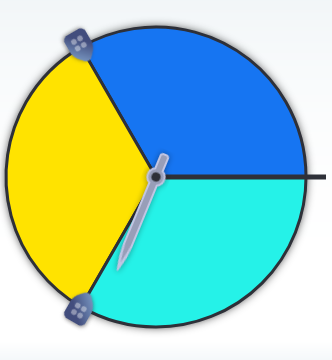
Unfair?--Derek uses the spinner simulation 24 times. How many times should he expect the spinner to land on yellow? Why?
"Derek should expect the spinner to land on yellow..."
CFS:
#1: Accurately calculates theoretical probability
#2: Cites mathematical evidence
H/T--Your partner has already run an experiment with 30 tosses of a quarter.
a) Use the table in the SYW section to calculate the relative frequencies of heads after each number of tosses.
b) Do you think the quarter is fair? Explain why or why not using evidence from your table. You can type your answer in the box to be graded manually.
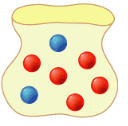
Guessing Game--Mr. Espinoza is doing some probability experiments with the bag of marbles pictured.
a) What is the theoretical probability that he randomly pulls a blue marble?
"The theoretical probability that he pulls a blue marble is..."
CFS:
#1: Accurately calculates theoretical probability
Mr. Espinoza is doing some probability experiments with the same bag of marbles.
b) Mr. Espinoza wants to do a chance experiment where he will randomly choose one marble, record its color, then put it back. He does this experiment 10 times and only picks one blue marble.
What is his experimental probability of choosing a blue marble?
"Mr. Espinoza's experimental probability of choosing blue was..."
c) Why is Mr. Espinoza's experimental probability different from his theoretical probability? What could Mr. Espinoza change about his experiment to get them to be closer?
"This might have happened because..."
"Mr. Espinoza can change..."
Sims--Mr. Hwung was bored after school so he decided to work on a probability simulation with 5 equal areas. He spun it 25 times and recorded 2 reds. Answer all three parts.
a) What was his experimental probability for landing on red?
b) What is the theoretical probability of landing on red?
c) How could Mr. Hwung run his experiment so that his experimental probability gets closer to the theoretical probability?
CFS:
#1: Accurately calculates theoretical probability
#2: Accurately calculates experimental probability: Number of occurrences / Total observations
#3: Cites mathematical evidence