Below is a selection of types of questions you could see on the LEAP 2025 test for Algebra I. Be sure to read the directions for each set of questions and the tips/hints provided to get you through.
This unit focuses on everything functions.
In order to understand what are functions, there are some definitions we need to know.
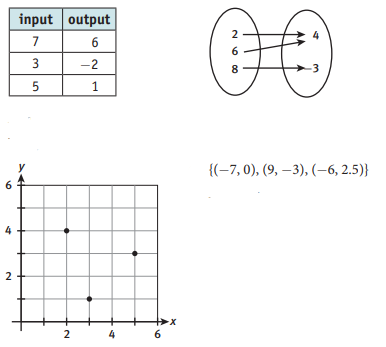
A function is a relation in which each input has exactly one output.
An input is the value that is applied to the function. It is also the independent values or x's.
An output is the result of evaluating a function with an input. It is also the dependent values or y's.
A relation is a set of ordered pairs.
An ordered pair shows the relationship between two elements, usually an input and output. Written as (x,y) or (input,output).
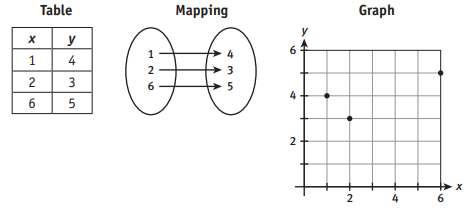
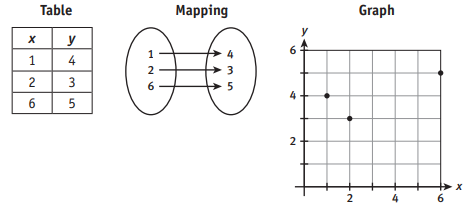
On the left side are three relations that represent what a function is.
Here are a few more examples of functions.
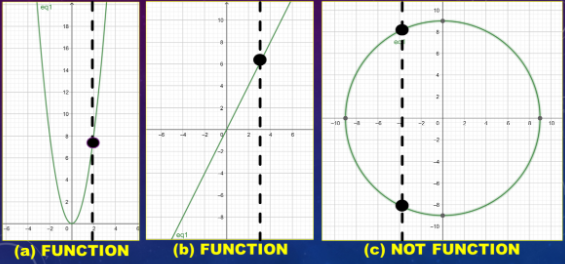
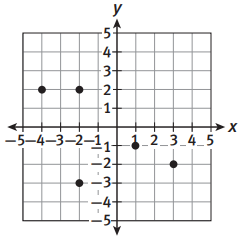
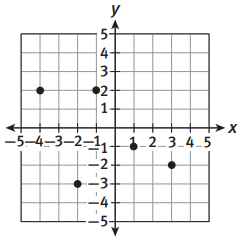
For graphs, a tool we use to determine if it is or isn't a function is the vertical line test. For a function, every vertical line drawn in the coordinate plane will intersect the graph in at most one point. If it ever crosses the graph twice, it is not a function.
Below are three examples.
1 point
1
Question 1
1.
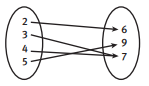
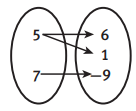
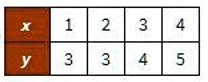
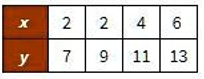
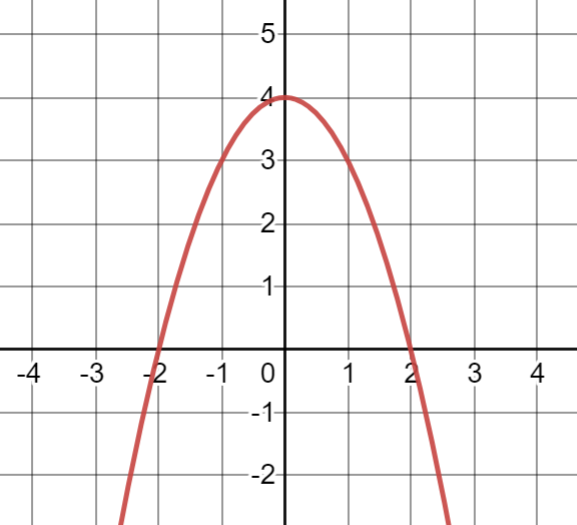
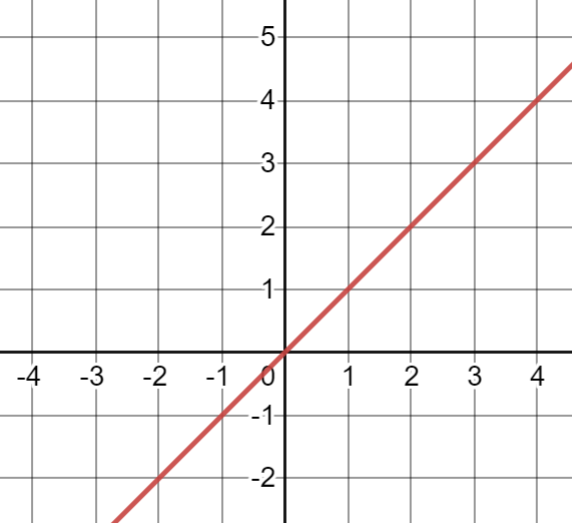
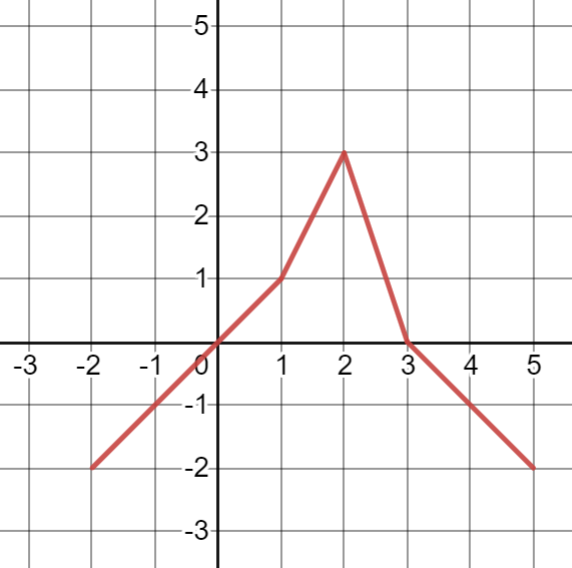
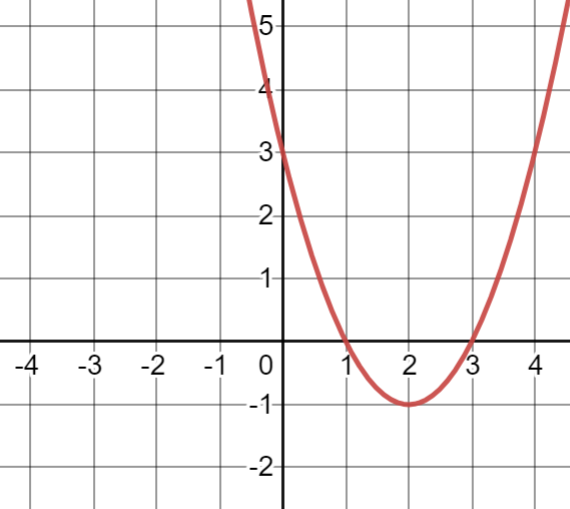
Determine if each of the following are a function or not a function. 4 will go in each category.
Function
Not a function
DOMAIN AND RANGE
Next up is determing the domain and range of a function.
The domain is the set of all inputs or x-values.
The range is the set of all outputs or y-values.
On the left side are the same function represented with three methods. If I were to write the domain or range, I would simply list the values.
1 point
1
Question 2
2.
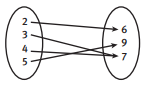
What is the domain of the mapping on the left?
1 point
1
Question 3
3.
What is the range of the mapping on the left?
FEATURES OF GRAPHS
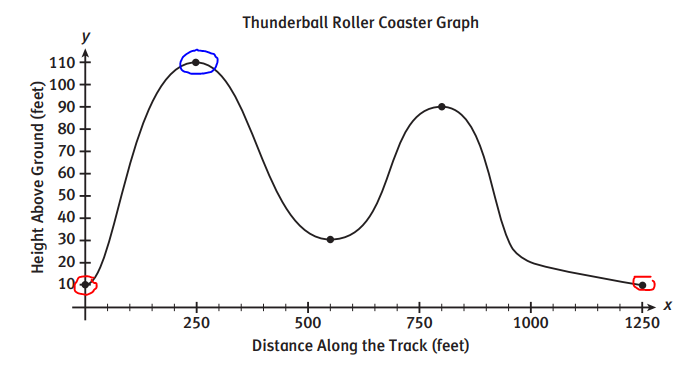
Key features of graphs are important. Those pieces can tell us information on the story behind the graph. On the left, we have a roller coaster traveling along a track. It measures the distance along the track and the height above the ground.
A minimum value is the least y-value of the information. In the case of this graph, it is the two points circled red meaning this graph has a minimum y-value of 10.
A maximum value is the greatest y-value of the information. In the case of this graph, it is the point circled in blue meaning this graph has a maximum y-value of 110.
Since this graph has continuous data (all points are connected with no breaks inbetween) we have to indicate the domain and range differently.
For the domain, or x-values, we see that the graph starts with an x-value of 0 on the left side. The graph continues to the right until the final point with an x-value of 1250. To represent all these values, we use a set.
This shows that the graph has any value of x from 0 to 1250.
For the range, or y-values, we see that the graph has a minimum value of 10 and the graph has a maximum value of 110. To represent all these values, we use a set.
This shows that the graph has any value of y from 1 to 110.
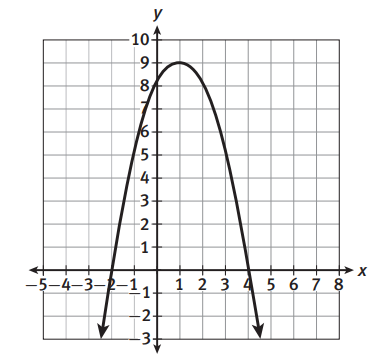
Here is another example.
Since there is an arrow that points down and to the left on one side and down and to the right on the other, our domain and range will be a little different. Remember that some graphs may not have the arrows and if the graph continues to the edge of the window shown, it can be assumed that the graph continues as if there were an arrow.
If you change the window of the coordinate plane, you will see the graph will always continue to the left and right giving us every possible real value for x.
The heighest value for y in the graph is 9. Since the graph has arrows indicating that it continues downward toward infinity, we can simply use the inequality given to indicate it is any value that is 9 or smaller.
1 point
1
Question 4
4.
Determine the range of each graph.
FUNCTION NOTATION
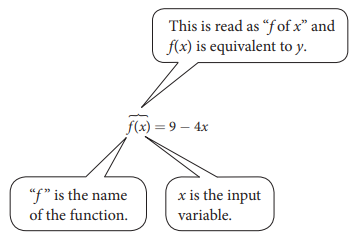
This is function notation. It is a way to write functions that is easy to understand and read.
Often, we are asked to evaluate functions or graph them. When evaluating a function, we are given an input value to substitute x with or whatever the indicated variable is. Make it a habit that when you substitute a value in an equation or function, ALWAYS use parentheses. If you don't, there is a chance the output you get is not correct.
The work shown below is how you would evaluate the function on the left when x = -10
With an input of -10, we get an output of 49. I could write this as an ordered pair as well (-10, 49).
There are also situations where I could ask you to find the input value when given the output.
Find the value of x when f(x) = 1. In these cases, you will replace f(x) with 1 and solve that equation for x.
I could either solve this by hand or using Desmos and I will find that I have an input value of 2 or x = 2.
3 points
3
Question 5
5.
Answer the following questions. Place the value asked.
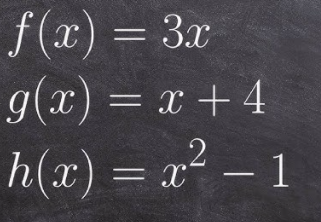
f(-2)=_______
h(3)=_______
g(-1)=_______
h(-7)=_______
g(10)=_______
f(-3)=_______
f(_______) = 15
g(_______)= 10
g(_______)= -3
TRANSFORMATION OF FUNCTIONS
A change in the position, shape, or size of a graph is called a transformation. The types of transformations we focus on is either a vertical or horizontal translation or a reflection across the x-axis.
In order to understand these transformations, we need to know the general shape of the basic function of each category called the parent function. Examples are shown below including their function.
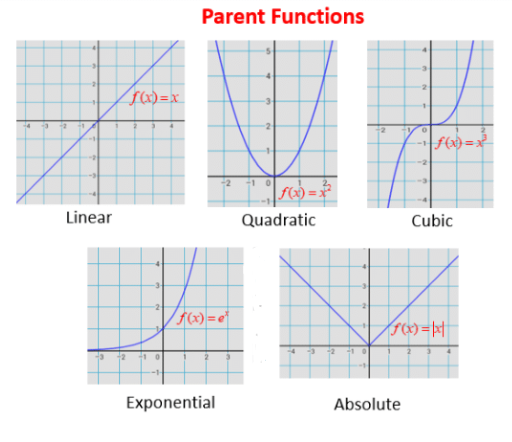
When doing transformations, we use the following for each section to represent those changes.
Linear
Exponential
Cubic
Absolute Value
Exponential
If you notice, all of these have the same three parts in common; a, h, and k.
The a tells us one of two things. If it is positive, it's the same general shape as the parent. If it is negative however, it will reflect across the x-axis. If writing a function and it does not reflect, you don't have to put any value for a.
The h value tells us the horizontal shift. If h is positive, the graph shifts to the left. If h is negative, the graph shifts to the right. A tip I use to remember this is if it is inside "parentheses", move opposite.
The k value tells us the vertical shift. If k is positive, the graph shifts up. If k is negative, the graph shifts down.
1 point
1
Question 6
6.
Write a quadratic function that translates to the right 3 and down 5.
f(x) = ( x _______)^2_______
1 point
1
Question 7
7.
Write an absolute value function that translates to the left 2 and down 6.
f(x) = |x_______ |_______
1 point
1
Question 8
8.
Write a quadratic function that translates to the right 4 and up 2.
1 point
1
Question 9
9.
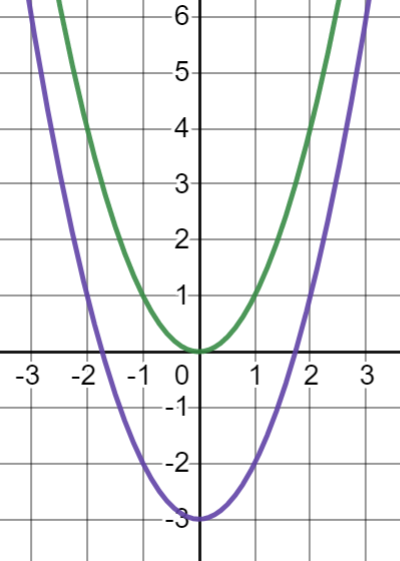
What type of transformation occured and by how much for the graph below?
1 point
1
Question 10
10.
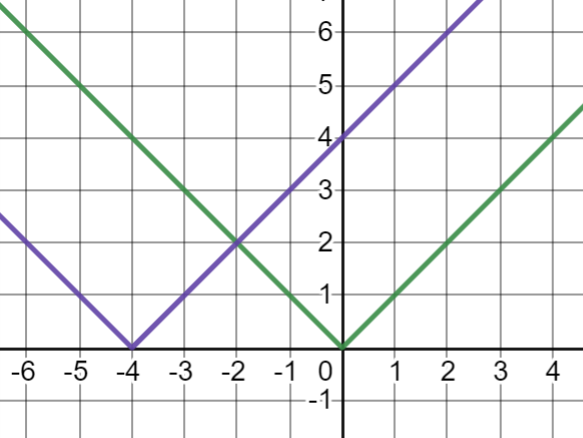
What type of transformation occured and by how much for the graph below?
1 point
1
Question 11
11.
What type of transformation occured and by how much for the function below?
1 point
1
Question 12
12.
Select all the transformations in the function below.