Ɛhia
1
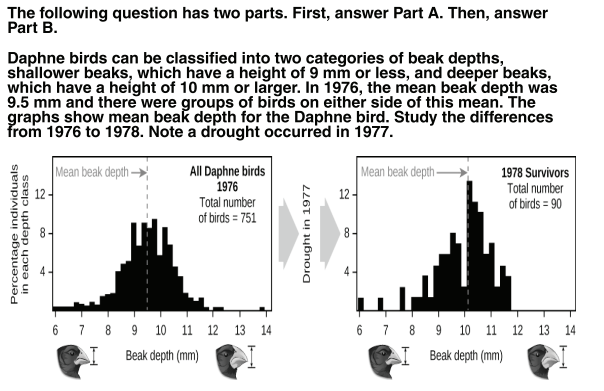
If the drought continued, what is a reasonable expectation for the distribution of beak depths in the bird species?
If the drought continued, what is a reasonable expectation for the distribution of beak depths in the bird species?
Ɛhia
1
If the drought continued, what is a reasonable expectation for the distribution of beak depths in the bird species?
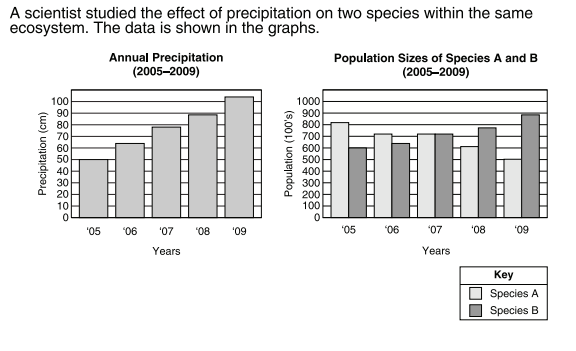
Which claim is best supported by the data?
If the precipitation levels observed in year ‘09 remain the same and other resources remain constant, identify and describe what can be predicted to occur with the population of Species B over the next 6 years.
What evidence supports common ancestry between two species? Select all that apply.
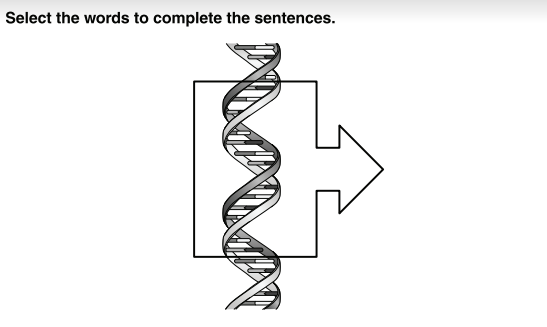
The region of DNA indicated in the diagram is called a. I tcontains instructions that code for.
The black-tailed jackrabbit lives in the desert. These rabbits maintain their body temperature by releasing heat through their long ears. If global temperatures continue to rise, what change would be expected in this rabbit species over time?
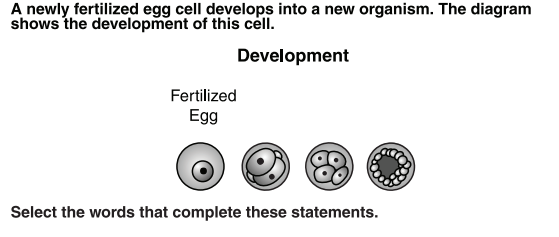
is a process by which cells begin to change and become specific types of cells. A group of similar cells working together to perform a specific function is a(n) .
Human body temperature is 98.6oF and must be maintained for proper function of human body systems. Thermal homeostasis is the ability of an organism to maintain its stable internal body temperature. When it is cold, one way the human body maintains normal temperature is to constrict blood vessels to conserve heat and to prevent sweat glands from secreting fluid. Other mammals maintain body temperature in cold climates in different ways. Otters maintain body temperature by trapping air pockets in their thick fur which insulates them from the cold. Harbor seals retain their heat with a thick layer of fat under the skin which insulates them from the cold. During an oil spill in a cold climate, sea otters have been found to be less likely to survive than harbor seals.
Which best explains why sea otters are less likely than harbor seals to maintain homeostasis after an oil spill?
The column on the left contains responses of the body. The column on the right lists systems of the body. Match the response to the corresponding body system. Options may be used more than once.
| Draggable item | arrow_right_alt | Corresponding Item |
|---|---|---|
Brain recognizes temperature drop | arrow_right_alt | Muscular System |
Body begins to shiver | arrow_right_alt | Circulatory System |
Blood Vessels constrict | arrow_right_alt | Endocrine System |
Sweat glands produce less fluid | arrow_right_alt | Nervous System |
Which statement correctly describes macromolecules?
A student examined an unknown molecule that contained carbon, hydrogen, oxygen, and nitrogen. No additional elements were found in the molecule.
Which type of molecule was examined?
Two different fish species, the Arctic cod and Antarctic toothfish, are separated by great distance. Although they are not genetically related, both produce a similar protein that prevents them from freezing in cold waters. What is the best explanation for the similarities between these two fish?
A variety of evidence suggests common ancestry of living things. Which pieces of evidence support common ancestry? Select all that apply
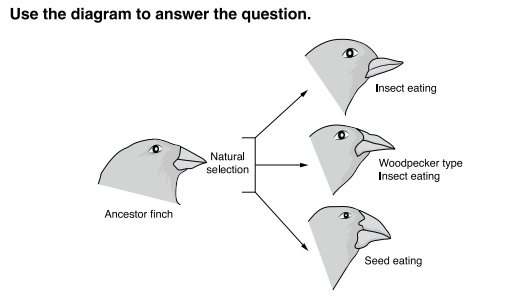
What contributed to the natural selection of the finches’ beaks? Select all that apply.
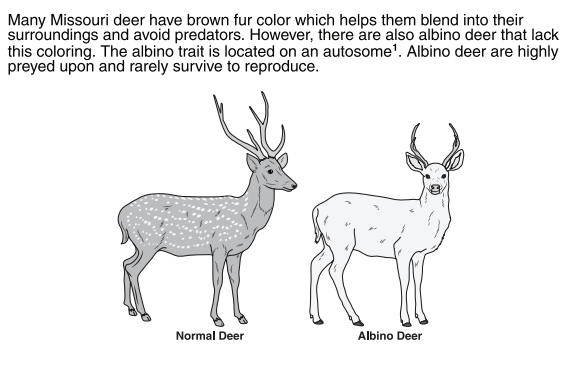
The first albino deer born in a population was most likely due to
If the albino female continues to produce offspring with the homozygous, normal male, the genotype of the offsrping produced will be and their phenotype would be . This type of inheritance pattern is known as .
Asian carp, an invasive species, were introduced accidentally into Missouri aquatic ecosystems. Both the Asian carp and the native paddlefish are plankton feeders. After the introduction of Asian carp, the paddlefish populations immediately began to decline. Based on the information provided, why is the native paddlefish population declining? Select all that apply.
There are two variations of a species of peppered moth. One is a very light gray and the other is black. All of the moths live on trees with white bark. What is most likely to lead to more black moths and fewer gray moths?
In the 1800’s, wolves were top predators in Yellowstone National Park. As humans moved westward, wolf populations were negatively impacted. Human expansion decreased their available prey. Human agricultural practices introduced livestock, which were easy prey for wolves. Humans protected their livestock and intentionally eliminated the wolves. By the mid-1900’s, no wolf packs lived in Yellowstone National Park. This left the park with few top predators. As a result, elk overgrazed young willow and cottonwood trees that stabilized riverbanks. This caused increased erosion, which filled rivers with silt. Fish populations declined as a result of the additional silt in the rivers and populations of animals that depended upon fish also declined. With a drop in cottonwood and willow trees, songbird and beaver populations lost potential habitat and materials needed to construct habitat. Fewer beaver dams resulted in fewer small, still ponds which fish use to reproduce and grow to adulthood. In 1995, wolves were reintroduced to Yellowstone National Park.
Why were wolves reintroduced to Yellowstone National Park? In addition, provide two pieces of evidence that would show the wolf reintroduction successfully improved overall ecosystem health within Yellowstone National Park.
Some cells contain two copies of each chromosome, and some cells contain only one copy of each chromosome. Which types of cells contain two copies of each chromosome?
Select all that apply.
As a zygote divides to form new cells, groups of cells specialize to carry out functions that are essential to the organism. What causes cells to differentiate into specialized cells?
Which human activity would decrease the biodiversity of a wetland ?
wetland: an area of land saturated by water, similar to a swamp or marsh
Recessive disorders can be passed onto offspring even if neither parent exhibits the trait. Which explanation below would best explain how this is possible?
Which explanation describes the predicted pattern of beak change due to continued drought?
A student walks to school in the morning when the outside temperature is 60oF. When the same student walks home after school, the outside temperature has dropped to 35oF. In this situation, how is thermal homeostasis maintained?