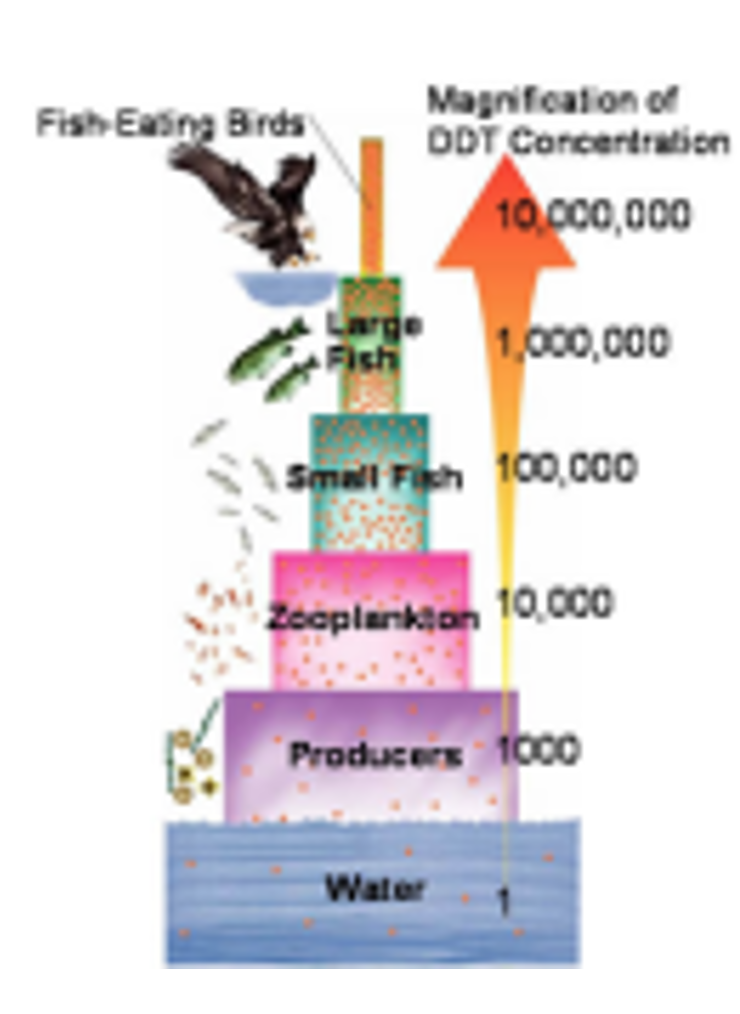
Diagram
In this diagram you will see the concentration of a chemical substance as you move up trophic levels on a food pyramid.This process is also known as biomagnification.
A chemical company produced a genetically engineered potato called the New Leaf Superior. This plant produces a chemical that repels insects which might eat the plant. If there was no testing of the potato plant before being released to the public, which impact should individuals buying the product be most concerned about?
One of Hawaii’s most important fruit crops are papayas. In the 1960’s a virus called the Papaya Ringspot Virus (PRSV) destroyed all the crops on the island of Oahu and crops had to be moved to the "Big Island" of Hawaii. Thirty years later the virus was discovered in the new fields. In 1998 a genetically modified papaya was introduced that was resistant to the virus. Which of the following describes an environmental impact of the genetically modified papaya?
Bioremediation is a process that uses living organisms to breakdown pollutants and convert them into less toxic forms. An example of this is when bacteria is used in the ocean to clean up oil spills. How is this biotechnology impacting the environment?
Diagram
In this diagram you will see the concentration of a chemical substance as you move up trophic levels on a food pyramid.This process is also known as biomagnification.
DDT was a pesticide that was heavily used until its harmful health effects were fully discovered. Fish are a food group consumed in many households around the world. How is the biomagnification of DDT a concern in relation to individual health?
Algal blooms are an overgrowth of microscopic algae or algae-like bacteria. They grow out of control and produce toxins that sicken or kill people and animals. In recent years, Florida has seen an increase in algal blooms throughout the state. If the trends of this algae continue how might public health be impacted in the coastal regions of the state?
Electric and hybrid vehicles have increased in recent years. Both types of vehicles require little or no gas and allow consumers to go longer distances without refueling. How has the increase in this technology impacted environmental quality?
Plastics can take thousands of years to naturally break down in the environment. Scientists have discovered an enzyme (a special type of protein) that naturally breaks down plastic. If scientists were to genetically modify a bacteria to make this enzyme what impact would the enzyme most likely have on the environment?
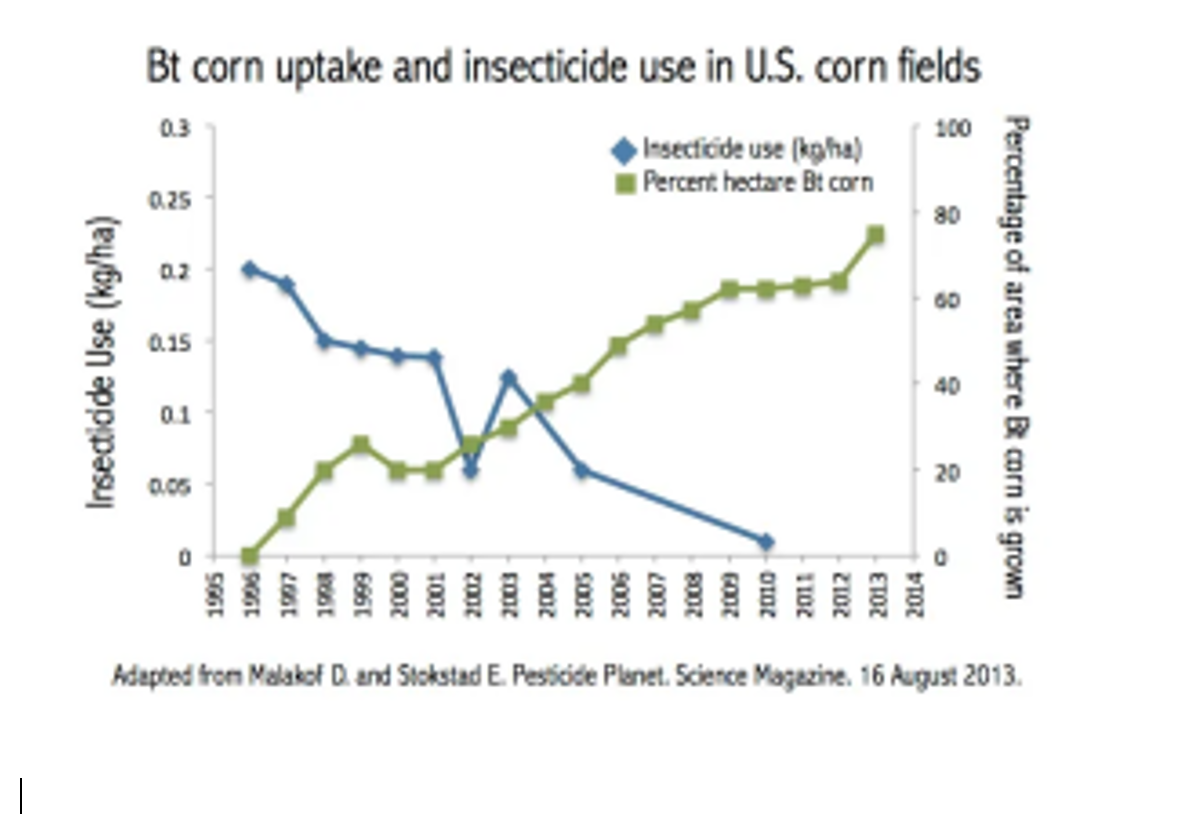
Bt corn is a corn that has been genetically engineered to produce a chemical naturally produced by soil bacteria. This chemical kills some insects that try and feed on them. Based on the graph, what impact can Bt corn have on the amount of pesticides used in the environment based on the graph?
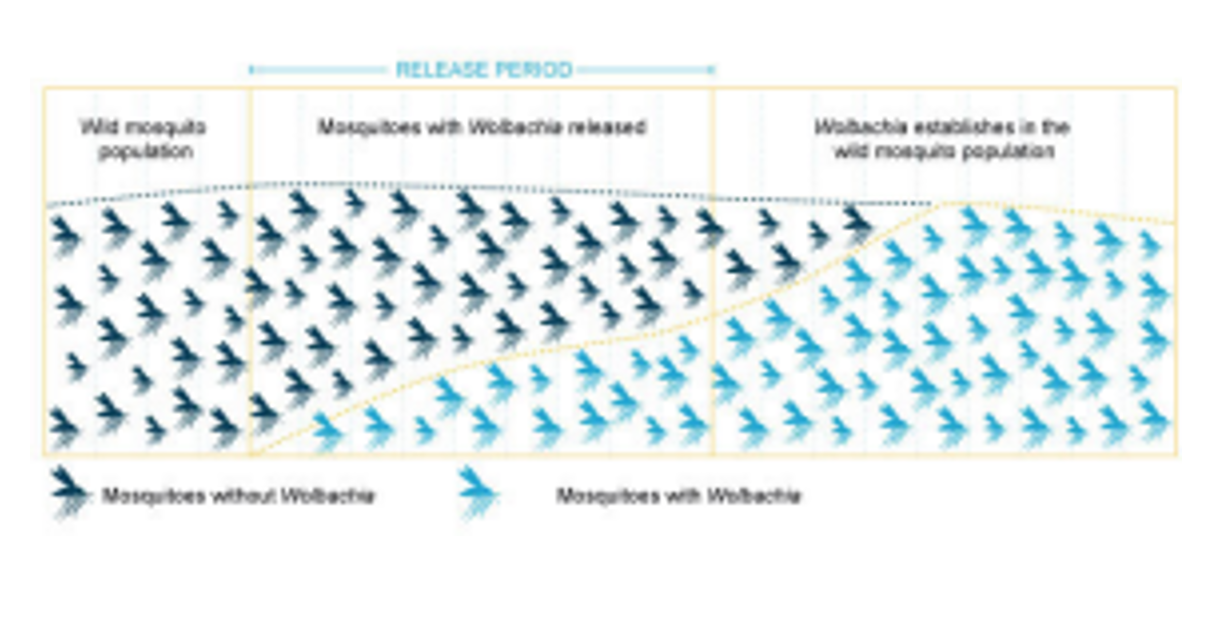
Mosquitos are the greatest killers of humans of all time. They kill by passing diseases on to humans. One idea scientists are testing is infecting mosquitoes with a naturally occuring bacteria called wolbachia. This bacteria spreads quickly through a population and once the mosquito is infected the bacteria out-competes the virus or parasite that the mosquito would pass to a human. Wolbachia have no impact on human health. What impact could wolbachia have on human populations over time?