4Havo, vocabulary 3rd term

Last updated over 3 years ago
30 questions
Note from the author:
Voor Tom!
1

I don’t have much opportunity for ……… pursuits these days.

1

Argentina gained …...... from Spain in 1816.

1

The actor wants to …...... himself as an independent movie mogul.

1

The mountains acted as a natural …...... to the spread of the disease.

1

It’s a totalitarian regime that reduces and …...... its population.

Hieronder volgen 10 zinnen waarin het werkwoord ontbreekt. Zet het passende werkwoord in iedere zin in de juiste vervoeging, zodat het een correcte zin wordt. Elk werkwoord wordt 1 keer gebruikt.

to buzz to recite to worship to advance
to divide to conform to define
to incite to restrict to symbolize
1
She _______ the dates and names of kings and queens.
1
The lighting of the Olympic torch _______ peace and friendship.
1
She is the youngest player ever to _______ to the semifinal.
1
I can hear something _______
1
In the dictionary, ‘reality’ is _______ as ‘the state of things as they are.’
1
She wore a uniform because she felt pressured to _______
1
The government took measures to _______ the sale of alcohol.
1
On that island the people _______ different gods.
1
She _______ racial hatred by distributing anti-Semitic leaflets.
1
After the second World War, Germany was _______ into two different countries.
1

Which literary device is used in the following sentence?
The sack fell into the river with a splash.

1

Which literary device is used in the following sentence?
James bond is known for approaching beautiful women with cool passion.

1

Which literary device is used in the following sentence?
The light danced on the surface of the water.

Lees onderstaand gedicht en beantwoord vraag 19.

When my love swears that she is made of truth I do believe her, though I know she lies, That she might think me some untutor’d youth, Unlearned in the world’s false subtleties. Thus vainly thinking that she thinks me young, Although she knows my days are past the best, Simply I credit her false speaking tongue: On both sides thus is simple truth suppress’d. But wherefore says she not she is unjust? And wherefore say not I that I am old? O, love’s best habit is in seeming trust, And age in love loves not to have years told: Therefore I lie with her and she with me, And in our faults by lies we flatter’d be.
1

What kind of poem is this?

Lees onderstaand gedicht en beantwoord vraag 20.

Our novels get longa and longa Their language gets stronga and stronga. There’s much to be said For a life that is led in illiterate places like Bonga.
1

What kind of poem is this?

Lees eerst vraag 21 tot en met 24. Gebruik vervolgens onderstaande tekst om de vragen te beantwoorden.


Can smiling really make you happier?
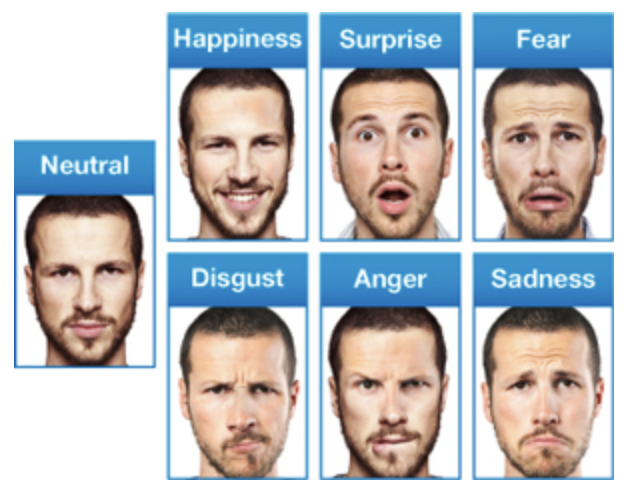
Those of us with a naturally serious expression may be fed up with people telling us, ‘Smile, it might never happen’. However, it does seem that smiling, even when we don’t feel particularly happy, can actually improve our mood.

This isn’t a new idea. In fact, it was back in the 1870s that Charles Darwin first suggested that expressions didn’t just express emotions, but could actually trigger them. Since then there have been a number of studies into the area, all appearing to show that changing our facial expressions can change our mood.

In 1989, for example, the psychologist Robert Zajonc described how those taking part in one of his experiments were asked to make a long ‘e’ sound, which involves smiling, felt better than those asked to make a long ‘u’ sound. Other similar experiments, with similar results, were carried out using pencils gripped between the teeth.

In another experiment, the participants were asked to do one of three things.
- Look at pictures showing different expressions.
- Copy the expressions shown in the pictures.
- Copy the expressions shown in the pictures while looking in a mirror.

They were asked questions before and after the experiment, designed to find out about their emotions. Interestingly, those who saw themselves smile were happier than those who only smiled. Both groups were happier than those who didn’t smile but simply looked at pictures.

The key question is why smiling makes us feel happier. It might simply be because the brain connects smiling with being happy, a kind of learned response. The fact that people who saw themselves smiling felt happier than those who just smiled would support this theory.

However, there may be another explanation. Robert Zajonc’s latest theory is that smiling affects the flow of blood to the brain, and that this has an effect on how we feel. Zajonc explains that when the temperature of any part of the body goes up or down, this changes chemical activities in that part of the body. When the brain is cooler, he says, our emotions are more positive, and when it’s hotter, they are more negative. Smiling causes muscles to reduce blood supply to the brain, and less volume means that the temperature goes down. This has the effect of cooling the brain, and thus makes us feel happier.

On the other hand, when we frown angrily, blood flow to the brain is increased, which raises the temperature and makes us feel more anxious or negative. Fascinatingly, our language reflects this theory. We talk about getting hot under the collar, or that something made our blood boil when we feel angry. If we need someone to calm down, we might tell them to ‘chill out’.

In the end, though, whether Zajonc is right or wrong, there is certainly plenty of evidence that smiling can and does make you feel happier. So ‘give us a smile, love’.
1

What is the main idea in the first paragraph?

1

What did Darwin first suggest back in the 1870s?

1

In one of the experiments people were asked to do one of three things. What is the conclusion of this experiment?

1

Which steps summarize Robert Zajonc's latest theory?

Lees eerst vraag 25 tot en met 30. Gebruik vervolgens onderstaande tekst om de vragen te beantwoorden.

Australia’s first professional Instagrammer, Lauren Bath, shares her secrets for career success

For those who think Instagram is just another superficial social media hype, think again. Instagram could become your next career, if you play your cards right.

Aussie photographer Lauren Bath quit her job as a chef a year ago to pursue a career in photographic marketing on Instagram, and she’s never looked back. Lauren, 33, was a chef in Cairns and the Gold Coast in Queensland for 12 years. But while she loved her career in hospitality, photography was another passion she wanted to explore.

News.com.au caught up with Lauren just as she was hopping on a Topdeck tour bus, camera in hand, to take in the sights of iconic Byron Bay in New South Wales. Lauren shared her journey to becoming Australia’s ‘first full-time Instagrammer’, and gave us some hot tips about how to make an Instagram career for yourself too.

Lauren had already accumulated close to 200,000 followers on Instagram while she was a chef. She now has over 345,000 followers,and travels around the world, posting photos on her Instagram account to a huge market audience and getting paid big bucks to do it.

“I got on to the platform early, in about August 2011,” Lauren said. “At that stage it was still iPhone only. I managed to get a great community going early, and was regularly featured on the popular page. I had already firmly established myself when Facebook bought out Instagram and Android got involved.”

What does a day in your job look like?
If I’m on campaign it looks something like this:
  • Wake up and shoot sunrise
  • Get on computer and edit what I’ve shot, then post to Instagram
  • Tour around and look for new shots
  • Coffee break
  • Location scouting
  • Lunch
  • Edit photos in afternoon
  • I finish each day by shooting sunset
How did you get started?
I quit my job as a chef because I saw potential in Instagram, and wanted to give it a chance. I had enough money saved to have six months off and explore photography. But on the day I quit my job, I checked my inbox and I already had three massive opportunities for paid work. So I started working right away.
Initially I got jobs travelling with journalists and travel writers, and covering the social media for stories. I did a few campaigns with tourism boards. It snowballed from there. I became more confident in what I was doing. I became more savvy with how I would approach people with my services.

How did your passion for Instagram become your career?
I’ve invented this job for myself, and it evolves as you go along. You can create your own rules and it’s fantastic. I see myself as a pioneer. I’m the first person in Australia to do this. I’m the only person doing this full-time.

How do you market your services?
I can provide ‘x’ amount of uploads, high resolution images, marketing analytics and reports and media value. I now use a top-of-the-rangeNikon D-800 to shoot, and upload edited photographs to Instagram. I have a base day rate when I’m out on my own for a client, solo style. I also plan and host my own campaigns and ‘Instameets’, which I charge an agency rate for. Clients receive high quality images after a campaign, which they can use on social media only. If they want to use images for other purposes they can purchase them.

Do you think Instagram has a limited life?
I honestly believe that Instagram will be around to stay. It will wane a bit for sure. But at the moment, I’m completely booked up for work until October. I’m diversifying into public speaking, workshops, consultancy and social media, so when Instagram starts waning I’ll have a back-up.

What’s the best thing about travelling and Instagramming?
Experiencing new destinations, meeting new people, seeing new things. I absolutely love to travel, it’s a dream come true. I love to share my images. Being able to use social media and travel together as a package is incredible. I don’t ever want to give that up.

Which campaign are you on at the moment?
I’m on a 10-day Topdeck campaign. We’re promoting a brand that visits multiple destinations in Queensland, New South Wales and the Northern Territory — we’re trying to reach a younger market to show what a Topdeck tour is like. I’m on a bus travelling around with eight other Instagram photographers from all over the world. Everybody has a completely different eye. It’s a great experience to be able to share with people who have influences all over the world.

LAUREN’S TIPS FOR INSTAGRAMMERS
1. Always put your best work forward.

2. Always edit your photographs — even if it’s just using an iPhone/Android app.

3. Engage with the platform — you have to give back. Reply to follower’s comments. Build relationships with other Instagram users.

4. Constantly grow — always look to improve.

5. Follow a variety of Instagram accounts, not just in your area of interest (e.g. landscapes, food, lifestyle, fitness).
1

Why did Lauren decide to become a professional Instagrammer?

What can be said about Lauren before she became a professional instagrammer? Choose 'True' or 'False'.
1

She had an iPhone.

1

She was on Instagram before the Facebook takeover.

1

She used to live in Byron Bay.

1

What is Lauren's view of her future?

1

At the end of the article Lauren gives a few tips for Instagrammers. Which tips does she give?