1
1
1
1
1
1
1
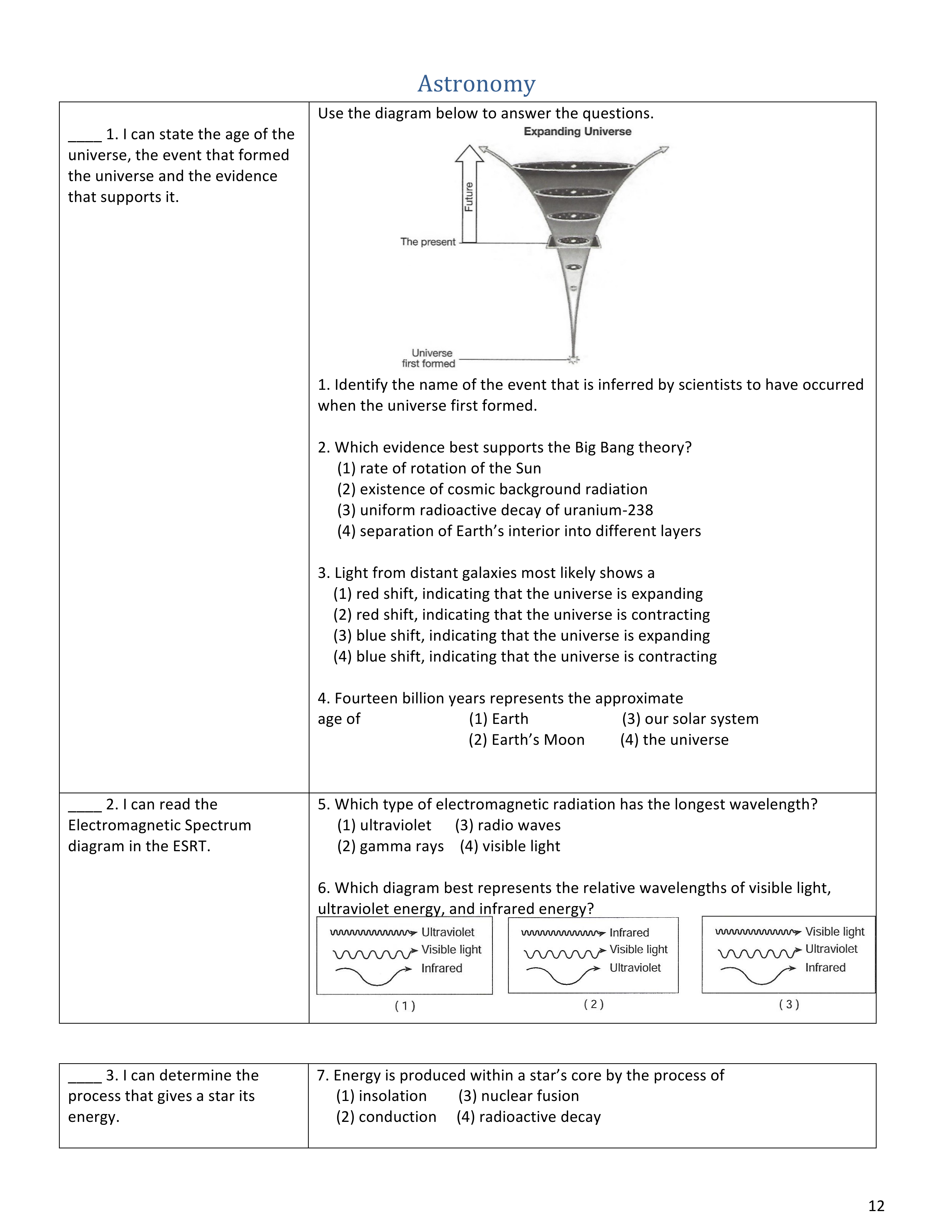
The Big Bang Theory:
The Big Bang Theory is the prevailing scientific explanation for the origin of the . According to this theory, around billion years ago, all matter, energy, space, and time were compressed into an extremely hot and dense state called a singularity. Then, a colossal explosion occurred, leading to the of the universe and the birth of everything we know.
Redshift and Blueshift:
Redshift and blueshift are key concepts related to the motion of celestial objects and the expansion of the universe.
When light from distant objects, such as galaxies or stars, moves away from us, its wavelength becomes , causing a shift towards the end of the electromagnetic spectrum.
Conversely, when objects move closer to us, the light they emit becomes , resulting in a shift towards the end of the spectrum. This phenomenon is called blueshift and indicates that an object is moving towards us.
Cosmic Background Radiation:
Cosmic background radiation is one of the most important pieces of evidence supporting the Big Bang Theory. Shortly after the universe began, it was extremely and dense. As it expanded, the temperature , and photons were released. These photons are now spread throughout the universe and form the cosmic microwave background radiation. It is like a faint echo of the Big Bang, and its discovery in the 1960s provided strong evidence for the theory.
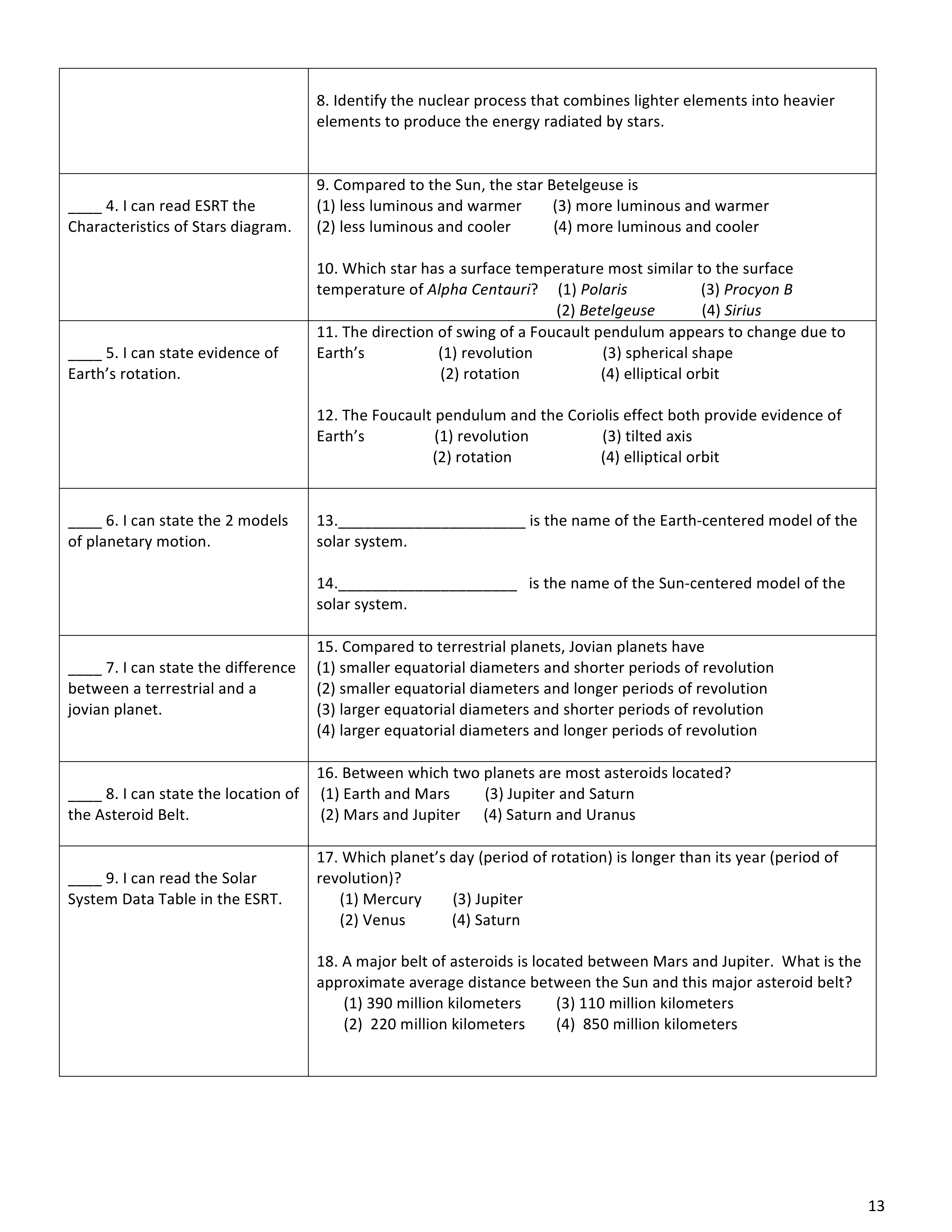
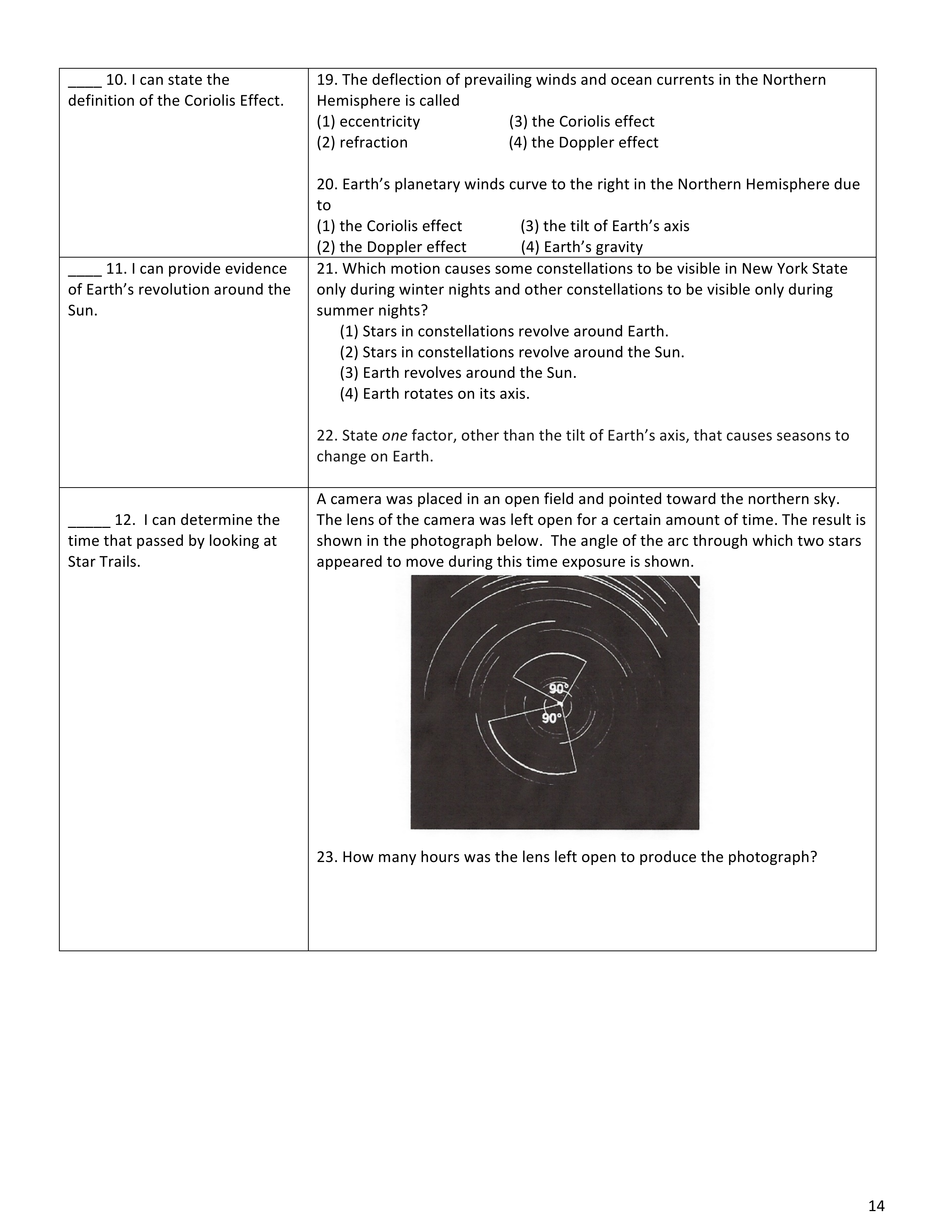
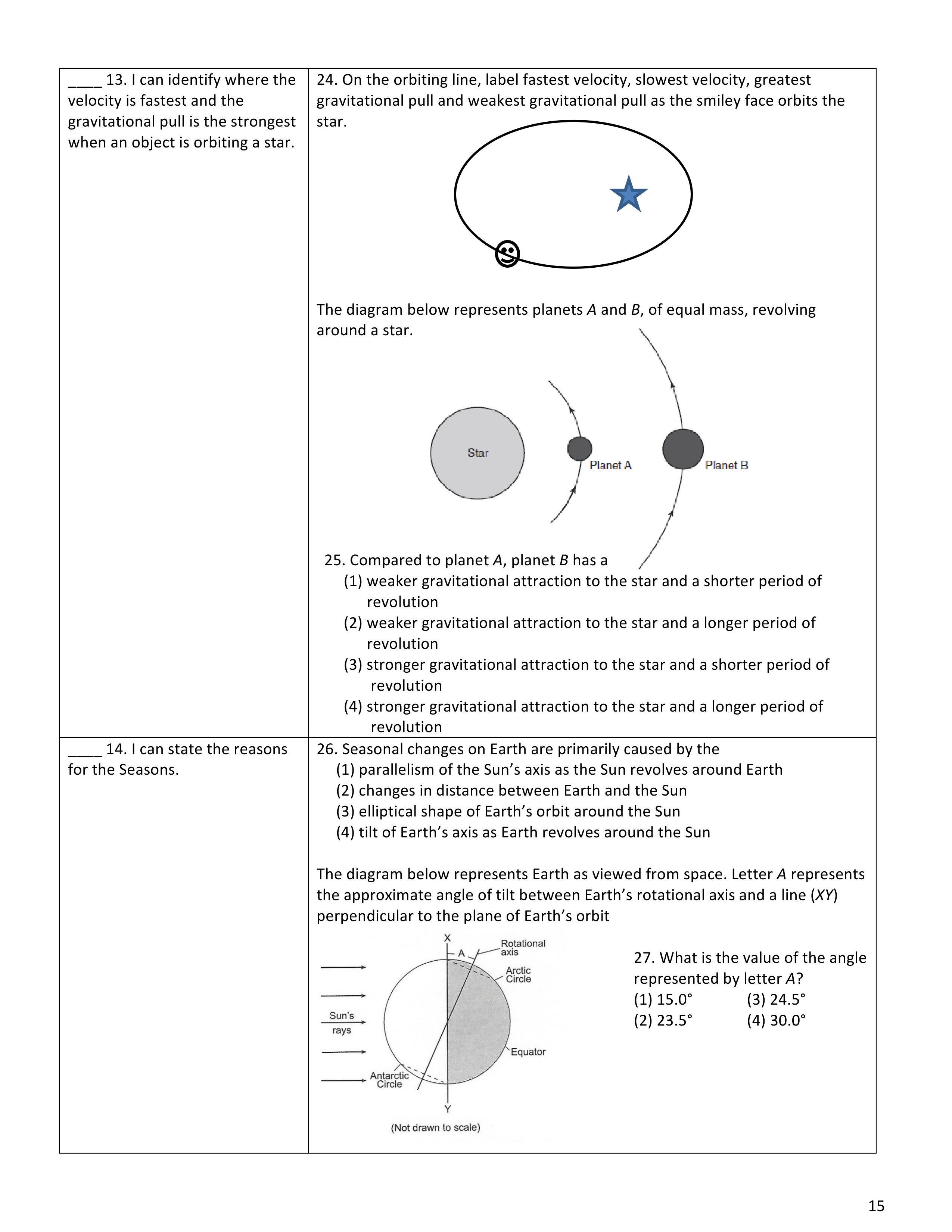
Use the 101 facts if needed or the unit packet!
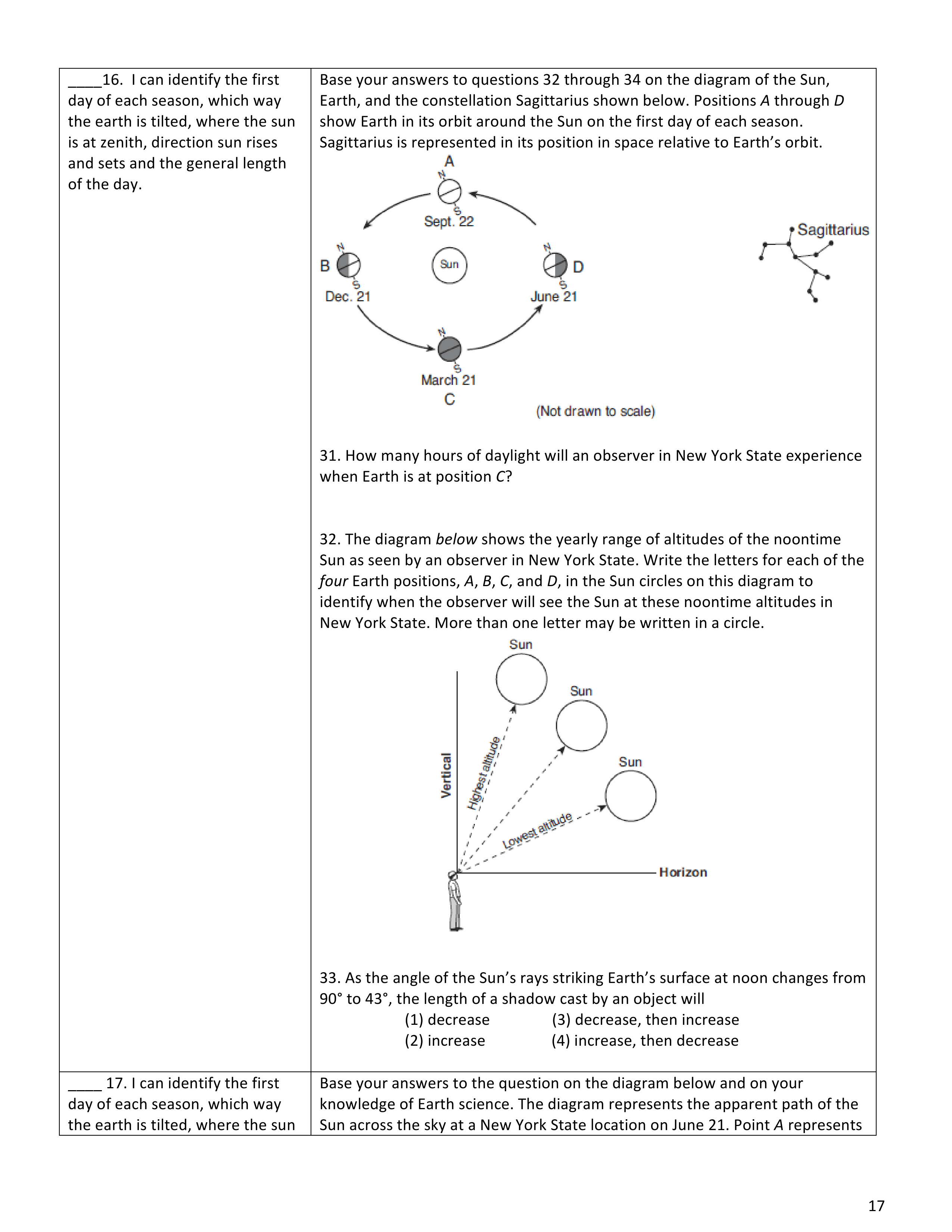
Solar Eclipses
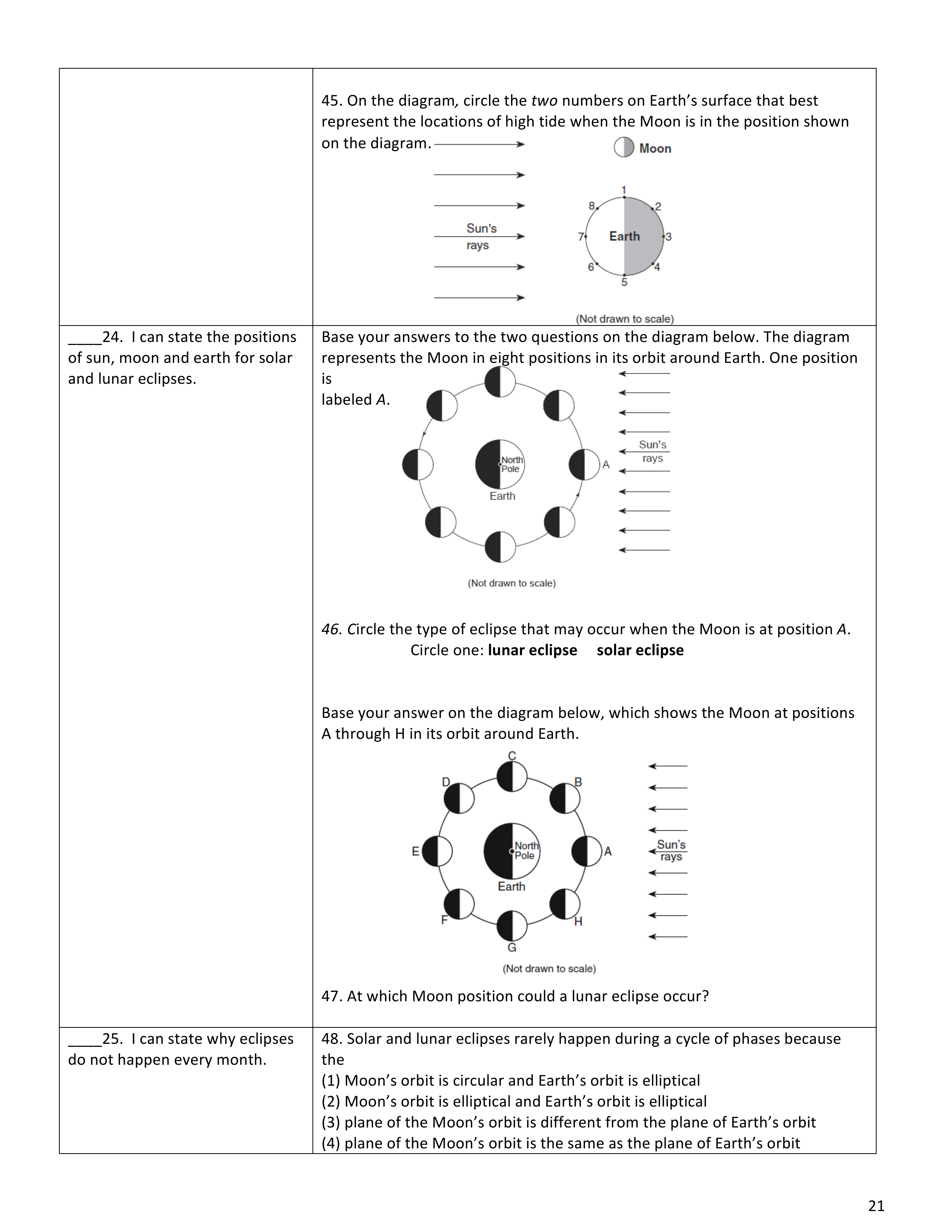
Solar eclipses are incredible events where the , casting a shadow on our planet. Here's what you need to know:
During a solar eclipse, the Moon perfectly with the Sun, blocking its light from reaching certain areas on Earth. This creates a shadow on the Earth's surface, temporarily darkening the sky.
Only a small portion of the Earth will see a solar eclipse because the Moon is very
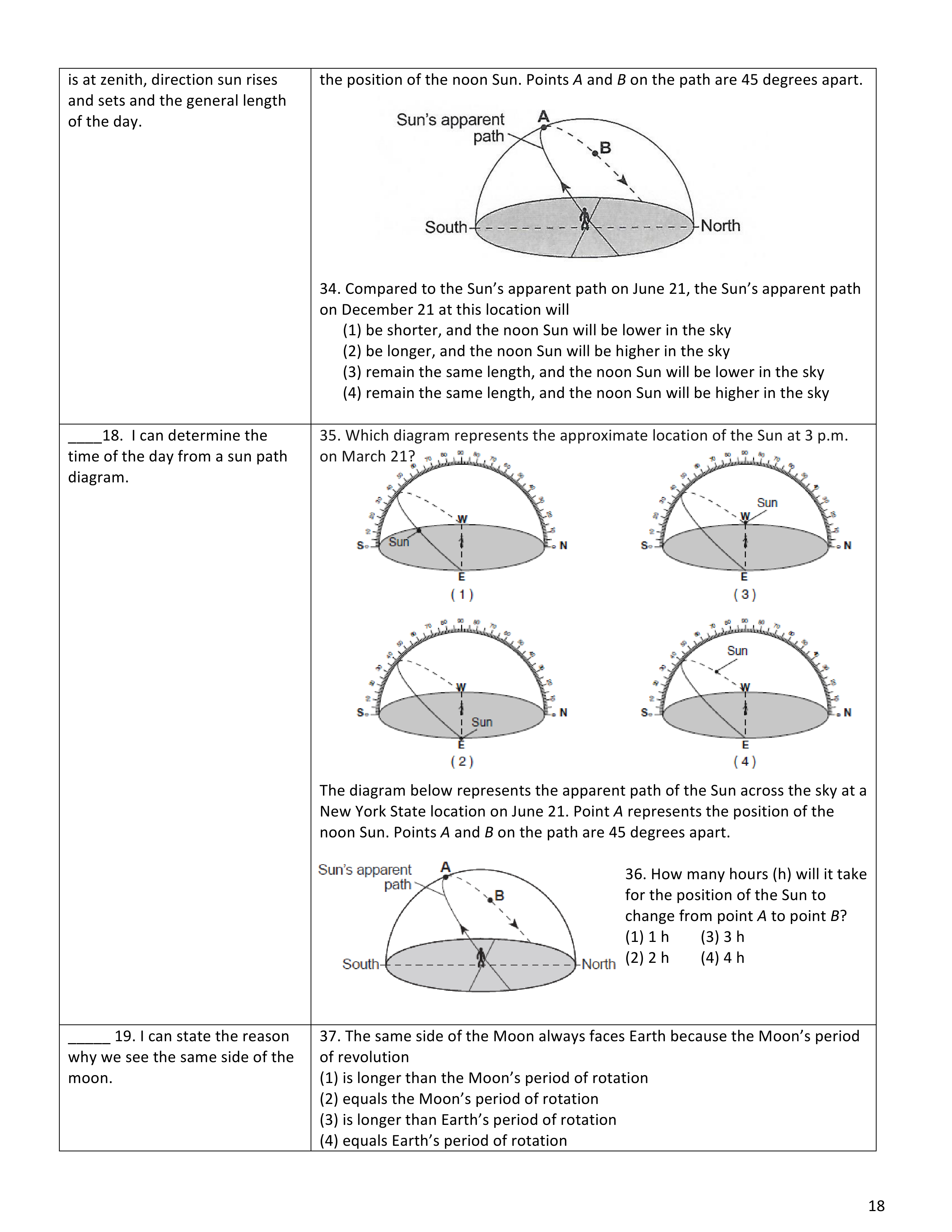
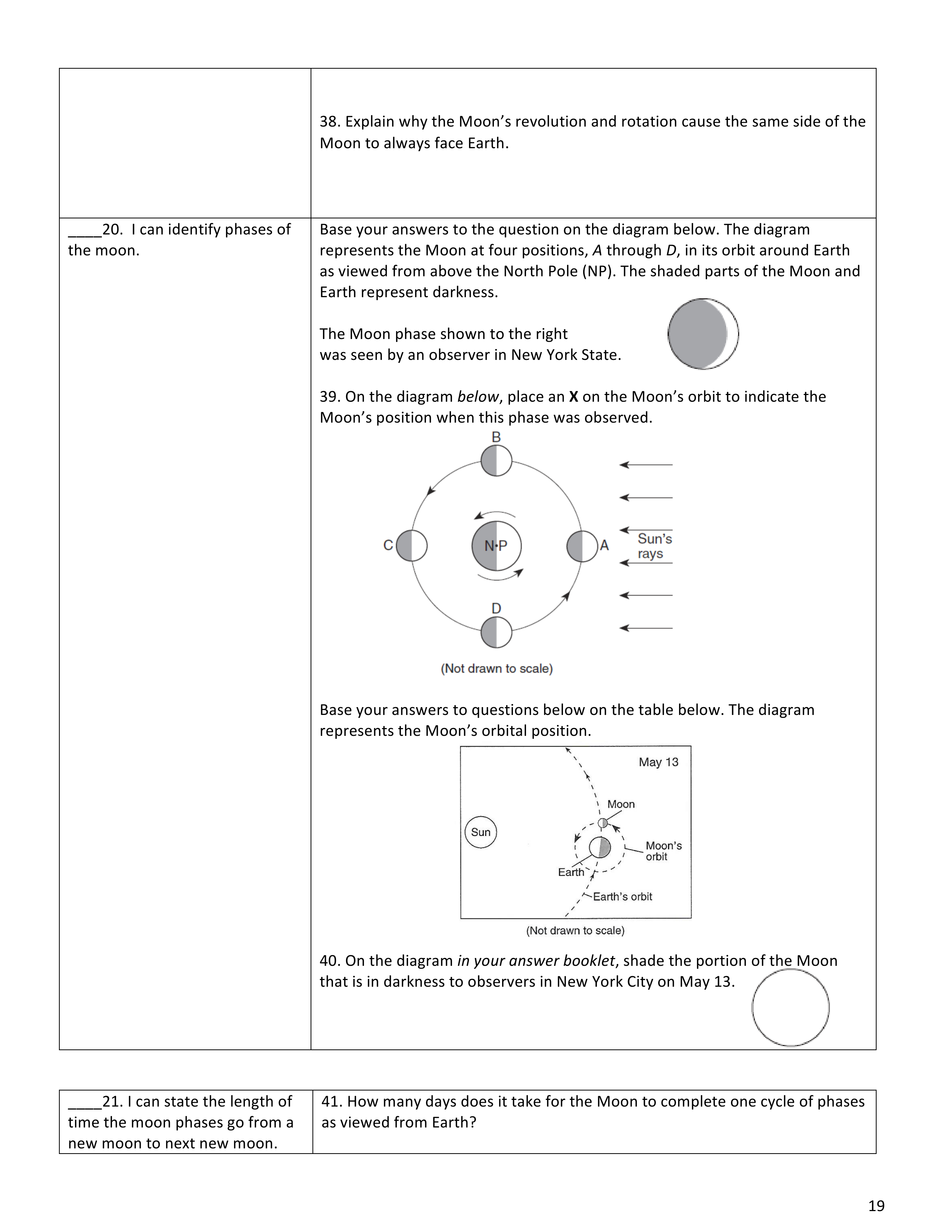
2. Lunar Eclipses: Lunar eclipses are captivating displays that occur when casts its shadow on the Moon. Let's explore the wonders of lunar eclipses:
Earth's Shadow: During a lunar eclipse, the , blocking the Sun's light from directly reaching the Moon. Instead, Earth's shadow falls on the lunar surface, turning it a reddish-brown color.
Total and Partial Lunar Eclipses: A total lunar eclipse occurs when the Moon is entirely engulfed in Earth's shadow, creating a breathtaking sight. During a partial lunar eclipse, only a portion of the Moon enters the Earth's shadow, resulting in a partial darkening. The partial darkening is when the observer is looking from the shadow.
Nuclear Fusion:
The Power of the Stars Have you ever wondered how the Sun and other stars shine so brightly? The answer lies in a remarkable process called nuclear . Deep within the Sun's core, hydrogen atoms come together to form helium atoms, releasing an enormous amount of in the process. This fusion of atomic nuclei creates the tremendous heat and that powers the Sun. Scientists are working hard to harness this incredible power on Earth to provide clean and abundant energy for our future.
Terrestrial vs. Jovian Planets
Our solar system is home to an incredible variety of planets. Terrestrial planets, including Mercury, Venus, Earth, and Mars, are characterized by their surfaces. They are relatively diameters, have densities, and are to the Sun. On the other hand, planets, such as Jupiter, Saturn, Uranus, and Neptune, are primarily composed of and have no solid surfaces. They are larger, less dense, and located away from the Sun. Understanding these distinctions helps us comprehend the diversity of worlds in our cosmic neighborhood.
The Location of the Asteroid Belt
Between the orbits of and Jupiter lies a region known as the asteroid belt. This region is home to countless asteroids, which are rocky and metallic objects that vary in size from small boulders to dwarf planets like Ceres. The asteroid belt formed from leftover material during the early stages of our solar system's formation, making them roughly years old. Although the asteroid belt contains numerous asteroids, the vast majority of space between these objects is empty, making it navigable for spacecraft.
Foucault Pendulum
A Foucault pendulum is a long, free-swinging pendulum that demonstrates the Earth's . As the pendulum swings back and forth, its plane of oscillation appears to rotate clockwise (or counterclockwise, depending on the observer's location) over time. This rotation is an indirect proof of Earth's rotation in a direction.
Coriolis Effect
The Coriolis effect is the apparent deflection of moving objects caused by the Earth. It affects the path of moving air masses and ocean currents. In the Northern Hemisphere, moving objects are deflected to the , while in the Southern Hemisphere, they are deflected to the . The Coriolis effect plays a crucial role in shaping global wind patterns and ocean currents.
The Milky Way
Our home galaxy, the Milky Way, is a galaxy. It is shaped like a flat disk with spiral arms extending from a central bar. We are located on one of the spiral arms, roughly 27,000 light-years away from the galactic center. The Milky Way contains billions of stars, including our Sun, and is just one of many galaxies in the vast cosmos.
Gravity
The gravity of two objects will always be higher when the objects are in size and in distance. As the distance from the star to the planet increases, the period of revolution will also , which means it will take to go around the star.
Seasons
The two causes of Earth's season are:
1. The tilt of Earth at an angle of
2. The of Earth around the Sun.
Note: The of the Sun and Earth makes no difference in seasons.
In the summer, which is on the date of st, the Sun is the altitude in the sky. This makes the length of day the duration. For the winter in the Northern Hemisphere, which is on st, everything is the .
The Moon is Earth's only natural satellite. It takes a total of days to revolve around Earth. Not only is the Moon revolving, but it is also at the same rate, which is why we observe only one side of the Moon at all times.
What Makes Tides Happen: Tides are the rising and falling of the ocean waters, and they happen because of two important things:
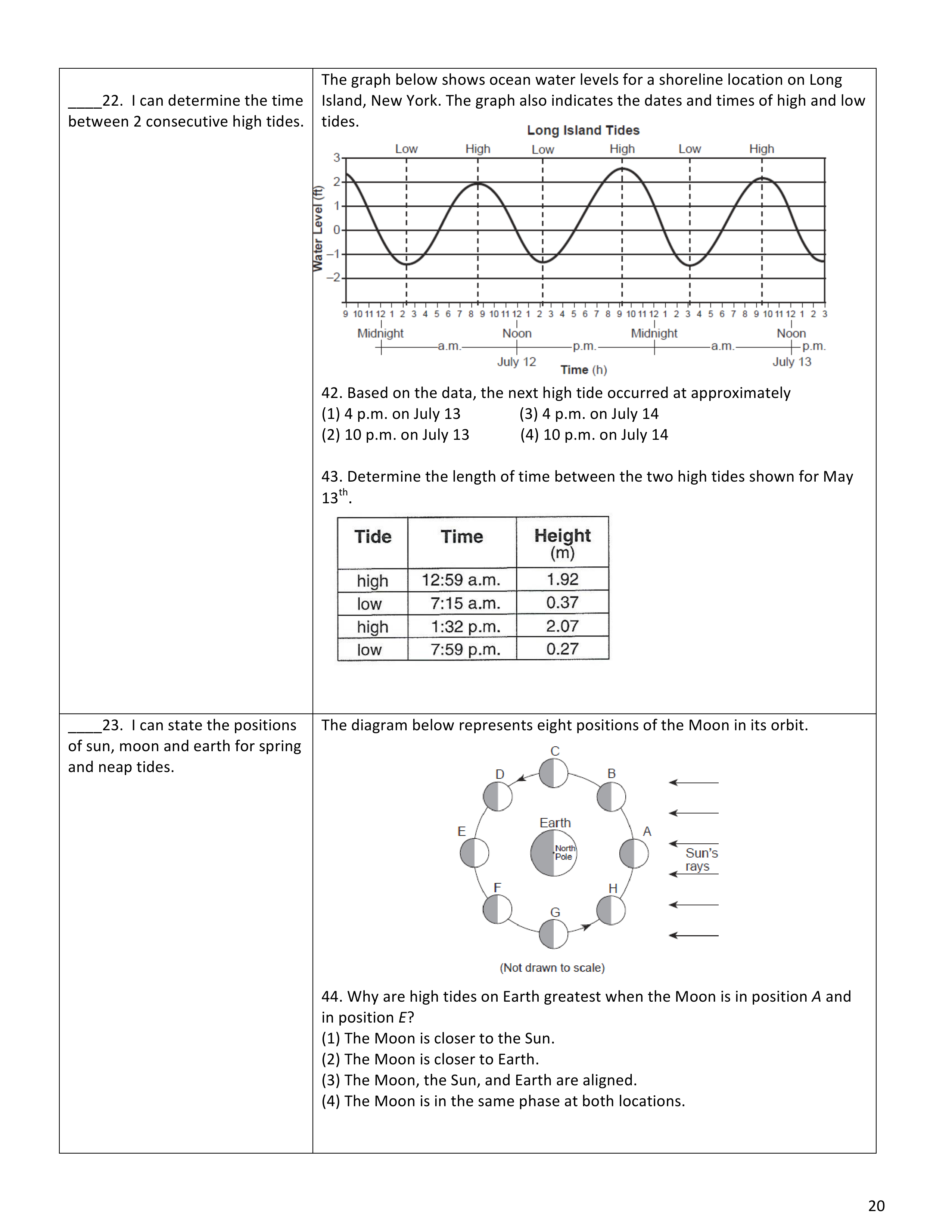
Moon's Pull: The Moon has a strong gravitational force that pulls on our planet. This force creates two bulges—one on the side facing the Moon and the other on the opposite side. These bulges cause tides.
Sun's Role: The Sun also has a gravitational pull, but it's not as as the Moon's. During the New and Full moon, when the Sun, Earth, and Moon line up, their combined forces make the tides even stronger. These are called tides. But during the First and Third Quarter moon phases when the Sun and Moon are at a right angle, the tides are not as high. We call these tides.
Spring Tides and Neap Tides:
Spring Tides: Spring tides happen during the Moon. At these times, the Sun, Earth, and Moon are , and their combined pull makes the highest high tides and the lowest low tides. It's like a super tide!
Neap Tides: Neap tides occur during the moon phases. At these times, the Sun and Moon are at to each other, and their pull on Earth is not as strong. This makes the high tides not so high and the low tides not so low. It's like a tide!
How Often Do Tides Happen? Did you know that it takes about for high tide to come back? That means you get two high tides and two low tides every day! It's because Earth on its axis every 24 hours, and during that time, it experiences two tidal bulges, leading to two high tides and two low tides.